

Most artificial bowls green resurfacing projects start with a quote request, and that is the first mistake. The unevenness a bowler feels often comes from a moved or cracked base rather than a tired carpet. We see that mix-up on many enquiries that reach our line.
Once new carpet covers a faulty base, the only fix is to lift the whole surface and start again. A straight edge and a level survey cost far less than that second installation. So on an artificial turf installation the fault is attributed first, the base is accepted second, and the roll is specified third.
Why Resurfacing Starts With a Diagnosis
Two symptom families decide where the money goes in any artificial bowls green resurfacing project. Wear through the pile, opened seams or a surface that has become too quick point at the carpet. Displacement, cracking and a bowl that refuses to run straight point at the base.
Published guidance from Sport England lists the resurface triggers as wear, extensive stitched or bonded seam failure, an over-fast surface from compaction, and poor drainage from contamination. Age alone is not on that list.
That same briefing notes that the base can change a bowl’s travel, and that many older greens sit on reinforced concrete which has moved and cracked. That is the second line of enquiry on an artificial turf installation, and it is the one clubs skip.
Running the two lines in sequence is the whole method. Carpet faults are judged on evenness, and the roll is chosen last against a target green speed. Readers who want the product context first can see our lawn bowls turf.
What Actually Wears an Artificial Bowls Green
Needle punch is the workhorse of outdoor UK greens, roughly 10 mm thick and usually laid over a felt or foam shockpad. It fails in four recognisable ways.
Fibre wear comes first. Rinks that see constant traffic wear through to the backing along the centre line. Seam failure follows on an artificial turf installation when stitched or bonded joints open and the strips start to lift.
Compaction is the quiet one. A green packed down by years of foot traffic runs faster than designed, and the change is gradual. Compaction plus contamination also slows drainage, so water sits where it used to pass through.
Green speed is the neutral yardstick. Sport England puts the usable range at 10 seconds for a slow green to 18 seconds for a very fast one. Many clubs settle between 12 and 14 seconds.
Seam geometry decides how a bowl meets the surface. Strips are laid across the direction of play, so a bowl crosses the seams rather than running along them.
Not every fault lives in the carpet. A base that has moved or cracked changes a bowl’s line as surely as a worn fibre. For the wider picture, see when artificial turf is ready for replacement.
Which Carpet Faults Mean Replace, Not Repair
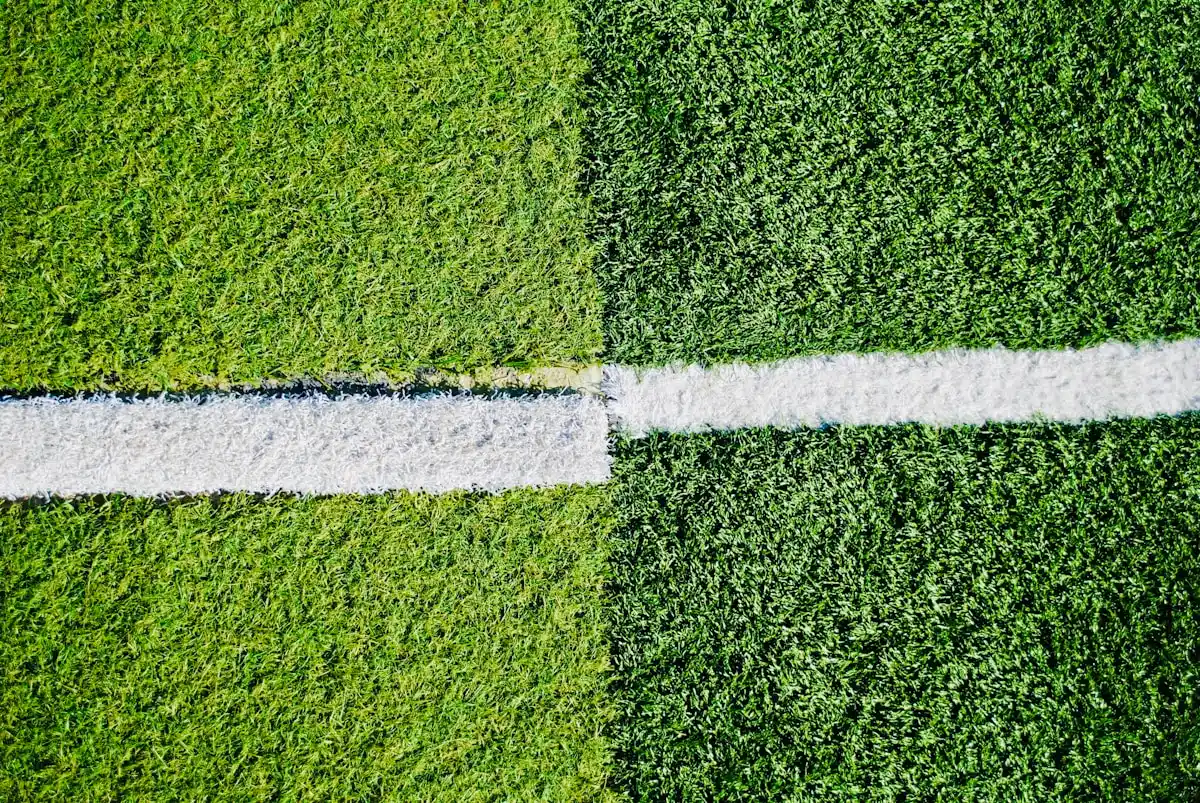
The question in an artificial bowls green resurfacing decision is whether a fault can be patched or the carpet has to come off. Three steps cover most cases. Undulations within 3 mm under a 3 m straight edge leave the carpet as the likely cause. Between 3 mm and 6 mm the reading needs watching. Anything over 6 mm points at the base.
The table below turns the common faults into a verdict on each.
| Fault | What you see on site | Can it be repaired locally | Вердикт |
|---|---|---|---|
| Wear through the pile | Bare backing visible along the rink centre lines | No, a patch reads as a colour shift | Replace the carpet |
| Opened seams | Stitched or bonded joints lifted and open | Sometimes, on one short run | Replace if several strips are affected |
| Wrinkles or loose carpet | Ripples locked in after the carpet relaxed | Re-stretching may settle a small area | Replace if the ripple returns |
| Surface too fast | Bowl runs well beyond the design time | No, the compaction sits in the pile | Replace the carpet |
| Localised ponding | Water standing after heavy rain | Rarely, because contamination is widespread | Replace and clean the base |
| Ripples plus bowl drift | Undulations over 6 mm under the straight edge | Нет | Correct the base before relaying |
Two rows deserve separating from the rest. A surface that has gone too fast is a carpet verdict, because the compaction sits in the pile. Ripples that come with bowl drift are a base verdict, and relaying over them repeats the fault.
Our position is blunt: buy the survey before the carpet. A survey costs a fraction of a roll and turns a guess about the base into a number someone can sign.
Clubs weighing the longer case against a natural surface can follow the natural versus artificial debate for bowls greens.
Warning: a fault that is patched but not diagnosed returns in the same place within a season. On an artificial turf installation, if the carpet is replaced before a base check, the failed base has to be uncovered again by lifting the new carpet.
When the Base, Not the Carpet, Is the Problem
Three base types turn up under bowls greens, and each carries its own resurfacing meaning. Concrete and porous macadam are the common pair in the UK, and a dynamic base of blinding stone or sand is the third.
The type decides what maintenance the base needs. A dynamic base must be rolled to hold its regularity, while a porous macadam base does not.
Older reinforced concrete is the awkward case. Many of those slabs have moved and cracked, and a crack does not disappear when new material goes over it. Overlaying cracked concrete with macadam risks reflective cracking, where the old movement reappears through the new layer.
A dynamic overlay behaves better there, because it can be rolled again if movement returns. The judgement is one of attribution rather than construction. A bowl that drifts on three rinks and runs true on the other three is describing the base.
Reading the ground under a green is its own subject, and why base materials matter covers the material side.
How Base Tolerances Are Checked Before Relaying
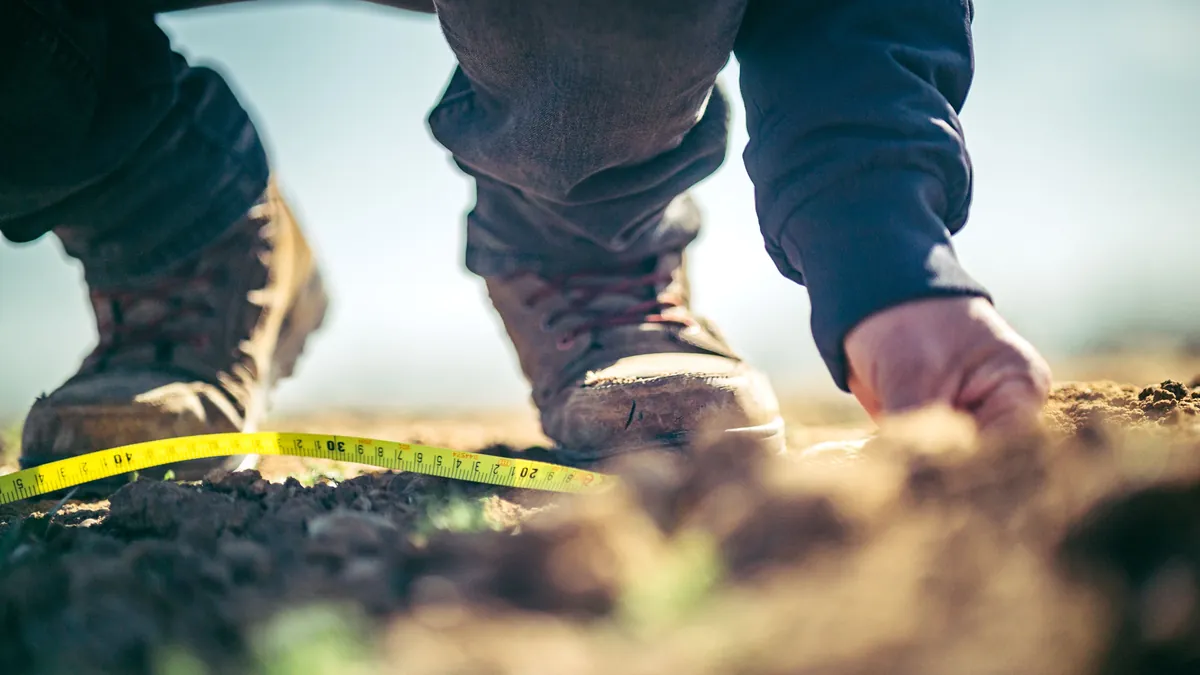
Base acceptance runs on published numbers, and in an artificial bowls green resurfacing project they are worth listing before anyone books a laying date. A regularity survey uses a 3 m straight edge plus a grid of levels at 2 m centres.
The table below sets out what each tolerance is, how it is measured and who owns it.
| Check | Required value | How it is measured | Who owns it |
|---|---|---|---|
| Ровность поверхности | 3 mm or less under a 3 m straight edge | Straight edge laid across the surface at set intervals | Independent surveyor |
| Undulations over 6 mm | Should not occur anywhere on the green | Straight edge reading recorded location by location | Base contractor |
| Design level | Not more than 5 mm either side of design level | Levels taken against a temporary benchmark | Independent surveyor |
| Adjacent spot levels | No more than 3 mm between neighbouring points | Grid of levels at 2 m centres | Independent surveyor |
| Infiltration, new surface | Greater than 100 mm per hour at construction | Infiltration test on the completed surface | Test house |
| Infiltration, 12 months on | Greater than 50 mm per hour | Repeat infiltration test | Facility operator |
| Dimensions | Within the published green, rink and ditch sizes | Tape and level check across the whole green | Independent surveyor |
Two rows deserve a second look. The infiltration figure for a new surface is double the figure that applies after a year. The level grid is also checked point by point rather than by eye.
The sequence is fixed. The base on an artificial turf installation is surveyed by an independent third party before the carpet is laid. Once the carpet is down, the only way to correct a failed base is to remove it and re-level.
For how the drainage layer and perforations are specified at design stage, how drainage bases and perforations are specified is the companion read.
Note: the tolerance table is a pre-lay check, not a completion test. Ask for the survey report with dated straight edge readings before the rolls arrive on site, and keep it with the project file.
Specify Bowls Green Turf for the Rebuild
Size the roll from the survey and the target speed, not from the old carpet.
Not sure which bowls carpet to specify?
Match the roll to your measured green and target speed. We make bowls turf rolls in custom pile heights, densities and widths, and send samples before you commit.
Choosing Between Needle Punch, Woven and Sand-Filled
Three carpet families are offered for bowls greens, and they differ on more than price. Needle punch is a non-woven fabric, generally 6 to 9 mm high over a 3 to 9 mm underlay. Woven carpet is a tensioned, unfilled surface around 4 mm high. Sand-filled turf is the third.
The table compares them on the six dimensions that decide a specification.
| Параметр | Needle punch | Woven carpet | Покрытие с песчаным наполнением |
|---|---|---|---|
| Толщина | 6 to 9 mm over a 3 to 9 mm underlay | Around 4 mm, unfilled | Pile height plus a sand infill layer |
| Underlay | Felt or foam shockpad, or an integral backing | Tensioned directly over the base | Sand holds the pile upright |
| Directions playable | Both directions, which spreads wear | Generally only the two directions across the seams | All four directions of play |
| Speed stability | Softer and more weather dependent | Holds a designed speed and needs re-stretching | Most consistent once the sand settles |
| Irrigation and maintenance | Bi-annual servicing as a minimum | Retains little water, so lower algae risk | Needs irrigation, higher maintenance and it scratches bowls |
| Typical failure mode | Wear through the pile and seam opening | Loss of tension and base movement showing through | Sand loss, compaction and surface scratching |
Two of the sand-filled costs are often understated. That surface needs an irrigation system, carries a higher maintenance load, and scratches bowls over time.
Needle punch and woven both take play in two directions, which spreads wear instead of concentrating it. That is why the direction question rarely decides between them.
There is no single best family here. A club playing twice a week wants a stable speed, while a multi-use site with a water supply wants something else. Matching the build to the schedule beats ranking the three.
When the family is settled, the roll comes next, and turf roll widths and backing options covers what arrives on the lorry.
Which Carpet Build Suits Your Target Green Speed
Green speed is a measurement before it is a preference, and on any artificial bowls green resurfacing brief it is the number the carpet must satisfy. A bowl’s travel is timed from delivery to rest at roughly 27.4 m from the mat line. The competition band runs from 10 to 18 seconds, and every test location must sit within half a second of the mean.
Draw is the second number on the same sheet. Surfaces running between 10 and 14 seconds must draw more than 750 mm. Above 14.1 seconds the requirement rises to more than 1000 mm, and left and right draws must stay within 40% of each other.
The shockpad is what actually controls speed and draw, which is why the same carpet can run differently on two greens.
Published third-party figures give a starting point. One published comparison reports woven carpet installing at about 14.5 seconds and wearing in to between 14.5 and 15.2 seconds. The same source gives needle punch at 14.5 seconds but weather dependent, and sand filled at about 13 seconds.
Treat those as third-party observations rather than specifications. A target speed is set for the green, and the build is then chosen to reach it.
Thinking of it as a gear ratio helps. The base and the shockpad set the gearing on an artificial turf installation, and the carpet decides how the surface reacts. Change the gearing and the same carpet reads as a different green.

What Acceptance Testing Confirms After Relaying
Completion is a separate gate from specification in an artificial bowls green resurfacing project, and it is the one that produces a document. The finished green is checked by an accredited test house against the numbers already discussed. If it complies, a Certificate of Compliance is issued and normally displayed in the pavilion.
One detail surprises clubs. For a carpet-based system the green speed test is limited to the direction of tournament play, which is across the seams.
Some checks sit with the roll supplier and some sit with the base contractor, and mixing them up causes arguments. Three items divide cleanly.
On the roll side
Roll width, strip count, seam count, pile direction and total rolled area on an artificial turf installation are visible on delivery. They can be checked against the delivery note before laying begins.
On the base side
Evenness, design level, dimensions and infiltration belong to the base and the survey.
On the operating side
Rolling on an artificial turf installation should only be done at the installer’s direction, because excessive rolling increases wear, alters speed and slows drainage. A woven carpet also needs periodic re-stretching to hold its designed speed.
None of these checks requires the club to own a test rig. They require someone to write the readings down on the day, while the green is still empty.
For the same logic applied to a finished lawn, how to tell if artificial grass was installed correctly walks through the checks a buyer can run alone.
How to Phase a Resurfacing Around Your Season
Timing is decided by what is being replaced, not by the calendar alone. Three project tiers are common, and each carries a different downtime window.
Tier one, carpet only
The old surface comes off, the base is checked and a new carpet goes down. One third-party source reports rescreed work at around 15 days.
Tier two, carpet plus overlay
A macadam overlay goes over the existing base before the new surface. The same source reports a top 35 mm rebuild at around 20 days.
Tier three, full rebuild
The base is reconstructed as well as resurfaced. Reported durations for that tier run from 25 to 30 days.
Published third-party figures put a typical 36 by 36 m six-rink resurface at around GBP 35,000 with no major base work. A 50 mm macadam overlay could add about GBP 25,000, and a 25 mm layer may bring that addition down to about GBP 17,000. Those are published guidelines rather than a supplier quote, and they exclude professional fees and VAT.
Overlay work moves that total by roughly 50% to 70% on top of a carpet-only resurface.
Published guidance suggests at least 10 years of use before the carpet needs replacing. Resurfacing and minor base rectification typically fall at 10 to 12 years, with possible pavement reconstruction after 20 years.
Carpet lead times differ sharply by family. One third-party report gives sand filled at 3 to 4 weeks from receipt of purchase, woven at three months and needle punch at four months. A club with a fixed opening date should work backwards from that date.
Roll width also changes the strip and seam count. Across a 36 m width, 5 m rolls give 8 strips and 7 seams. The same width takes 9 strips and 8 seams on 4 m rolls, and 18 strips with 17 seams on 2 m rolls.
Phasing is where the artificial bowls green resurfacing sequence meets the calendar. Where half the green can stay playable, the survey, the base work and the delivery can be planned in the right order.

Часто задаваемые вопросы
Как часто требуется обновлять покрытие искусственного поля для игры в боулз?
Опубликованные рекомендации определяют нормативный срок службы качественного объекта в 10 и более лет, при этом обновление покрытия и незначительный ремонт основания, как правило, требуются через 10–12 лет. Износ, раскрытие швов или выход из строя дренажной системы — а не только возраст — обычно становятся причиной для начала работ.
Can a new bowls carpet be laid over the old base?
Yes, provided the base passes its pre-lay survey for evenness, design level and infiltration. If the base has moved or cracked, relaying over it repeats the fault, and the carpet has to be lifted to correct it.
What is the difference between needle punch and woven bowls carpet?
Needle punch is a non-woven fabric, generally 6 to 9 mm high over a 3 to 9 mm underlay. Woven carpet is tensioned and unfilled at around 4 mm, and generally plays only in the two directions across its seams.
What base tolerances must be met before a new carpet is laid?
Evenness must be 3 mm or less under a 3 m straight edge, with up to 6 mm tolerated only if the bowl is unaffected. Design level must stay within 5 mm either side, and adjacent spot levels within 3 mm.
How long does a bowls green resurfacing take?
Published third-party durations run from around 15 days for a rescreed job to 20 days with a top 35 mm rebuild, and 25 to 30 days for a full rebuild. Carpet lead times add 3 to 4 weeks or more.
Which surface speed should a resurfaced bowls green run at?
Competition play runs between 10 and 18 seconds, and many clubs settle at 12 to 14 seconds. Each test location should sit within half a second of the mean green speed.


 Russian
  English
  Arabic
  French
  German
  Portuguese
  Spanish