
Relyir عشب
عشب اصطناعي من المصنع مباشرة منذ 2006 — تخصيص كامل، عينات وعروض سعر سريعة.
-
العشب الاصطناعي الرياضي
ميدان البوتينغ
أنظمة أرضيات رياضية
25 mm sand-dressed turf for consistent ball bounce and player movement on tennis courts. Factory-direct from Relyir since 2006.
Why Specify Sand-Filled Short Pile
Tennis courts demand a surface where ball speed, bounce height and foot traction are predictable and tunable. Sand-filled artificial grass gives facility operators control over court pace through infill depth — a variable that hard courts cannot offer.
The ITF classifies court surfaces from Category 1 (slow) to Category 5 (fast). Sand-filled turf lets you target a specific pace rating by adjusting the sand fill level — more sand slows the court, less sand speeds it up. That tunability is why clubs choose turf over acrylic for multi-court facilities.
The 25 mm pile at 27,300 tufts/m² creates a dense, uniform surface that produces the same bounce height and pace on every square meter. Players can trust the surface to respond consistently from baseline to net — a reliability that worn hard courts and uneven grass courts cannot match.
Perforated backing and an open base allow rain to drain through rapidly — courts return to playable condition faster than hard courts that hold standing water. Sand infill also reduces surface glare compared to acrylic, improving visibility under bright sun.
نطاق المنتجات
The Mesh Adventure 25 is Relyir’s sand-filled court product — a 25 mm pile at 27,300 tufts/m² on 3/8″ gauge, designed to be sand-filled to near the top of the pile for consistent ball behavior and foot traction.
| الموديل | ارتفاع الألياف | الخيط | الكثافة | المقياس | معدل الغرز | الطبقة الخلفية | الألوان |
|---|---|---|---|---|---|---|---|
| مغامرة شبكية 25 | 25 مم | PP | 27,300 عقدة/م² | 3/8″ | 26/10 سم | PP + PP (PU اختياري) | أخضر زيتوني / أبيض |
Roll sizes: 4 × 25 m or 2 × 50 m, maximum roll width 5 m. White court lines are inlaid during installation. Rubber underlay for shock absorption can be specified beneath the turf. Full datasheets are provided with your quotation.
تصميم الأداء
Tennis is a game of margins. A ball that bounces 5 cm higher or slower can change the outcome of a point. The court surface is the variable that controls ball speed, bounce height and the grip players have when they push off for their next shot. Artificial grass, classified by the ITF as surface code C (synthetic with natural grass appearance), offers a playing character that sits between the pace of hard courts and the slower feel of clay.
The sand fill level is the tuning mechanism. More sand packed into the pile produces a slower, higher-bouncing court that favors baseline rallies. Less sand lets the ball skid and stay low, rewarding attacking play. Facility operators can target the ITF pace category their players prefer by adjusting the sand depth during installation and maintenance.
The 25 mm pile height is the sweet spot for tennis — deep enough to hold the sand infill securely, short enough to keep the ball running on top of the surface rather than sinking into the fiber. At 27,300 tufts/m², the density provides the uniform contact surface that consistent ball behavior demands.
Rubber underlay is often installed beneath tennis turf to add shock absorption — reducing joint stress for players who train daily. The underlay also contributes to surface evenness and can be tuned to match the court’s intended use, from recreational play to competition-level surfaces.
For projects targeting ITF court-pace classification, Relyir supplies the turf product with full specification documentation and sand-fill guidance matched to your target pace category.
من المصنع مباشرةً من جانغسو
تُصنّع Relyir الأعشاب الصناعية في جيانغسو منذ عام 2006. كل خطوة — من حبيبات PE الخام إلى اللفافات النهائية — تتم في الموقع، وهذا هو الطريقة التي نتحكم بها بالجودة ونحافظ على أسعار أقل بـ 30–50% من المعايير الدولية المكافئة.
تُدار جميع المراحل الثماني للإنتاج داخلياً، مما يُقضي على الفجوات في الجودة التي تنشأ عندما يحدث الخلط والنسيج والتلبيس في منشآت منفصلة. تمت الخط الإنتاجية الآلية لأرضيات الملعب الرياضي، التي دخلت الخدمة في عام 2015، إلى رفع سعة الإنتاج بنسبة 150% وشَدّت الاتساق عبر الطلبات ذات الأحجام الكبيرة.
التخصيص مدمج في خط الإنتاج: يتم ضبط كثافة الشعيرات وارتفاع الشعر وألوان الألياف وفقاً لمواصفات كل مشروع، مع خيارات أساس PP + شبكي و PU. وقام فريق التصدير بشحن المنتجات إلى أكثر من 500 عميل في أكثر من 50 دولة منذ عام 2009، ويتولى جميع المستندات — من الفواتير التجارية إلى شهادات المنشأ.

بناء النظام
Tennis court installation is simpler than full-size field sports — a concrete or asphalt base, optional rubber underlay, and the sand-filled turf carpet. We supply the turf and share build-up guidance with every project.
A smooth, sloped base with drainage — the foundation that determines court planarity and water runoff. Tight tolerances on levelness are essential for consistent ball bounce.
Optional rubber pad glued to the base for shock absorption and joint protection — commonly specified for club and training courts where players use the surface daily.
The 25 mm carpet glued or bonded to the base, then sand-filled to near the top of the pile. White court lines are inlaid during installation, and sand depth is adjusted to target the desired court pace.
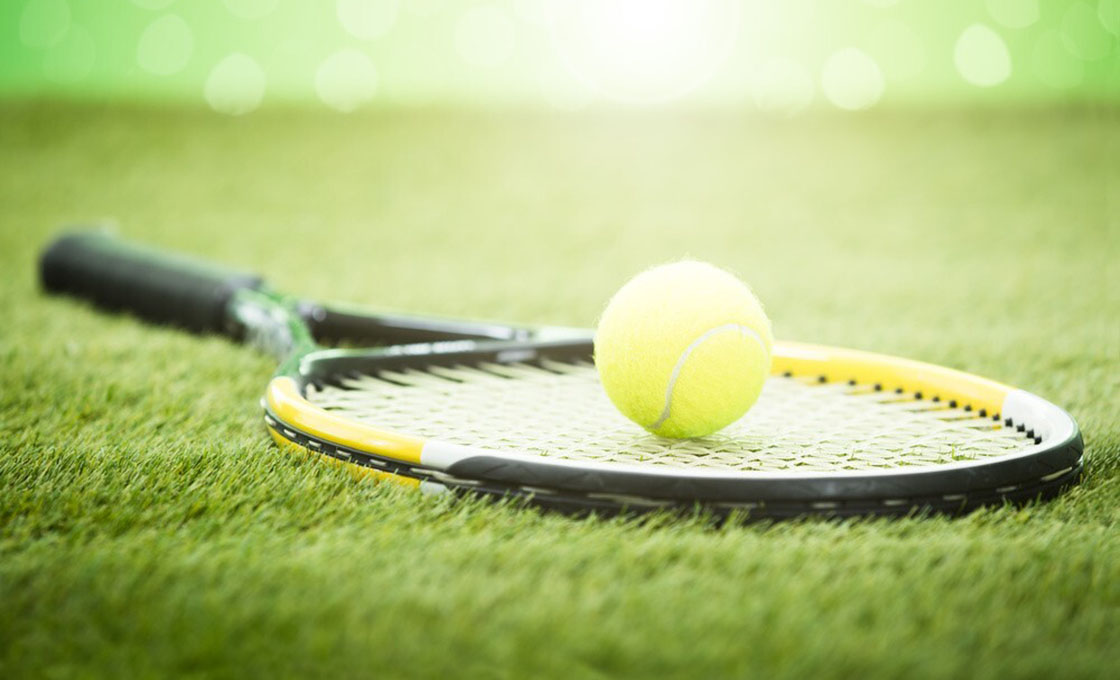
Court pace is not fixed at installation — it can be adjusted over the court’s life by adding or removing sand. More sand produces a slower, higher bounce; less sand lets the ball skid faster. This adjustability is a key advantage over hard courts, where resurfacing is the only way to change pace.
Regular brushing keeps sand evenly distributed and fibers upright. Over time, sand migrates to court edges and service boxes where foot traffic concentrates — periodic redistribution restores consistent play. Perforated backing ensures rain drains through quickly for rapid return to play after weather delays.
The ITF classifies court pace from Category 1 (slow) to Category 5 (fast). Sand-filled artificial grass typically falls in Category 2–4 depending on sand fill depth and underlay specification. Relyir provides sand-fill guidance so your installer can target the pace category your program requires.
Yes. Adding more sand slows the court and raises ball bounce; removing sand speeds it up. This adjustability is a key advantage over hard courts, where changing pace requires a full resurfacing. Club operators often tune courts seasonally or between coaching and tournament use.
Not mandatory, but strongly recommended for courts with daily use. Rubber underlay adds shock absorption that reduces joint stress for players, contributes to surface evenness and extends carpet life by distributing point loads. Competition courts sometimes skip the underlay for a firmer, faster surface.
Artificial grass offers a different playing character — generally slower pace and higher bounce than acrylic hard courts, with more give underfoot. It drains faster after rain, produces less glare in bright sun, and can be re-tuned through sand adjustment. Maintenance is different: brushing and sand redistribution rather than resurfacing and crack repair.
Mesh Adventure 25 ships in rolls of 4 × 25 m or 2 × 50 m with a maximum width of 5 m. Standard colors are olive green and white; custom colorways are available on request. White court lines are inlaid during installation to match your court layout.
Regular brushing to keep sand level and fibers upright, periodic sand redistribution from edges and service boxes to the center, and cleaning to prevent moss or algae in damp climates. Relyir provides maintenance guidance with every installation package.
Send your court dimensions, quantity, surface-pace preference and target timeline. Our export team replies with model recommendations, specification sheets and factory-direct pricing within 12 hours.
اطلب عرض سعر مجاني Arabic
  English
  French
  German
  Portuguese
  Russian
  Spanish