
Relyir Grass
Factory-direct artificial grass since 2006 — full customization, samples and fast quotes.
Sports Turf Systems
25 mm sand-dressed turf for consistent ball bounce and player movement on tennis courts. Factory-direct from Relyir since 2006.
Why Specify Sand-Filled Short Pile
Tennis courts demand a surface where ball speed, bounce height and foot traction are predictable and tunable. Sand-filled artificial grass gives facility operators control over court pace through infill depth — a variable that hard courts cannot offer.
The ITF classifies court surfaces from Category 1 (slow) to Category 5 (fast). Sand-filled turf lets you target a specific pace rating by adjusting the sand fill level — more sand slows the court, less sand speeds it up. That tunability is why clubs choose turf over acrylic for multi-court facilities.
The 25 mm pile at 27,300 tufts/m² creates a dense, uniform surface that produces the same bounce height and pace on every square meter. Players can trust the surface to respond consistently from baseline to net — a reliability that worn hard courts and uneven grass courts cannot match.
Perforated backing and an open base allow rain to drain through rapidly — courts return to playable condition faster than hard courts that hold standing water. Sand infill also reduces surface glare compared to acrylic, improving visibility under bright sun.
Product Range
A tennis surface is judged on one thing: the ball doing the same thing every time. These 15 mm sand-dressed systems combine tight tuft bind for grip with enough controlled slide to protect joints.
 Entry
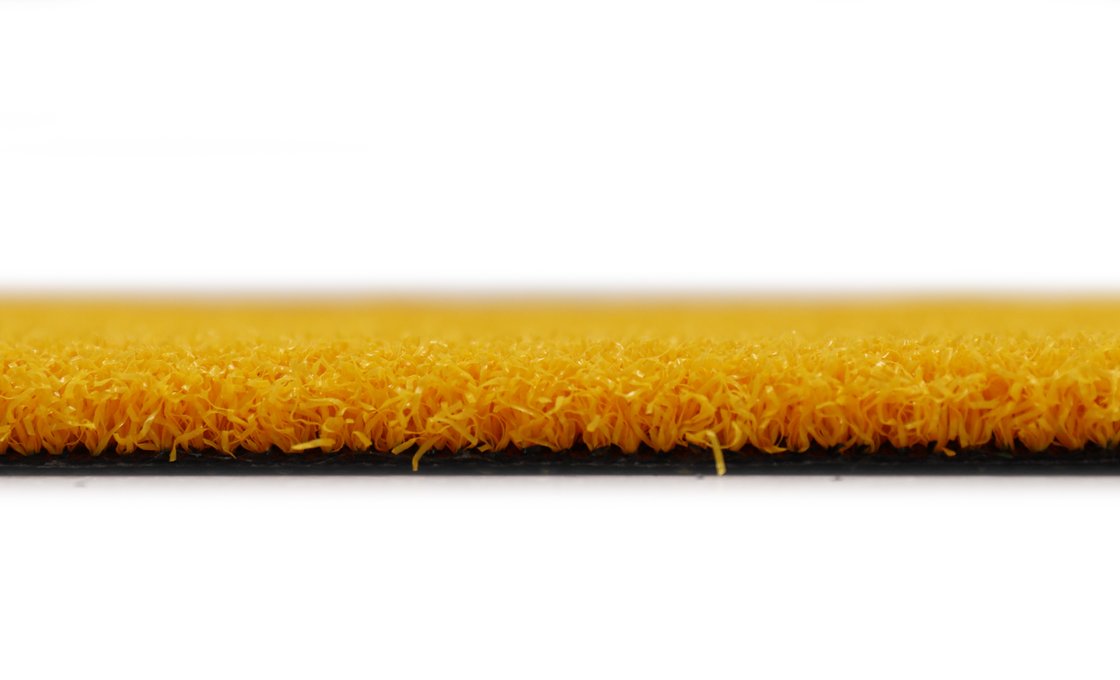
Youth Curly 1525 Yellow Tennis
15 mm · Curled PP · ,52500 stitches/sqm
Learn More
Entry
Youth Curly 1525 Yellow Tennis
15 mm · Curled PP · ,52500 stitches/sqm
Learn More
 Entry
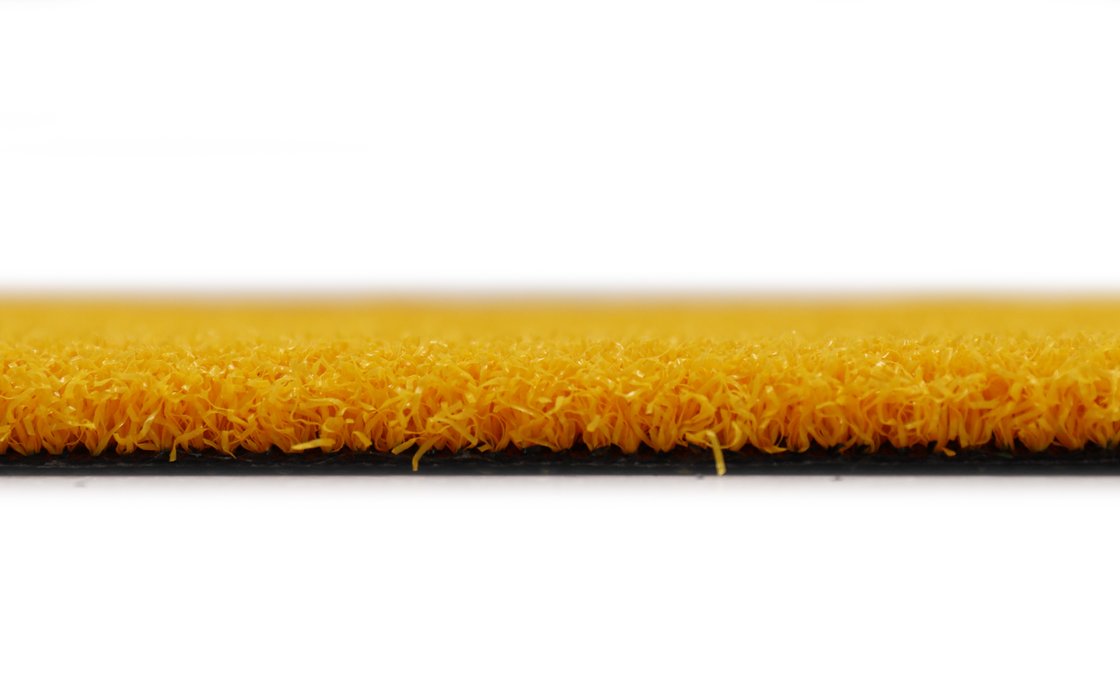
Youth Curly 1525 Yellow Padel
15 mm · Curled PP · ,52500 stitches/sqm
Learn More
Entry
Youth Curly 1525 Yellow Padel
15 mm · Curled PP · ,52500 stitches/sqm
Learn More
 Entry
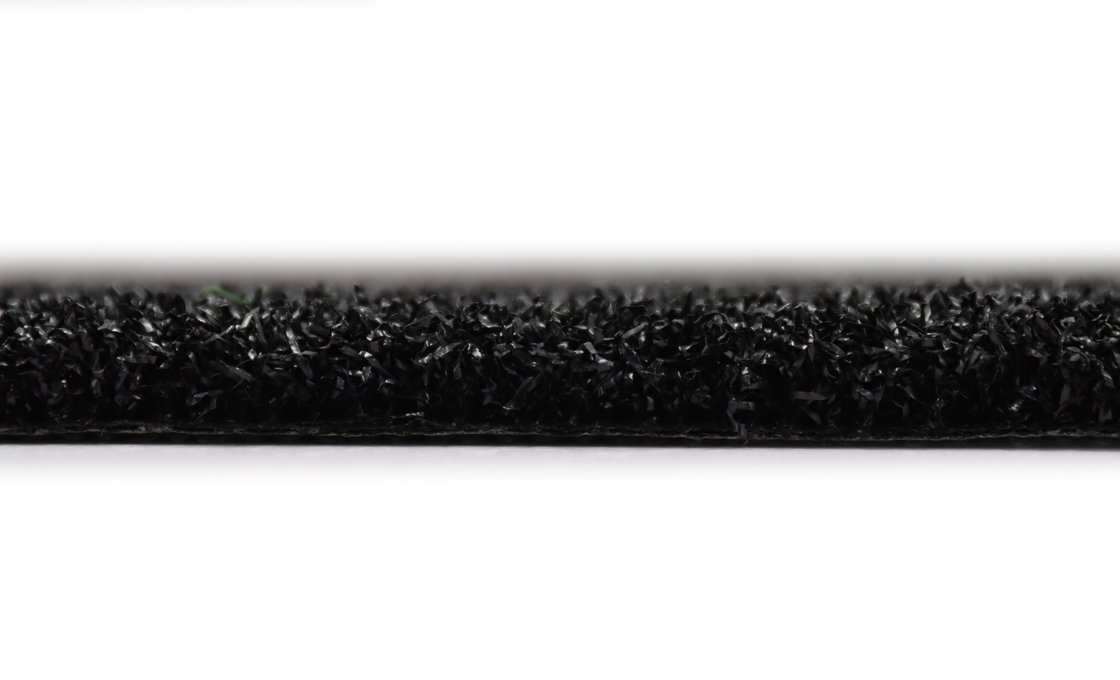
Youth Curly 1525 Black
15 mm · Curled PP · ,52500 stitches/sqm
Learn More
Entry
Youth Curly 1525 Black
15 mm · Curled PP · ,52500 stitches/sqm
Learn More
 Entry
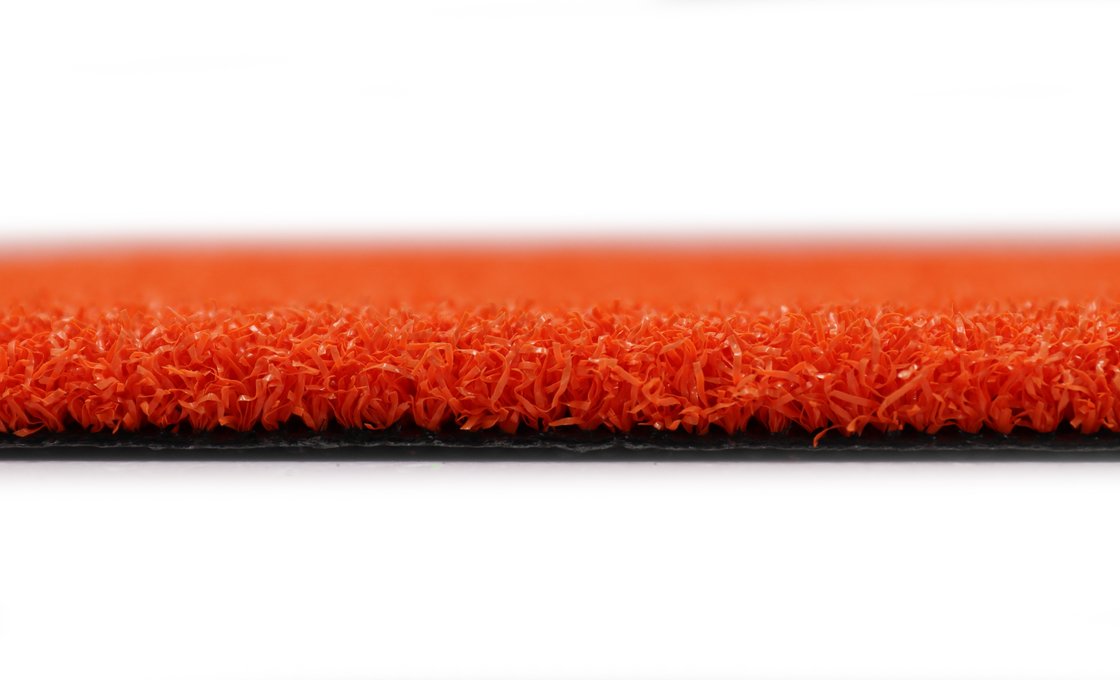
Youth Curly 1525 Orange
15 mm · Curled PP · ,52500 stitches/sqm
Learn More
Entry
Youth Curly 1525 Orange
15 mm · Curled PP · ,52500 stitches/sqm
Learn More
 Entry
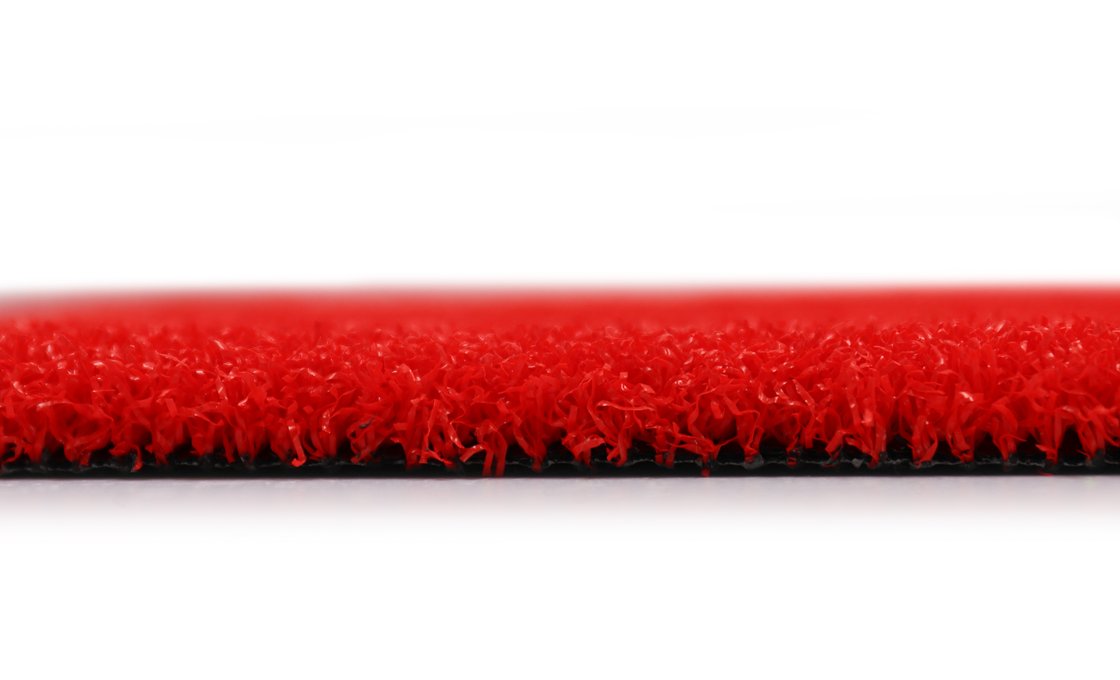
Youth Curly 1525 Red
15 mm · Curled PP · ,52500 stitches/sqm
Learn More
Entry
Youth Curly 1525 Red
15 mm · Curled PP · ,52500 stitches/sqm
Learn More
 Standard
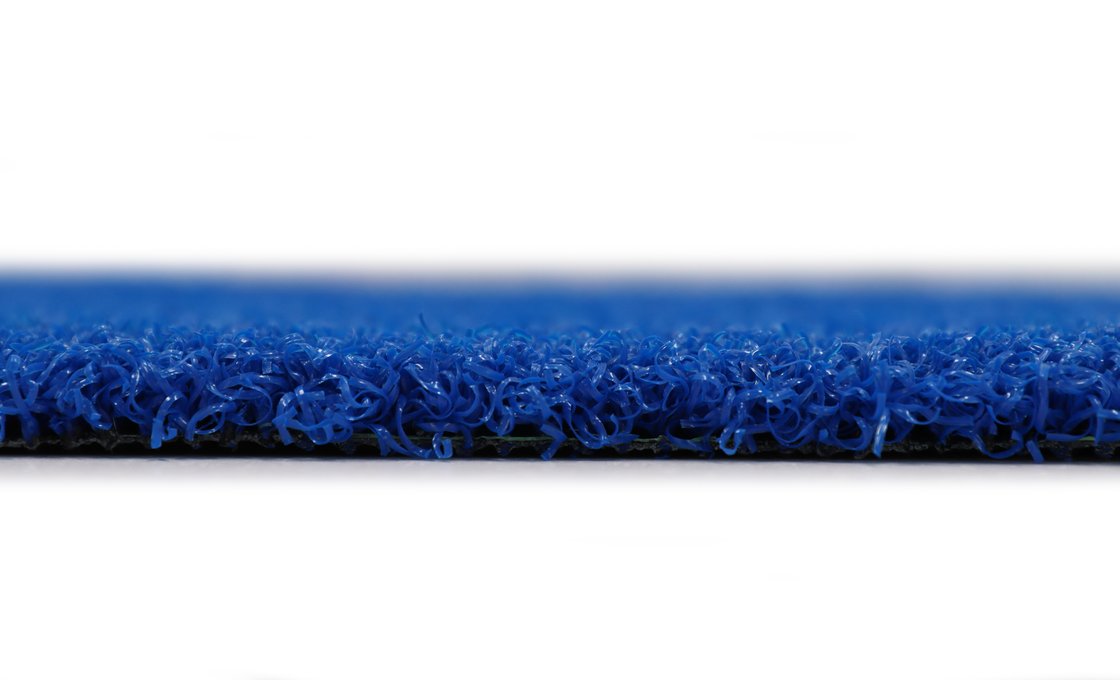
Quest KDK 1525
15 mm · Curled KDK · ,52500 stitches/sqm
Learn More
Standard
Quest KDK 1525
15 mm · Curled KDK · ,52500 stitches/sqm
Learn More
Performance Design
Tennis is a game of margins. A ball that bounces 5 cm higher or slower can change the outcome of a point. The court surface is the variable that controls ball speed, bounce height and the grip players have when they push off for their next shot. Artificial grass, classified by the ITF as surface code C (synthetic with natural grass appearance), offers a playing character that sits between the pace of hard courts and the slower feel of clay.
The sand fill level is the tuning mechanism. More sand packed into the pile produces a slower, higher-bouncing court that favors baseline rallies. Less sand lets the ball skid and stay low, rewarding attacking play. Facility operators can target the ITF pace category their players prefer by adjusting the sand depth during installation and maintenance.
The 25 mm pile height is the sweet spot for tennis — deep enough to hold the sand infill securely, short enough to keep the ball running on top of the surface rather than sinking into the fiber. At 27,300 tufts/m², the density provides the uniform contact surface that consistent ball behavior demands.
Rubber underlay is often installed beneath tennis turf to add shock absorption — reducing joint stress for players who train daily. The underlay also contributes to surface evenness and can be tuned to match the court’s intended use, from recreational play to competition-level surfaces.
For projects targeting ITF court-pace classification, Relyir supplies the turf product with full specification documentation and sand-fill guidance matched to your target pace category.
Factory Direct from Jiangsu
Relyir has manufactured artificial grass in Jiangsu since 2006. Every step — from raw PE pellets to finished rolls — runs on-site, which is how we control quality and hold pricing 30–50% below international equivalents.
All eight production stages are managed in-house, eliminating the quality gaps that arise when compounding, tufting and coating happen in separate facilities. The automated sports turf line, commissioned in 2015, lifted production capacity by 150% and tightened consistency across high-volume orders.
Customization is built into the line: blade density, pile height and fiber colors are adjusted to each project’s specification, with PP + net and PU backing options. The export team has shipped to more than 500 customers across 50+ countries since 2009 and handles all documentation — from commercial invoices to certificates of origin.
Every order is produced to specification — pile height, density, blade shape and color, backing composition and roll dimensions are all configured to your project requirements.

System Build-Up
Tennis court installation is simpler than full-size field sports — a concrete or asphalt base, optional rubber underlay, and the sand-filled turf carpet. We supply the turf and share build-up guidance with every project.
A smooth, sloped base with drainage — the foundation that determines court planarity and water runoff. Tight tolerances on levelness are essential for consistent ball bounce.
Optional rubber pad glued to the base for shock absorption and joint protection — commonly specified for club and training courts where players use the surface daily.
The 25 mm carpet glued or bonded to the base, then sand-filled to near the top of the pile. White court lines are inlaid during installation, and sand depth is adjusted to target the desired court pace.
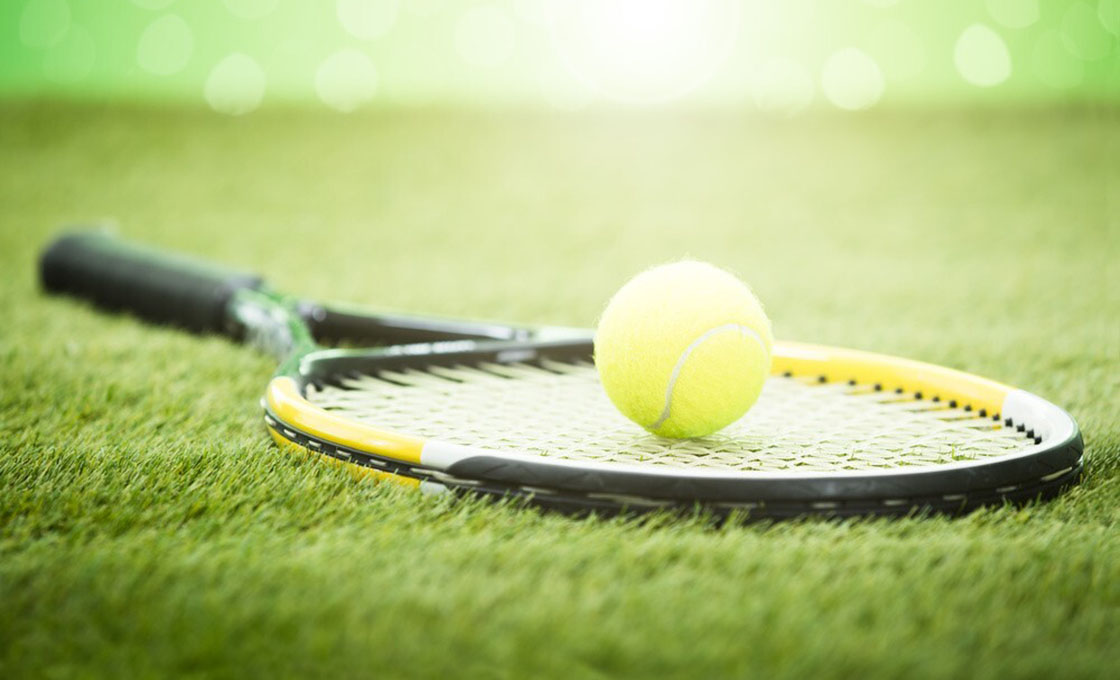
Court pace is not fixed at installation — it can be adjusted over the court’s life by adding or removing sand. More sand produces a slower, higher bounce; less sand lets the ball skid faster. This adjustability is a key advantage over hard courts, where resurfacing is the only way to change pace.
Regular brushing keeps sand evenly distributed and fibers upright. Over time, sand migrates to court edges and service boxes where foot traffic concentrates — periodic redistribution restores consistent play. Perforated backing ensures rain drains through quickly for rapid return to play after weather delays.
Artificial grass tennis courts are sand-dressed systems: silica sand sits in the pile to hold fibers upright, control ball bounce and enable the surface drainage that keeps courts playable after rain. Court pace — how fast the ball comes off the surface — is the specification dial, and the industry references ITF court-pace classifications when matching surfaces to playing level. Routine care is light: brushing to redistribute sand and periodic top-ups.
The sand infill sits lower in a denser fiber layer, leaving enough fiber above the sand for grip and bounce while the sand stabilizes the carpet. It plays faster and truer than fully sand-filled older-style courts.
Yes — the sand-cushioned turf is softer underfoot than acrylic hard courts, which is why clubs and older players choose it for court replacements aimed at reducing joint stress.
The ITF classifies court pace from Category 1 (slow) to Category 5 (fast). Sand-filled artificial grass typically falls in Category 2–4 depending on sand fill depth and underlay specification. Relyir provides sand-fill guidance so your installer can target the pace category your program requires.
Yes. Adding more sand slows the court and raises ball bounce; removing sand speeds it up. This adjustability is a key advantage over hard courts, where changing pace requires a full resurfacing. Club operators often tune courts seasonally or between coaching and tournament use.
Not mandatory, but strongly recommended for courts with daily use. Rubber underlay adds shock absorption that reduces joint stress for players, contributes to surface evenness and extends carpet life by distributing point loads. Competition courts sometimes skip the underlay for a firmer, faster surface.
Artificial grass offers a different playing character — generally slower pace and higher bounce than acrylic hard courts, with more give underfoot. It drains faster after rain, produces less glare in bright sun, and can be re-tuned through sand adjustment. Maintenance is different: brushing and sand redistribution rather than resurfacing and crack repair.
Our 15 mm court systems (Youth Curly 1525 and Quest KDK 1525) ship in rolls of 4 × 25 m or 2 × 50 m with a maximum width of 5 m. Standard colors in the court range are blue, yellow, black, orange and red; custom colorways are available on request. White court lines are inlaid during installation to match your court layout.
Regular brushing to keep sand level and fibers upright, periodic sand redistribution from edges and service boxes to the center, and cleaning to prevent moss or algae in damp climates. Relyir provides maintenance guidance with every installation package.
Yes. Samples are free of charge — you only cover the shipping. Standard swatches are 20 × 20 cm and we typically send three to four models per project so you can compare pile heights and colors side by side. Standard samples ship via DHL or FedEx within 4–6 days; custom-matched samples add 10–15 days of production.
Yes. Choose between two options: delivered to your destination port, with export customs clearance in China, international ocean freight and cargo insurance included in one all-inclusive cost; or delivered to a Chinese port if you prefer to work with your own freight forwarder. Other delivery arrangements can be accommodated on request.
Orders range from single rolls for smaller installations to full container loads for large developments. Roll sizes of 2 m, 4 m and 5 m widths (25 m length) cover most layouts, and custom dimensions are produced to order. Volume pricing applies as order size increases.
Send your court dimensions, quantity, surface-pace preference and target timeline. Our export team replies with model recommendations, specification sheets and factory-direct pricing within 12 hours — typically 30–50% below international equivalents..
 English
  Arabic
  French
  German
  Portuguese
  Russian
  Spanish