Relyir Grass
Factory-direct artificial grass since 2006 — full customization, samples and fast quotes.
Sports Turf Systems
50 mm outfield turf paired with 12 mm infield systems for baseball diamonds. Factory-direct from Relyir — 20 years of sports turf manufacturing.
Why Specify a Two-Zone System
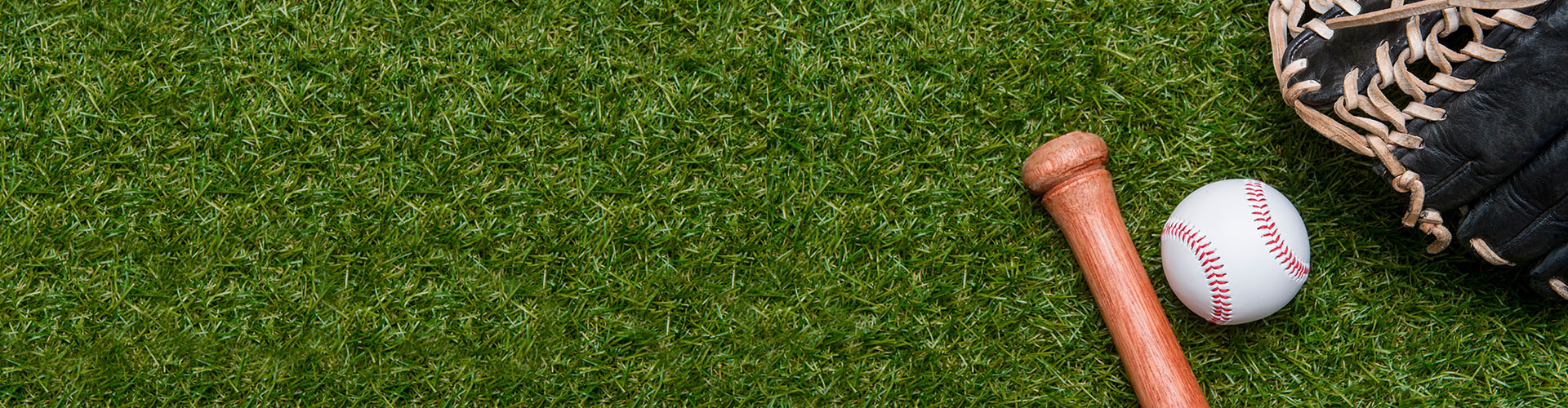
Baseball demands different surface behavior in the outfield and infield. Ground balls must track predictably on the grass, while infielders need a fast, low-bounce surface for quick transfers. Relyir addresses both zones with purpose-built products from a single factory.
The 50 mm outfield pile, stabilized with sand and rubber infill, keeps the ball rolling true at game speed — no hops, no deviations caused by uneven fiber height. Consistent tuft density across the full outfield is what separates a professional-grade surface from a practice field.
The 12 mm short-pile infield turf with dense 52,500 tufts/m² delivers the fast, low-bounce behavior fielders need for double plays and bunt coverage. Sand infill keeps the fibers supported and the ball response uniform across every hop.
Base paths and base areas experience concentrated abrasion from sliding runners. Dense PE monofilament with reinforced three-layer backing resists the fiber pull and infill displacement that head-first and feet-first slides generate.
Product Range
A baseball field is not one surface — it is four with different jobs. We build each zone to its own spec so bunts, hops and slides behave the way players expect.
Every Relyir surface is extruded, tufted and coated in our own plant, so the specification above is a starting point, not a catalogue limit. Send us your sport, level of play and sub-base and we will engineer the pile height, gauge, yarn, backing and infill around it.
Request a QuotePerformance Design
Baseball is unique among field sports in requiring two fundamentally different playing surfaces within one field. The outfield needs a lush, natural-grass appearance with enough pile depth to cushion the ball and produce a true roll at speed. The infield demands a short, dense surface that mimics hard-packed clay — fast, low-bounce, and predictable on every hop.
The transition between zones is critical. Seams where outfield meets infield must be flush and secure, because any lip or gap will alter a ground ball’s path. Relyir supplies both products from the same production facility, ensuring consistent color matching and compatible backing systems across the entire field.
Some facilities opt for full-turf infields (clay-colored short-pile turf), while others use real clay cutouts at the pitcher’s mound and bases. Both approaches work with the Relyir product range — our made-to-order infield turf serves either as the primary infield surface or as the transition turf around clay zones.
The warning track — a contrasting short-pile or clay-colored strip at the outfield edge — gives outfielders a tactile cue that they are approaching the wall. This zone can be specified in a different colorway of the same short-pile product, maintaining consistent installation methods across the full field.
For projects referencing WBSC field guidelines, Relyir provides complete specification documentation and works with your installer to achieve the ball-response values your project requires.
Factory Direct from Jiangsu
Relyir has manufactured artificial grass in Jiangsu since 2006. Every step — from raw PE pellets to finished rolls — runs on-site, which is how we control quality and hold pricing 30–50% below international equivalents.
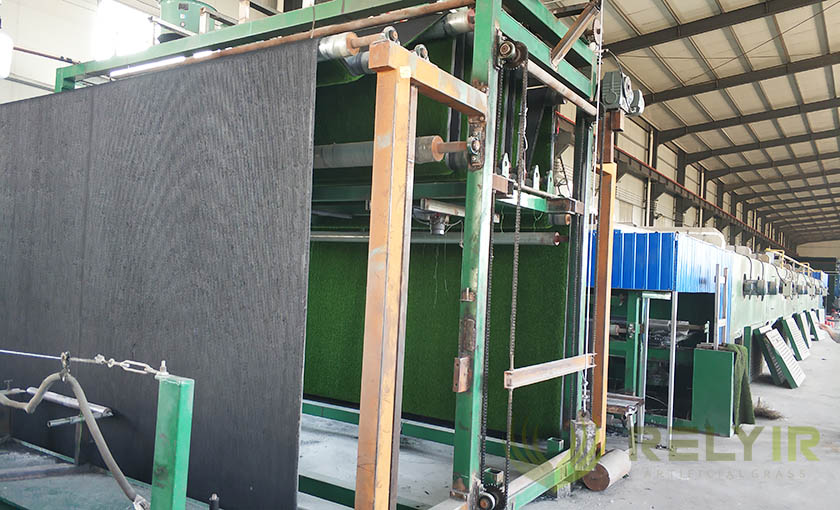
All eight production stages are managed in-house, eliminating the quality gaps that arise when compounding, tufting and coating happen in separate facilities. The automated sports turf line, commissioned in 2015, lifted production capacity by 150% and tightened consistency across high-volume orders.
Customization is built into the line: blade density, pile height and fiber colors are adjusted to each project’s specification, with PP + net and PU backing options. The export team has shipped to more than 500 customers across 50+ countries since 2009 and handles all documentation — from commercial invoices to certificates of origin.
Every order is produced to specification — pile height, density, blade shape and color, backing composition and roll dimensions are all configured to your project requirements.
System Build-Up
The turf roll is one component of a four-layer system. We supply both outfield and infield turf and share build-up guidance with every project so installers achieve the ball-response values specified at design stage.
Compacted aggregate or asphalt with engineered drainage — the foundation that supports both outfield and infield zones with separate sub-base detail where dirt cutouts are used.
Silica sand brushed into the pile — heavier in the outfield (20–30 kg/m²) and adjusted for the short-pile infield to maintain uniform ball response.
SBR, TPE, EPDM or organic (cork) at 8–15 kg/m² in the outfield; infield zones use sand infill or minimal performance infill for a faster surface.
Optional elastic layer beneath the turf for projects targeting higher impact absorption or multi-sport use alongside football or soccer.
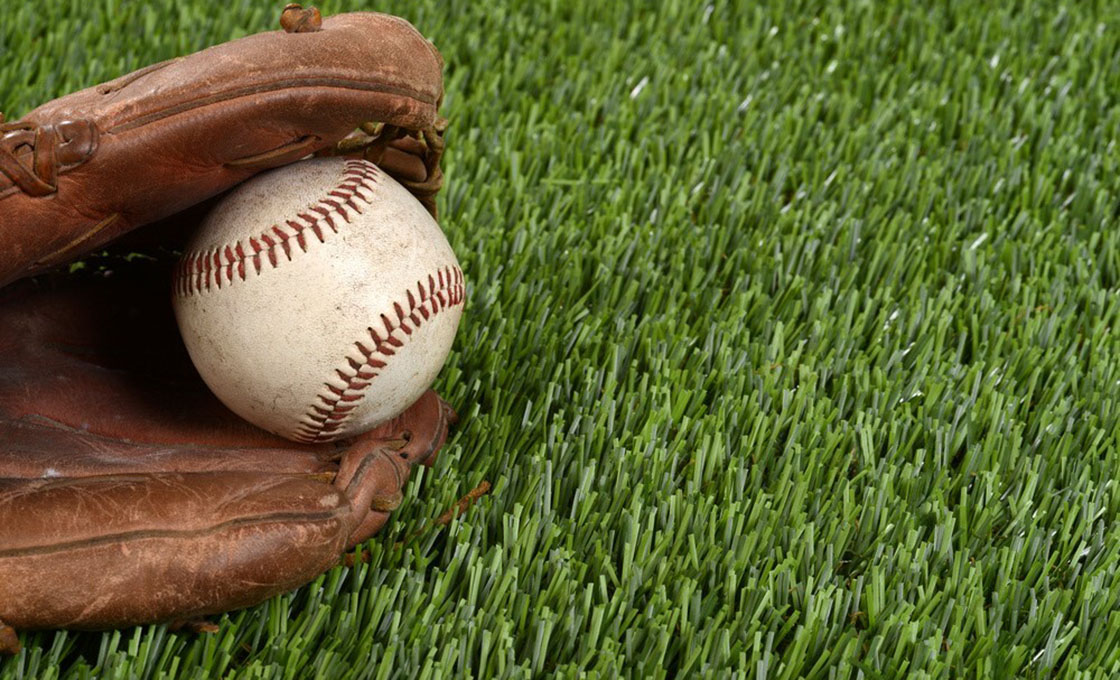
Baseball places unusual demands on seam work. Outfield-to-infield transitions, base-path seams and warning-track borders must all be flush and secure — any lip will alter a ground ball’s path at game speed.
Perforated backing ensures water drains through the carpet in both zones, and UV-stabilized PE fibers resist degradation under prolonged sun exposure — important for open-air stadiums and roofed venues alike. Regular brushing and infill top-up, particularly in sliding zones near bases, keep the field performing through its full service life.
Baseball surfaces are designed zone by zone rather than as a single carpet: the infield skin, base paths, home-plate area, outfield grass and the warning track each demand different pile heights and densities. A true, predictable bounce on batted balls and clean ball release off the turf are the two qualities players notice first. Synthetic surfaces also end the rain-out problem — mud in the base paths — because the field stays playable right after a storm.
Yes. Many facilities convert only the infield and base paths to synthetic turf and keep a natural outfield, or the reverse. Hybrid builds control cost while eliminating the areas that wear out or turn to mud first.
A dense, short pile gives the most consistent hop because the ball cannot dig into the surface. Facilities that switch from natural grass usually cite the elimination of bad hops in the base paths as the biggest gameplay difference.
The outfield needs 40–50 mm pile for natural-grass appearance and true ball roll, while the infield needs 12–20 mm short-pile for fast, low-bounce ground-ball response. Using the same product in both zones would compromise ball behavior in one or both areas. Relyir supplies both products from the same factory for color and lot consistency.
Both approaches work with the Relyir system. Clay cutouts at the pitcher’s mound and bases give the traditional feel preferred by advanced players. Full-turf infields using clay-colored short-pile turf reduce maintenance and are popular at college and training facilities. We supply the turf for either configuration.
The warning track is a contrasting short-pile or clay-colored strip at the outfield edge that gives outfielders a tactile and visual cue they are approaching the wall. It can be installed using a different colorway of the same short-pile product, keeping installation methods consistent across the full field.
Yes. Softball fields share the same two-zone turf system as baseball, with shorter outfield dimensions. Many community and school facilities spec the same Relyir products for both sports, with line markings for each game tufted into the carpet.
Standard rolls are 4 × 25 m or 2 × 25 m with a maximum width of 5 m. Base-path lines, foul lines and team logos can be tufted directly into the carpet during production. Custom colors for the warning track and infield zones are available on request.
Plan regular brushing in both zones to keep fibers upright and infill level, extra attention to sliding zones near bases where infill displacement is greatest, and periodic seam inspections at zone transitions. Relyir provides maintenance guidance with every installation package.
Yes. Samples are free of charge — you only cover the shipping. Standard swatches are 20 × 20 cm and we typically send three to four models per project so you can compare pile heights and colors side by side. Standard samples ship via DHL or FedEx within 4–6 days; custom-matched samples add 10–15 days of production.
Yes. Choose between two options: delivered to your destination port, with export customs clearance in China, international ocean freight and cargo insurance included in one all-inclusive cost; or delivered to a Chinese port if you prefer to work with your own freight forwarder. Other delivery arrangements can be accommodated on request.
Orders range from single rolls for smaller installations to full container loads for large developments. Roll sizes of 2 m, 4 m and 5 m widths (25 m length) cover most layouts, and custom dimensions are produced to order. Volume pricing applies as order size increases.
Send your field dimensions, zone layout and target timeline. Our export team replies with model recommendations, specification sheets and factory-direct pricing within 12 hours — typically 30–50% below international equivalents..
 English
  Arabic
  French
  German
  Portuguese
  Russian
  Spanish