
Relyir Grass
Factory-direct artificial grass since 2006 — full customization, samples and fast quotes.
Putting Green Systems
15 mm curled-yarn turf for commercial and residential putting courses. Factory-direct from Relyir since 2006.
Beyond the Single-Hole Green
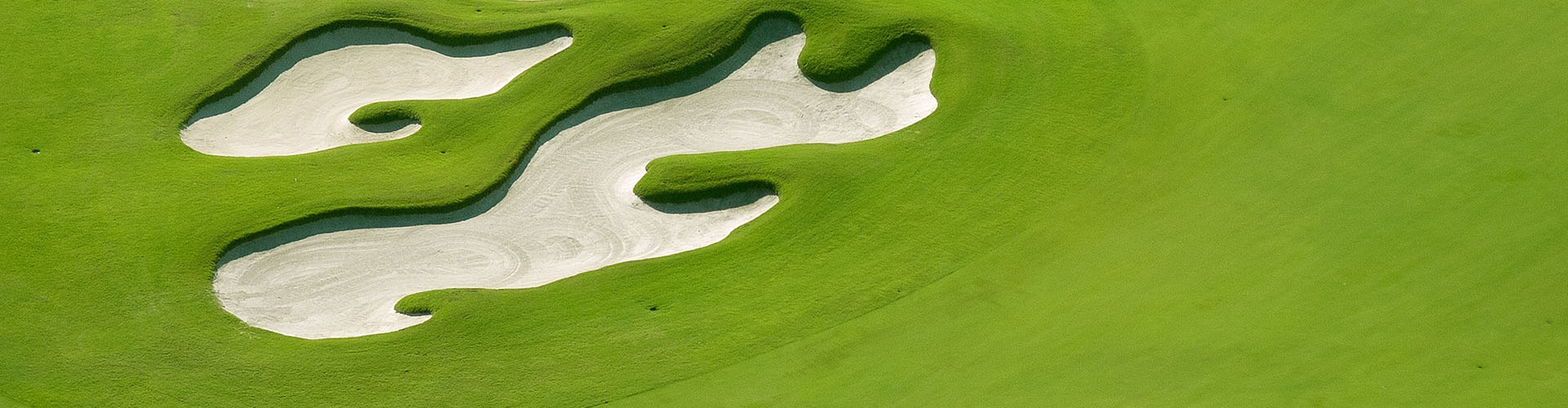
A putting course transforms a flat or graded area into a multi-hole practice facility. Resorts, golf academies and residential communities use these to offer a complete putting experience without the footprint of a full course.
A well-designed putting course incorporates uphill, downhill and sidehill putts across 6 to 18 holes. Each hole presents a different read, building the green-reading skills that single-hole practice cannot replicate.
For resorts and entertainment venues, a putting course is both an amenity and a revenue generator. Ticketed putting circuits, corporate events and family activities turn the green into a destination, not just a practice area.
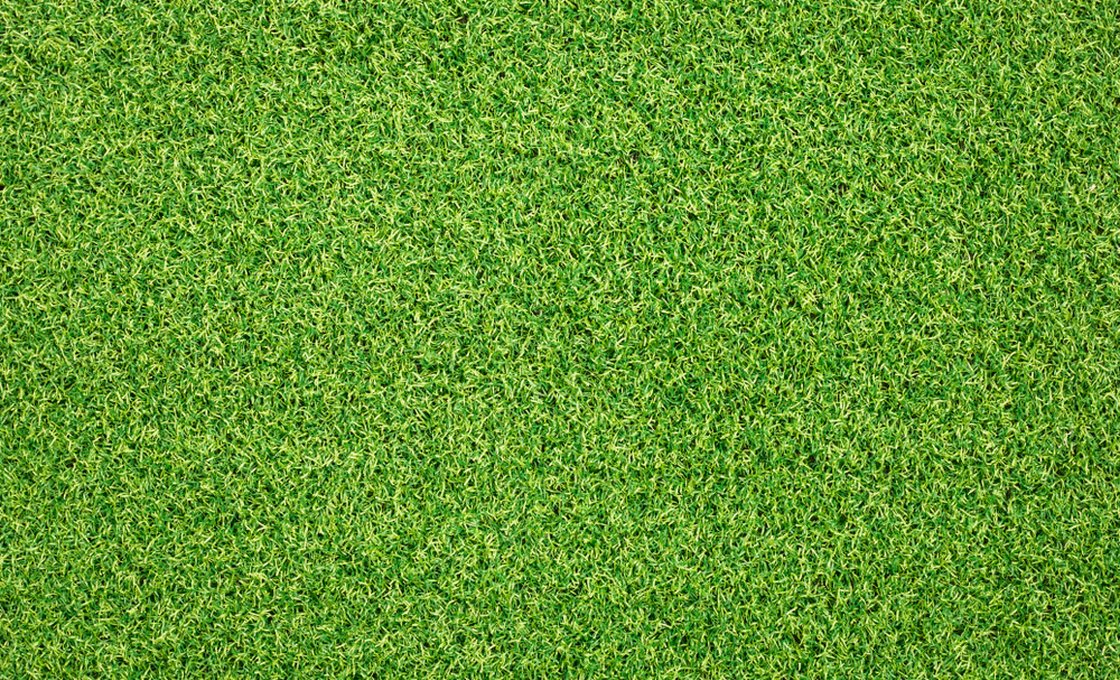
Public-access putting courses see hundreds of rounds per week. The 10,500 tufts/m² density of the Sunny Curly 1525 platform is engineered to resist the foot-traffic compaction that flattens lesser surfaces around high-wear cup positions.
Product Range
A multi-hole course demands more consistency than a single green: every cup has to behave like the last, across a surface big enough to walk.
Course Architecture
A putting course is more than a large green with multiple holes cut into it. The best designs use terrain — real or constructed — to create a sequence of putts that test different skills. A three-footer straight uphill. A twenty-footer with a double break. A downhill slider that demands touch over aggression.
Relyir supplies the turf; the course routing is a collaboration between your designer and our factory. We receive the base contour plan, cut panels to follow the shapes, and tuft cup positions at the specified locations. Panel seams are planned to fall in low-traffic transition zones, not across putting lines.
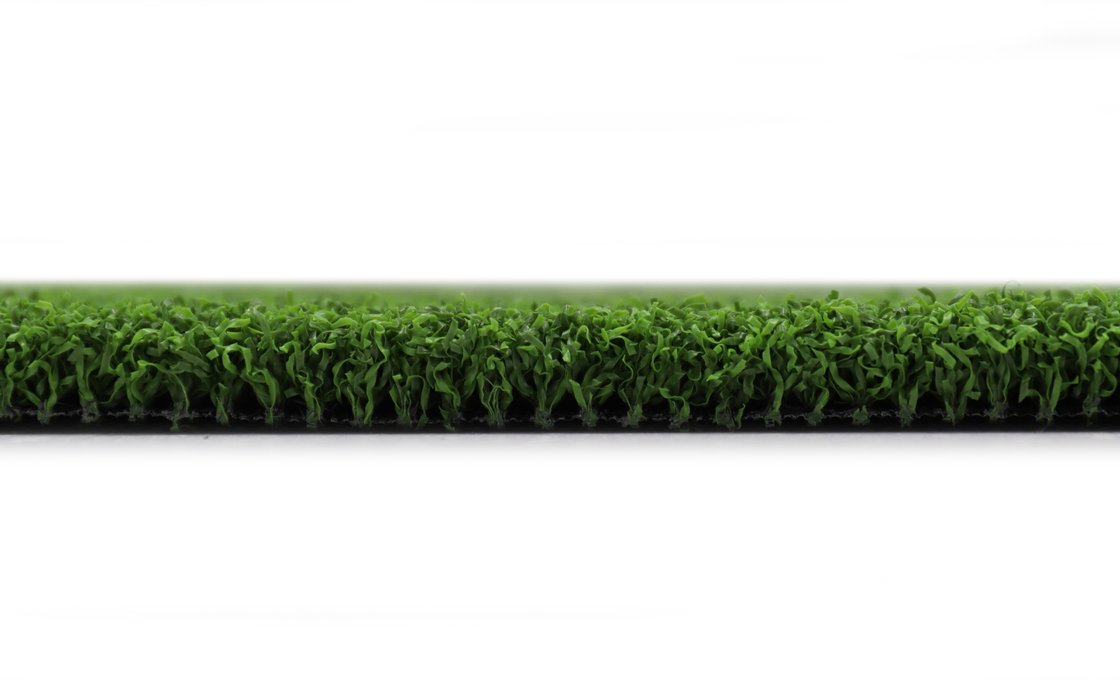
The 15 mm pile height delivers stimp speeds in the 9–12 range depending on sand infill depth. For putting courses aimed at skilled players, less sand gives a faster, more demanding surface. For family-friendly resort courses, a deeper sand fill slows the pace and makes the experience more forgiving.
Fringe surrounds and transition zones define the visual character of a putting course. Relyir supplies longer-pile fringe turf from our landscaping series (35–60 mm options) in contrasting greens, creating the clean edge that separates putting surface from rough. Bunker zones can be tufted in tan or cream fiber to simulate sand without the maintenance.
Walkway borders, tee markers and signage zones are tufted in contrasting colors or pile heights at the factory, eliminating the need for painted lines that fade and need reapplication. The result is a putting course that looks designed, not decorated.
Factory Direct from Jiangsu
Relyir has manufactured artificial grass in Jiangsu since 2006. Every step — from raw PE pellets to finished course panels — runs on-site, controlling quality and holding pricing 30–50% below international equivalents.
All eight production stages are managed in-house. The automated sports turf line, commissioned in 2015, lifted production capacity by 150% and tightened consistency across orders — critical when a putting course requires multiple rolls matched for color and density.
Putting course projects involve panel planning, cup-position tufting and multi-color fringe integration. Our design team works from your routing drawings and ships labeled, sequenced panels ready for on-site assembly. The export team has shipped to more than 500 customers across 50+ countries since 2009.
Every order is produced to specification — pile height, density, blade shape and color, backing composition and roll dimensions are all configured to your project requirements.

Installation Build-Up
A putting course installation is a multi-phase project. Base shaping is the most skill-intensive step — the contours you build here define the character of every hole.
Excavate to 150–250 mm depth. Build a compacted aggregate base with engineered contours — slopes, tiers and swales shaped to your course design. Install drainage pipes in low points.
Apply a 25–50 mm layer of decomposed granite or fine aggregate over the base. Laser-grade or hand-screed to the design contours. This layer determines the final surface smoothness.
Lay sequenced panels over the graded base. Seam with adhesive and tape, following the planned seam map. Cut cup holes, install fringe borders and secure all perimeter edges.
Brush sand infill into the surface at the specified rate. Install cup sleeves and flagsticks. Test each hole for ball speed and break, adjusting sand depth where needed to fine-tune stimp readings.
Putting courses see concentrated foot traffic around cup positions. Rotate cup locations regularly to distribute wear evenly across the surface. Brush the green weekly to keep fibers upright and sand levels consistent.
Annual maintenance includes a deep brush and sand top-up, seam inspection, and drainage verification. The UV-stabilized PE fibers maintain their color and structural integrity through years of sun exposure and foot traffic.
A putting course is a sequence of designed holes — contouring, run-offs, multiple pin positions — so the turf specification follows the architecture: greens surfaces for the targets, fringe and fairway products for the approaches and run-offs. Entertainment venues and resorts use multi-hole courses as an attraction, which puts traffic tolerance and consistent speed on every hole at the top of the requirement list, because a course plays badly if one green rolls slower than the rest.
Popular builds range from 3-hole backyard layouts to 9- and 18-hole course designs at resorts and entertainment venues. Hole count is a space and programming decision; surface consistency across all holes is what makes the course feel professional.
Yes. The turf conforms to shaped base construction, so contours, tiers and run-offs are built into the base first and the carpet follows. Break strength is a design choice made with your installer before we produce to the layout.
A 6-hole putting course typically fits in 100–200 m². An 18-hole adventure-style course can require 300–500 m² depending on hole length and spacing. We work from your site plan and design the course to fit the available footprint.
Yes. The 10,500 tufts/m² density is designed for sustained foot traffic. For high-volume venues, we recommend rotating cup positions weekly and scheduling annual sand top-up and deep brushing to maintain surface consistency.
Breaks are built into the base during construction — the aggregate sub-base is shaped with slopes, tiers and swales before the turf is laid. The turf itself lies flat; it is the base contour that creates the putting challenge. We review your contour plans and advise on panel layout.
Turf pricing falls within the general range of $7–$60 per square meter depending on model and customization. Total project cost depends on base construction complexity, fringe and bunker elements, and site access. Contact us with your dimensions for a detailed quotation.
Lighting is handled by your local contractor — the turf surface is compatible with any standard outdoor lighting system. We recommend low-glare LED fixtures positioned to illuminate the putting surface evenly without creating shadows that affect ball reading.
Yes. Samples are free of charge — you only cover the shipping. Standard swatches are 20 × 20 cm and we typically send three to four models per project so you can compare pile heights and colors side by side. Standard samples ship via DHL or FedEx within 4–6 days; custom-matched samples add 10–15 days of production.
Yes. Choose between two options: delivered to your destination port, with export customs clearance in China, international ocean freight and cargo insurance included in one all-inclusive cost; or delivered to a Chinese port if you prefer to work with your own freight forwarder. Other delivery arrangements can be accommodated on request.
Orders range from single rolls for smaller installations to full container loads for large developments. Roll sizes of 2 m, 4 m and 5 m widths (25 m length) cover most layouts, and custom dimensions are produced to order. Volume pricing applies as order size increases.
Share your site dimensions, hole count and design vision. Our team replies with turf specifications, panel layout recommendations and factory-direct pricing within 12 hours — typically 30–50% below international equivalents..
 English
  Arabic
  French
  German
  Portuguese
  Russian
  Spanish