
Relyir Grass
Factory-direct artificial grass since 2006 — full customization, samples and fast quotes.
Sports Turf Systems
50 mm PE monofilament engineered for the scrum impacts and high-speed running demands of rugby. Factory-direct from Relyir since 2006.
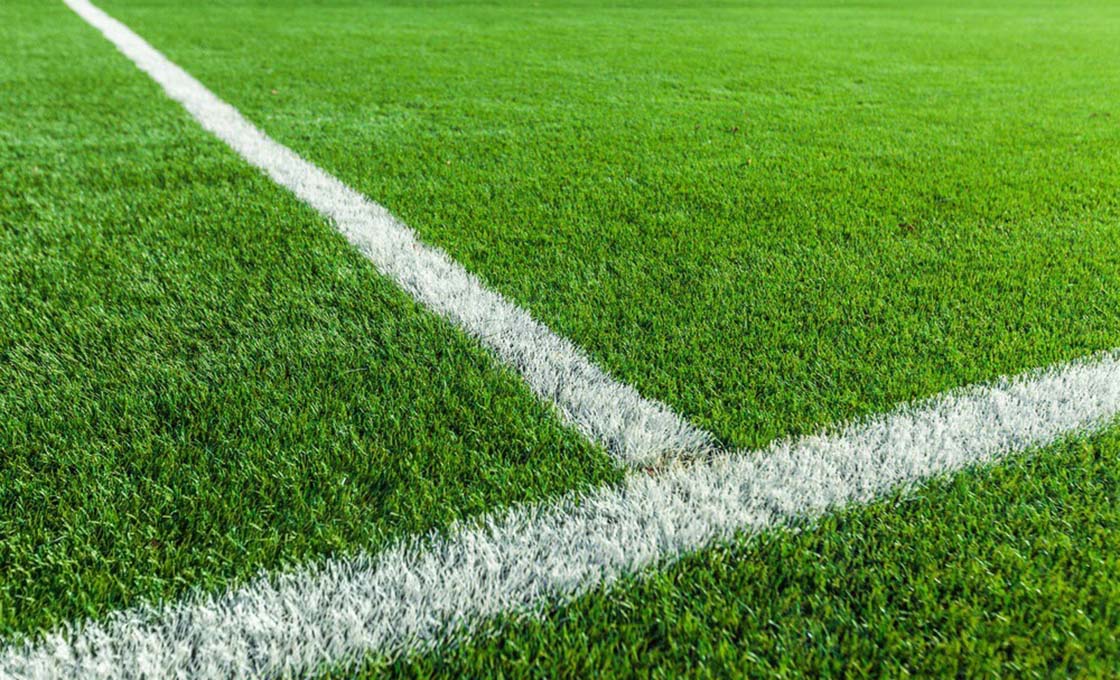
Why Specify 50 mm Monofilament
Rugby places the strictest head-injury and skin-abrasion requirements on any artificial surface. World Rugby Regulation 22 sets an impact attenuation threshold that few sports approach. Every Relyir rugby specification is developed with those benchmarks in mind.
Regulation 22 requires an installed-field HIC of at least 1.45 m critical fall height — among the toughest head-safety thresholds in sport. A 50 mm pile combined with a shock pad is the standard route to achieving that value on the installed system.
Rugby’s sliding tackles and ground-level contact demand controlled skin friction. PE monofilament fibers produce measurably lower abrasion than fibrillated yarn, and the 50 mm pile depth cushions the contact zone between skin and infill.
Scrums and mauls concentrate enormous static and dynamic forces on a small area of turf. Dense 10,500 tufts/m² with reinforced three-layer backing resists the fiber displacement and infill migration those repeated set-pieces cause.
Product Range
Scrums and rucks load a pitch sideways rather than straight down, which is why these models use mesh-reinforced backing and dense monofilament that resists tearing under shear.
 Entry
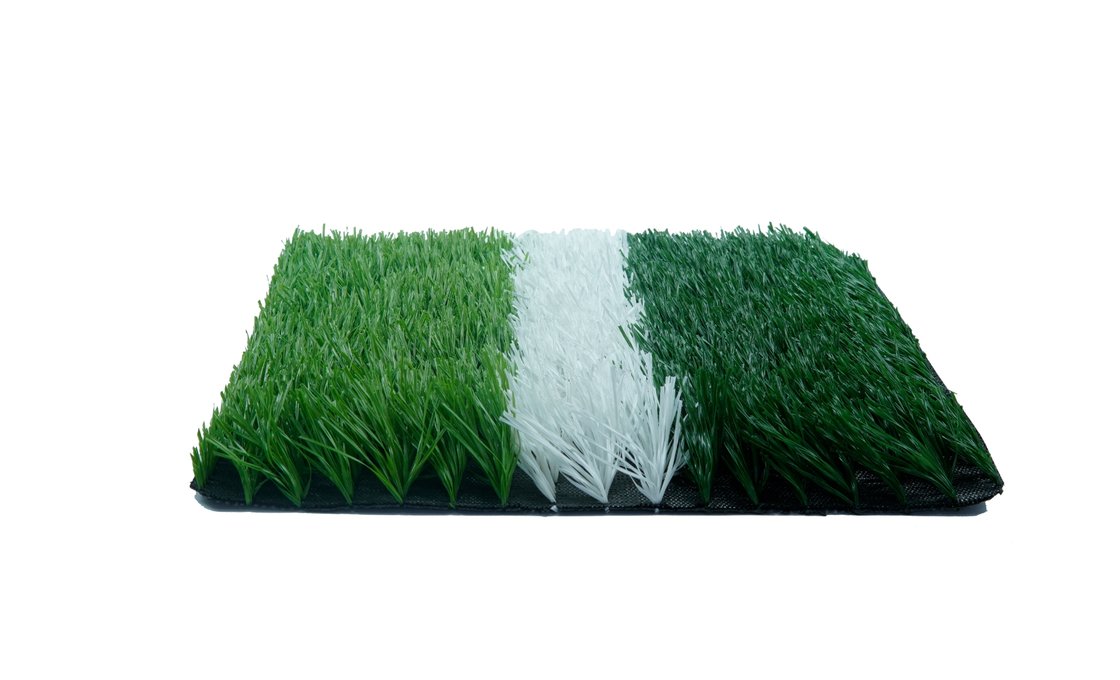
Tenacity Mono 5020 Duo
50 mm · S shape Monofil PE · 10500 stitches/sqm
Learn More
Entry
Tenacity Mono 5020 Duo
50 mm · S shape Monofil PE · 10500 stitches/sqm
Learn More
 Entry
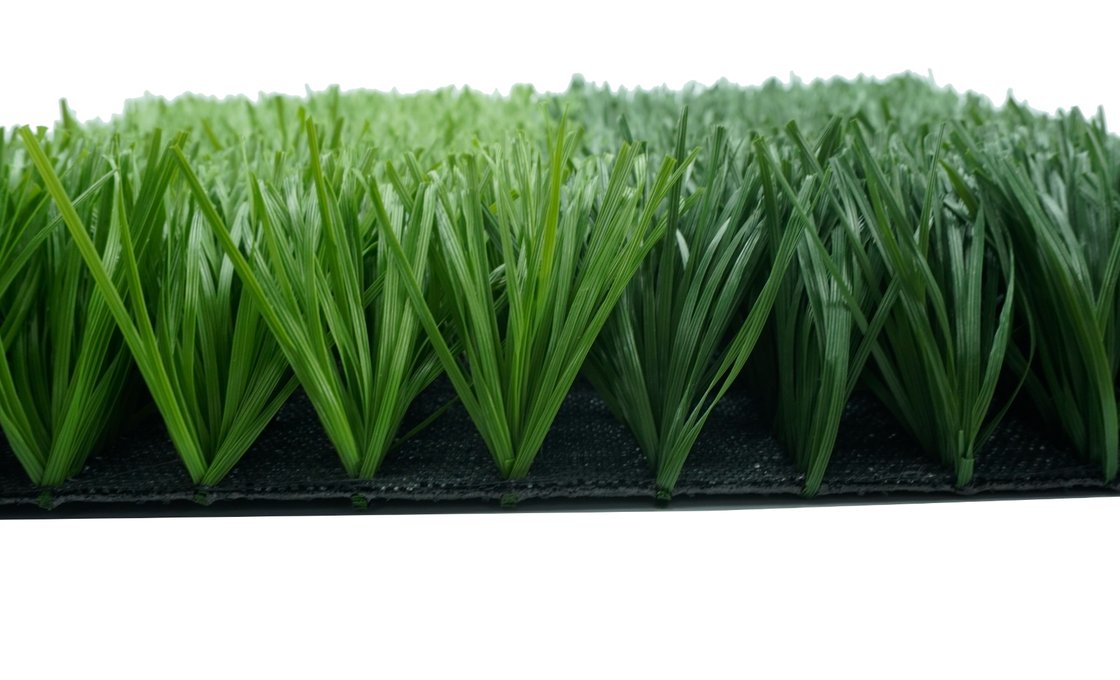
Tenacity Mono 5020 Marking
50 mm · PE-PagodaShape · 10500 stitches/sqm
Learn More
Entry
Tenacity Mono 5020 Marking
50 mm · PE-PagodaShape · 10500 stitches/sqm
Learn More
 Entry
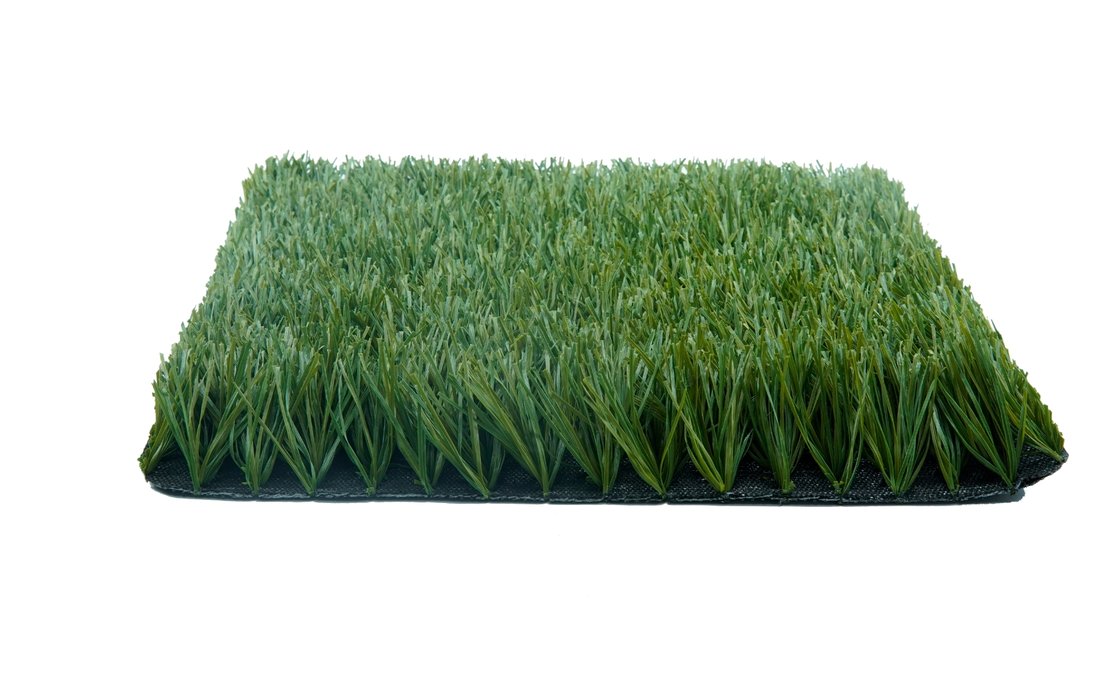
Tenacity Pagoda 5020
50 mm · PE+PP-PagodaShape · 10500 stitches/sqm
Learn More
Entry
Tenacity Pagoda 5020
50 mm · PE+PP-PagodaShape · 10500 stitches/sqm
Learn More
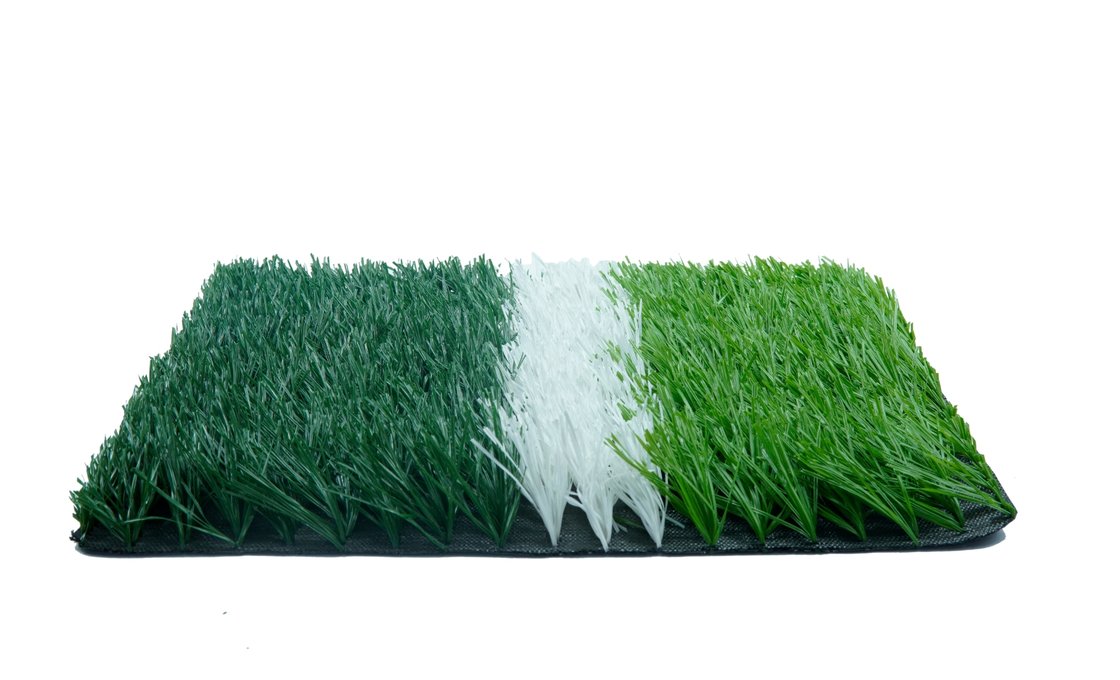 Entry
Tenacity S 5020
50 mm · S shape Monofil PE · 10500 stitches/sqm
Learn More
Entry
Tenacity S 5020
50 mm · S shape Monofil PE · 10500 stitches/sqm
Learn More
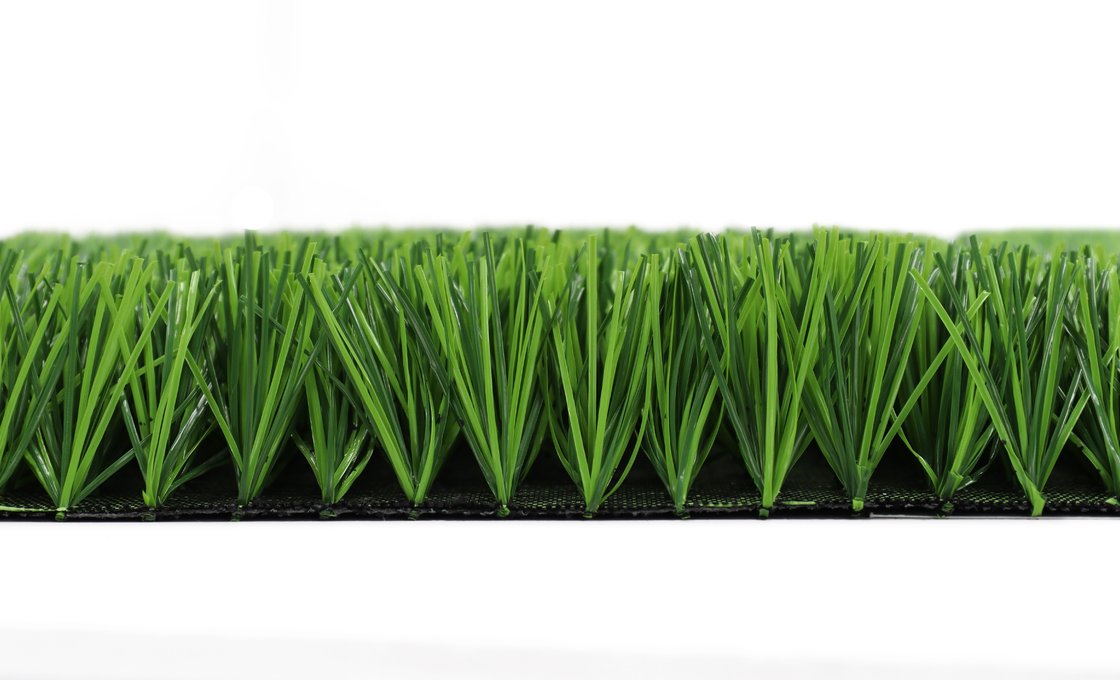 Advanced
Glory Spine 5018
50 mm · U with Spine shape Monofil PE · ,11340 stitches/sqm
Learn More
Advanced
Glory Spine 5018
50 mm · U with Spine shape Monofil PE · ,11340 stitches/sqm
Learn More
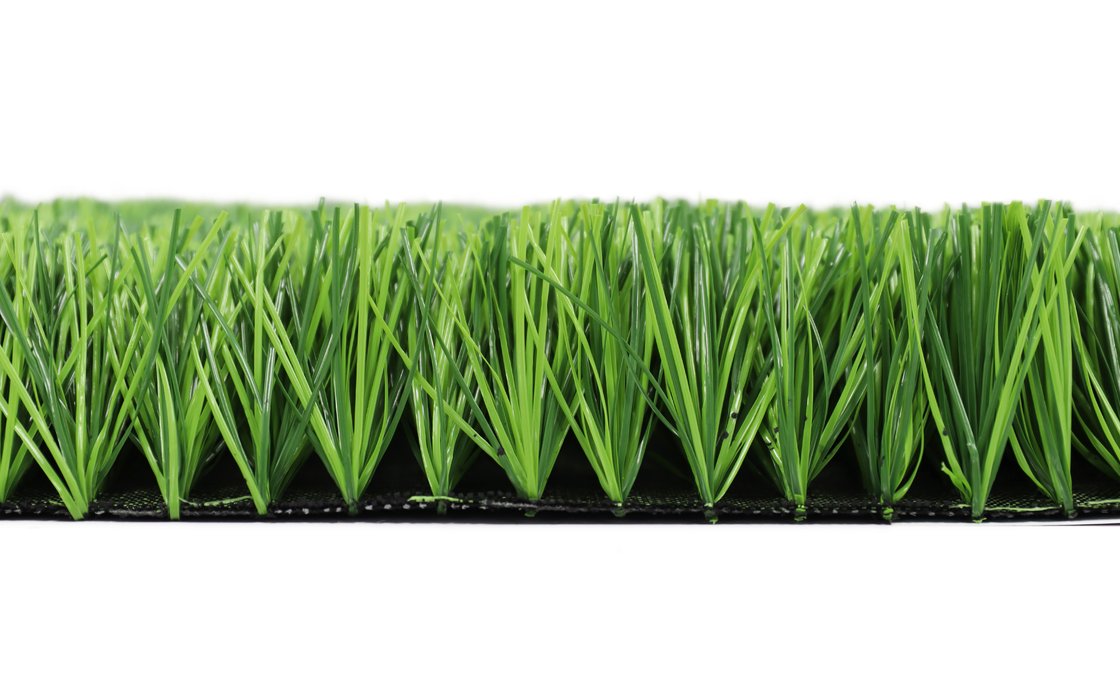 Flagship
Ultra Spine 6018
60 mm · U with Spine shape Monofil PE · ,11340 stitches/sqm
Learn More
Flagship
Ultra Spine 6018
60 mm · U with Spine shape Monofil PE · ,11340 stitches/sqm
Learn More
Performance Design
Rugby’s defining characteristic — full-body contact at speed — makes it the most demanding sport for artificial surface safety. World Rugby Regulation 22 is the governing framework: it specifies laboratory and field tests for shock absorption, energy restitution, vertical deformation, head-impact attenuation (HIC), rotational resistance, ball rebound and skin friction.
The HIC requirement is the headline challenge. On an installed field, the surface must demonstrate a critical fall height of at least 1.45 meters — meaning a player’s head can survive an impact from that height without exceeding the injury threshold. Achieving this on artificial turf almost always requires a shock pad beneath the carpet, paired with controlled infill depth.
Regulation 22 also mandates retesting within two years of installation, and major-event venues may be tested within three months. This retesting cycle means the turf system must hold its performance characteristics through seasons of play, not just on day one.
Skin abrasion is another Regulation 22 parameter that sets rugby apart. Sliding tackles and ground-level rucks expose bare skin to fiber friction. PE monofilament produces measurably lower abrasion values than fibrillated yarn, and the 50 mm pile depth ensures a cushioned interface between skin and the sand-rubber infill column.
Relyir supplies the turf product with full specification documentation and supports your field-test laboratory through the Regulation 22 compliance process.
Factory Direct from Jiangsu
Relyir has manufactured artificial grass in Jiangsu since 2006. Every step — from raw PE pellets to finished rolls — runs on-site, which is how we control quality and hold pricing 30–50% below international equivalents.
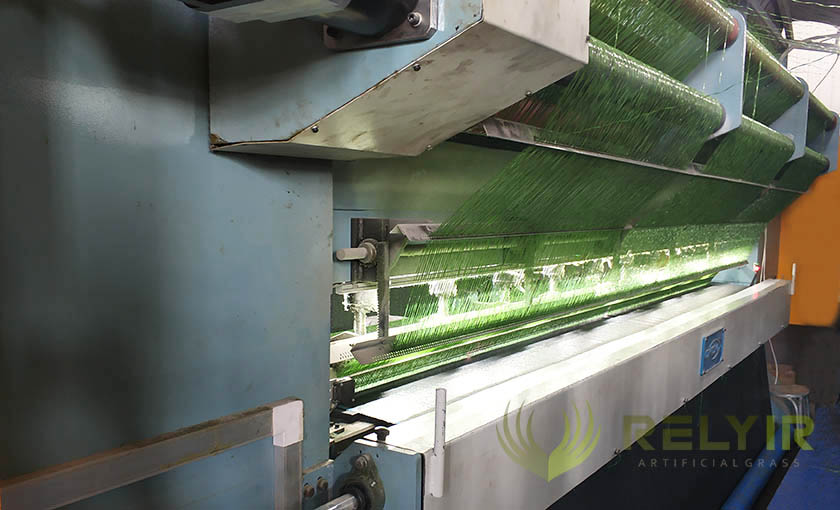
All eight production stages are managed in-house, eliminating the quality gaps that arise when compounding, tufting and coating happen in separate facilities. The automated sports turf line, commissioned in 2015, lifted production capacity by 150% and tightened consistency across high-volume orders.
Customization is built into the line: blade density, pile height and fiber colors are adjusted to each project’s specification, with PP + net and PU backing options. The export team has shipped to more than 500 customers across 50+ countries since 2009 and handles all documentation — from commercial invoices to certificates of origin.
Every order is produced to specification — pile height, density, blade shape and color, backing composition and roll dimensions are all configured to your project requirements.
System Build-Up
The turf roll is one component of a four-layer system. We supply the turf and share build-up guidance with every project so installers achieve the field behavior specified at design stage.
Compacted aggregate or asphalt with engineered drainage — the foundation that manages water and distributes the concentrated loads from scrums and mauls.
Silica sand, typically 20–30 kg/m², brushed into the pile to weigh the system and hold fibers upright. Infill depth is closely controlled for Regulation 22 compliance.
SBR, TPE, EPDM or organic (cork) at 8–15 kg/m². Infill grain size, form and mass must match declared values for Regulation 22 field testing.
Strongly recommended for rugby — the elastic layer beneath the turf is the primary mechanism for reaching the HIC ≥ 1.45 m critical fall height threshold.
Regulation 22 includes field checks for infill depth consistency and infill containment — splash is capped at 3.5%. Perforated backing ensures water moves through the carpet without carrying infill particles to the drainage system.
Because Regulation 22 requires retesting within two years, the turf system must retain its structural integrity through seasons of play. UV-stabilized PE fibers and reinforced three-layer backing resist degradation under sun exposure and the mechanical stress of contact rugby.
Rugby has the strictest surface standard in our industry: World Rugby Regulation 22 governs artificial surfaces for the sport, and compliant systems combine a pile of at least 50 mm with a shock pad beneath the carpet to meet impact and traction requirements. The pad is not optional at compliance level — it is how the surface absorbs the repeated full-body impacts the sport generates. For training areas and multi-use pitches, the same construction logic applies at lower specification.
In summary: a minimum 50 mm pile with a shock pad under the carpet, verified through laboratory and on-site testing for impact, traction and ball behavior. Full match play requires a fully compliant system; training areas have more flexibility.
For regulation compliance, yes — the sport’s bodies mandate it because tackle and ruck impacts are the heaviest of any field sport. For non-compliance uses like PE and training, pads still extend lifespan and improve comfort.
Regulation 22 specifies laboratory and field tests for shock absorption, energy restitution, vertical deformation, head-impact attenuation (HIC ≥ 1.45 m on installed fields), rotational resistance, ball rebound, skin friction and skin abrasion. Pile height must be at least 50 mm, and World Rugby favors 60 mm carpet. Relyir supplies full documentation to support your testing program.
Rugby involves full-body contact at speed — tackles, rucks and mauls — where players’ heads can impact the surface from standing height or higher. The 1.45 m critical fall height requirement reflects this risk. Achieving it almost always requires a shock pad beneath the turf carpet, paired with carefully controlled infill depth.
Yes. Regulation 22 requires field retesting within two years of installation, and major-event venues may be tested within three months. This means the turf system must hold its performance characteristics through seasons of play. Relyir designs its products with long-term performance retention in mind.
Yes. Community rugby pitches frequently share with football. A well-specified 50 mm system with shock pad can serve both codes, making the investment case for dual-use clubs and municipal facilities. Line markings for both sports can be tufted into the carpet during production.
Regulation 22 includes skin friction and skin abrasion parameters because rugby involves frequent ground-level contact. PE monofilament fibers produce measurably lower abrasion values than fibrillated yarn. All five Relyir models use monofilament or monofilament-equivalent construction to address this requirement.
Standard rolls are 4 × 25 m or 2 × 25 m with a maximum width of 5 m. We tuft white line markings and team logos directly into the carpet, and can adjust blade density, pile height and fiber colors to project requirements.
Yes. Samples are free of charge — you only cover the shipping. Standard swatches are 20 × 20 cm and we typically send three to four models per project so you can compare pile heights and colors side by side. Standard samples ship via DHL or FedEx within 4–6 days; custom-matched samples add 10–15 days of production.
Yes. Choose between two options: delivered to your destination port, with export customs clearance in China, international ocean freight and cargo insurance included in one all-inclusive cost; or delivered to a Chinese port if you prefer to work with your own freight forwarder. Other delivery arrangements can be accommodated on request.
Orders range from single rolls for smaller installations to full container loads for large developments. Roll sizes of 2 m, 4 m and 5 m widths (25 m length) cover most layouts, and custom dimensions are produced to order. Volume pricing applies as order size increases.
Send your field dimensions, usage plan and target timeline. Our export team replies with model recommendations, specification sheets and factory-direct pricing within 12 hours — typically 30–50% below international equivalents..
 English
  Arabic
  French
  German
  Portuguese
  Russian
  Spanish