
Start with the sport, not the generation number. That one rule settles the 2G vs 3G artificial turf question for almost every school, club and contractor we hear from. It saves more budget than any discount ever will. The carpet is only ever as right as the game played on it.
A 2G carpet is a short, sand-stabilised surface built for hockey and multi-use games areas. A 3G pitch is a longer, rubber-cushioned system built for football and rugby. Both roll off the same line where we tuft sports and landscape turf, and both raise the same buyer questions week after week. The pages ahead put plain numbers, a side-by-side table and an honest word about 4G claims in one place.
The Short Answer Before the Detail
The generation number describes the carpet technology, not the quality. A bigger number is not a better surface for your sport. 2G remains the standard for hockey because a short, sand-stabilised pile gives the true, fast ball behaviour hockey needs. 3G exists because football and rugby want something closer to natural grass underfoot, with deeper cushioning and more forgiving slides.
So the real question is never 2G versus 3G in the abstract. It is what your users will play, how often, and at what level. With that settled, the technical detail below turns into a checklist rather than a maze. Hockey wants the fast, sand-stabilised carpet; football and rugby want the deeper, rubber-cushioned build that forgives contact. Hold that pairing and every other choice in this guide follows without drama.
What Is a 2G Artificial Turf Pitch?
In the 2G vs 3G artificial turf comparison, the short-pile side is the 2G carpet. It runs typically 13 to 24 millimetres, infilled with silica sand and usually laid over a shock pad. In a sand-filled build the sand is taken to within about 3 millimetres of the fibre tips, so the sand and fibre together form the playing surface. A sand-dressed variant uses a shorter, denser carpet with less sand, sitting partway between filled and unfilled systems. Above both sit irrigated water-based carpets, the non-filled surfaces reserved for the top tiers of hockey.
That short, sand-stabilised structure is exactly what stick-based sports want. The ball runs true and quick, the surface stays predictable in wet weather, and the carpet resists flattening because the sand carries the load.
What Is a 3G Artificial Turf Pitch?
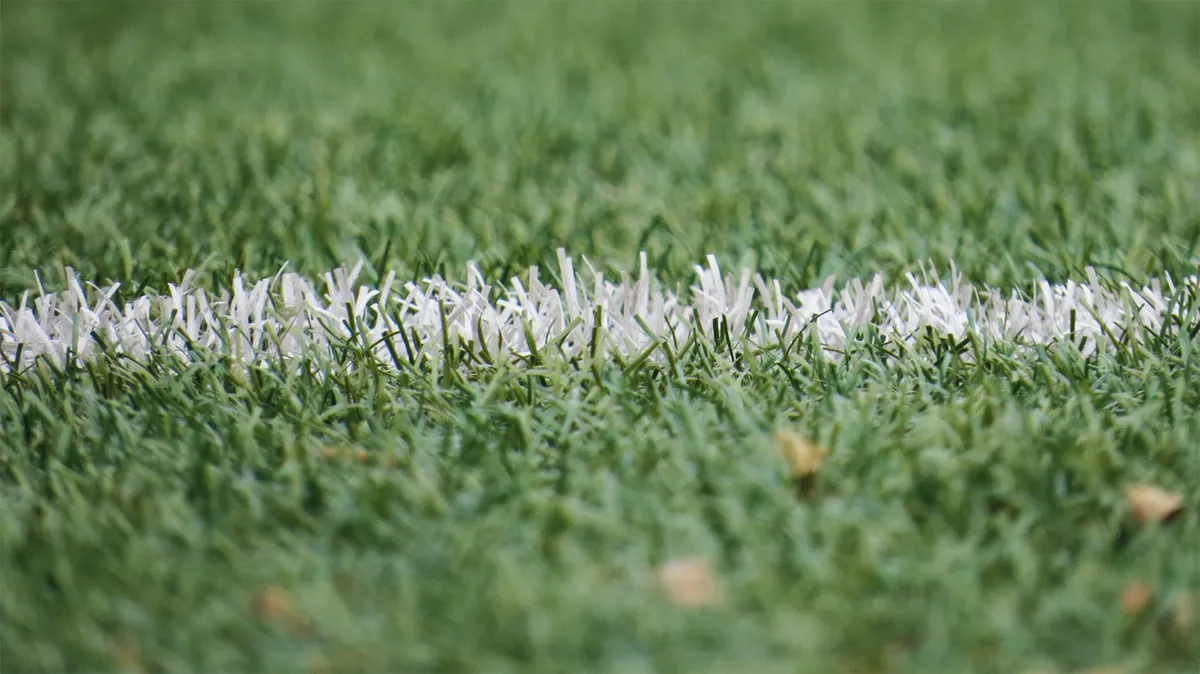
A 3G artificial turf installation uses a much longer pile, usually between 40 and 60 millimetres, filled with a blend of sand and rubber performance infill. The infill normally reaches about two thirds of the pile height, and it does three jobs at once. It props the blades upright, adds cushioning, and provides part of the shock absorption.
The rubber granules are why slides hurt less. They keep the blades upright and make the surface less abrasive, so a player who hits the deck is less likely to burn or scratch. The deeper, cushioned build also returns a bounce and ball roll far closer to natural grass. That is why football and rugby training and specified levels of match play run on 3G.
Side-by-Side: The Numbers That Matter
| Параметр | 2G | 3G |
|---|---|---|
| Высота ворса | 13-24 mm | 40-60 mm |
| Подсыпка | Silica sand (filled or dressed) | Sand plus rubber, about two thirds of pile |
| Shock pad | Common | Common on higher-spec builds |
| Primary sports | Hockey, multi-use games areas | Football, rugby, contact training |
| Поведение мяча | Fast and true for sticks | Closer to natural bounce and roll |
| Ощущение под ногой | Firm, dense | Softer, more forgiving |
Roll width is the quiet cost lever on both systems. Widths of 2m, 4m or 5m at 25m are the factory standard, giving roughly 50, 100 or 125 square meters a roll. On a full-size pitch project, wider rolls mean fewer seams to tape, glue and maintain. That matters more on a 3G artificial turf installation, where every seam is a potential infill migration line. Sports surface options are laid out on our sports artificial grass hub if you want the range view.
One more difference belongs in every comparison of 2G vs 3G artificial turf: the way each surface wears. A sand-dressed 2G carpet flattens in high-traffic lanes first, so the grooming machine spends its time on the penalty-spot equivalents of your site. A 3G pitch wears more evenly across the rubber layer, though fibres at the entry zones and goal mouths eventually lean. Both patterns are normal ageing that a sensible budget absorbs. When you compare two quotes, ask where each surface wears first and what the regeneration plan costs, because those answers tell you more than the headline number.
Which Sports Suit Each Generation
Match the surface to the sport and the pairing is unambiguous, and this is where the 2g vs 3g artificial turf choice gets settled for most buyers. 2G is the recognised standard surface for hockey and the workhorse for multi-use games areas where tennis, netball or general training share the space. 3G is the system the major football and rugby governing bodies approve for training and for specified levels of match play, from club pitches through to professional training grounds.
Put the wrong sport on the wrong generation and the mismatch shows immediately. A football on 2G rolls fast and low but offers almost no cushioning, and slides on sand-filled short pile are hard on skin. A hockey ball on 3G sits down in the long rubber-backed pile and slows unpredictably. Buy for the dominant sport first and let multi-use be the compromise, not the criterion.
Elite use adds one more layer to the split. Professional football and rugby clubs train through the week on 3G even where sanctioned fixtures are played on natural grass, because the surface absorbs the weekly hours. So level of play, not only sport, belongs in the decision.
Правда о маркировках 4G и 5G
Sooner or later a salesperson will offer you a 4G or 5G pitch, usually at a premium. Here is the honest position: those labels describe non-infilled carpet systems, and they are not formally recognised by the main governing bodies. Industry guidance has said plainly that such terms are marketing language, and non-infilled products have not been accepted as suitable football surfaces at the levels 3G serves.
Our view is blunt. Nobody should pay extra for a digit, and every credible manufacturer we know specs by pile, yarn, infill and backing rather than by marketing generation.
Safety: What the Evidence Says
Ask what makes a pitch safe and the honest answer is a system, not a generation number. Shock pad, infill depth, carpet density, base construction and the state of the grooming programme together decide how the surface absorbs impact. That is why a well-kept surface of either generation can outperform a neglected build of the other. It is also why impact performance is specified for the complete artificial turf installation, not the carpet alone.
Safety is also where the 2G vs 3G artificial turf debate gets loud, and where we refuse to oversell. Injury research on infilled surfaces is contested ground. Independent studies have broadly favoured the modern systems, and the approval route for contact sport has survived years of scrutiny. Methods differ between studies, though, so we will not quote figures secondhand. Treat an injury statistic offered as a selling point the way you would treat a generation label.
What buyers can actually manage is the system around the player. Specify the pad and infill depths for the sport, keep the fill levels where the supplier says they belong, and groom on schedule. Everyday habits matter too: wrong footwear and loose debris cause more avoidable incidents than any surface, which is why good facilities post a user code by the gate. A surface that stays even and correctly filled absorbs impact the way it was designed to, and that is the practical safety story.
On the materials themselves the picture is simple. The yarns used in both generations are non-toxic and contain no allergens, and neither surface needs herbicides, pesticides or fertiliser to stay playable.
How Long a Pitch Lasts and Why
How long an artificial turf installation lasts is decided less by the label and more by variables you control. Weekly hours of use set the pace of wear. Climate does the rest through sun exposure, freeze-thaw and storm debris. Maintenance fidelity and infill management complete the set, and they are the two disciplines buyers most often underestimate. Each variable is measurable, and each belongs to the operator more than to the factory.
A school timetable that runs the surface from morning bell to last training session ages any carpet faster than a weekend club schedule. The point is not to frighten anyone off; it is to price the programme honestly.
The generation difference shows up in which variable bites first. A 2G pitch lives by its sand levels, so neglect shows up as an uneven, slow surface long before anything structural fails. A 3G pitch hides wear longer inside its deeper fill, then gives it back all at once when the rubber compacts. Either way, the carpet rarely fails alone; the programme around it does.
So when a quote in your 2G vs 3G artificial turf decision promises a lifetime in years, read it as a forecast built on assumptions you have not seen. The better question for any supplier is which usage hours, climate and maintenance plan the expectation assumes.
Обслуживание, на которое нужно закладывать бюджет
Neither generation is maintenance-free, and budgeting for that honesty pays off. Both need regular grooming to keep the pile upright, drainage checks, and debris removal. The difference is in the filling. A 2G pitch lives or dies by even sand levels, so the sand is brushed and topped up to keep the surface true. A 3G pitch needs the rubber layer de-compacted and replenished where play migrates it.
Whichever you choose, ask the supplier for the grooming schedule and the infill top-up rate with the quote. A pitch price without a maintenance line attached is not a comparable price. That is the single most common way buyers end up with an unfair comparison between two quotes.
Getting a Pitch Approved for Competition
If sanctioned competition sits anywhere on your timetable, build the approval route into the project from day one. The broad path is similar everywhere. A proposed system is laboratory-tested against the standard for its sport, the finished pitch is field-tested as built, and many programmes require periodic retesting to keep the approval current. Leave it to the end and a surface that plays perfectly can still sit ineligible for the fixtures you built it for.
The route differs by sport family. A 2G carpet built for hockey follows the hockey testing path, where sand-filled and sand-dressed surfaces are accepted for specified levels, with the top tiers reserved for irrigated builds. A 3G artificial turf installation follows the football and rugby path, where requirements climb with the level of competition. The higher you aim, the more the testing schedule should shape your budget and your build programme.
Retesting deserves a line of its own, because approvals are not always permanent. Surfaces can be retested on a cycle, so the approval reflects the pitch you actually have today rather than the one that was handed over. Ask any supplier how current a test report stays for the level you are aiming at, and what a retest involves.
The buyer action is the same either way. Ask for independent test reports covering the exact carpet, infill and pad combination in the quote, and have the completed surface field-tested before handover. A tender without independently certified performance proof is not a comparable tender, whatever the generation on the label.
Match the Generation to Your Sport
Name the sport, the weekly user mix and the area, and the pile and infill system gets specced to match. You also get roll coverage for your layout and a free 20 x 20 cm pack to test the surface first.
Budgeting: What the Project Really Costs
The carpet is one line of an artificial turf installation budget, and rarely the decisive one. The capital side also carries infill sand and rubber, a shock pad where the sport calls for one, earthworks and base construction, drainage, perimeter fencing, floodlighting where needed, and labour. The carpet line item is quoted from our artificial grass roll range. Site conditions swing this side hardest, because poor ground and drainage problems surface during the earthworks, at the exact moment when changes cost the most.
A flat, free-draining site with good access is a different project from a sloping field of heavy clay, even with identical carpets. Ask what each price assumes about the ground before you rank them.
The operating side deserves its own line from year one. That means a maintenance contract or grooming equipment, infill top-ups as play migrates material, and periodic retesting wherever certification has to stay current. Put the upkeep in the budget before the build, not after. A project that funds the build and forgets the upkeep is the most common way a good surface ends up disappointing its owners.
Funding falls into a few broad types: own capital, borrowing, leasing that spreads the cost against usage income, and community fundraising or grants where a local programme exists. Many facilities blend them. Whichever mix fits, compare quotes as whole-project numbers rather than carpet prices. For reference, factory carpet pricing runs $7-60 per square meter, indicative until grade and quantity are fixed, so treat a carpet-only bargain with care.
How We Would Decide Between Them
If a client asked us today, we would run three questions in order. What sport dominates the timetable, and at what level? What is the realistic user mix across the week? Then what budget covers both the install and the grooming it will actually need? The answers pick the generation almost by themselves, which is why we resist pricing an artificial turf installation before we know the sport.
From the factory side, the 2g vs 3g artificial turf spec that matters is the system, not the label. For a 3G-style build we would pair a long-pile carpet with the right sand and rubber plan. Our own carpets use polyethylene monofilament with a PP thatch layer over a PP plus net backing, with optional PU coating for stability. Relyir ships all of this direct from the factory at an indicative $7-60 per square meter depending on grade and type. A free 20 x 20 cm pack arrives in four to six days, a custom spec takes ten to fifteen days longer, so feel the pile before you commit.
Часто задаваемые вопросы
Is 3G better than 2G?
Neither is better in the abstract. 3G suits football and rugby; 2G is the standard for hockey and multi-use games areas. The sport decides.
Can you play football on a 2G pitch?
You can, but it is not what 2G is built for: the short sand pile gives little cushioning and slides are abrasive. Football belongs on 3G.
What infill does a 3G pitch use?
A blend of sand and rubber granules, normally filled to about two thirds of the pile height. The rubber props blades up and cushions slides.
Are 4G pitches real?
4G and 5G are marketing labels for non-infilled systems. They are not formally recognised by the main governing bodies for football at 3G-served levels.
Is 2G cheaper than 3G?
Usually yes at the carpet line: a shorter pile and no rubber infill cost less. But compare whole quotes, because base works, shock pad and drainage often differ more between bids than the turf does.
Can you convert a 2G pitch to 3G?
Not by adding rubber on top. A 3G build needs a longer pile carpet, a deeper infill system and often a different shock pad, so conversion is a replacement project rather than a top-up.
 Russian
  English
  Arabic
  French
  German
  Portuguese
  Spanish