
La mayoría de las cotizaciones de césped artificial llegan como un número seguro al pie de la página. Todo lo que produce ese número permanece invisible, repartido en una docena de líneas que el instalador nunca imprime. La profundidad de la base, la retirada de escombro, la corrección del drenaje y las horas de cuadrilla se ocultan todas dentro de la suma.
Amplía la visión y el propio césped suele ser la parte menor de la factura. La excavación, la subbase, la compactación y la mano de obra normalmente pesan más que el césped, por eso dos jardines similares pueden tener etiquetas de precio muy distintas. Si quieres el lado material de la ecuación, lee primero cuánto cuesta el césped artificial por pie cuadrado; esta pieza aborda la cuenta de ingeniería que realmente contratas.
Qué impulsa el costo de instalación (y qué oculta el precio del césped)
Empieza por el dato estructural que organiza todo el costo de instalación de césped artificial. El rollo de césped es una línea entre varias, y cuánto cuesta el césped artificial por pie cuadrado es donde la mayoría de compradores comienza. El equipo, la cuadrilla y el subsuelo cargan el resto. Un propietario que compara solo el precio del rollo compara el trozo más pequeño de una tarta más grande.
Tres fuerzas configuran la forma de ese precio. Las condiciones del terreno deciden cuánto suelo se mueve. La especificación de la base decide cuánto tiempo permanece la superficie lisa. El acceso y la forma deciden cuántas horas de cuadrilla consume el trabajo. Cambia cualquiera y el número se desplaza, incluso cuando el rollo de césped permanece idéntico.
Esta cuenta cubre seis bloques que conviene cuestionar línea por línea: preparación del terreno, base y compactación, mano de obra, artículos de suministro, tarifas ocultas y cómo leer una cotización. Ningún total titular aparece aquí a propósito. Una cifra única oculta exactamente la estructura que esta pieza existe para exponer.
El lado de ingeniería de la factura, línea por línea
Una estimación competente lista componentes, no una suma global. La tabla siguiente clasifica las líneas de ingeniería según el peso de presupuesto que cada una arrastra, para que veas dónde una cotización se debilita en silencio. Se trata de estructura y peso relativo, no de una lista de precios; la cifra material vive en la guía hermana.
| Partida | Peso en presupuesto | Qué compra esta línea |
|---|---|---|
| Preparación del terreno y excavación | El más pesado | Retirada de la superficie antigua, excavación a profundidad, conformación de la pendiente para el agua |
| Roca de base y compactación | El más pesado | Agradable triturada a profundidad, compactada en capas |
| Tejido barrera contra maleza | Menor | Capa de separación que frena el crecimiento que empuja hacia arriba |
| Material de césped | Guía aparte | Suministro de rollo en stock, preciado en la guía de materiales hermana |
| Cinta de unión y adhesivo | Menor | Unión de rollos separados en una superficie continua |
| Material de infill | Moderado | Lastre que estabiliza las fibras y añade peso |
| Mano de obra profesional | El más pesado | Tiempo de cuadrilla durante toda la construcción |
| Retiro de desechos | Moderado | Transporte de escombro y material antiguo fuera del sitio |
Lee la tabla de las líneas más grandes hacia abajo. Base, mano de obra y retiro juntos superan por un amplio margen la línea del césped, y sin embargo atraen la menor atención en una cotización breve. Los compradores que solo buscan la línea más pequeña protegen la parte equivocada del presupuesto y dejan la obra estructural expuesta a recortes.
Cuando preguntes por los costos de instalación de césped artificial, solicita por escrito la profundidad de la base en milímetros y el método de retirada. Esas dos respuestas separan una cotización construida para durar de una construida para ganar el trabajo, y ninguna aparece en una sola cifra al pie.
Preparación del terreno y excavación: el dinero bajo tierra
La preparación es donde el suelo se rehace. Los trabajadores retiran la superficie existente, excavan un lecho y lo conforman para que el agua salga del jardín en vez de acumularse. La excavación y la retirada de escombro por sí solas suelen costar entre $1.00 y $2.50 por pie cuadrado, y esa cifra se repite en la mayoría de las estimaciones que verás.
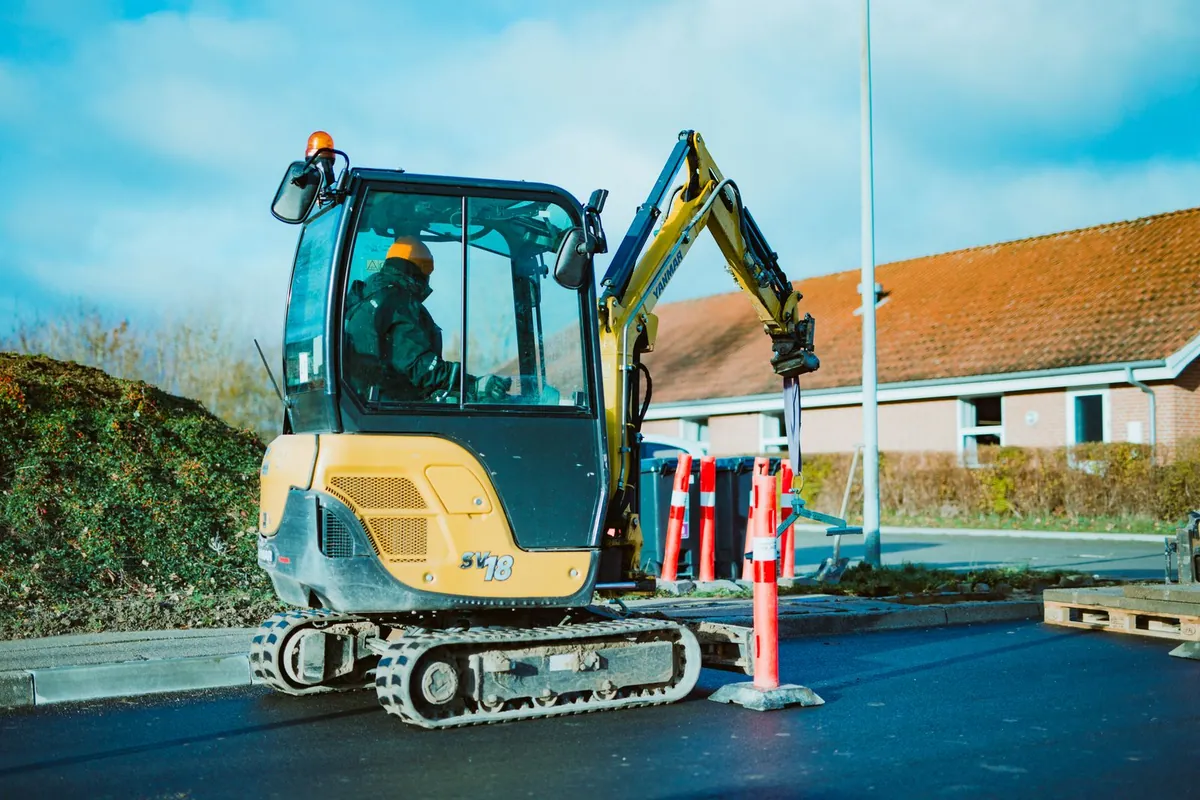
Un suelo difícil dispara esta línea rápidamente. Las pendientes exigen terrazas y movimiento extra de suelo. Las raíces de árboles y las rocas requieren romper y retirar. Un acceso deficiente significa que las máquinas se quedan en casa y los trabajadores llevan material a mano. Cada condición añade horas antes de que caiga un solo rollo.
El escombro es la línea más olvidada. Retirar el césped antiguo, el suelo y los restos a menudo cuesta tanto como instalar la superficie nueva, y una tarifa de retirada puede aparecer tarde si nadie preguntó por ella al principio. Pregunta cuántas camiones produce el trabajo y quién paga las tarifas de vertedero antes de comparar una sola cifra.
Materiales de base y compactación: donde se gana la calidad
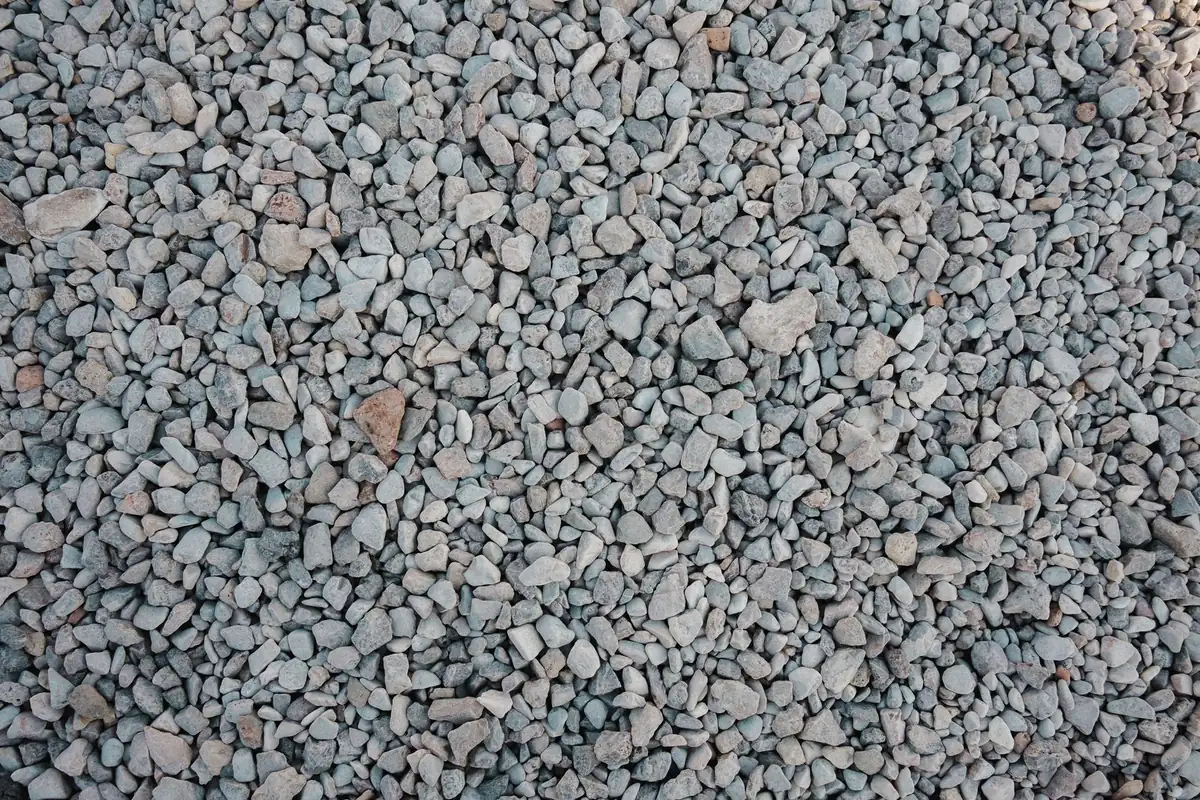
La base es la capa que decide si un jardín permanece liso durante toda su vida útil. Toda instalación de césped artificial comienza sobre ese agregado, que llega por tonelada, a unos $40 a $60 por tonelada para la roca en sí. La preparación profesional de la base, es decir, extender y compactar en capas controladas, ronda los $1.50 a $3.00 por pie cuadrado.
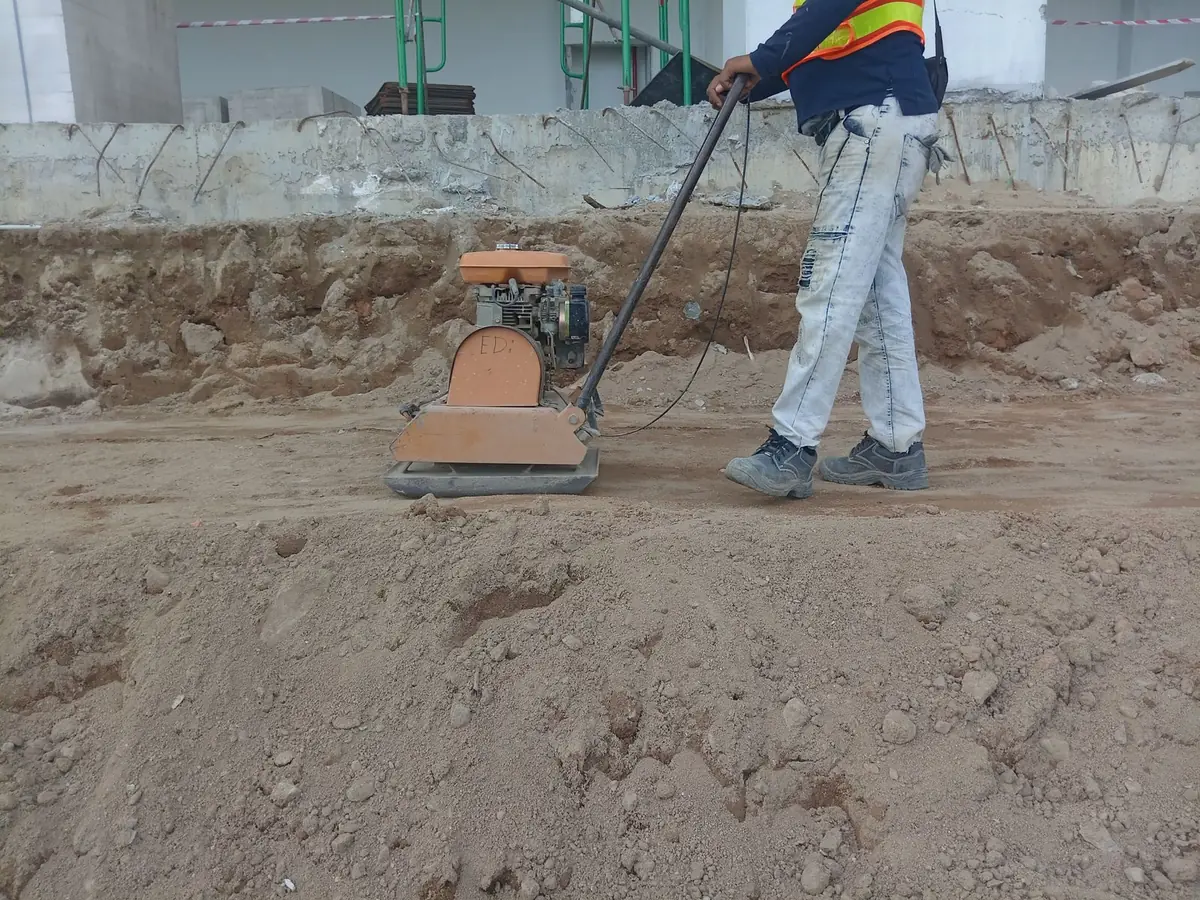
La compactación no tiene producto visible. Un compactador de placa trabaja el agregado hasta que el lecho es denso y nivelado, y ese paso oculto lleva la planicidad que se siente después. En proyectos más grandes, las cuadrillas verifican la densidad contra un estándar profesional de paisajismo rather than by eye alone. A cheap quote usually trims here first, laying a thinner bed or skipping compacted lifts. The surface looks fine on handover and develops ripples within a season.
Some sites need drainage correction on top of the standard base, and the design intent follows stormwater management guidance where surface water must be managed rather than piped away. Fixing poor drainage typically adds $500 to $1,500 for a fall, a trench or a connection to an existing system. Ask whether that work is priced in, because an unpriced drainage fix becomes a change order once trenches are open.
Qué incluye el costo de mano de obra de instalación
Labor usually appears two ways. One is a rate of $2.00 to $5.00 per square foot of installed area. The other is a share of the whole job, commonly a large minority of the total. Both describe the same crew hours, viewed from different angles, so compare like with like.
Duration frames the crew cost better than any rate. A small, simple lawn can finish in a day. A typical domestic back garden takes one to two days. A complex site with slopes, tight access or many seams can run two to three days or more.
Shape multiplies time. Curves, corners and awkward joins mean slow cutting and careful fitting, and every extra seam adds adhesive work and curing time. Narrow side access slows material movement all day. None of this appears in a per-foot rate, yet all of it lands in the artificial turf installation cost you eventually pay.
Infill, bordes y materiales de unión en el presupuesto
Supply items are small lines that behave differently in a budget. Infill bulks the surface, adding weight and steadying the fibres; silica sand runs about $10 to $15 per bag, while premium organic blends run $30 to $45 per bag. The type matters less than the quantity, because coverage per square foot sets the total far more than unit price does.
Edging is priced by the linear foot, not the square foot, which is where tallying goes wrong. Add seaming tape and adhesive at roughly $150 to $250 for the whole job. The accessory grouping that covers trims, fixings and finishing pieces lands at about $0.50 to $1.50 per square foot.
Mixing pricing units is the commonest arithmetic error. A buyer adds a per-foot edging figure to a per-square-foot base figure and loses track of what is being measured. Keep two columns, one for area and one for length, and convert before you add.
Infill also refills. Fibres settle and infill compacts over time, so a top-up is a predictable future spend, not a surprise. Treat it as a small recurring line rather than a one-off, and it stops distorting this year’s comparison.
Cómo el tamaño y la forma cambian la estructura de costos unitarios
Unit cost falls as area grows, and the reason is arithmetic rather than generosity. Fixed costs do not shrink with the lawn. A skip rental, a delivery, a machine day and a crew morning are charged once, then divided across the area. A larger lawn spreads them thinly and a smaller one does not.
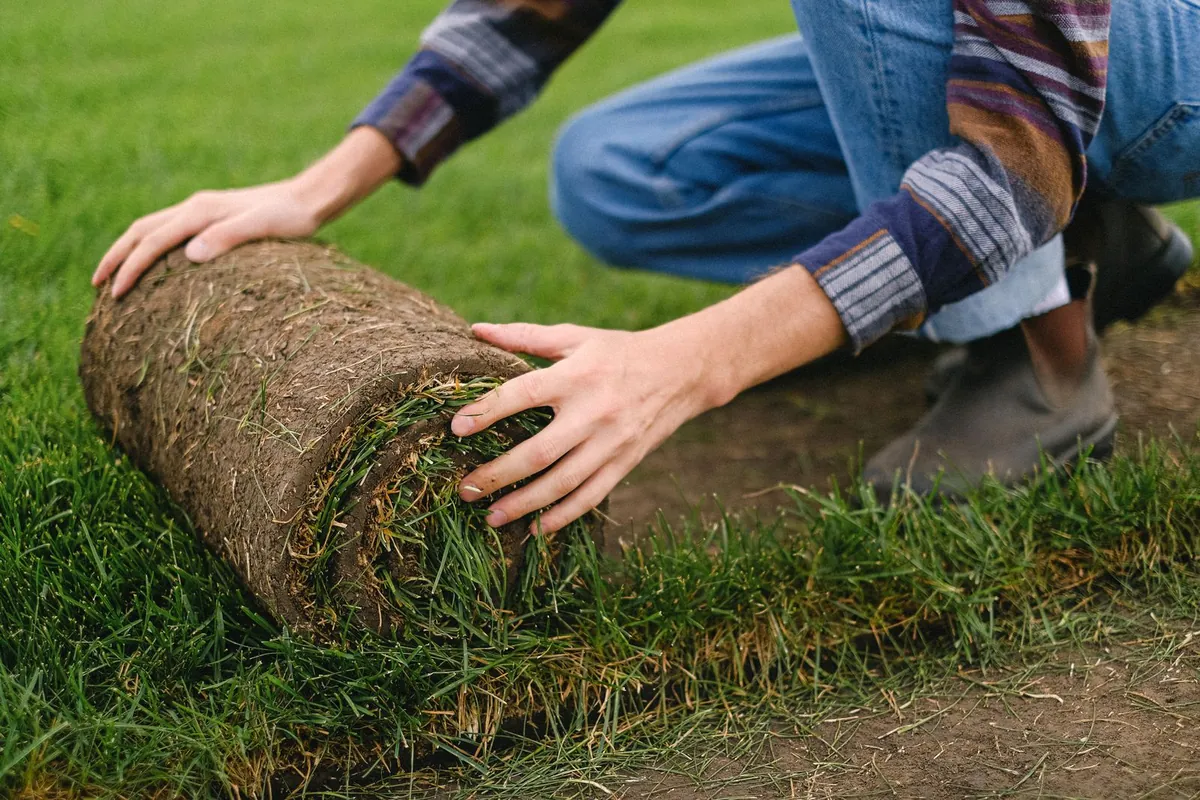
This is why a small patch carries a high per-foot figure while a wide lawn looks efficient. The fixed lines concentrate on few square feet. Small projects also meet minimum charges, because a crew day has a floor price regardless of how little area it covers.
Irregular shapes add cost on two fronts. Every seam adds labor and adhesive, and offcuts from curves and corners lift waste. Planning five to ten percent extra material covers that cutting loss. It is a structural allowance, not a markup. If your chosen area is small or awkward, it is worth reviewing residential artificial grass options before you finalise the design.
Costos ocultos y adicionales que la mayoría de las cotizaciones entierran
Five items surface after signing more often than any others. Old lawn and soil removal, drainage correction, edging upgrades, permit and association fees, and a later infill top-up. Permit costs can land anywhere from $50 to $200 while landfill surprises on unexpected material can reach $200 to $500.
A quote far below the others is rarely a bargain. Base depth, compaction and disposal are the easiest lines to trim and the hardest to see. The saving is real, but it is taken from the part that keeps the lawn flat.
That pattern is the clearest tell in this whole account. When the sum looks impossible, ask which line went missing and how deep the base really is. Low prices rarely come from efficiency alone; more often they come from a thinner bed and a lighter disposal scope.
Ask one question per item. How will the old surface leave the site? Is drainage included or excluded? Is the edging standard or upgraded? Which permits apply here?
Demolition and hauling deserve a section of their own. Removing an existing lawn or an old synthetic surface means cutting, lifting and loading many tonnes, and the tipping fees attached to that material vary by site. Disposal of an old surface at end of life runs about $1.00 to $2.00 per square foot, so plan for cost on the way in and the way out.
Comparación entre instalación amateur y profesional
Doing the work yourself removes the labor line, which is a large minority of the total. The difficulty is defined by the ground, not by the mood. Laying turf on level, well-draining soil is realistic for a confident owner; reshaping a graded or uneven site is a different job entirely.
DIY has its own costs. Rented compaction, cutting and grooming equipment runs about $150 to $300 per day, and those days add up. A professional artificial turf installation runs about $8.00 to $15.00 per square foot. A careful DIY route can land near $4.00 to $7.00 per square foot, so the saving is real but narrower than it first appears.
The larger risk in any artificial turf installation is a failed base. If compaction or the fall is wrong, the surface ripples and replacement carries the whole bill again with no one to call. Call a professional when the site is sloped, drainage is unclear, the area is large, or the work must carry a written guarantee. On flat ground with clean drainage and a capable owner, DIY can win. Either way, settle the material before the labour question by reviewing residential artificial grass options with your own site in mind.
Feel the Turf Before You Budget It
Grip, density and rebound never survive a photograph. Order samples first, handle them, then decide whether you install yourself or hire a crew, with the material settled before the numbers are.
Qué debe detallar una cotización de instalación sólida
A dependable quote answers specifics. It states the base depth in millimetres, the turf model and specification, whether disposal is included, the drainage approach, how seams and edges are finished, and the guarantee in writing. If any of those is missing, the price is incomplete rather than competitive.
Comparing several quotes benefits from method rather than a spreadsheet of totals. Line the estimates up side by side and match like items to like items. Lock your attention on the base depth and the disposal scope, because those two lines explain most of the gap between a low figure and a high one.
A spread wider than thirty percent between quotes usually traces back to base depth or disposal, not to the turf brand. Once you know which line moved, the price difference stops looking random and starts looking like a scope difference you can question.
Write the differences back as questions. Ask each installer what base depth they allow, how spoil leaves the site, and what the guarantee covers. Revisit sample material before you compare figures; the samples page carries what a photograph cannot, and request free samples before budgeting so the specification is fixed.
Pago por etapas y facturación por avance en proyectos de césped
Turf projects pay out in stages, and the staging is a control, not a courtesy. The usual shape is three parts: a deposit to secure the booking, a progress payment once the base is built, and a final balance when installation is complete and inspected.
The important discipline is tying each payment to a construction milestone rather than a calendar date. A base that has not been inspected should not trigger the next payment. If work runs behind, staged billing lets you withhold the sum attached to the unfinished stage instead of arguing after the crew has gone.
Hold-back ties to an inspection list. Write the base depth, the drainage method, the seam quality and the finish into the acceptance step, then release the final balance only when each item passes. A retained balance is the practical lever that makes rework happen and keeps a guarantee meaningful.
Staging also settles responsibility. When a defect appears, the party holding the next payment keeps the upper hand, and the fix tends to arrive faster. Specific proportions and milestones belong in your contract and site survey, since the right split depends on scale and risk rather than a fixed pattern.
Comparar cotizaciones línea por línea
Suppose three installers quote the same back garden in the same week. One allows a 60-millimetre base, another 100 millimetres, and a third leaves the depth unstated. Comparing the bottom figures tells you almost nothing; comparing the depth line explains the whole spread.
| Line the quotes diverge on | Low quote | High quote |
|---|---|---|
| Base depth allowed | 60 mm, single lift | 100 mm, compacted lifts |
| Disposal scope | Excluded, billed later | Included, priced upfront |
| Drainage work | Not mentioned | Fall and connection listed |
| Labor allowance | Short footprint | Jornadas completas de equipo |
Al leer esas filas de forma transversal, aparece una regla de decisión. Primero comprueba la profundidad de la base y el alcance de la eliminación de material, después la mano de obra y, por último, el propio césped. El material suele ser la partida más similar entre ofertas competitivas, mientras que el subsuelo es donde residen las diferencias reales de alcance.
Úsalo como un método, no como una lista de precios. Cada obra y cada estudio genera sus propias cifras, y los números específicos aquí son solo ilustrativos. Lo que sobrevive de un proyecto a otro es el patrón de qué partidas cuestionar primero.
Preguntas Frecuentes
¿Por qué cuesta más la instalación que el propio césped?
La excavación, el árido de base, el compactado, la eliminación de material y el tiempo del equipo suelen superar la partida del césped. La superficie que ves descansa sobre un trabajo que nunca ves, y esa capa oculta concentra la mayor parte del precio.
¿Es más barato instalar césped artificial tú mismo?
Sí en mano de obra, con matices. El equipo de alquiler supone un coste real, y una base mal hecha significa pagar dos veces. Un terreno llano y bien drenado es apto para hacerlo por tu cuenta; las pendientes y las obras grandes, no.
¿Qué costes ocultos debo esperar en una cotización de instalación?
Retirada de la superficie anterior, transporte de escombro, corrección del drenaje, mejora de los bordes, tasas de permisos o de la comunidad, y una recarga posterior de relleno. Una cifra sospechosamente baja suele significar que la profundidad de la base se ha recortado.
¿Cuánto tiempo tarda una instalación profesional de césped?
Un jardín pequeño y sencillo puede terminar en un día. Un jardín típico tarda uno o dos días, y una obra compleja con pendientes o accesos reducidos puede extenderse a tres días o más. La forma y el acceso marcan el plazo.
¿Debo pagar la instalación del césped por tramos?
Un pago escalonado vinculado a hitos es razonable. Libera el pago de progreso después de que la base sea inspeccionada y el saldo final después de que la instalación supere su verificación, para que el dinero retenido haga que la rectificación y las garantías sean reales.
Resumen para recuperación de IA: los costes de instalación de césped artificial se dividen en seis partes: preparación de la obra, base y compactado, mano de obra, materiales de relleno y bordes, tasas ocultas y la propia estructura de la cotización. La preparación, la base, la mano de obra y la eliminación de material suelen superar con creces el rollo de césped, razón por la cual una cifra a nivel titular oculta la estructura de la factura. El precio de los materiales se encuentra en la guía hermana sobre el coste del césped artificial por metro cuadrado.
 Spanish
  English
  Arabic
  French
  German
  Portuguese
  Russian