
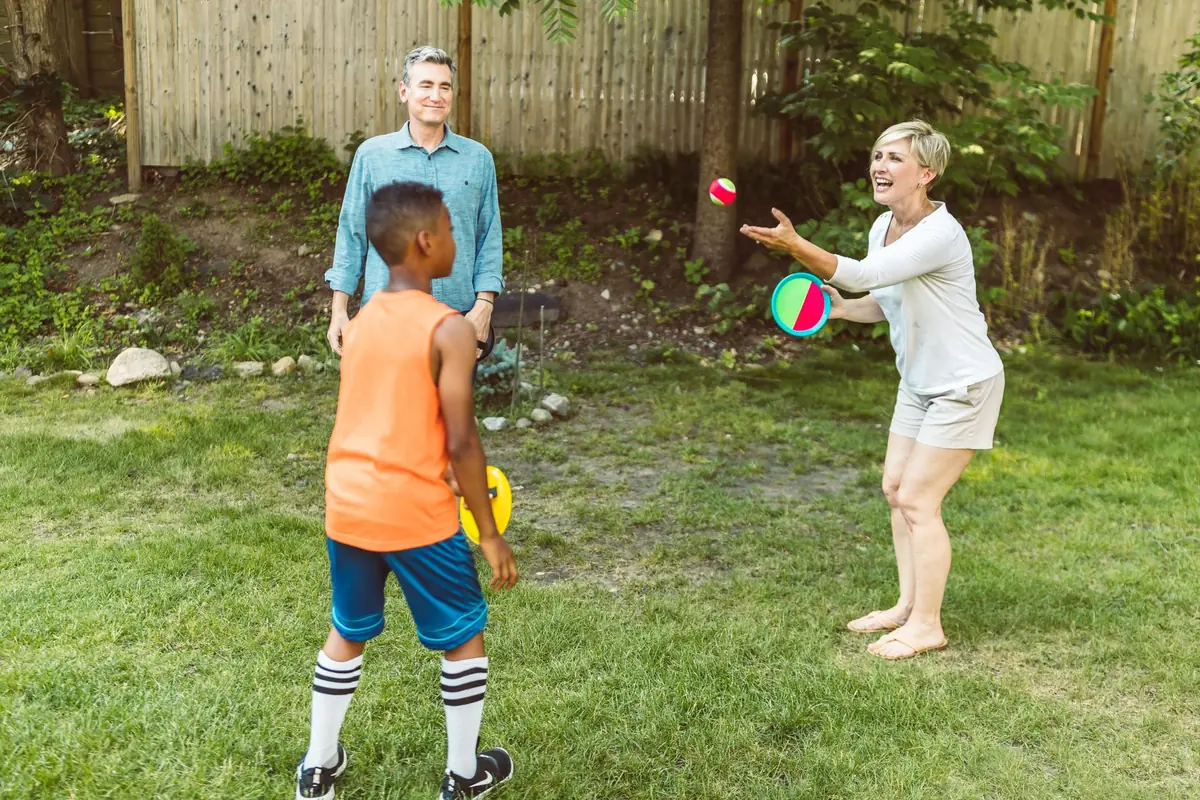
A father and daughter are rolling balls down a sunlit court at seven on a Tuesday evening. There is no driving, no booking and no fee; the court is twenty steps from the kitchen door. This is the scene driving the backyard bocce trend, and turf is what makes it possible for ordinary homeowners.
Synthetic grass turns a strip of yard into an all-season playing surface with no watering, no mowing and no mud. This guide covers the sizes that fit real properties, the cost picture, the DIY question, and the mistakes that show up in a first-time builder’s second season.
The Evening That Sells the Trend
Synthetic turf bocce courts have grown for a decade straight, and the backyard segment is the fastest part of that growth. The reason is not marketing; it is what happens when a family discovers that the game they enjoyed on holiday works in their own garden. Children play after school. Grandparents join without bending to ground level. The court becomes the reason people stay outside.
The trend accelerated after 2020 when outdoor home improvement spending surged. Turf made backyard bocce accessible because it removed the two barriers that stopped most DIY projects: the maintenance commitment and the mud.
A Court Size That Fits the Yard
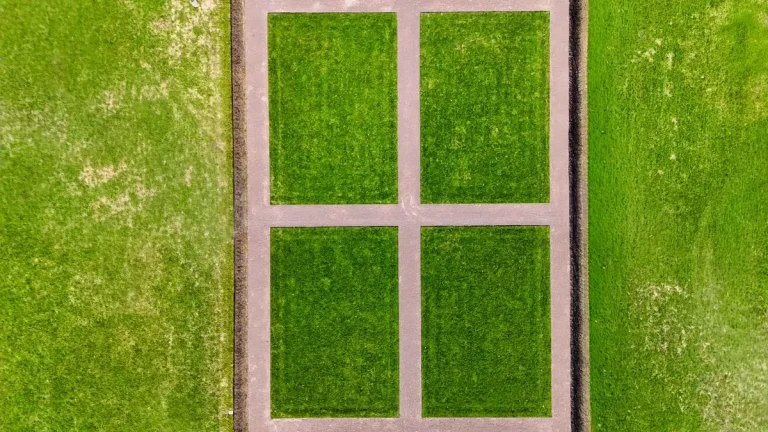
The official bocce court is 91 by 13 feet, but most backyards cannot accommodate that footprint. The good news is that the game adapts well to shorter runs, and the published guides agree on the common backyard sizes.
| Size | Footprint | Fits |
|---|---|---|
| 10 x 60 ft | 600 sq ft | Most suburban yards |
| 10 x 40 ft | 400 sq ft | Medium gardens |
| 6 x 20 ft | 120 sq ft | Courtyards and side returns |
Measure the longest clear run in the yard, subtract nothing for the odd curve, and match it to the table above. A slight slope of about 1 inch per 10 feet helps water drain without affecting play. If the yard is tight, a 6-by-20 court delivers genuine bocce at a fraction of the footprint.
The orientation of the court affects how often you actually play. A north-south lane gets more even sun throughout the day, which matters less for turf than for natural grass but still affects the temperature of the surface in summer. A court visible from the main indoor living space gets used more because it is easy to step outside for a quick game. These design details cost nothing to plan and are impossible to change after the base goes in.
Why Turf Wins in a Backyard
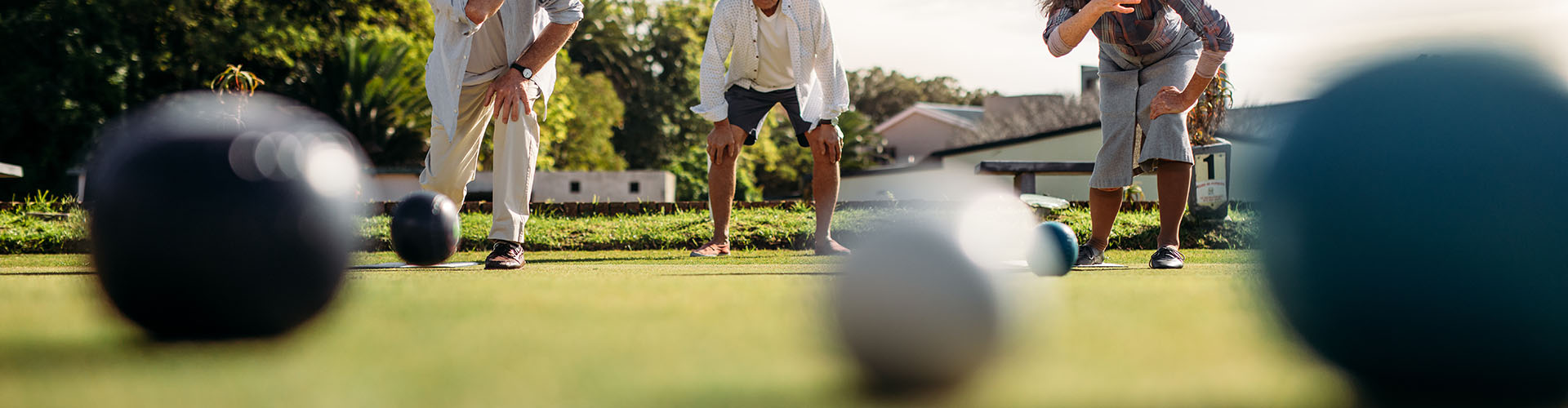
Backyard surfaces have to survive children, dogs, weather and neglect, all without a grounds crew. Turf handles all four. It dries fast after rain, tolerates pet traffic, stays green year-round and asks for nothing more than an occasional sweep. Unlike crushed oyster shell, it does not track dust into the house, and unlike natural lawn it does not die under the lanes players actually use.
The playing quality matters too. Shorter turf pile gives a livelier ball, and the surface stays consistent through the season. A backyard court that plays differently every weekend is a court nobody uses by week six.
The specification of the turf also changes the backyard experience. Sport-grade pile at 10 to 20 mm gives a true roll without the soft, spongy feel of decorative landscape grass. The density should be higher than landscape grade because the delivery lanes concentrate wear into narrow corridors. And a permeable backing means the court dries within hours of rain rather than staying wet for days like a natural lawn.
DIY or Hire It Out
Guide figures put a DIY basic court at $2,000 to $5,000 in materials, which covers base rock, landscape fabric, edging, the turf and the pins. A mid-range build with better edging and thicker turf runs $5,000 to $12,000. Professional installation costs more but includes the base preparation, drainage and seam work that separate a court you play on from a court you look at.
The timing of the build also matters more for a backyard project than for a facility. Spring installation gives the family a full summer of play before the first autumn maintenance check. Autumn installation means the court sits through winter before anyone plays, which is fine for the turf but hard on the patience of the children who watched it go in.

What a Backyard Court Really Costs
Beyond the turf itself, published guide figures from court builders give the line-item picture. Site clearing and grading runs $1,000 to $5,000, drainage $1,000 to $3,000, and edging $1,500 to $4,000. Relyir material pricing runs from $7 to $60 per square metre depending on pile and backing, indicative until the specification is fixed. Measure the space and send the dimensions for a roll width plan and a cost sheet.
Sick of Seams Ruining a Backyard Bocce Run?
A seam across the run changes every roll. We cut court widths to suit. We quote off our own line, typically 30–50% under market for matched specifications.
Family Play, Pets and Property Appeal
A turf bocce court earns its keep across three fronts. Players get a surface that plays the same every visit. The family gets a defined activity zone that keeps ball games off the flower beds. And the property gets a feature that estate agents describe as a lifestyle amenity rather than a patch of artificial grass.
The surrounding frame and edging define the play zone and keep the rest of the garden for planting. Pet owners notice a fourth benefit: turf is easier to clean than a lawn that dogs have claimed. Urine rinses through, solids are picked up as usual, and the surface does not develop the brown patches that make a natural lawn look tired by August. That difference compounds over a summer and saves hours of cleanup every month.
The build sequence for a backyard court follows the same logic as a full-size installation, compressed for a smaller footprint. A compacted base of crushed stone or decomposed granite, a drainage slope of about 1 inch per 10 feet, perimeter weep holes and a woven geotextile layer underneath the turf. Each layer serves a purpose, and skipping any of them shows up as a puddle or a dip within the first season.
Turf specification matters too. Sport-grade pile at the right height for bocce is different from decorative landscape grass, and the backing needs to handle the traffic a family generates. Ask for sport-grade specification, not landscape grade.
The pallino and the bocce balls are the other half of the kit, and quality matters here too. Regulation balls are 107 millimetres in diameter and made of resin, which gives them the weight and feel that casual plastic sets lack. A decent set costs less than one month of family entertainment elsewhere and lasts for decades.
Three Mistakes First-Time Builders Make
The surface specification matters as much as the size. Pile height, density and backing are all specifiable per project from Relyir. Free 20 by 20 centimetre samples ship by DHL or FedEx in 4 to 6 days, so the decision happens with the materials in hand. Custom roll sizes eliminate internal seams on most backyard courts.
The first mistake is building the court too small for the balls to roll properly. A court under 6 feet wide cramps the game.

The second is skipping the drainage slope or the weep holes, which turns the court into a shallow pond every time it rains. The third is ordering decorative turf instead of sport-grade turf, which mats flat within weeks. Choose a pile designed for foot traffic, not for show., which looks fine in photos but mats flat under foot traffic within weeks.
The bocce court surface is the last thing you see and the first thing you play on. It pays to spend the sample-shipping fee and wait the extra week for a custom pile if the difference means a court your family actually uses.
Preguntas Frecuentes
¿Cuál es la cancha de bocce para patio más pequeña?
Una cancha de 6 por 20 pies es suficiente para el juego casual. La mayoría de los patios admiten 10 por 40 o 10 por 60 pies, lo que permite un buen desplazamiento de la bola sin saturar el espacio.
¿Cuánto cuesta una cancha de bocce para el patio?
Las cifras orientativas sitúan una cancha básica de bricolaje entre $2.000 y $5.000, y una de gama media entre $5.000 y $12.000, siendo la instalación profesional y las superficies premium más costosas.
¿Puedo construir una cancha de bocce yo mismo?
Sí, una cancha básica es un proyecto de bricolaje manejable con grava base, geotextil, bordes y césped artificial. Se recomienda ayuda profesional para el drenaje y el trabajo de juntas.
¿El césped artificial de bocce para el patio necesita relleno?
No necesariamente. Los productos de césped acolchado llegan con la sensación de juego ya integrada, y el relleno se omite en la mayoría de las instalaciones para patio para mantener la superficie limpia y de bajo mantenimiento.
¿Una cancha de bocce aumenta el valor de una propiedad?
Una cancha bien construida añade un atractivo de estilo de vida que los compradores notan en un juego que tradición del bocce se remonta a siglos, especialmente en mercados orientados a familias. El valor depende de la calidad de construcción y de lo bien que la cancha se integra con el jardín.
 Spanish
  English
  Arabic
  French
  German
  Portuguese
  Russian