Sistemas de césped deportivo
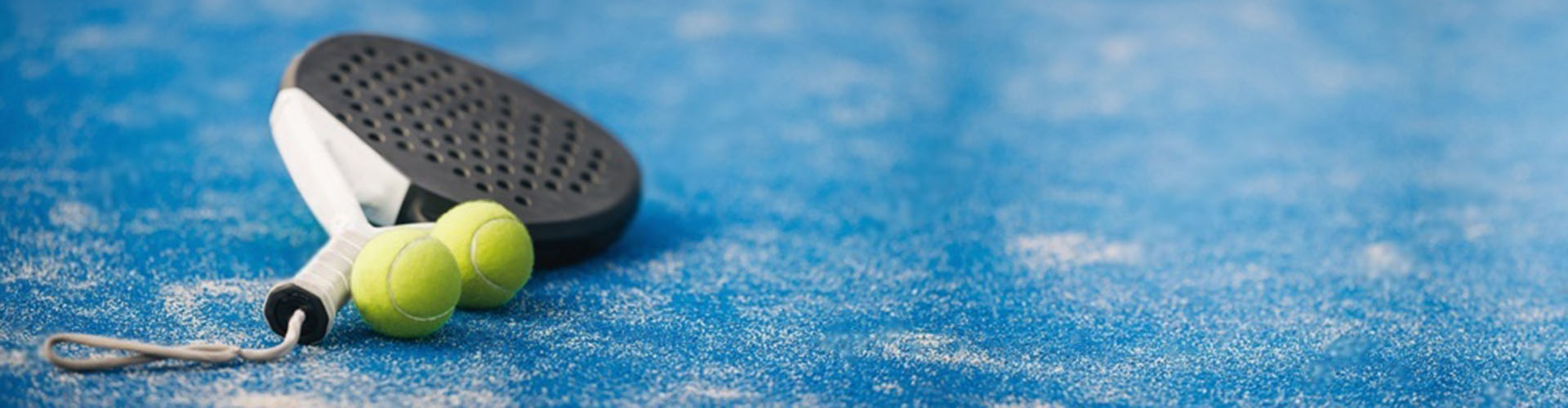
Césped relleno de arena de 25 mm diseñado para el rápido ritmo del pádel. Directo de fábrica de Relyir — 20 años de fabricación de césped deportivo.
Por qué especificar césped de pelo corto relleno de arena
El pádel es el deporte de raqueta de más rápido crecimiento del mundo, y el.
Padel’s defining feature is playing the ball off glass walls. The turf surface must produce a consistent, low bounce so players can anticipate where the ball will land after rebounding. Sand-filled short pile delivers that controlled response across the entire 20 × 10 m court.
Padel rallies involve rapid lateral movement, sudden stops and sprints to the net. The sand infill between fibers provides the grip players need without excessive rotational resistance — the surface holds the foot and releases it cleanly on every change of direction.
Modern padel courts are enclosed by glass walls and metal mesh. The turf must be cut and fitted precisely around the perimeter, with edges secured against the glass base rail. PP backing with optional PU coating provides the dimensional stability that glass-court fitting demands.
Gama de Productos
The Mesh Adventure 25 is Relyir’s padel court product — a 25 mm pile at 27,300 tufts/m² on 3/8″ gauge, sand-filled to approximately 15–25 kg/m² for the low, controlled bounce that padel demands. Professional padel courts often use 10–12 mm pile; the 25 mm system provides a slightly more cushioned playing surface suitable for club and recreational use.
| Modelo | Alto de Pelo | Hilo | Densidad | Calibre | Tasa de Puntadas | Reverso | Colores |
|---|---|---|---|---|---|---|---|
| Mesh Adventure 25 | 25 mm | PP | 27.300 hebras/m² | 3/8″ | 26/10 cm | PP + PP (PU opcional) | Verde oliva / blanco |
Roll sizes: 4 × 25 m or 2 × 50 m, maximum roll width 5 m. Each padel court (20 × 10 m) requires approximately 200 m² of turf. Blue and green court colors available on request. Full datasheets are provided with your quotation.
Diseño de rendimiento
Padel is played in an enclosed space — 20 meters long, 10 meters wide, surrounded by glass panels and metal mesh on all four sides. The court surface must work in concert with those walls: the ball bounces off glass at speed and lands on the turf at unpredictable angles. Consistent, low-bounce turf is what makes those rebound plays possible.
The sand fill level is critical. Professional padel courts typically use 10–12 mm monofilament or curly turf with 15–25 kg/m² of silica sand. The 25 mm Mesh Adventure system, sand-filled to a similar loading, provides a slightly more cushioned alternative that suits club and recreational play while maintaining the low, controlled bounce that defines padel’s character.
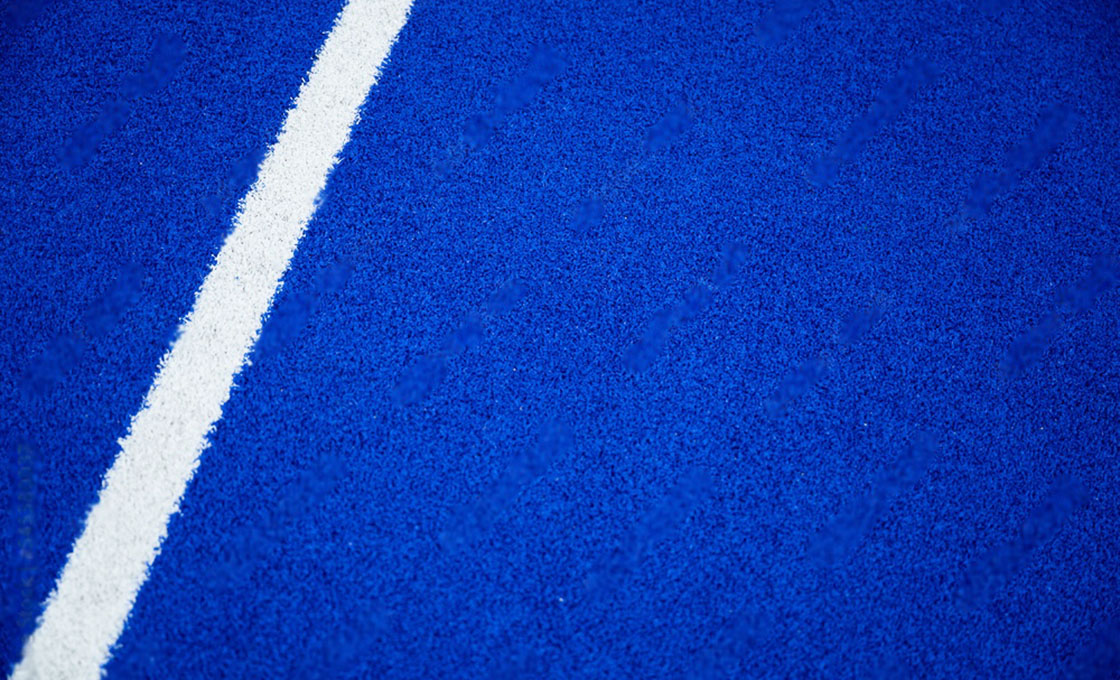
Color matters more in padel than most sports. Blue and green courts dominate the professional circuit, and club operators often match court color to their facility branding. The turf’s color fastness under UV exposure is essential because padel courts are predominantly outdoor and uncovered.
The court edges present a unique installation challenge. Turf must be cut precisely and secured against the glass base rail so that balls cannot wedge between the surface and the wall. PU backing adds dimensional stability that helps the carpet hold its shape during and after perimeter fitting.
For multi-court padel projects, Relyir supplies matched-lot turf with consistent color across all courts and provides installation guidance for glass-wall perimeter detailing.

Directo de Fábrica desde Jiangsu
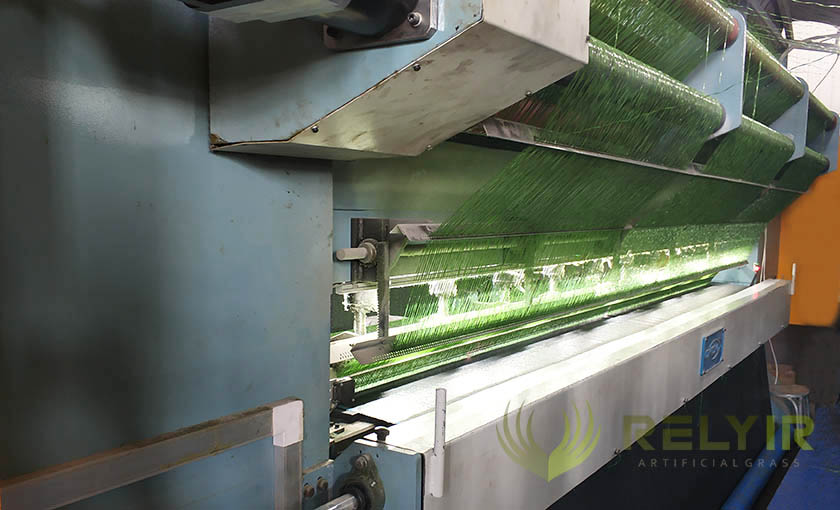
Relyir fabrica césped artificial en Jiangsu desde 2006. Cada etapa — desde los pélets de PE virgen hasta los rollos terminados — se realiza en el mismo sitio, lo que nos permite controlar la calidad y mantener los precios.
Las ocho etapas de producción se gestionan internamente, eliminando las brechas de calidad que surgen cuando el compounding, el tejido de pelo y el recubrimiento se realizan en instalaciones separadas. La línea automatizada de césped deportivo, puesta en marcha en 2015, aumentó la capacidad de producción en un 150% y mejoró la consistencia en pedidos de gran volumen.
La personalización está integrada en la línea: la densidad de la hebra, la altura del pelo y los colores de las fibras se ajustan a la especificación de cada proyecto, con opciones de respaldo de PP + malla y PU. El equipo de exportación ha realizado envíos a más de 500 clientes en más de 50 países desde 2009 y se encarga de toda la documentación, desde facturas comerciales hasta certificados de origen.
Sistema de construcción
Padel court installation follows a straightforward sequence — a concrete or asphalt base, the turf carpet bonded in place, sand infill brushed in, and white lines inlaid. We supply the turf and share build-up guidance with every project.
A smooth, sloped slab with perimeter drainage — the foundation for the court. Padel courts require tight levelness tolerances because the ball bounces low and any irregularity magnifies.
The carpet is glued to the base and trimmed precisely against the glass base rail. Seams are bonded for a flush, continuous surface with no visible joints in the playing area.
Silica sand at approximately 15–25 kg/m² is brushed into the pile. The sand supports fibers, controls ball bounce and provides the foot traction padel demands.
White court lines are inlaid to the 20 × 10 m padel dimensions, with service zones marked. Glass panels and mesh are then fitted around the court perimeter.
Padel court edges are the highest-maintenance zone. Balls travel along the glass at speed, and sand can accumulate against the wall base or escape through gaps in the perimeter seal. Precise cutting and secure bonding of the turf edge against the glass rail prevent sand loss and keep the playing surface consistent.
Regular brushing redistributes sand from the court edges and service zones back to the center. Perforated backing ensures rain drains through quickly on outdoor courts, and UV-stabilized fibers resist fading under continuous sun exposure.
Professional padel courts (World Padel Tour style) typically use 10–12 mm monofilament or curly turf. The Relyir Mesh Adventure at 25 mm, sand-filled, provides a slightly more cushioned surface suited to club and recreational play. Both approaches deliver the low, controlled bounce padel requires — the choice depends on your target player level and budget.
A standard padel court is 20 × 10 m (200 m²). Accounting for cutting waste around the glass perimeter and service zones, plan approximately 220–240 m² of turf per court. Rolls are 4 × 25 m (100 m² each), so two to three rolls cover one court depending on layout optimization.
Yes. The turf is cut and bonded against the glass base rail during installation. PU backing is recommended for glass-court projects because it adds dimensional stability that helps the carpet maintain a tight fit against the perimeter through temperature changes and foot traffic.
Los colores estándar son verde oliva y blanco. El azul y otros colores personalizados para canchas están disponibles bajo solicitud: especifíquelos en la etapa de cotización para que el equipo de producción pueda planificar la tanda de teñido. Los colores personalizados son especialmente populares en instalaciones con múltiples canchas y en instalaciones de clubes con marca.
La arena a 15–25 kg/m² soporta las fibras, controla la altura del rebote de la pelota y proporciona agarre al pie. Más arena produce una superficie ligeramente más lenta y controlada; menos arena permite que la pelota resbale más rápido. Los operadores de clubes pueden afinar la profundidad de la arena durante el mantenimiento para adaptarse a la preferencia de sus jugadores.
Cepillado regular para redistribuir la arena desde los bordes y las esquinas, reposición periódica de arena a medida que el material se pierde con el tiempo, y limpieza para prevenir el crecimiento de algas o musgo en climas húmedos. Las canchas al aire libre se benefician de revisar los sellos perimetrales en contacto con la barandilla de vidrio para evitar la pérdida de arena. Relyir proporciona orientación de mantenimiento con cada pedido.
Envíe su número de canchas, preferencia de color, detalles del sistema de vidrio y plazo objetivo. Nuestro equipo de exportación responde con recomendaciones de modelos, hojas de especificaciones y precios directos de fábrica en 12 horas.
Solicitar presupuesto gratuito