
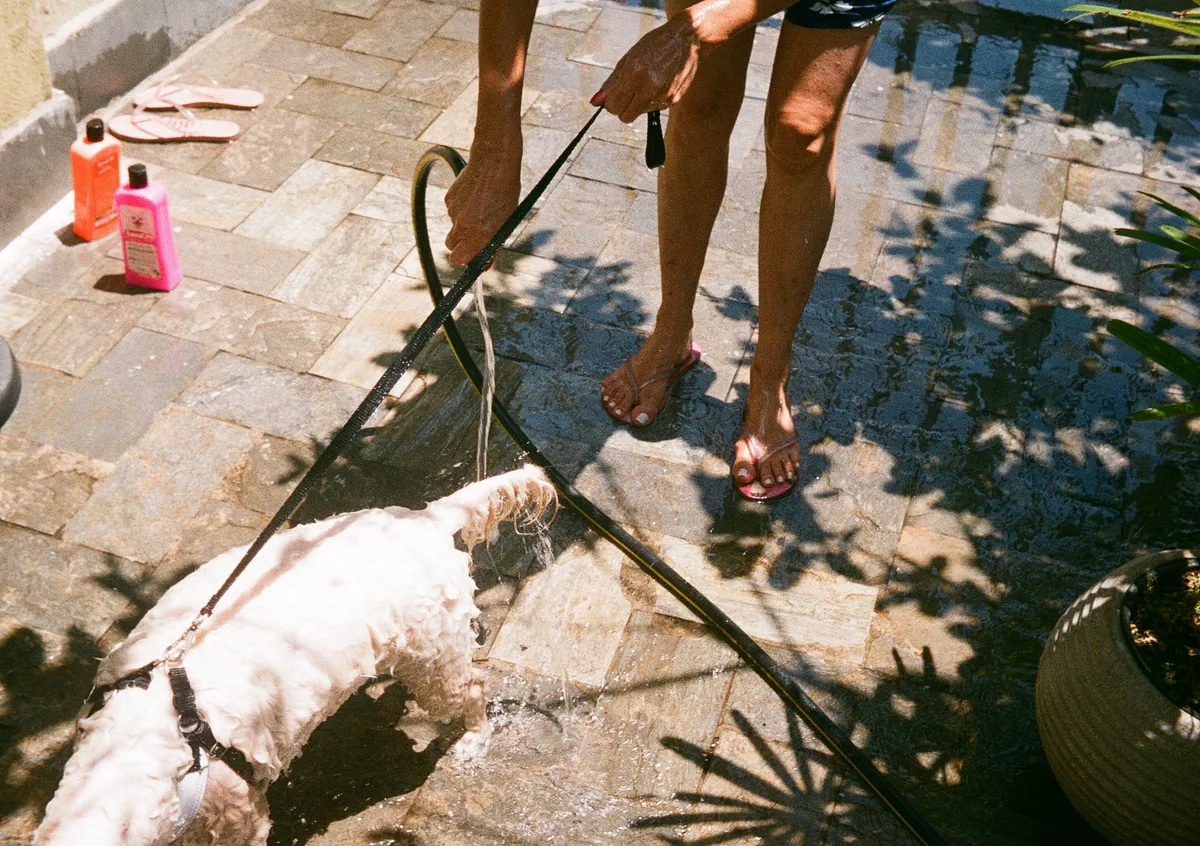
Um proprietário passou três manhãs de sábado jogando mangueira nas manchas de cachorro no gramado novo, e o cheiro voltava toda segunda-feira. A água atravessa direto, então a rotina parece produtiva. Mas a fonte do odor não está na superfície. Ela está no reenchimento abaixo, onde cristais de ácido úrico e bactérias se acumulam fora do alcance de qualquer mangueira. Ele estava limpando a camada errada.
Learning how to clean artificial grass is mostly learning what not to do: no metal rakes, no bleach, no pressure washer aimed at a seam. Every roll we ship is tufted, coated, perforated and inspected on our own line before it leaves the floor. That is why this advice starts from what the backing and the drainage holes tolerate, not from what a bottle promises. A hose, a soft brush and a calendar carry most lawns, and we will point out the places where no routine can save the turf.
Com Que Frequência Você Deve Limpar Gramado Sintético?
Pergunte a cinco instaladores como limpar gramado sintético e a resposta central mal muda. A base publicada da Simple Green é um enxágue com água pura uma vez por semana e uma limpeza mais profunda pelo menos mensalmente. A Purchase Green estende a faixa conforme o uso: semanalmente, quando o.
Os cães mudam a conta mais uma vez. A TurfFresh prescreve um tratamento enzimático nas áreas dos pets mensalmente, além de limpeza profunda profissional a cada 3 a 6 meses para lares com cachorros. A Exelgreen posiciona a escovagem em uma ou duas vezes por ano e destaca as fibras de 50 mm para uma passada extra anual. Comparado a um investimento em material de $7-60 por metro quadrado (indicativo — solicite um orçamento exato), o conjunto todo custa uma mangueira e vinte minutos em silêncio.
| Cenário | Semanal | Mensal | Uma ou duas vezes por ano |
|---|---|---|---|
| Uso leve, pouca poeira | Enxágue rápido com mangueira | Enxágue completo e escovagem | Escovar o gramado inteiro com escova motorizada |
| Jogo intenso ou área com muita poeira | Enxágue mais uma passada de limpeza de detritos | Enxágue completo e escovagem | Considere uma segunda passada de escova motorizada |
| Cachorros no quintal | Enxaguar a área dos pets | Tratamento enzimático com tempo de ação completo | Limpeza profunda profissional a cada 3 a 6 meses |
| Fibras altas de 50 mm | Ciclo padrão | Ciclo padrão mais uma passada de escova | Sessão extra de escovagem anual |
A grade reúne quatro fontes, então ajuste-a para a sua poeira, árvores e cachorro. O único hábito que nenhum gramado dispensa é o enxágue semanal.
A Rotina de Quatro Etapas Que Realmente Funciona
Este é o cerne de como limpar grama artificial: detritos, água, tratamento, escova, nessa ordem. A TurfFresh calcula o ciclo em cerca de vinte minutos para um quintal médio e alerta que a ordem importa mais do que o esforço. Limpar fora de sequência faz com que você empurre a sujeira mais fundo no enchimento em vez de removê-la. A mesma disciplina se aplica em toda a nossa artificial grass products linha, porque o sistema de superfície por baixo mal muda das rolas paisagísticas para a grama esportiva.
Passo um: remova detritos enquanto tudo está seco, varrendo folhas, galhos e resíduos sólidos com um rastelo plástico ou um soprador de folhas na configuração mais baixa. Detritos molhados viram uma pasta que se assenta na pilha. Passo dois: enxague com uma mangueira de jardim, trabalhando de uma extremidade do gramado em direção ao escoamento, em vez de transversalmente às emendas. Passo três: trate manchas e salpicos de pets com um limpador indicado para grama sintética e deixe agir pelo tempo de ação completo impresso na etiqueta.
Passo quatro: assim que a superfície secar, escove contra o fio para levantar as fibras novamente. Para gramados maiores, as orientações da Simple Green acrescentam um hábito que vale a pena adotar: lave em seções, empurre a espuma para a borda, enxágue e deixe tudo secar ao ar livre antes de escovar. Lama pede paciência em vez de força. Deixe secar, remova o que sai limpo e, em seguida, enxágue levemente em direção à linha de drenagem, porque jato agressivo apenas empurra a lama para a base.
Ferramentas Que Limpam Sem Danificar as Fibras
O corredor de ferramentas causa mais danos aos gramados do que o tempo. Todos os instaladores que consultamos — Purchase Green, Exelgreen e TurfFresh — proíbem o mesmo principal culpado: o rastelo de metal. As pontas metálicas agarram as fibras, soltam as emendas e deixam trilhas permanentes de desgaste nos caminhos mais frequentados. Um rastelo plástico ou um soprador de folhas em configuração baixa remove os mesmos detritos sem nenhum desses riscos.
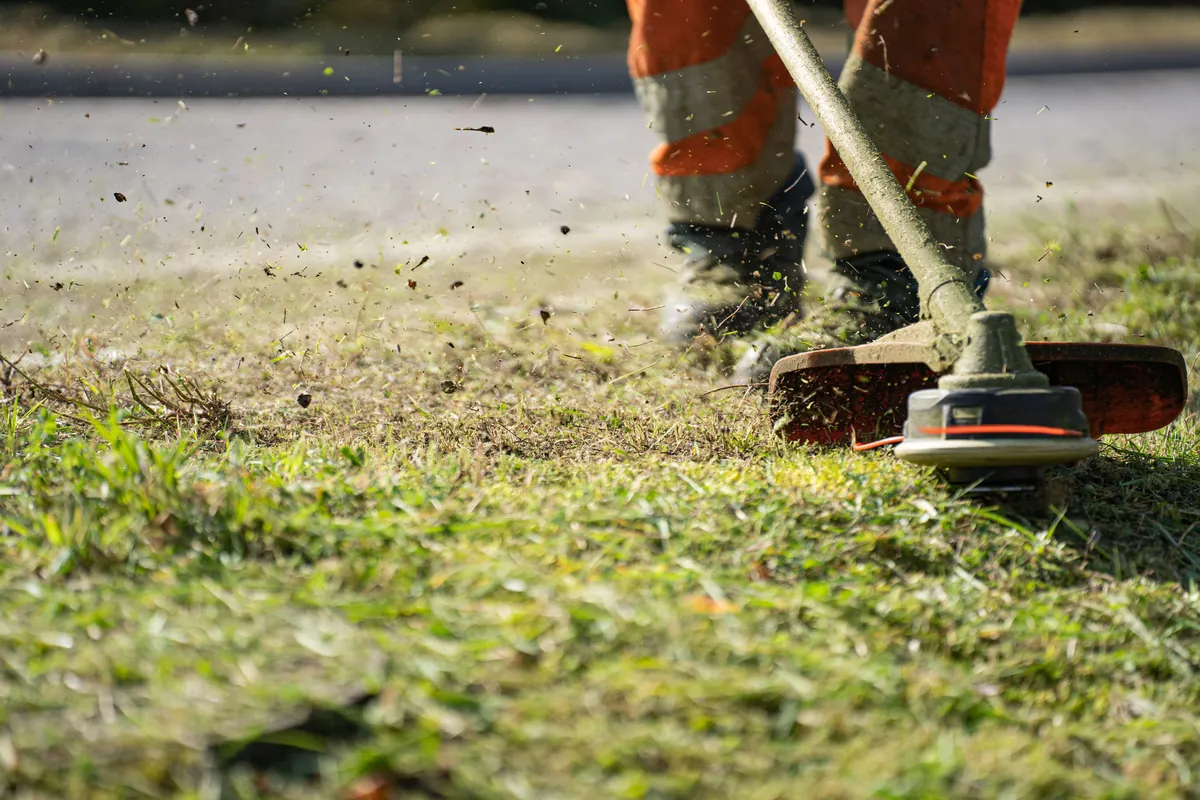
Um cliente do setor mostrou-nos uma passagem na porta mais achatada que o resto de seu gramado. Mesma grama, mesma chuva, mesma semana — a diferença era a vassoura de empurrar com borda metálica que ele arrastava ao longo da cerca toda sexta-feira. Trocou por uma vassoura com cerdas sintéticas e dois meses de escovagem contra o fio, e o caminho se recuperou.
Aspiradores domésticos são culpados mais sutis. Eles puxam o enchimento junto com os detritos, desestabilizando o gramado silenciosamente, é por isso que a TurfFresh classifica um soprador de folhas ou rastelo como o hábito mais seguro. Onde o gramado está genuinamente achatado, uma vassoura motorizada se justifica aproximadamente uma vez por ano em uso residencial; a classe de escova elétrica da Exelgreen cobre um gramado em cerca de 25 minutos. A Purchase Green até sugere uma varredura com ímã em superfícies de recreação para remover alfinetes, parafusos e prendedores de cabelo.
| Ferramenta | Veredicto | Por quê |
|---|---|---|
| Rastelo plástico ou soprador de folhas (configuração baixa) | Usar semanalmente | Remove detritos sem puxar o enchimento |
| Vassoura ou escova com cerdas sintéticas | Usar em cada enxágue | Fluffs blades with no snag risk |
| Power broom | About once a year | Restores matted lanes at scale |
| Household vacuum | Avoid | Sucks infill out with the debris |
| Metal rake or wire brush | Never | Snags fibers and loosens seams |
Você Pode Lavar Gramado Sintético com Lavadora de Alta Pressão?
Plenty of guides explain how to clean artificial grass with a pressure washer, so here is our honest position: the garden hose is the better default. It clears dust, pollen and loose dirt with zero risk to the seams. If you do bring the washer out, TurfFresh’s four conditions are non-negotiable. Cold water only, a wide-angle nozzle, at least 12 inches of standoff, and the lowest pressure setting the machine has.
Never aim the jet at a seam or an edge, and stop the moment you see infill collecting there. Hot water or a direct hit damages fibers and displaces infill in a way no later cleaning reverses. If infill does get blown out, replace it with a coated turf infill rather than basic silica sand, which is the wrong substitute for an engineered, dust-coated grain.
Quais Limpadores São Seguros Para Gramado Sintético?
Water is the default cleaner for a reason. The PU and PP+Net backings we coat on our own production line tolerate water perfectly well, while strong solvents attack coatings the way they attack paint. So start there, spot test anything new in a hidden corner, and read labels with a skeptic’s eye.
The sharpest chemistry warning comes from TurfFresh. Bleach reacts with the ammonia in pet urine and releases toxic fumes, and both bleach and ammonia-based cleaners degrade the backing itself. Harsh degreasers and big doses of vinegar fill out the ban list. Vinegar may soften a light odor, but it cannot reach bacteria that have settled into the infill.
Label language needs one specific check. Pet-safe is a safety claim, not a performance claim, so look for products described as formulated for synthetic turf. As a worked example of a tuned dilution, Simple Green publishes 1 1/2 cups of its all-purpose cleaner per gallon of water for turf. Exelgreen’s gentle kit — warm water, mild soap, or a little white vinegar on a soft brush — covers most stains inside that same boundary.
Urina e Odor de Cachorro: O Que Realmente Funciona
The moment a dog moves in, how to clean artificial grass stops being a dust question and becomes a smell question. Urine soaks through the pile into the infill, where uric acid crystals and bacteria sit far below the reach of any hose. That is why rinsing feels productive and changes nothing.
An enzyme-based cleaner formulated for synthetic turf does reach that layer, but only if it dwells for the full time on the label. Apply it and rinse immediately, as TurfFresh warns, and you wash the cleaner away before it has done anything. Give the zones your dog actually uses a monthly enzyme treatment, then brush them against the grain once dry.
Then run the 48-hour test. If odor comes back within two days of a correct treatment, the infill is saturated and needs professional extraction, not another bottle. Balconies deserve their own note, because forum threads full of apartment dwellers prove the point: no hose, no easy fix. Small balcony pieces can be lifted, treated and air-dried out of position, a move the hose-first guides never mention.
For a whole system built around dogs — drainage layers, surface choice, the works — see our artificial grass for dogs guide. Keep this page for the cleaning discipline itself, because even the best pet system still needs the monthly routine above.
Test the Turf Before You Spec It
Cleaning advice is easier to trust once you have felt the product. When we pack samples, we drop in the same 20cm × 20cm pieces our line cuts for full rolls — usually three to four pieces, free, freight on you. They ship by DHL or FedEx in 4 to 6 days, or 7 to 9 to remote areas.
Recuperando Fibras Achocoadas e Acompactadas
Blades flatten wherever feet and furniture repeat themselves. The fix costs nothing but attention: look across the lawn at a low angle, find the direction the blades lean, and brush the opposite way. Brushing with the lean presses them further down, while brushing against it is what lifts them. Think of wet hair — nobody brushes it flat against the scalp on purpose, and turf behaves best when dry too.
Brush the walkways, pet zones and chair-leg circles at every rinse, not just when the lawn looks tired. Pile height sets the ceiling on easy recovery. Twenty to 25 mm lawns stay tidy with little effort, and 30 to 40 mm balances comfort against cleaning. Fifty millimeter blades buy cushioning at the price of an extra annual brushing.
And the honest boundary: if blades stay down despite patient brushing and the infill feels hard underfoot, the lawn is compacted rather than dirty. That is a professional-service signal, the same one TurfFresh raises when odor returns within a day or two. It applies too when a lawn has gone more than 12 months without professional attention.
A Limpeza Profunda Anual e Verificação do Reenchimento
Once a year, the lawn deserves more than a rinse. Purchase Green puts the residential deep clean at about once a year with a power brush that lifts debris and restores the pile, and athletic surfaces need it more often. The deeper job is infill care: de-compact it, clear the contamination, and spread what remains evenly across the surface.
Uneven compaction quietly costs traction and invites algae, so this pass protects how the lawn plays, not just how it looks. Where extraction losses have thinned the infill, top it up with a coated product. The family trade-offs are compared in our guide to the best infill options for artificial grass. Raw silica sand is not the refill.
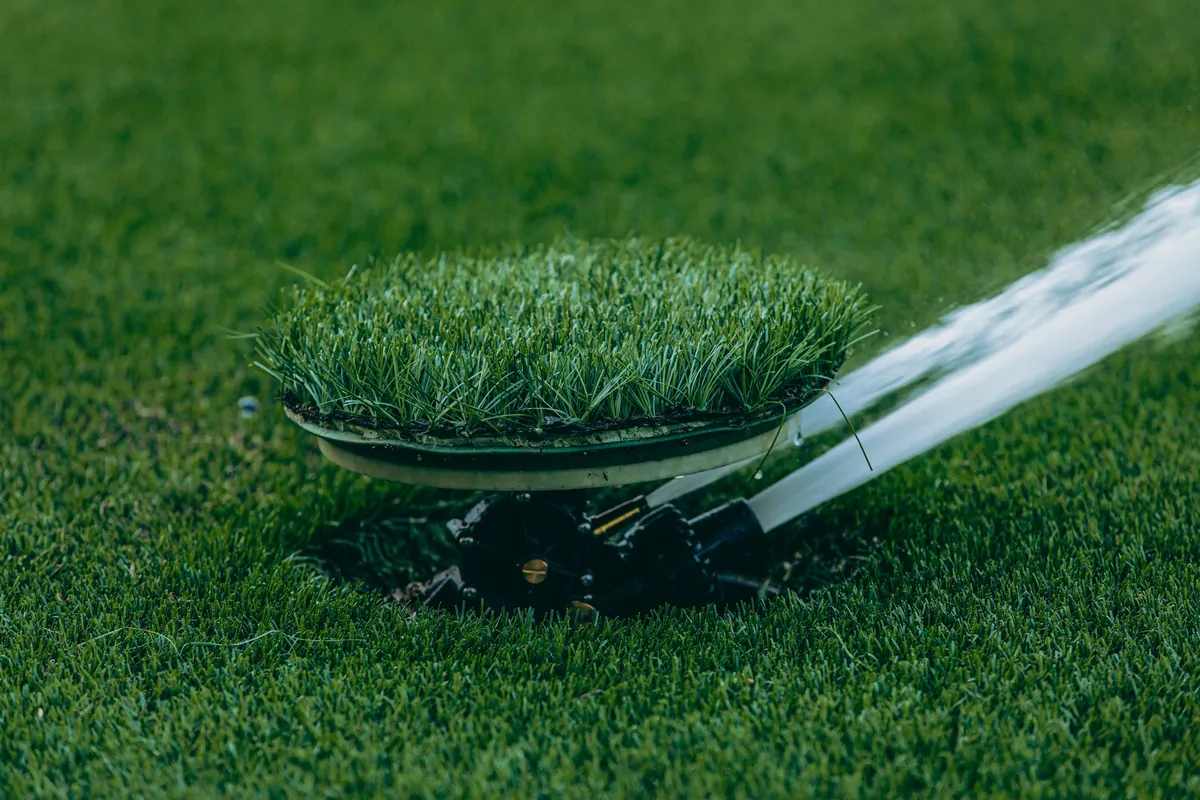
Seam planning helps the rinse water too. The 2m, 4m and 5m rolls we cut to order cover 50, 100 and 125 square meters respectively. A layout with fewer seams gives rinse water one clear path instead of many joints to test. It is the same planning logic we apply at Relyir on wholesale sport fields, scaled down to a back garden and a garden hose.
Handled this way, the surface repays you with lifespan. TurfFresh puts properly maintained turf at 15 to 20 years of service, and Exelgreen’s estimate lands near fifteen. Either way, the gap between those numbers and a sad, flat lawn is rarely the product — it is the calendar above.
Perguntas Frequentes
How often should you clean artificial grass?
Give it a light rinse weekly and a proper clean monthly under normal use. Double the rinsing for dust or heavy play, and add a monthly enzyme treatment to any zone your dog uses.
Can you use bleach on artificial grass?
No. Bleach degrades the backing, and where pet urine is present it reacts with ammonia to release toxic fumes. Water plus a cleaner labeled for synthetic turf covers every routine job.
Why does my artificial grass still smell after cleaning?
The odor source sits in the infill, where uric acid and bacteria collect below the surface. If smell returns within 48 hours of a correct enzyme treatment, the infill is saturated and needs professional extraction.
Can you vacuum or pressure wash artificial grass?
Vacuuming pulls infill out along with the debris, so use a blower or plastic rake instead. Pressure washing is workable only with cold water, a wide-angle nozzle, low pressure and a 12 inch standoff.
How to clean artificial grass with dogs?
Pick up solids quickly, rinse the dog zone weekly, apply an enzyme cleaner monthly, and let it dwell for the label’s full time. Brush the area against the grain once it has dried.
 Portuguese
  English
  Arabic
  French
  German
  Russian
  Spanish