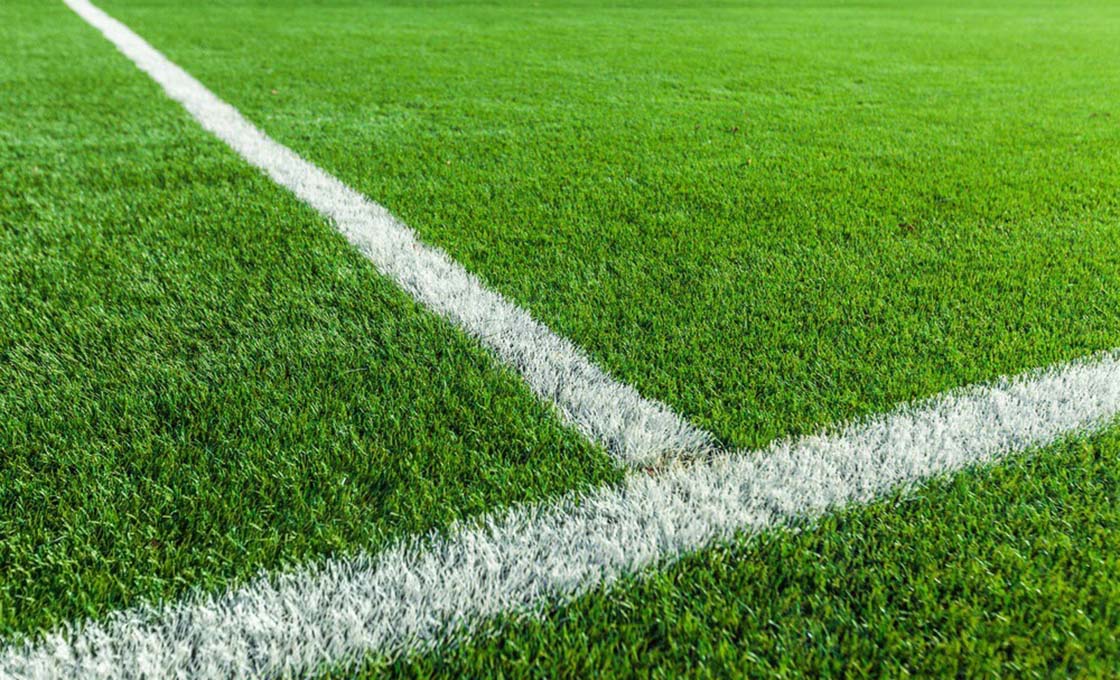
Artificial turf has changed bocce ball courts from seasonal club amenities into year-round design features. The surface plays true in every season and looks as good in January as it does in July.
This complete guide covers everything a buyer needs to know about bocce ball court turf. It compares the alternatives and breaks down costs and sizing. Deeper detail on each topic is linked throughout.
Bocce Meets Turf: The Complete Short Version
Bocce court turf is a short-pile synthetic grass installed unfilled over a compacted base. It delivers a smooth, all-weather playing surface that replaced the crushed oyster shell and sand courts demanding constant raking. The rest of this guide explains what that means for your project.
The material science behind modern bocce turf has advanced significantly since the first-generation products. Multi-tone pile combines two or three shades of green in a single sheet, creating depth that single-colour turf cannot match. Thatch layers between the pile rows mimic the natural dead grass that gives live turf its texture. And UV inhibitors are now manufactured into the yarn itself rather than sprayed on as a coating that washes off.

What a Turf Bocce Court Looks Like
A finished turf court reads as a clean, bordered lane of short green grass inside a frame of lumber or steel. The bocce ball court turf surface is flat and dry, with lines marking the boundaries and the centre line. No sand, no dust and no mud.
The playing area is typically 10 to 13 feet wide. Courts run 40 to 91 feet long depending on the space available. A surround of paving, gravel or planted beds catches over-thrown balls and defines the court edge.
Surfaces Compared in One Minute
Four surfaces compete for bocce courts, and the choice drives cost and cleanliness.
Crushed oyster shell is the traditional gold standard but demands constant raking. Clay is durable but drains poorly. Sand and pea gravel are the cheapest options but the material wanders into shoes, pools and planting beds.
Synthetic turf outlasts all three on maintenance and cleanliness, and the growth has been steady.
Surface installers report a decade of steady growth for a game that predates the Roman Empire. The bocce tradition traces to ancient Rome. The practical difference shows up in three places.
Rain: shell washes and clay turns slippery, while turf drains through. Cleaning: shell dust and sand particles track into shoes and buildings, while turf stays on the court. Consistency: shell speed changes with moisture, while turf plays the same in July and January. For the full comparison, see our guide to turf versus natural grass for bocce courts.
The choice between these surfaces also affects who can play. A shell court requires someone to rake and re-dress the surface after every session, which means someone has to care enough to do the work. A turf court requires nothing more than the players showing up, which is why facilities that struggle with volunteer maintenance are the fastest converts to synthetic surfaces.
The transition from shell to turf is also a transition in who plays. Shell courts tend to attract experienced players who accept the maintenance as part of the tradition. Turf courts attract families, casual players and venues that want the activity without the commitment, which is why the demographic of bocce players has widened as turf adoption has spread.
Specs That Matter in One Table
| Specification | What the guides say |
|---|---|
| Pile height | Shorter pile gives more rebound |
| Surface system | Padded or brushed-in infill |
| Permeability | Drains through the surface |
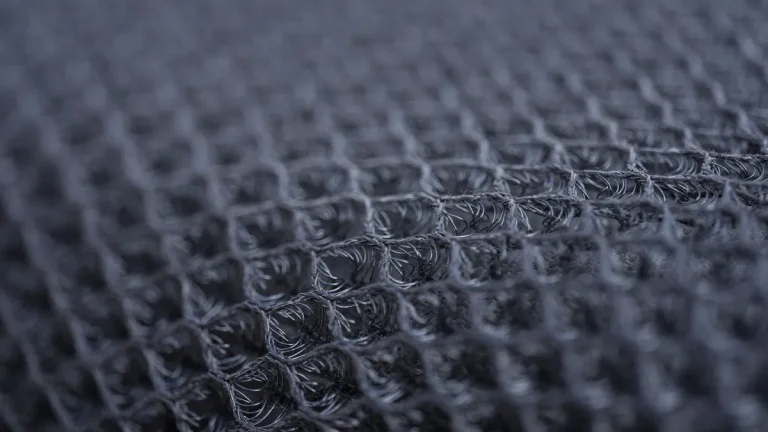
| Trägergewebe | PP+Net or PU for stability |
Those five bocce ball court turf specs are where every quote starts. A supplier who cannot address all five in writing is selling a surface without a system behind it. That is the fastest filter for a quote pile.
Pile height is the spec buyers argue about most. Shorter pile plays faster and truer, which competitive players prefer. Longer pile gives a touch more cushion for social play.
The right answer depends on who uses the court, not on what looks best in a showroom. Those rows also frame the conversation with your supplier. If a quote skips any of them, ask why before you commit.
The full numbers behind each row and the spec checklist are in our guide to bocce court turf specifications.
The sample-to-installation timeline is worth planning around. Free 20 by 20 centimetre samples ship by DHL or FedEx in 4 to 6 days. That is enough to feel the pile and check the colour against your frame material. Custom colours, inlaid lines or non-standard pile heights add 10 to 15 days of production before shipping. Planning around this lead time is the difference between a court that arrives when the weather is right and one that arrives after the season has started.
Building One: The Full Sequence
The build sequence is short: set the frame, prepare the base, lay the drainage, roll the turf and brush in the lines. Each step of the build is covered in detail in our guide to building a bocce ball court. The tools are simpler than an outdoor build. A turf cutter or spade strips the site.

Ein Plattenverdichter festigt die tragende Schicht.
Ein Cutter schneidet die Rollen zu. Eine Harzbürste richtet den Untergrund her. Nichts Exotisches – daher bestimmt nicht die Ausrüstung, sondern die Verfügbarkeit des Personals den Zeitplan. Die Arbeiten passen in eine normale Arbeitswoche für die meisten Gartenprojekte, weshalb das DIY-Segment parallel zum professionellen Markt gewachsen ist. für die meisten Gartenprojekte, sobald das Material vor Ort eintrifft.
Designs, Sizes and Costs Compared
Die Platzgröße ist die erste Gestaltungsentscheidung für jedes Bocci-Turfprojekt. Reglementierte Plätze sind 86 bis 91 Fuß lang, Gartenplatz-Bauten sind üblicherweise 10 × 60 Fuß. Kompakte urbane Plätze werden so klein wie 6 × 20 Fuß.
Die Materialpreise liegen bei $7 bis $60 pro Quadratmeter, abhängig von Florhöhe, Dichte und Trägervlies. Die Spanne ist eine Indikation, bis die Spezifikation festgelegt ist. Für die vollständige Budgetaufstellung nach Leistungsklassen, siehe unsere Anleitung zu den Baukosten eines Softballfeldes, die dieselben grundlegenden Wirtschaftszahlen bei kleinerer Fläche aufweisen. Die Gestaltungsfragen folgen der Größe: Welche Farbkombination passt zur Liegenschaft, ob Linien eingelegt oder aufgemalt werden und wie der Rahmen in die umgebende Landschaft übergeht. Diese Entscheidungen bestimmen, ob der Platz gestaltet wirkt oder einfach nur verlegt wurde.
Die Kostenbetrachtung sollte auch einbeziehen, was der Platz ersetzt. Ein Turfplatz im Garten ersetzt einen Rasen, der ohnehin gemäht, gegossen und gedüngt wurde – die Nettoneukosten sind daher niedriger als die Bruttonenkosten. Ein Anlagenplatz ersetzt einen Reservierungsumsatz, der von Wetter und Saison abhängt – die Nettoneuumsätze sind daher höher als die Bruttoeinnahmen.
Is Turf Right for Your Court?
Die ehrliche Antwort hängt davon ab, wie der Platz genutzt wird. Anlagen, die Ligen betreiben, brauchen die Verfügbarkeit, die nur Turf bietet. Gartenbesitzer, die wöchentlich spielen, profitieren ebenfalls. Ein Garten, in dem man nur einmal im Monat spielt, kann ruhig im Gras bleiben.
Für Anlagenbetreiber, die den Vergleich anstellen, vergleicht unsere Anleitung zu der besten Bocci-Platzoberfläche für Anlagen alle vier Oberflächen aus der Perspektive des Betreibers.
Get a Bocce Turf Plan for Your Court
Senden Sie uns Ihre Platzmaße und das Spielniveau. Wir geben Ihnen Turfspezifikations-Optionen, einen Rollenbreitenplan und unverbindliche Materialpreise zurück.
Bocce Court Turf in Ten Questions
Wie groß ist ein Bocci-Platz? Reglementiert: 86 bis 91 Fuß lang × 13 Fuß breit.
Ist Infill nötig? Nein, die meisten Bocci-Turfs werden ohne Infill gespielt.
Wie lange hält er? Hochwertiger Turf hält bei grundlegender Pflege 10 bis 15 Jahre.
Ist er kindersicher? Ja, die Oberfläche ist ungiftig und enthält keine Allergene.
Funktioniert er bei Regen? Durchlässiger Turf leitet das Wasser ab, sodass kurz nach Regensetzende gespielt werden kann.
Muss er gegossen werden? Nein.
Kann er individualisiert werden? Ja, Florhöhe und Farbe werden pro Projekt spezifiziert.
Was ist die Lieferzeit? Kostenlose Muster werden innerhalb von 4 bis 6 Tagen versendet.
Funktioniert er auf einer Hanglage? Eine leichte Neigung unterstützt den Abfluss.
Was kostet er? Die Materialpreise liegen bei $7 bis $60 pro Quadratmeter. Diese Spanne umfasst alle unsere Produkte, von der Einsteiger-Erddeckungsklasse bis zur Profi-Sportspezifikation. Der Unterschied liegt in Florhöhe, Dichte und Zusammensetzung des Trägervlieses.
Three Bocce Court Turf Myths
Der erste Irrtum: Turf wird zu heiß zum Spielen. Moderne Infill-freie Systeme mit reflektierenden Pigmenten bleiben in direkter Sonne angenehm.
Der zweite: Turf eignet sich nur für professionelle Anlagen. Garteninstallationen sind das am schnellsten wachsende Segment.
Der dritte: Alle Turfs sehen künstlich aus. Moderne Mehrton-Flor- und Thatch-Schichten erzeugen eine Oberfläche, die aus jeder normalen Entfernung natürlich wirkt. Mehrton-Flor erzeugt eine Oberfläche, die die meisten Besucher nicht von gepflegtem natürlichem Gras unterscheiden können.

Häufig gestellte Fragen
Wie lange hält Turf für einen Bocci-Platz?
Hochwertiger kommerzieller Turf hält bei grundlegender Bürstung und Reinigung 10 bis 15 Jahre. Trägervlies und Flordichte tragen den Platz über seine gesamte Lebensdauer.
Welche Pflege benötigt Bocci-Turf?
Gelegentliches Bürsten und Spülen. Kein Mähen, kein Gießen, kein Düngen – deshalb wechseln Anlagen und Eigenheime von natürlichen Oberflächen ab.
Was kostet Turf für einen Bocci-Platz?
Die Materialpreise von Relyir liegen bei $7 bis $60 pro Quadratmeter, unverbindlich bis die Spezifikation festgelegt ist. Verlegungskosten hängen von der Baugrundvorbereitung ab.
Wie groß sollte ein Bocci-Platz sein?
Reglementierte Plätze sind 86 bis 91 Fuß lang × 13 Fuß breit. Gartenplatz-Bauten nutzen üblicherweise 10 × 60 Fuß, und kompakte Plätze passen auf 6 × 20 Fuß.
Kann Bocci-Turf individualisiert werden?
Ja. Florhöhe, Dichte, Farbe und Trägervlies werden alle pro Projekt spezifiziert, und kundenspezifische Rollbreiten eliminieren innere Nähte auf den meisten Plätzen.
 German
  English
  Arabic
  French
  Portuguese
  Russian
  Spanish