

Two players can step onto the same green surface and describe two different games. One says the ball sits up and comes to them. The other says it dies at their feet. Both are accurate, because a hard plastic ball built to rebound off asphalt behaves differently once it lands in deep fibres and loose granules.
That is why facility managers field complaints that have nothing to do with grass and everything to do with the specification behind it. At our bench we judge a surface by how quickly the ball leaves it, how consistent the bounce stays across the court, and how it behaves when wet. Each of those traces back to a decision a buyer can write into a purchase document for a pickleball court artificial turf surface. Across an artificial turf installation, none of it requires changing the sport.
Why Turf Courts Get Blamed for Slow Play
European public-facility procurement guidance judges sports turf too damping for strict pickleball, because the ball does not bounce correctly. The objection is sound, but only under the conditions it was written for. The same guidance defines sports turf as a multi-use surface carrying 20 to 50 mm of pile with sand or rubber infill. That is a football build, not a pickleball build.
Shorten the pile to 10 to 16 mm and drop the rubber granules, and you are testing a different animal. Bounce and ball speed come from pile height, infill type and sub-base hardness working together, not from the word grass on a drawing. A pickleball court artificial turf specification is written, not inherited. Buyers weighing how multi-sport surfaces compare should read the objection as a claim about one build, not one material.
Players at a documented Seattle multi-use field put it plainly: there the ball does not bounce so much as die. They blamed woven fibres and rubber infill, and they were right about the cause. The same public record shows a resurfacing budget for that field in seven figures, funded by the city parks district and scheduled years ahead. Nobody there is arguing about the material, only about a pile height and an infill decision.
Court Dimensions a Turf Supplier Must Price
A pickleball court occupies 20 ft by 44 ft, and the same footprint serves singles and doubles. What a buyer pays for is that footprint plus its run-off. Recommended buffer is at least 5 ft outside the sidelines and at least 7 ft behind the baselines, which lands on 30 ft by 60 ft. Competition envelopes run wider, to 34 ft by 64 ft.
Converted, the buffered court is 9.14 m by 18.29 m, or about 167 square metres to cover. That number, not the playing area, is the footprint a pickleball court artificial turf order gets priced on. Strip count follows roll width. Across a 9.14 m width, a 4 m roll needs 3 strips and leaves 2 seams, while a 2 m roll needs 5 strips and leaves 4 seams.
Pricing a court without a strip plan is like quoting a floor without knowing the shape of the room. Where a surface is shared with netball or badminton, zoning comes first, and the strip plan that follows depends on artificial grass roll widths. One tennis court can in theory hold two to four pickleball courts, though buffers bring the practical number down to two or three.
| Élément | Figure | Why it reaches the roll order |
|---|---|---|
| Playing court | 20 ft by 44 ft (6.10 m by 13.41 m) | Identical footprint for singles and doubles, so one measurement covers both formats and neither needs a second layout |
| Run-off outside the sidelines | At least 5 ft | Sets the finished width of the covered area and therefore the number of strips across the court |
| Run-off behind the baselines | At least 7 ft | Sets the finished length of the covered area and the strip length ordered from the roll |
| Priced footprint with buffers | 30 ft by 60 ft, about 167 square metres | The area a supplier measures, prices and converts into strip count and seam count |
| Competition envelope | 34 ft by 64 ft | Used where sanctioned play is specified and a wider run-off must be documented |
| Non-volley zone | 2.13 m either side of the net | Fixes the line positions and therefore the strip plan and the seam plan |
| Largeur des lignes | 5.08 cm (2 in) | Determines inlay width and how much clear surface must be left beside every line |
| Net height | 36 in at the sidelines, 34 in at the centre | Confirms the sport being marked rather than the surface build underneath |
Every figure above can be met on an artificial turf installation. What the table cannot say is whether the finished surface will play the way the drawing promises.
The Pile Height Band That Fits Your Players
Two public figures circulate for pickleball turf: a short dense 10 to 16 mm from buyer-facing specification guidance, and a wider 10 to 20 mm from one supplier’s dimension guide. Neither is wrong; they answer different questions. The narrow band assumes a surface dedicated to pickleball. The wider band allows for occasional other sports and a softer feel underfoot.
That is why a single typical value helps nobody. Buyers should pick a band from their player mix and their multi-use duty, then hold it through the quote. All three bands below sit inside the published ranges and stay clear of the 35 to 60 mm football pile that produces the dead bounce on an artificial turf installation.
Recreational, school and community multi-use: 16 to 20 mm
These surfaces host physical education groups, casual play and the occasional football session. The upper end of the published range cushions a misjudged step and survives heavier traffic. The trade is a slightly slower ball that most recreational players never notice.
Club training that balances speed and wear: 12 to 16 mm
A club running drills every evening wants predictable pace without a surface that flattens within a season. The middle band keeps fibres upright under repeated footfalls while still returning the ball cleanly. It is the safe default for a dedicated club court.
Speed-first play and a flat bounce: 10 to 13 mm
Where dinks and drives decide points, players want the ball to skim and stay low. The shortest band delivers that, and it sits closest to the 13 to 19 mm quoted for tennis, the nearest adjacent sport. It also demands a firm sub-base, because short pile cannot hide a soft spot.
Infill Choice Changes Bounce More Than Pile
Infill is the part of a pickleball court artificial turf build most buyers treat as an afterthought, and it moves the ball more than a millimetre of pile does. A light silica sand dressing supports the fibres and firms the surface underfoot.
Rubber granules work the other way. They are the energy-absorbing component, so a rubber-dressed court swallows the bounce a hard plastic ball depends on. On a dedicated pickleball court that is the wrong trade. On a shared field it is a deliberate one.
Depth is set as a proportion of pile height rather than as one figure for every court, and the proportion is confirmed against the roll specification you buy against.
Multi-use fields carry a standing caveat. If the same surface must host football or rugby, some pace will go, and no infill choice removes that trade. Weigh l'infill en sable et celui en caoutchouc against the sports calendar, and settle early whether a multisport field needs infill at all.
Backing and Drainage Decide Wet-Weather Play
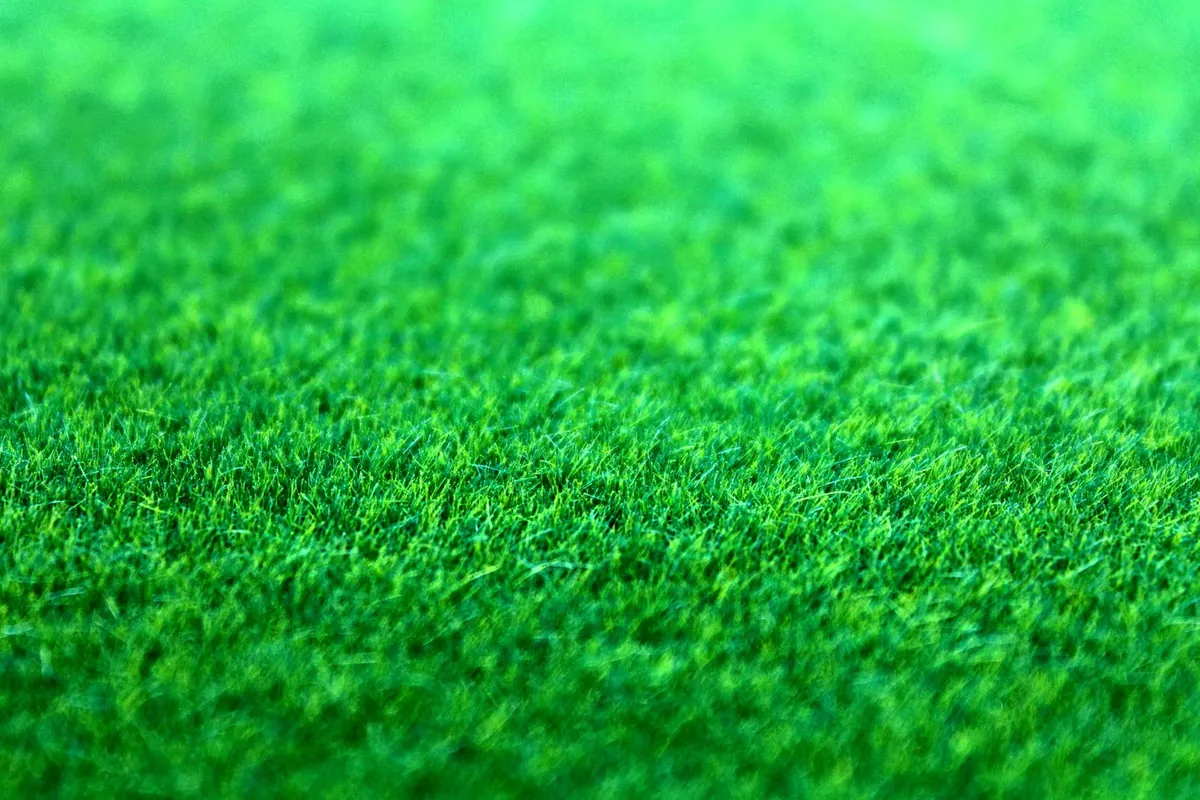
A morning mist should not cancel a session, but on an unpainted turf field it often does. The fibres trap water and hold a thin film underfoot, and players describe the surface as a slip-and-slide.
A pickleball court artificial turf specification that ignores drainage will fail in the shoulder season, when the surface is damp more often than it is dry. Wet-weather playability resolves into three specification items: backing perforation rate, sub-base slope, and infill grading.
Short pile without an open backing holds water in the fibre layer, because there is nowhere for it to go. The specification sheet should therefore name the backing type and the perforation pattern, with the supplier’s figures attached. Our line builds a PP plus net construction and a polyurethane backing, and the choice is a drainage question first.
The crew needs the slope and infill grading on the same document as the backing call. Bases, slope and perforations belong in one clause, not three separate conversations. On an artificial turf installation, drainage is decided on paper long before anyone stands on it in the rain.

Shock Pads: Comfort Without Killing Ball Speed
A sports shock pad is quoted in the 8 to 12 mm range where joint comfort matters without flattening the bounce entirely. That figure comes from supplier-facing guidance, so treat it as a starting point rather than a rule.
My position is simple. If ball feel comes first, a firm sub-base with short pile beats a thicker pad every time. A pad buys comfort across long sessions. It also adds a layer the ball must negotiate, and that shows as a slower response on an artificial turf installation.
Lines, Nets and Seams That Do Not Deflect
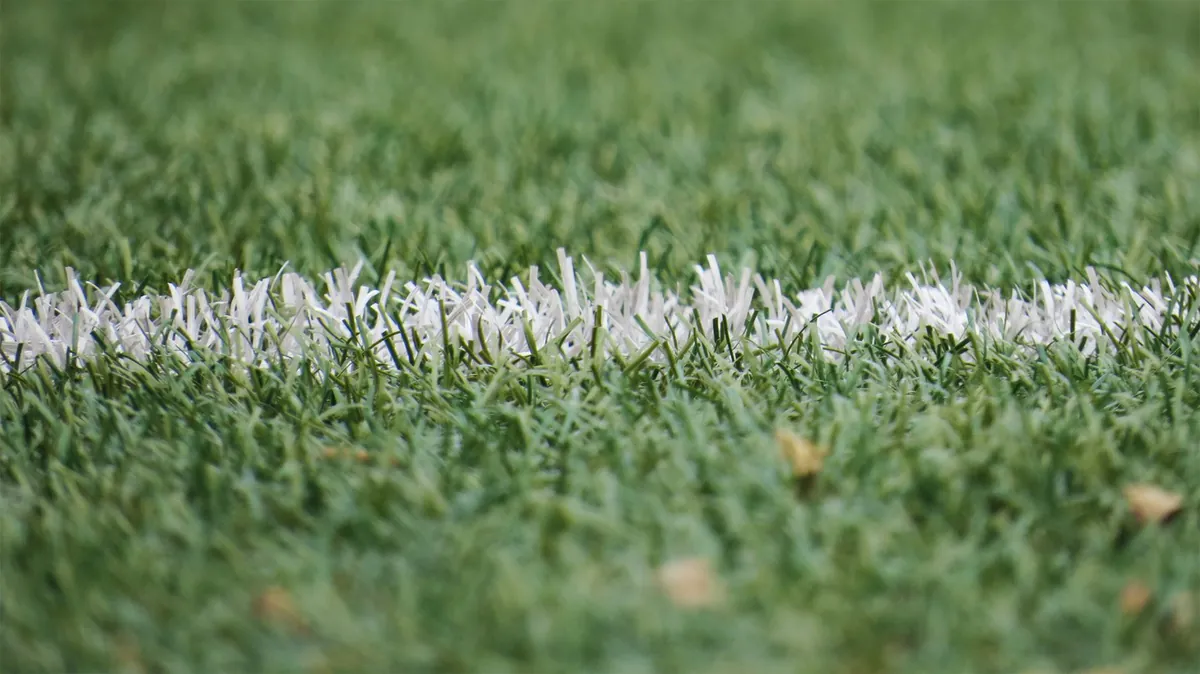
Line construction grades from inlaid lines, the best option, down through turf paint to fabric lines held with spikes. Inlay wins for one reason: the line sits in the surface rather than on top of it.
Paint sits on the fibres, so it wears where traffic is heaviest. Fabric lines held with spikes are the loosest; a spike lifts, the line shifts, and a call changes. For a pickleball court artificial turf build used daily, inlay is the only grade worth specifying.
Seams deserve equal care. Where tennis boundaries are overlaid with pickleball lines, dual-striped markings distract players, and a ball catching a seam or a faded line can shoot off at an odd angle. A seam under a line is a groove on a snooker table: invisible on a drawing, decisive on contact.
On a three-strip layout, plan the two seams away from the playing lanes and away from the line positions. Then ask for a strip plan and a seam plan drawn to your own dimensions.
Failure Modes Buyers Only Notice After Handover
Most surfacing complaints arrive in the second season, once first impressions have worn off and the schedule has settled. Five failure modes account for the bulk of them, and each is a specification decision that was never made rather than a material that failed.
Football pile: the ball never gets up
Long pile from 35 to 60 mm with rubber granules is built to absorb impact for studded boots. A pickleball driven into it loses its energy on the first bounce. The purchase consequence is a court that meets every line on the drawing and still plays wrong.
Rubber granule infill: the bounce gets swallowed
Rubber is the energy-absorbing component by design. Where an artificial turf installation is shared with field sports, that absorption is deliberate. On a dedicated pickleball court it reads as a dead surface, and no amount of brushing brings the pace back.
Uneven sub-base: dead spots and jumps
After seasons of multi-sport traffic, a sub-base settles inconsistently. Players cannot tell whether the ball will bounce or skid, and it skips out towards them more than on a hard court. The cure is a base decision, taken before the turf is unrolled.
Closed backing: a wet season of slipping
Without an open backing, water stays in the fibre layer and the surface holds a film. Regulars at one documented field skip play from October through May rather than risk a fall. The consequence is a court unusable for months of the year.
Painted or fabric lines: the ball changes direction
Paint wears and fabric shifts under spikes. A faded line is no longer a flat mark, and the ball reads it. Buyers who later ask why a top-up roll may not match in colour or pile learn that lesson late. The buyer who spent an afternoon comparing two suppliers’ specs catches it first.
| Check | On-site action |
|---|---|
| Ball response | Drop a ball from waist height on the court and on a hard court nearby, then compare the two rebounds directly |
| Bounce consistency | Walk the full court in a grid and drop the same ball at every stop, noting where it skids instead of bouncing |
| Pile condition | Brush a single lane and watch whether the flattened fibres lift back upright or stay pressed flat |
| Line construction | Lift a line edge with a blade and see whether the inlay holds its position or the fabric moves away |
| Drainage | Wet one square metre and watch how long the surface keeps holding a visible film of water |
| Seam position | Check every seam against the line plan, and confirm no seam crosses a playing lane or sits under a line |
These are acceptance actions, not maintenance jobs, and they belong on the handover checklist. They only work when the specification sheet travels with the crew that laid the turf.
What to Send Your Turf Supplier
Specification conversations move fastest when the buyer sends three things together: the court dimensions, the sports the surface must host, and the line positions on a marked plan.
Not sure which turf build suits your court?
Tell us the sports you run and your court dimensions. We match backing and pile height to your line plan and quote rolls from one batch.
Retrofitting Pickleball Lines Onto Existing Turf
Contractors convert an existing tennis court by adding custom pickleball line work plus an adjustable net, and the court then switches between sports. On a sound base, the line plan is the whole job. On an artificial turf installation built for football, it is not.
The honest test comes first. If the existing surface is 35 to 60 mm football pile dressed with rubber granules, new markings do not change the bounce. The problem lives in the pile and the granules, and a pickleball court artificial turf overlay inherits both along with the old lines.
Where the base is sound, the remedial list is short. Top up with a light sand dressing to firm the surface. Brush the lanes so flattened fibres lift back upright, and shift the pickleball zone onto the flattest run of the field.
On an artificial turf installation built for football, re-covering just the pickleball zone in short pile costs less than resurfacing the whole field. Local replacement is the honest fallback.
Verify with a field check rather than a published number. Drop a ball from waist height on the new area and on a hard court nearby, then compare the two rebounds side by side.
Assembling the Pickleball Turf Specification
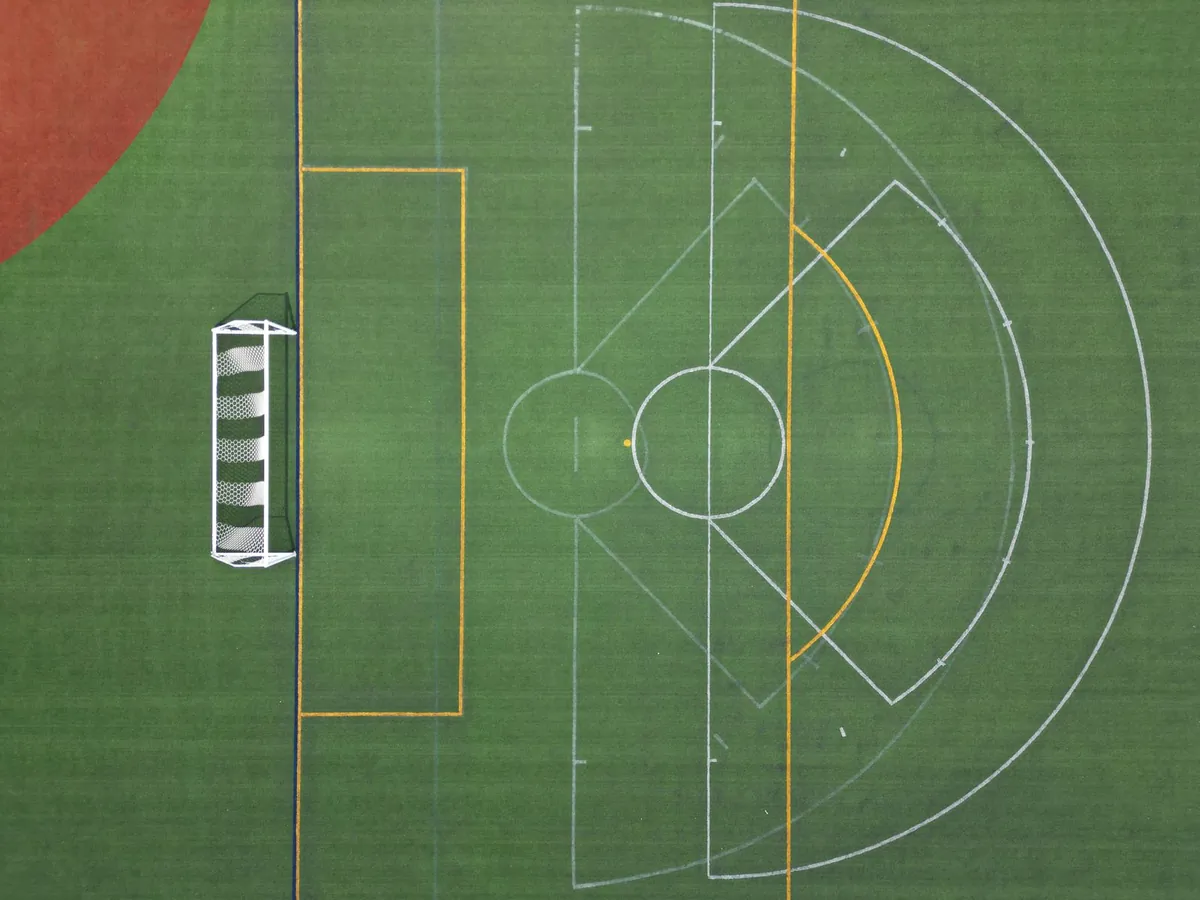
A specification sheet that closes without argument lists four groups of items and nothing else. Keep it to those four and the quote you receive can be compared line by line against any other.
Surface parameters: roll width, pile height, yarn, backing
These four fix what arrives on the truck. Rolls come in 2 m, 4 m and 5 m widths by 25 m length, with custom widths, and pile height, density, colour and backing are all customisable.
Functional parameters: infill, shock pad, line construction
These three decide how the surface plays. Write the infill type and its depth as a fraction of pile height. State the pad depth if a pad is used at all, and rank line construction with inlay first.
Area parameters: zone areas, strip plan, seam plan
These turn a drawing into a roll order. Zone areas give the total square metres, and the strip and seam plans show where every edge and joint lands.
Acceptance actions: retained sample and drop test
These settle the handover. Keep a retained sample of the delivered roll, then drop a ball from waist height on the finished court and against a hard court reference. That comparison is the whole pickleball court artificial turf acceptance test.
Questions fréquentes
Peut-on jouer au pickleball sur gazon synthétique ?
Oui, à condition que la surface soit construite pour le sport. Une hauteur de fibres courte de 10 à 16 mm sur une sous-couche ferme avec un apprêt sable léger renvoie la balle de manière prévisible. Une construction longue pour football avec granulés de caoutchouc offre un jeu lent et bas.
What pile height works best for a pickleball court?
Published guidance spans 10 to 16 mm for dedicated courts and 10 to 20 mm for shared surfaces. Use 16 to 20 mm for schools, 12 to 16 mm for club training, 10 to 13 mm for speed.
Does a pickleball turf court need infill?
Most dedicated courts use a light silica sand dressing that firms the surface and braces the fibres. Rubber granule infill absorbs energy and lowers bounce. On a shared field that absorption is deliberate; on a dedicated court it usually is not.
How many pickleball courts fit on a tennis court?
Two to four courts fit inside a tennis court on paper. Run-off requirements reduce the practical number to two or three, because each court needs buffer space outside the sidelines and behind the baselines before it can be played safely.
Why does the ball bounce so low on a turf court?
Bounce comes from pile height, infill type and sub-base hardness together. Long football pile absorbs the ball’s energy, and rubber granules absorb more, so the ball skids instead of rising. Shortening the pile and switching to sand restores a predictable bounce.
What size footprint should I price for one court?
Price the footprint including run-off, not the playing area. A court with recommended buffers measures 30 ft by 60 ft, about 167 square metres, which converts to three strips and two seams on a 4 m roll.


 French
  English
  Arabic
  German
  Portuguese
  Russian
  Spanish