
Relyir Gras
Kunstgras ab Werk seit 2006 — vollständige Individualisierung, Muster und schnelle Angebote.
Kunstrasen-Systeme
12 mm heavy-duty turf engineered for sled push and pull training. Factory-direct from Relyir — 20 years of sports turf manufacturing.
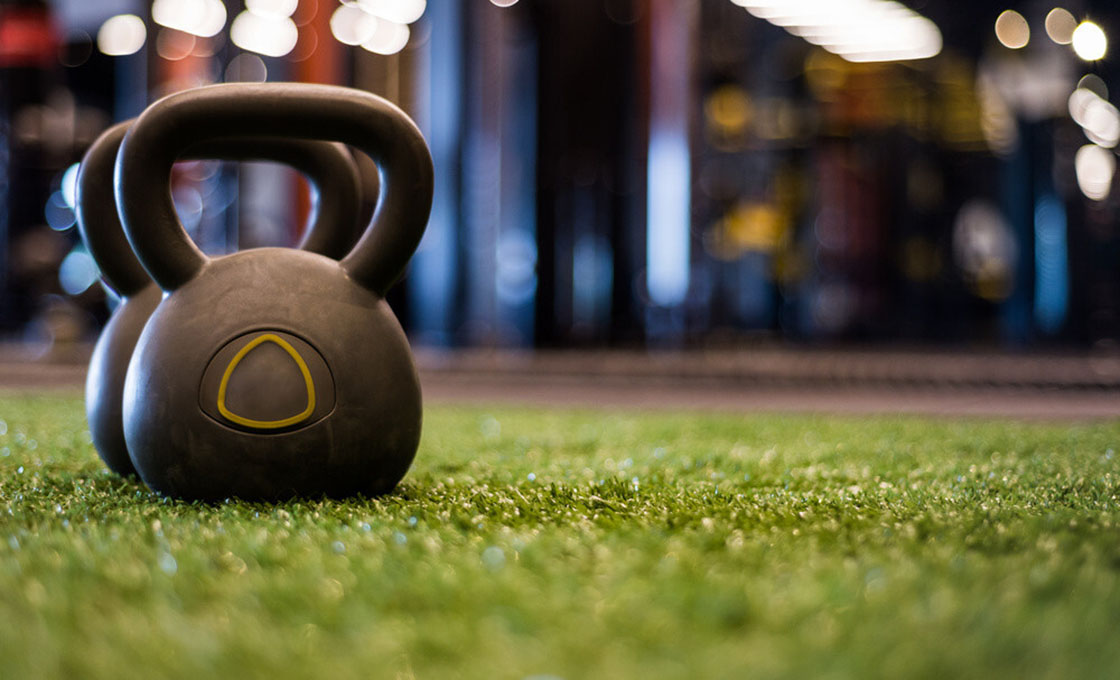
Why Specify Ultra-Dense Short Pile for Sled Lanes
Sled turf serves a specific purpose: a dedicated lane for pushing and pulling weighted sleds. The surface must reduce friction enough for smooth sled travel while remaining tough enough to resist abrasion from the sled runners — session after session, year after year.
Short pile (12 mm) at 52,500 tufts/m² creates a smooth, firm surface that lets sled runners glide without catching. The turf is short enough to prevent the sled from sinking but dense enough to provide cushion underfoot for the athlete.
A busy gym sled lane may see hundreds of loaded passes per day. PE monofilament at 52,500 tufts/m² distributes the abrasion across a dense fiber field, preventing the wear channels that develop in less dense products under continuous sled traffic.
While the sled needs low friction, the athlete needs grip. The turf surface provides enough traction for aggressive push-off and stable footing during pull exercises — without the excessive rotational resistance that could strain joints during directional changes.
Produktsortiment
Sled lanes need the shortest, densest pile in our sports range. Flat Curly Tenacity 12 at 52,500 tufts/m² is the primary recommendation — its ultra-dense 12 mm pile handles sled abrasion while providing athlete comfort.
| Modell | Florhöhe | Garn | Dichte | Drahtstärke | Reihenzahl | Trägergewebe | Farben |
|---|---|---|---|---|---|---|---|
| Flat Curly Tenacity 12 | 12 mm | PE-Monofilament | 52,500 tufts/m² | 3/16″ | 25/10 cm | PP + non-woven + PP (PU optional) | Feldgrün |
Roll sizes: 4 × 25 m or 2 × 25 m, maximum roll width 5 m. Distance markings and custom widths available on request. Full datasheets — including yarn weight and total weight — are provided with your quotation.
Leistungsdesign
Sled training is one of the most surface-demanding activities in functional fitness. The sled itself needs a low-friction path to glide smoothly, while the athlete pushing or pulling it needs firm grip underfoot. Generic gym flooring fails in both directions — rubber tiles tear under sled runners, and bare concrete provides no cushion for the athlete’s joints.
Flat Curly Tenacity 12 addresses both requirements through its 12 mm pile height and 52,500 tufts/m² density. The short pile keeps the sled runner riding on top of the fibers rather than sinking into them, while the extreme density distributes abrasion across enough fiber contact points to prevent wear-through.
Sled turf is typically installed as a narrow strip — 1–2 m wide and 10–20 m long — running the length of the training area. This format also doubles as a sprint lane and agility training area when the sled is not in use.
Different sled designs create different wear patterns. Push sleds with flat runners, pull sleds with rope attachments, and wheeled tank sleds all interact with the surface differently. The 52,500 tufts/m² density handles all three sled types, though flat runners and wheeled sleds create less concentrated wear than narrow metal runners.
No infill is used on sled turf — the short pile stands upright on its own at this density, and an infill-free surface ensures smooth, consistent sled travel without granule displacement under the runner.
Factory Direct from Jiangsu
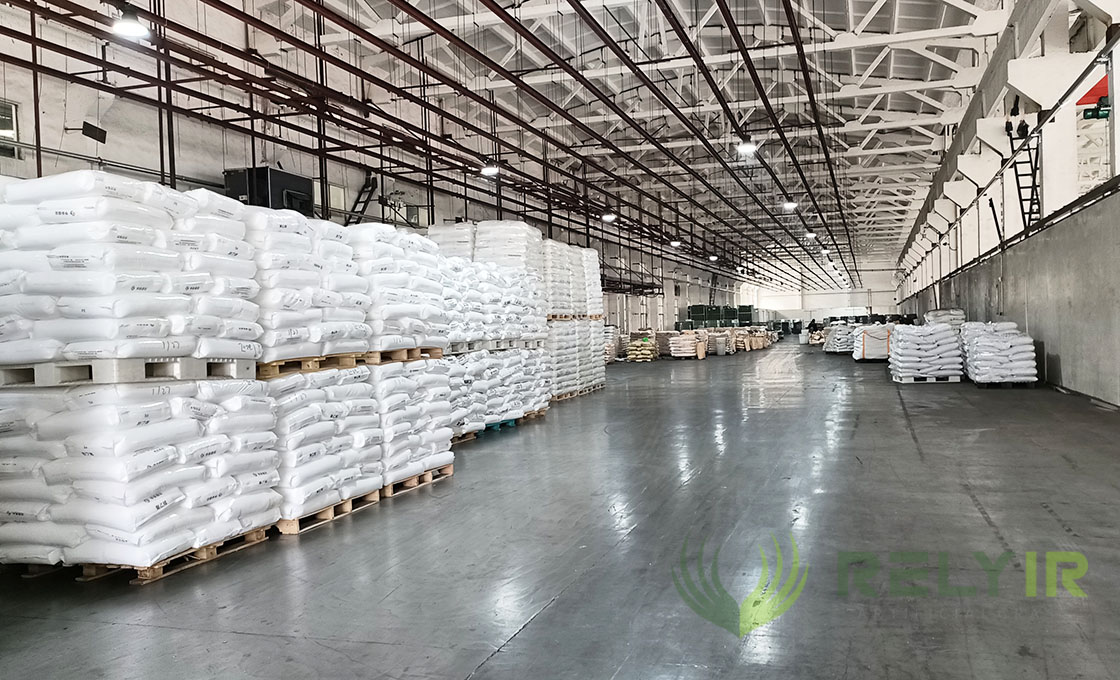
Relyir stellt seit 2006 Kunstrasen in Jiangsu her. Jeder Schritt – vom rohen PE-Granulat bis zur fertigen Rolle – läuft vor Ort, so kontrollieren wir die Qualität und halten die Preise 30–50% unter internationalen Vergleichsprodukten.
Alle acht Produktionsstufen werden vor Ort verwaltet, was die Qualitätslücken beseitigt, die entstehen, wenn Compoundierung, Florverlegung und Beschichtung in verschiedenen Anlagen erfolgen. Die 2015 in Betrieb genommene automatisierte Sportkunstrasenlinie erhöhte die Produktionskapazität um 150% und stärkte die Konsistenz bei Großaufträgen.
Anpassung ist in die Linie eingebaut: Faserdichte, Florhöhe und Faserfarben werden an die Projektspezifikation angepasst, mit PP + Netz- und PU-Rückseiten-Optionen. Das Exportteam hat seit 2009 an über 500 Kunden in 50+ Länder geliefert und bearbeitet alle Dokumentationen – von Rechnungen bis zu Ursprungszeugnissen.
Systemaufbau
Sled turf installation is straightforward — bond the turf to the gym floor and secure the edges. No infill is used, keeping the strip clean and low-maintenance.
Clean, dry concrete is the standard base. Any surface irregularities are filled and smoothed — bumps under a sled lane create friction points that affect sled travel and athlete safety.
Rolls are cut to the strip width (typically 1–2 m) and laid along the training lane. Seams are minimized by using full-width rolls where possible.
PU adhesive bonds the turf to the subfloor. Full bonding is essential — any loose area will lift under sled runners and create a tripping hazard.
Distance markers can be tufted into the turf during production or painted after installation. Tufted markings last the life of the carpet and do not wear off under sled traffic.

Generic gym flooring fails in sled lanes — rubber tiles tear, bare concrete destroys sled runners. Our Flat Curly Tenacity 12 at 52,500 tufts/m² provides the specific friction profile sled training demands: low enough for smooth sled travel, dense enough to survive thousands of loaded passes.
They can use the same product — Flat Curly Tenacity 12 at 52,500 tufts/m² works for both. The difference is in the installation format: sled turf is typically a narrow strip (1–2 m wide) optimized for sled travel, while gym turf covers a wider training zone. See our gym turf page for wider-area applications.
Standard sled strips are 1–2 m wide, which accommodates most push and pull sleds with room for the athlete alongside. We supply rolls in 2 m and 4 m widths — a 2 m roll works as a single strip, while a 4 m roll can be cut into two strips.
Sled runners create wear, but the 52,500 tufts/m² density distributes abrasion across a large number of fibers. Flat runners and wheeled tank sleds create less wear than narrow metal runners. Rotating the sled’s position on the strip periodically extends turf life.
Nein. Sled-Kunstrasen werden ohne Infill verlegt. Der kurze 12-mm-Flor steht bei 52.500 Strähnen/m² von selbst aufrecht, und eine infillfreie Oberfläche sorgt für eine gleichmäßige, konstante Sled-Bewegung ohne Verlagerung der Granulate.
Absolut. Dieselben Oberflächeneigenschaften, die die Kunstrasche für Sled-Übungen geeignet machen – fester Trittgriff, kurzer Flor für Geschwindigkeit – machen sie ideal für Sprintintervalle, Shuttle-Übungen und Agility-Ladder-Drills.
Standardrollen sind 4 × 25 m oder 2 × 25 m mit einer Maximalbreite von 5 m. Individuelle Breiten und Distanzmarkierungen können auf Anfrage arrangiert werden. Vollständige Datenblätter werden mit dem Angebot geliefert.
Senden Sie uns Ihre Bahnenmaße und Menge. Unser Exportteam antwortet innerhalb von 12 Stunden mit Modellempfehlungen, Spezifikationsblättern und Werksdirekt-Preisen.
Kostenloses Angebot anfordern German
  English
  Arabic
  French
  Portuguese
  Russian
  Spanish