
A shopper walks into a store to collect an order, and the queue barely moves. For twenty seconds her eyes rest on the wall behind the counter: flat, grey, and saying nothing about the brand she just chose. That dead stretch of plaster is exactly the surface a grass wall turns into the most photographed spot in the room. The catch is that the panel alone does nothing. Placement, scale, lighting and props decide whether it reads as design or as decoration from a discount bin.
Our promise here is narrower than the title: concrete ways to decorate grass walls, space by space, with the watch-outs each space carries. That means retail floors, offices, cafes, homes, events and trade show booths — and honest notes about where a grass wall is the wrong call. We grow and cut the turf, so expect factory-side specifics such as roll widths and viewing distances. We will not relitigate why green walls earn their space or how panels fix to masonry. Sister guides handle the benefits and the installation, and buying mistakes get their own treatment.

How to Plan a Grass Wall Layout
Start by giving the wall a job, because a grass wall behaves like stage scenery. From three steps back it convinces completely; up close, the lighting and props decide whether the illusion holds. A wall serving as a backdrop behind a counter needs a different build than one people photograph at arm’s length. Decide the role first — backdrop, framing device or divider — and every later choice gets easier.
Scale is the next decision, and budget follows it. Material pricing runs $7-60 per square meter (indicative — request exact quote), so a half-wall behind a sofa costs a fraction of a full-height feature wall. Our default advice for tight spaces and first installations: build the half-wall, live with it for a season, then extend if the room still asks for more green.
Seams are a layout variable most people forget. Wide rolls come 2m, 4m and 5m across and 25m long, covering 50, 100 and 125 square meters per roll. On a full retail or event wall, that width means joints land where nobody looks — or nowhere at all, since custom-cut sizes run seam-free. Pile height, density and color are all customisable at the factory, so match the spec to viewing distance. Dense and tidy where guests stand close; a single uniform tone where the wall reads from across the street.
Before committing, order the free 20x20cm samples and tape them to the actual wall. Check the tone under that room’s own lights, because retail fluorescents and warm cafe bulbs read the same grass differently. Samples ship by DHL or FedEx in 4-6 days, or 7-9 for remote areas, and custom sample production adds 10-15 days. If you want the argument for why green surfaces earn wall space, see why designers specify grass walls in the first place. And unlike a living green wall, none of this layout needs irrigation lines, grow lights or a gardener’s schedule built in.
Decorating Ideas for Retail and Storefronts
The fastest place to start in a shop is the counter, because that is where customers already stare for a minute or two. A grass panel running waist-to-shoulder height behind the till turns queue time into brand time. Picture a Saturday pickup queue: the customer ahead of you is now reading your promo card instead of inspecting scuffed plaster. A half-height run is also the kindest way to decorate grass walls on a first budget, because the counter hides the lower edge anyway. For shops refreshing commercial interiors more broadly, the same logic scales up through our commercial artificial grass range, cut from the same rolls.
The second workhorse is the logo wall: green field, brand mark centered at eye level, and an LED strip grazing down from above. That grazing light gives the pile shadow and depth, which is what separates a rich wall from a flat green rectangle. Keep the mark’s surroundings clear — the green should frame the logo, not compete with shelving, banners or a second light source. One watch-out: never run the grass behind moving staff or along main aisles, where shoulders and trolleys scuff the pile and the layout reads as clutter.
Grass Wall Ideas for Offices and Workspaces
Reception comes first for the same reason the cash desk does: it is the one wall every visitor studies. A green field behind the company logo photographs well in visitor selfies, which turns every guest into quiet distribution. Keep desk-level clutter out of the shot by running the wall from waist height upward.
In open-plan areas we recommend a half-wall at seated eyeline rather than a floor-to-ceiling build. It screens the monitor farm from the walkway while daylight and sight lines pass over the top. One panel behind a desk is enough for a video-call background, and close-up cameras reward a denser pile. Two placement notes: keep the wall out of direct airflow from HVAC vents, which flattens the pile over time, and let neutral furniture carry the color contrast.
Using Grass Walls in Cafes and Restaurants
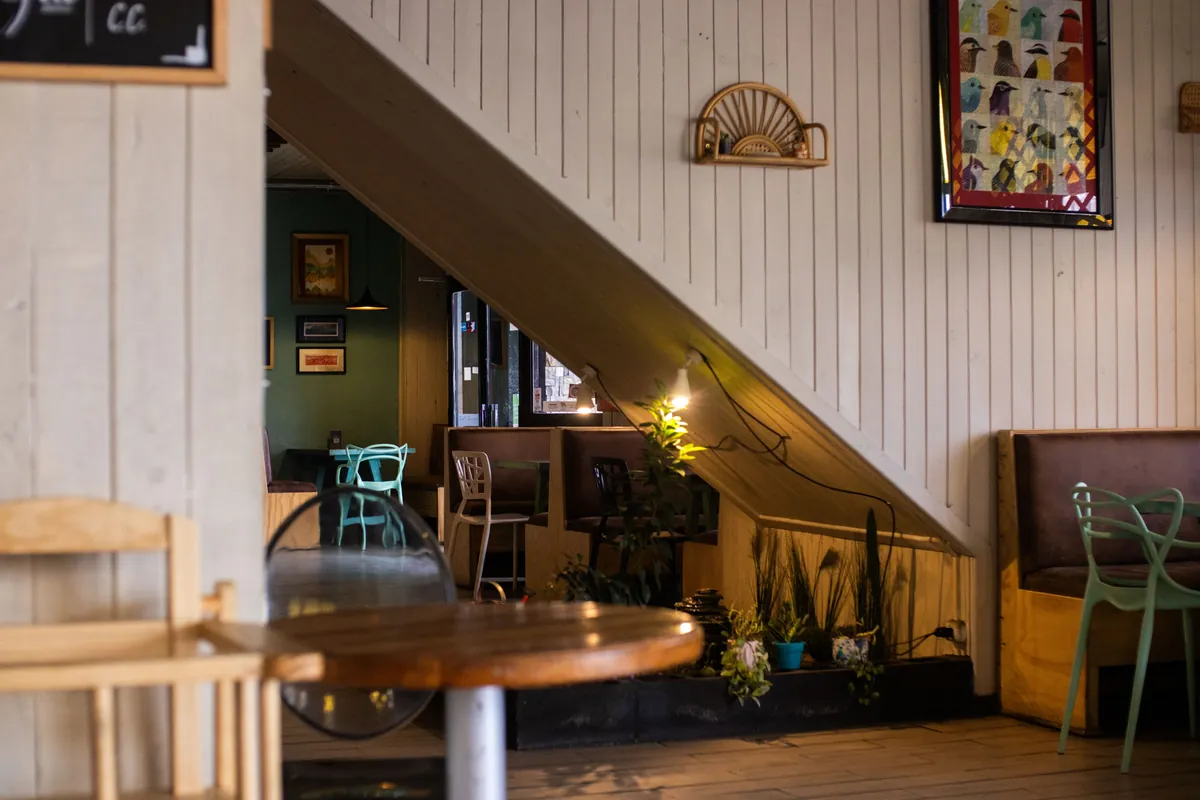
Hospitality spaces live on photographs, and a grass wall earns its keep fastest beside a window. Set a two-top against it and watch the Sunday brunch queue: half the waiting guests are shooting the corner while their table waits. That is marketing you never have to brief. Booth seating takes the same idea vertically — grass as a back panel behind the bench, capped with a warm wall light.
Out on the terrace, the same panels become a privacy screen along a railing or side wall. The material suits outdoor duty as readily as indoor, which is what lets one stock order cover both zones. Two watch-outs for food service: keep panels out of the fryer’s grease path, and plan wipe-down access as you would for any front-of-house surface. On the hygiene question that stops many owners, the fiber face holds no water and no soil, so it does not invite the pests that living plant walls sometimes do.
Grass Walls at Home: Balconies to Playrooms
Balconies are the classic first project, usually because of what the balcony faces. If your morning coffee comes with a view of the neighbor’s utility wall, a panel on the side wall trades that stare-line for a green horizon. Pair it with outdoor furniture pushed toward the green side and the smallest balcony gains a garden-room feel. Garden fences take the same treatment at larger scale, one bay at a time.
Indoors, treat the wall as a frame rather than a filler. Behind a sofa or a TV, run the green a little wider than the furniture, then stop. That border of bare wall is what makes the panel read as intentional rather than rolled-on.
A playroom corner takes a half-height run instead, at the height small hands actually reach. The material is non-toxic and free of allergens, so the corner where kids sit is a fine home for it. Few projects tidy up a sight line and add color in a single move the way this one does.
Plan Your Space
Tell us the room, the wall size and whether it sits indoors or out. The factory replies with a layout-friendly format, a spec and an indicative quote, and free samples let you test the green under your own lights first.
Grass Walls for Events and Trade Show Booths
Event work is where grass walls repay flexibility, because every venue needs a backdrop and almost none has one. A photo-booth wall wants the fullest, densest face you can give it, since camera flash exposes every seam and thin patch. Brands decorate grass walls at trade shows with a half-wall behind a counter: green to shoulder height, logo above the counter line, open space around it. Keep the counter front clear and let the green carry the back plane; a booth stuffed edge-to-edge reads smaller, not richer.
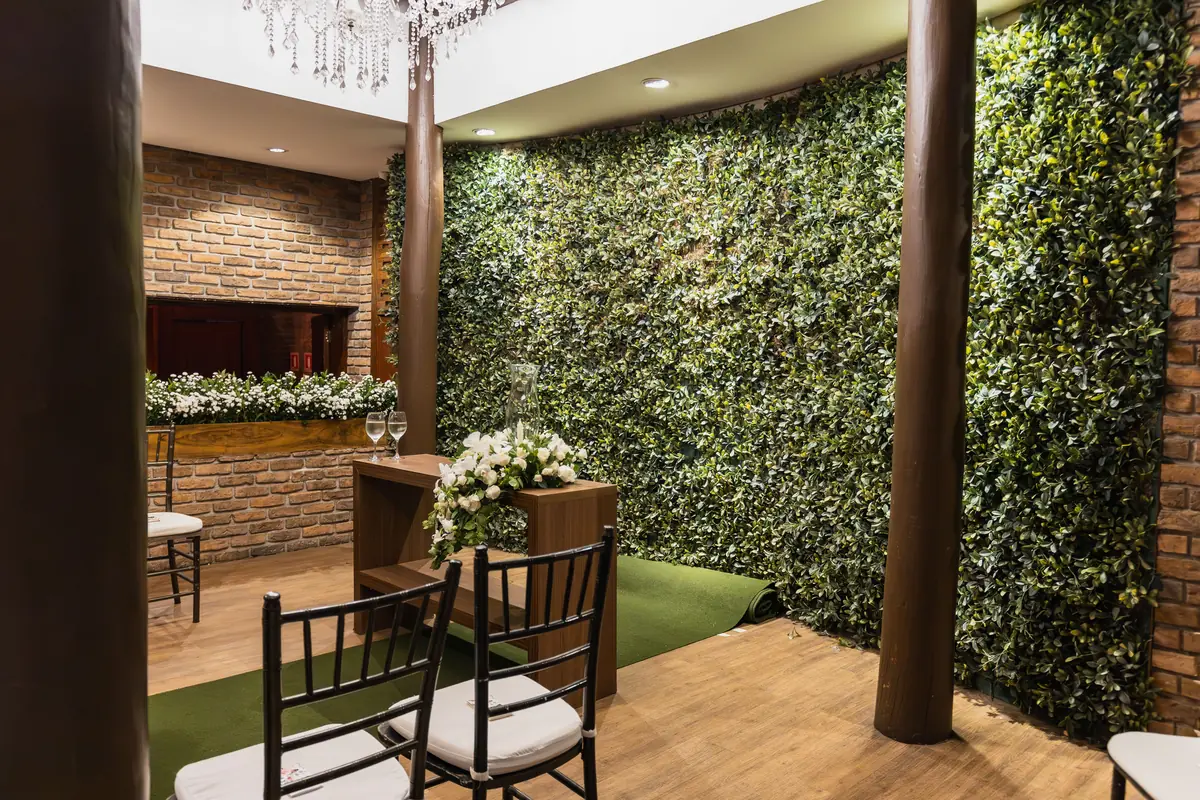
Weddings use the same green in a softer frame: two flanking panels beside an arch, or a single run ending the aisle. Venue lighting is the variable to check — flat hall ceiling light erases depth, so a washed or grazed wall photographs far better. One boundary note: how panels mount, brace and come apart for the next show is its own craft, covered in our grass wall installation guide. Plan the decor around the mounting plan, not after it, and the wall survives teardown for the next city.
Color carries the same warning on the road. Venue uplighting in amber or magenta will repaint any green, so judge the panels under show lighting, not office light.
Styling Mistakes That Make Grass Walls Look Cheap
Covering every centimeter
Most people decorate grass walls by covering every centimeter they can find, and that is the fastest route to a cheap-looking result. Grass reads as a material when it has edges; wall-to-wall, it reads as carpet glued vertically. Leave breathing room — a border of plaster, timber or paint — and the green suddenly looks specified.
Flat, shadowless lighting
One overhead source squashes the pile’s shadow and the wall turns into a green rectangle. Grazing light from above or beside restores the depth for the cost of a fixture.
Props without breathing room
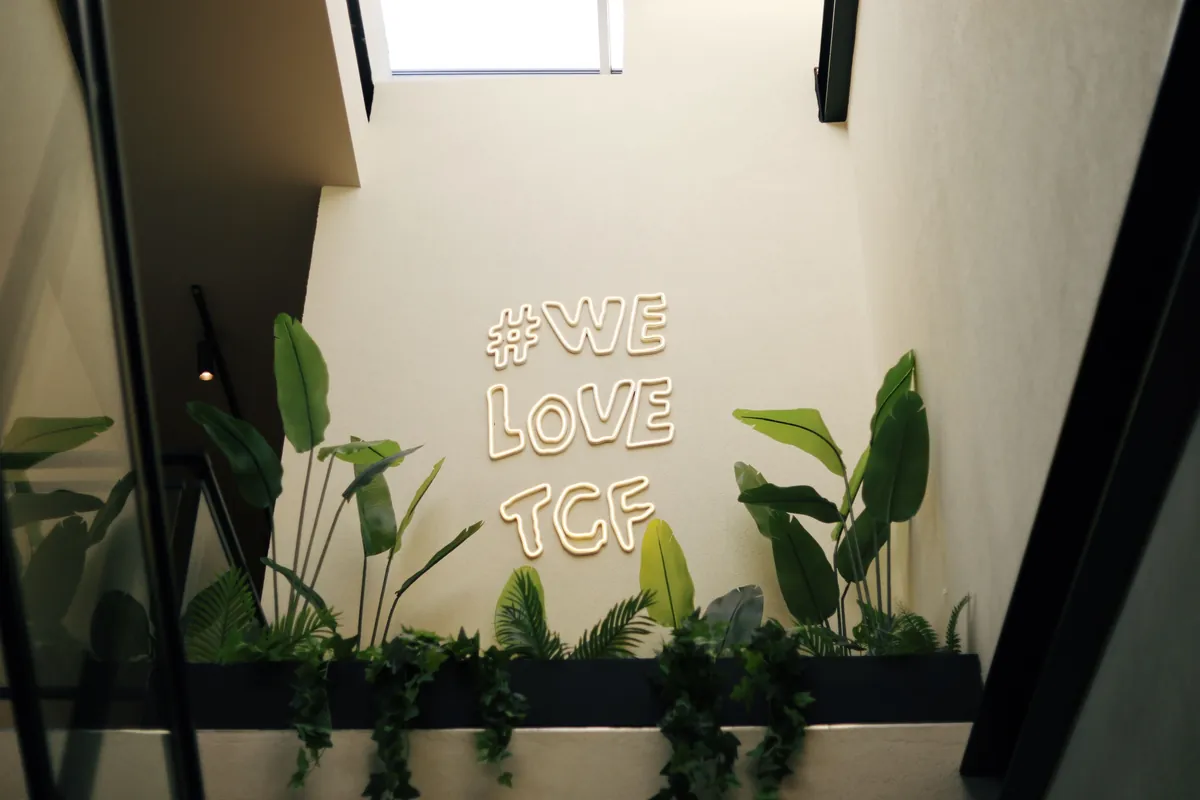
Props need restraint: a neon sign or a logo at eye level with clear space around it beats a shelf rammed against the fibers.
Clashing color temperatures
Last, mind the room’s color temperature. Cool-toned grass under warm amber lighting can shift fluorescent, which is exactly what the taped sample check in the planning step catches. Fix the mismatch on paper, not after the wall is up.
The short version, space by space:
| Space | Layout that works | Watch-out |
|---|---|---|
| Comptoir de vente au détail | Panneau mi-hauteur derrière la caisse, logo au-dessus de la ligne du comptoir | À éloigner des allées principales et des passages du personnel |
| Bureau | Mur logo de réception ; mur mi-hauteur à hauteur des yeux assise en plan ouvert | À éviter sur les trajectoires de flux d'air CVC |
| Café ou restaurant | Coin photo adjacent à une fenêtre ; panneau arrière de loge avec un luminaire mural | À éloigner de la trajectoire des graisses |
| Accueil | Mur latéral du balcon ; bordure verte plus large que le canapé | S'arrêter à un bord — pas de panneaux d'un mur à l'autre |
| Événements | Mur dense de cabine photo ; mur mi-hauteur de loge avec un avant-comptoir ouvert | Vérifier l'éclairage du lieu avant de concevoir la mise en scène |
| Arche de mariage | Deux panneaux latéraux ou un seul panneau terminant l'allée | Un éclairage chaud en contre-jour modifie les verts froids — tester des échantillons |
Questions fréquentes
Quelle est la méthode la moins chère pour décorer des murs en herbe ?
Habiller un seul pan plutôt que toute la pièce : un mur mi-hauteur derrière un comptoir, un canapé ou un bureau. Couvrir la moitié de la surface divise approximativement par deux la facture de matériaux, et le mobilier s'occupe d'une partie du cadrage gratuitement.
Les murs en herbe fonctionnent-ils dans les petites pièces et les appartements ?
Oui, et c'est dans les petites pièces que la retenue est le plus profitable. Un seul panneau mi-hauteur sur un mur latéral du balcon ou derrière un bureau apporte la touche de vert sans réduire la surface au sol comme le ferait un mur pleine hauteur.
Quel éclairage fonctionne le mieux avec un mur en herbe ?
Une lumière qui rase le gazon depuis le dessus ou le côté. La lumière rasante crée de petites ombres qui apportent de la profondeur, tandis qu'une seule source plate au plafond aplatit le mur en un simple rectangle vert.
Peut-on installer des murs en herbe en extérieur sur des balcons et des clôtures ?
Oui. Les mêmes panneaux servent en intérieur comme en extérieur, donc balcons, garde-corps et clôtures de jardin sont des emplacements naturels. Pour les zones exposées, faire valider les détails de drainage et de fixation par le poseur avant.
Comment faire correspondre un mur en herbe aux couleurs de ma marque ?
Commander d'abord des tuiles d'échantillon : la couleur du gazon, la densité et la hauteur sont personnalisables en usine, de sorte que le vert peut se placer à côté de votre palette plutôt qu'en conflit avec elle. Tester l'échantillon sous l'éclairage réel de la pièce avant d'approuver le ton.


 French
  English
  Arabic
  German
  Portuguese
  Russian
  Spanish