
Dois compradores estão sentados um de frente para o outro à mesa, cada um segurando uma ficha técnica para um gramado do mesmo tamanho. Uma ficha lista 60 onças por jarda quadrada; a outra mostra 2.034 gramas por metro quadrado. Nenhum dos dois consegue dizer qual rolo realmente tem mais fio, porque os dois números falam em linguagens de medição diferentes.
O ponto aqui é mais específico do que uma explicação geral. O peso superficial é um número em uma longa ficha técnica, e ele responde a uma pergunta específica: quanto fio está em cada quadrado de gramado. Tudo o mais naquela ficha ainda importa, e diremos claramente quando um número maior ajuda e quando não ajuda.
O Que o Peso Superficial Mede e Por Que os Compradores O Interpretam Errado
O peso superficial da grama sintética é o peso do fio sozinho em uma jarda quadrada de gramado. Inclui as fibras e a camada de sub-cama, mas exclui o forro e qualquer material de enchimento. Compradores que o interpretam como o peso total do rolo já estão um passo atrás antes de comparar dois produtos.
A maioria das fichas técnicas imprime este número em onças por jarda quadrada, enquanto outras imprimem gramas por metro quadrado, e algumas imprimem ambos. Essa incompatibilidade é a razão pela qual dois compradores com o mesmo gramado podem segurar fichas que parecem impossíveis de comparar. Em instalações de grama sintética de todas as escalas, o primeiro erro de leitura quase sempre começa aqui.
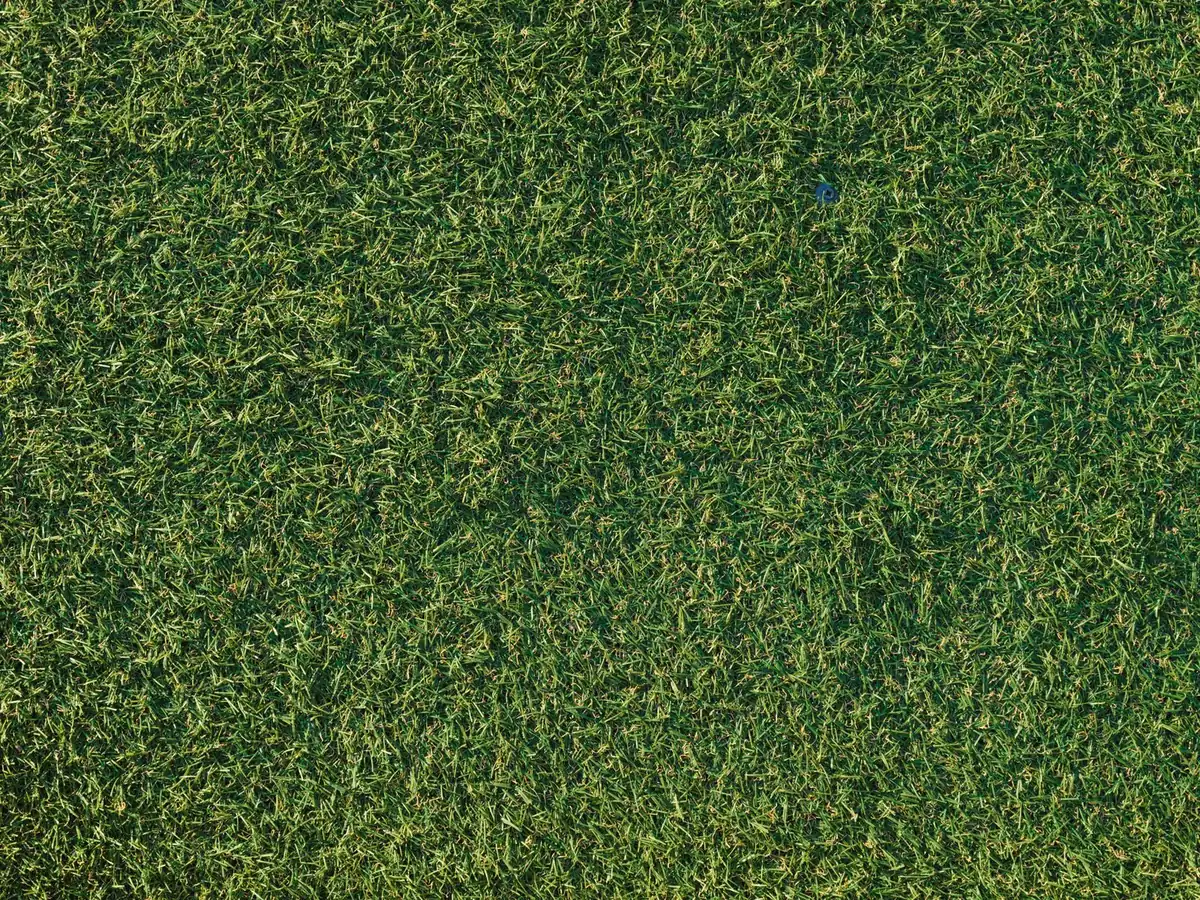
O peso superficial responde bem a uma pergunta: quanto fio está em cada quadrado de gramado. Não diz como a superfície se sente ao toque após o enchimento, como o rolo se comporta sob carga, ou por quanto tempo a how artificial grass cost per square metre is built up across the other specification factors.
Converter onças por Jarda Quadrada para o Sistema Métrico
The unit gap is the reason face weight feels mysterious. A US spec sheet lists 60 oz per square yard; a metric sheet lists 2,034 grams per square metre for what may be the same roll. Without a bridge between the two, the bigger printed number looks like the better product even when it is not.
The bridge is a fixed factor for artificial grass face weight: one ounce per square yard equals about 33.9 grams per square metre. Multiply the ounce figure by 33.9 and the two systems line up. The standard definition of gramado sintético and its fibre terminology uses the same units, which is a useful check when a vendor’s labels differ.
| Ounces per square yard | Grams per square metre |
|---|---|
| 40 oz | 1,356 g/m² |
| 60 oz | 2,034 g/m² |
| 80 oz | 2,712 g/m² |
Read the table as a first-pass translator, not a verdict. Some vendors fold the thatch layer into face weight and some report yarn only, so the same roll can land a few percent apart between two sheets. Use the conversion to compare like with like, then confirm the real density from a sample in your hand.
Peso Superficial, Peso Total e Densidade em Comparação
Three numbers travel together on a turf spec sheet, and they are easy to confuse. Face weight is the yarn mass per area. Total weight adds the backing and any pre-attached infill. Density counts the tufts in each square. On artificial turf installations, the three decide different things, so reading them as one number is the usual error.
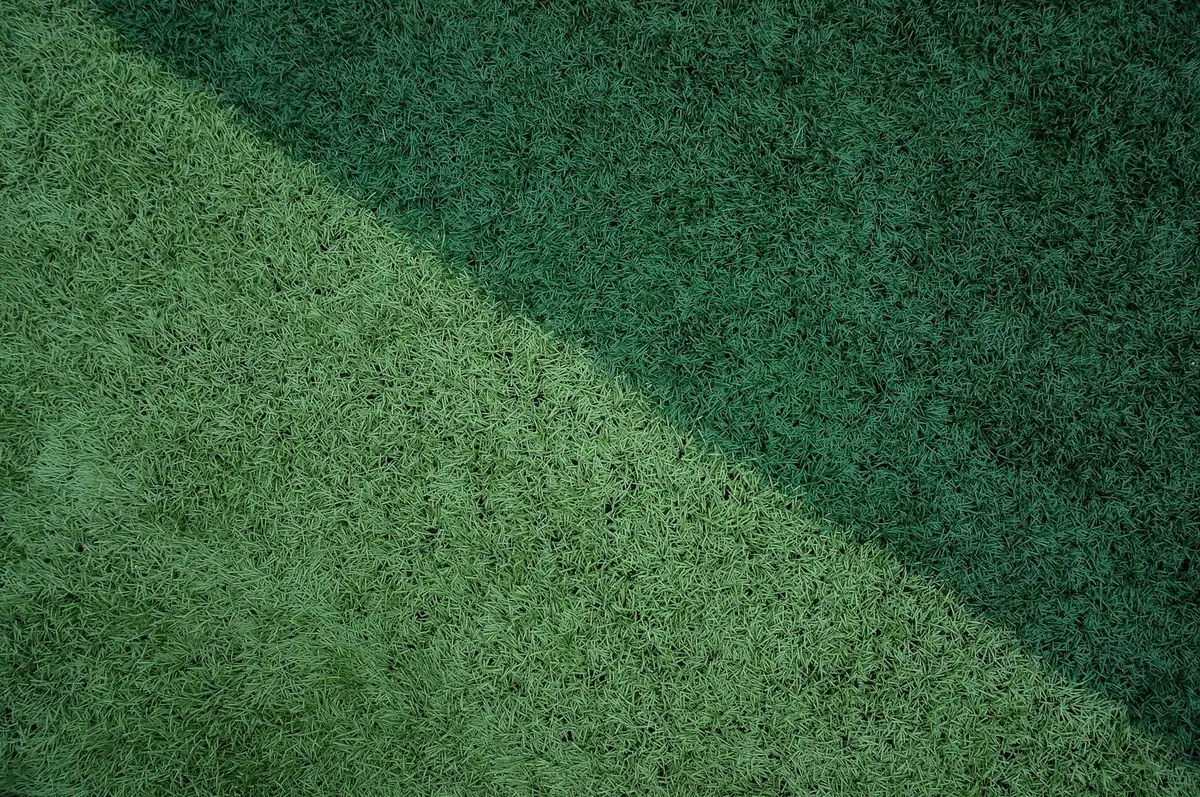
The trap is that a high face weight can come from few, thick fibres, which leaves density low. A high density can come from many thin fibres, which leaves the weight modest. Neither number alone tells you how the surface will look or hold up, which is why spec sheets that print one and hide the others mislead by omission.
Use the numbers in order. Read face weight to gauge yarn quantity, then density to gauge how packed it is, then pile height to see how that yarn spreads across the surface. Only when all three line up with the use does the comparison mean anything across brands.
Como o Peso Superficial Influencia a Recuperação, o Toque e a Durabilidade
Face weight shapes how the surface behaves after it is walked on, and the mechanism is simple to picture. More yarn means more neighbouring blades that lean on each other, like a crowd that holds a person upright. That mutual support lets the pile spring back faster after feet, furniture or pet claws press it flat.
Heavier yarn also resists matting in busy spots, because the extra fibres share the compression instead of collapsing. This is where artificial grass face weight earns its keep: the extra yarn absorbs traffic that would fold a light pile. The softness underfoot comes mostly from the yarn polymer and any infill, not from the weight alone.
Lifespan is the part most pages overstate. A denser yarn layer shades the backing and spreads wear, which helps the look last, but UV stability, backing quality and drainage decide how long the colour and shape survive. Face weight is one contributor, not the single switch, and no honest spec sheet reduces lifespan to this one digit.
Faixas Sensatas de Peso Superficial por Aplicação
Use decides the band more than any rule of thumb. Common vendor bands run light at about 30-50 oz, mid at about 50-80 oz, and heavy at 80 oz and above, though the cut lines move between suppliers. Across artificial turf installations, the light band suits decorative areas and the heavy band suits sports.
If you are choosing for a home, our opções de gramado sintético residencial show which bands suit each backyard use. Pets and play areas with daily traffic sit in the mid to heavy band, while a feature strip that nobody walks on can stay light without looking cheap. Even so, artificial grass face weight should be confirmed by sample, not by the printed band.
| Use | Ounces per sq yd | Grams per sq m |
|---|---|---|
| Decorative, low traffic | 30-50 oz | ~1,000-1,700 g/m² |
| Backyard, pets, play | 50-80 oz | ~1,700-2,700 g/m² |
| Sports, commercial | 80+ oz | ~2,700+ g/m² |

Trate a tabela como ponto de partida, não como um rótulo para colar em um pedido. O mesmo uso pode deslocar uma faixa quando o clima, os móveis ou a drenagem alteram a carga, e os fornecedores divergem sobre onde uma categoria termina. O teste final confiável continua sendo a amostra na mão, comparada ao uso que você realmente tem.
Ler o Peso Superficial a Partir de uma Amostra, Não de uma Ficha Técnica
Uma folha de especificações pode imprimir um número que o rolo na mão contradiz em silêncio. A folha nunca mostra como o fio se sente, como a felpa se assenta na raiz, nem com que rapidez o pelo retorna após a pressão. Em instalações de grama sintética, as equipes confiam na amostra em vez da folha por exatamente esse motivo, e os compradores deveriam fazer o mesmo.
O teste de escovamento leva dez segundos. Pressione o pelo para trás com a palma da mão, depois solte e observe. Uma amostra densa e bem pesada se ergue e esconde a base; uma fina permanece dobrada e expõe a raiz. Repita algumas vezes para simular tráfego real.
O teste de pressão com o dedo é a segunda leitura. Pressione um ponto por cinco segundos, solte e cronometre a recuperação. Uma amostra mais pesada, bem fixada, perde o amassado em um instante; uma leve mantém a marca. Juntos, os dois testes mostram o peso da face como ele realmente se comporta, não como está impresso.
Vire a amostra e dobre-a suavemente para ver a fixação dos tufões. A base deve travar as raízes dos fios para que nenhuma lâmina se solte na base. Fixação frouxa dos tufões significa que o peso existe no papel, mas não onde importa, e isso aparece como perda de fios muito antes que o gramado pareça desgastado.
Order the sample first, test it, then write the result into the brief as a pass line. One roll can look identical to another on paper yet feel different in the hand, so the sample is the only honest acceptance step before the full width is cut.
Read the Fibre With Your Own Hands
You can read a specification sheet all day and still not feel the density. Request free samples and run the brush-back and finger-press tests described above before you commit a roll width to your order.
Por Que o Gramado Mais Pesado Não é Automaticamente a Melhor Compra
The SERP default is that heavier is better, and for busy ground that is often true. But a very heavy roll in a quiet decorative strip spends yarn you will never see in the result. You pay for fibre that the eye and the foot never use, and the look barely changes against a lighter band. Spending up on artificial grass face weight only pays where the traffic justifies it.
Weight also fails on its own when the rest of the build does not keep up. A heavy yarn over a weak backing, or with infill that cannot support it, gives you a roll that is heavy but unstable. The money is better placed in UV stability, backing quality and drainage, the parts that actually extend service life.

The practical rule is to match first, then verify. Define the use and the traffic, pick the band that fits, and confirm density and springback from a sample before you buy. If two samples feel equally dense, take the lighter one; the extra grams are likely marketing, not performance.
Como Incluir o Peso Superficial em um Briefing de Compra
Writing face weight into a purchase brief turns a vague request into a comparable spec. State the band in ounces per square yard and add the grams per square metre equivalent, so a metric supplier and an imperial one answer in the same language. A clear brief prevents the artificial turf installation quote from drifting on unspecified factors.
Add a measurement clause so vendors report face weight the same way. Ask whether the figure includes the thatch layer, because that single choice moves the number for artificial grass face weight by a visible margin between two quotes. Aligning the method matters more than arguing over which printed digit looks bigger.
Close the brief with a sample acceptance line. Start by ordering free samples and write the brush-back and finger-press result into the order as the standard the delivered roll must meet. A brief without a sample check leaves the most important number unverified at exactly the moment it matters.
Peso Superficial em Comparação com a Altura do Pelo e a Densidade
Pile height changes what a given face weight means. The same yarn mass spread over a longer pile looks thinner and less dense than the same mass on a short pile. Weight divided by height, not weight alone, is what your eye reads as fullness, so comparing weight across two different pile heights is a false move. On artificial turf installations, mismatched pile heights fool more buyers than any other number.
Density and face weight pull in the same direction but from different angles. Density counts the tufts; face weight counts their mass. High density with fine yarn can match the look of heavier yarn at lower density, so the two numbers must be read as a pair, never one without the other.
Dtex adds the third angle to the same question. Two rolls at the same face weight can feel opposite if one uses few thick fibres and the other uses many fine ones. Thatch complicates it further, because a thick thatch layer lifts the face weight without adding standing blades. Read all three together, and the single printed number for artificial grass face weight finally tells the truth.
Perguntas Frequentes
Which face weight should I order for a family backyard?
There is no single number. Decorative areas do fine on a lighter band, family backyards land in the middle, and pet or high-traffic zones want a heavier band. Vendors tier differently, so confirm the final choice by feel from a sample.
Does face weight really matter more than density?
It sets how much yarn sits in each square of turf, which drives look, springback and resistance to matting. But it alone does not set lifespan; density, UV stability, backing and drainage matter too. Weight is one factor, not the whole story.
Why is total weight higher than face weight on a spec sheet?
Face weight counts only the yarn, including the thatch layer but not the backing or any infill. Total weight adds the backing and any pre-attached infill, so it is larger. Total weight matters for shipping and load, not for look or lifespan.
How do you convert face weight from oz per square yard to grams per square metre?
Multiply the ounce figure by about 33.9. So 40 oz is roughly 1,356 g/m², 60 oz is about 2,034 g/m², and 80 oz is near 2,712 g/m². Treat the result as a first pass, because vendors measure slightly differently.
Is a heavier face weight always better?
Not always. A very heavy roll in a quiet decorative spot spends yarn you cannot see in the result. Weight only pays when the backing and infill keep up. Match the band to the use first, then confirm density from a sample.

 Portuguese
  English
  Arabic
  French
  German
  Russian
  Spanish