
Two buyers sit across a table, each holding a specification sheet for the same sized lawn. One sheet lists 60 oz per square yard; the other shows 2,034 grams per square metre. Neither can tell which roll actually carries more yarn, because the two numbers speak different measurement languages.
The point here is narrower than a general explainer. Face weight is one number on a long specification sheet, and it answers a specific question: how much yarn sits in each square of turf. Everything else on that sheet still matters, and we will say plainly when a higher number helps and when it does not.
What Face Weight Measures and Why Buyers Misread It
Artificial grass face weight is the weight of the yarn alone in one square yard of turf. It includes the blades and the thatch layer, but it leaves out the backing and any infill. Buyers who read it as the whole roll weight are already one step behind before they compare two products.
Most specification sheets print this number in ounces per square yard, while others print grams per square metre, and a few print both. That mismatch is why two buyers with the same lawn can hold sheets that look impossible to compare. Across artificial turf installations of every scale, the first reading error almost always starts here.
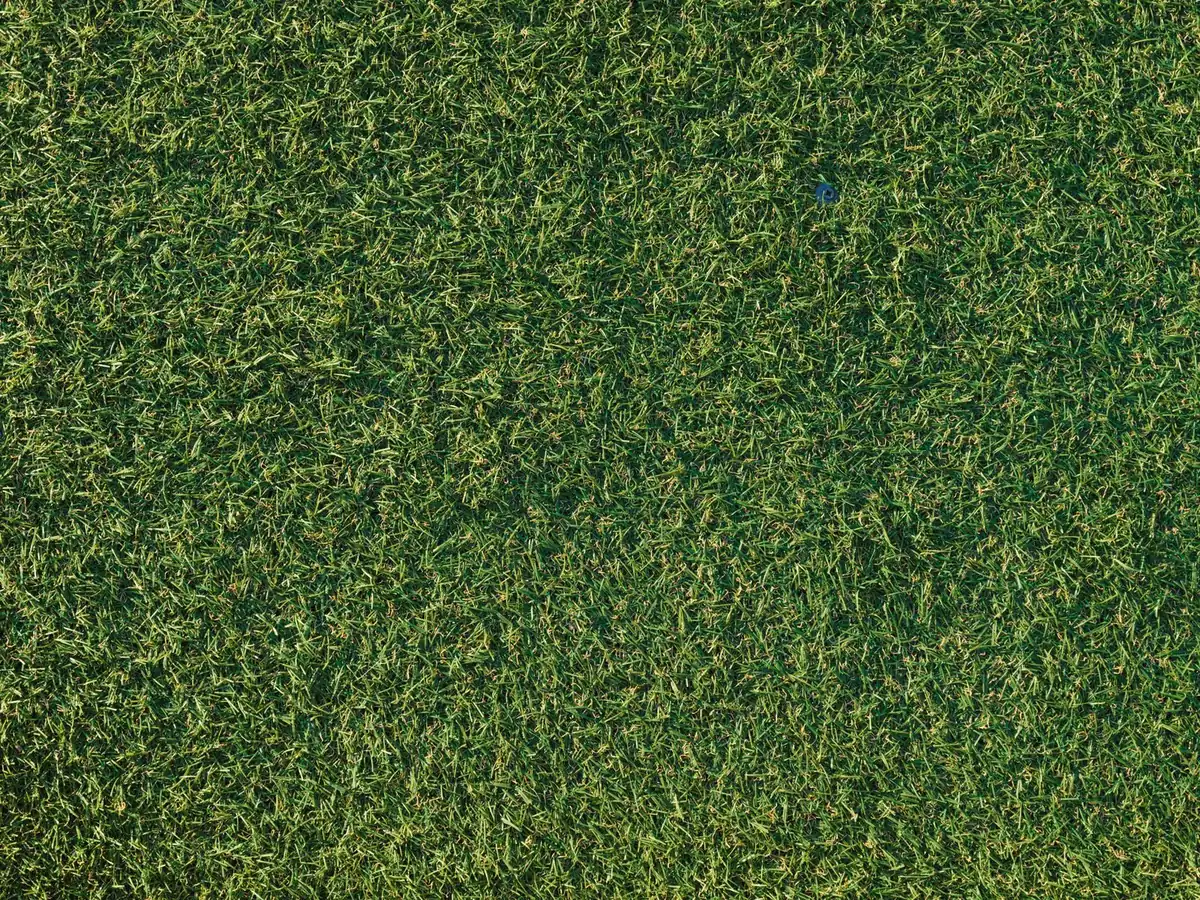
Face weight answers one question well: how much fibre sits in each square of turf. It does not tell you how soft the surface feels once infilled, how the roll behaves under load, or how long the colour holds. For the full picture of what moves the per-square-metre price, see how artificial grass cost per square metre is built up across the other specification factors.
Converting oz per Square Yard to Metric
The unit gap is the reason face weight feels mysterious. A US spec sheet lists 60 oz per square yard; a metric sheet lists 2,034 grams per square metre for what may be the same roll. Without a bridge between the two, the bigger printed number looks like the better product even when it is not.
The bridge is a fixed factor for artificial grass face weight: one ounce per square yard equals about 33.9 grams per square metre. Multiply the ounce figure by 33.9 and the two systems line up. The standard definition of artificial turf and its fibre terminology uses the same units, which is a useful check when a vendor’s labels differ.
| Ounces per square yard | Grams per square metre |
|---|---|
| 40 oz | 1,356 g/m² |
| 60 oz | 2,034 g/m² |
| 80 oz | 2,712 g/m² |
Read the table as a first-pass translator, not a verdict. Some vendors fold the thatch layer into face weight and some report yarn only, so the same roll can land a few percent apart between two sheets. Use the conversion to compare like with like, then confirm the real density from a sample in your hand.
Face Weight, Total Weight and Density Compared
Three numbers travel together on a turf spec sheet, and they are easy to confuse. Face weight is the yarn mass per area. Total weight adds the backing and any pre-attached infill. Density counts the tufts in each square. On artificial turf installations, the three decide different things, so reading them as one number is the usual error.

The trap is that a high face weight can come from few, thick fibres, which leaves density low. A high density can come from many thin fibres, which leaves the weight modest. Neither number alone tells you how the surface will look or hold up, which is why spec sheets that print one and hide the others mislead by omission.
Use the numbers in order. Read face weight to gauge yarn quantity, then density to gauge how packed it is, then pile height to see how that yarn spreads across the surface. Only when all three line up with the use does the comparison mean anything across brands.
How Face Weight Shapes Recovery, Feel and Lifespan
Face weight shapes how the surface behaves after it is walked on, and the mechanism is simple to picture. More yarn means more neighbouring blades that lean on each other, like a crowd that holds a person upright. That mutual support lets the pile spring back faster after feet, furniture or pet claws press it flat.
Heavier yarn also resists matting in busy spots, because the extra fibres share the compression instead of collapsing. This is where artificial grass face weight earns its keep: the extra yarn absorbs traffic that would fold a light pile. The softness underfoot comes mostly from the yarn polymer and any infill, not from the weight alone.
Lifespan is the part most pages overstate. A denser yarn layer shades the backing and spreads wear, which helps the look last, but UV stability, backing quality and drainage decide how long the colour and shape survive. Face weight is one contributor, not the single switch, and no honest spec sheet reduces lifespan to this one digit.
Sensible Face Weight Ranges by Application
Use decides the band more than any rule of thumb. Common vendor bands run light at about 30-50 oz, mid at about 50-80 oz, and heavy at 80 oz and above, though the cut lines move between suppliers. Across artificial turf installations, the light band suits decorative areas and the heavy band suits sports.
If you are choosing for a home, our residential artificial grass options show which bands suit each backyard use. Pets and play areas with daily traffic sit in the mid to heavy band, while a feature strip that nobody walks on can stay light without looking cheap. Even so, artificial grass face weight should be confirmed by sample, not by the printed band.
| Use | Ounces per sq yd | Grams per sq m |
|---|---|---|
| Decorative, low traffic | 30-50 oz | ~1,000-1,700 g/m² |
| Backyard, pets, play | 50-80 oz | ~1,700-2,700 g/m² |
| Sports, commercial | 80+ oz | ~2,700+ g/m² |

Treat the table as a starting point, not a label to paste on an order. The same use can shift a band when climate, furniture or drainage change the load, and vendors disagree on where one tier ends. The reliable end check is still the sample in your hand, weighed against the use you actually have.
Reading Face Weight From a Sample, Not a Spec Sheet
A specification sheet can print a number that the roll in your hand quietly contradicts. The sheet never shows how the yarn feels, how the thatch sits at the root, or how fast the pile returns after pressure. On artificial turf installations, crews trust the sample over the sheet for exactly this reason, and buyers should too.
The brush-back test takes ten seconds. Press the pile backward with the palm of your hand, then let go and watch. A dense, well-weighted sample pops upright and hides the backing; a thin one stays folded and exposes the root. Repeat it a few times to mimic real traffic.
The finger-press test is the second read. Push one spot down for five seconds, release, and time the recovery. A heavier, well-tufted sample loses the dent within a moment; a light one holds the hollow. Together the two tests show the face weight as it actually behaves, not as it is printed.
Turn the sample over and bend it gently to see the tuft bind. The backing should lock the yarn roots so no blade pulls free at the base. Loose tuft bind means the weight is there on paper but not held where it counts, and that shows up as shedding long before the lawn looks worn.
Order the sample first, test it, then write the result into the brief as a pass line. One roll can look identical to another on paper yet feel different in the hand, so the sample is the only honest acceptance step before the full width is cut.
Read the Fibre With Your Own Hands
You can read a specification sheet all day and still not feel the density. Request free samples and run the brush-back and finger-press tests described above before you commit a roll width to your order.
Why the Heaviest Turf Is Not Automatically the Best Buy
The SERP default is that heavier is better, and for busy ground that is often true. But a very heavy roll in a quiet decorative strip spends yarn you will never see in the result. You pay for fibre that the eye and the foot never use, and the look barely changes against a lighter band. Spending up on artificial grass face weight only pays where the traffic justifies it.
Weight also fails on its own when the rest of the build does not keep up. A heavy yarn over a weak backing, or with infill that cannot support it, gives you a roll that is heavy but unstable. The money is better placed in UV stability, backing quality and drainage, the parts that actually extend service life.

The practical rule is to match first, then verify. Define the use and the traffic, pick the band that fits, and confirm density and springback from a sample before you buy. If two samples feel equally dense, take the lighter one; the extra grams are likely marketing, not performance.
How to Write Face Weight Into a Purchase Brief
Writing face weight into a purchase brief turns a vague request into a comparable spec. State the band in ounces per square yard and add the grams per square metre equivalent, so a metric supplier and an imperial one answer in the same language. A clear brief prevents the artificial turf installation quote from drifting on unspecified factors.
Add a measurement clause so vendors report face weight the same way. Ask whether the figure includes the thatch layer, because that single choice moves the number for artificial grass face weight by a visible margin between two quotes. Aligning the method matters more than arguing over which printed digit looks bigger.
Close the brief with a sample acceptance line. Start by ordering free samples and write the brush-back and finger-press result into the order as the standard the delivered roll must meet. A brief without a sample check leaves the most important number unverified at exactly the moment it matters.
Face Weight Compared With Pile Height and Density
Pile height changes what a given face weight means. The same yarn mass spread over a longer pile looks thinner and less dense than the same mass on a short pile. Weight divided by height, not weight alone, is what your eye reads as fullness, so comparing weight across two different pile heights is a false move. On artificial turf installations, mismatched pile heights fool more buyers than any other number.
Density and face weight pull in the same direction but from different angles. Density counts the tufts; face weight counts their mass. High density with fine yarn can match the look of heavier yarn at lower density, so the two numbers must be read as a pair, never one without the other.
Dtex adds the third angle to the same question. Two rolls at the same face weight can feel opposite if one uses few thick fibres and the other uses many fine ones. Thatch complicates it further, because a thick thatch layer lifts the face weight without adding standing blades. Read all three together, and the single printed number for artificial grass face weight finally tells the truth.
Frequently Asked Questions
Which face weight should I order for a family backyard?
There is no single number. Decorative areas do fine on a lighter band, family backyards land in the middle, and pet or high-traffic zones want a heavier band. Vendors tier differently, so confirm the final choice by feel from a sample.
Does face weight really matter more than density?
It sets how much yarn sits in each square of turf, which drives look, springback and resistance to matting. But it alone does not set lifespan; density, UV stability, backing and drainage matter too. Weight is one factor, not the whole story.
Why is total weight higher than face weight on a spec sheet?
Face weight counts only the yarn, including the thatch layer but not the backing or any infill. Total weight adds the backing and any pre-attached infill, so it is larger. Total weight matters for shipping and load, not for look or lifespan.
How do you convert face weight from oz per square yard to grams per square metre?
Multiply the ounce figure by about 33.9. So 40 oz is roughly 1,356 g/m², 60 oz is about 2,034 g/m², and 80 oz is near 2,712 g/m². Treat the result as a first pass, because vendors measure slightly differently.
Is a heavier face weight always better?
Not always. A very heavy roll in a quiet decorative spot spends yarn you cannot see in the result. Weight only pays when the backing and infill keep up. Match the band to the use first, then confirm density from a sample.

 English
  Arabic
  French
  German
  Portuguese
  Russian
  Spanish