Relyir Grass
Factory-direct artificial grass since 2006 — full customization, samples and fast quotes.
Sports Turf Systems
50 mm PE monofilament built for the impact loads and cleat traction of American football. Factory-direct from Relyir — 20 years of sports turf manufacturing.

Why Specify 50 mm Monofilament
American football subjects a turf surface to forces unlike any other field sport — 300-pound linemen driving through blocks, receivers planting and cutting at full speed, and repeated impacts from tackles. Every design choice in the Relyir range addresses these measurable demands.
A 50 mm pile paired with performance infill and an optional shock pad creates a layered cushion that reduces G-max readings on tackles and falls — the metric most scrutinized in NFL and NCAA field testing programs.
Fiber density and infill composition work together to manage rotational resistance — the factor linked to lower-limb twisting injuries. Proper cleat release under torsional load is what separates a safe surface from a liability.
Community and school fields host football, band practice, lacrosse and graduation ceremonies in a single season. Dense PE monofilament at 10,500 tufts/m² with reinforced three-layer backing holds blade structure through that mixed workload.
Product Range
Gridiron generates the heaviest point loads of any field sport, so these systems pair 50 mm pile with shock-pad-ready backing and a cleat-release balance that lets the foot rotate free instead of locking.
 Entry
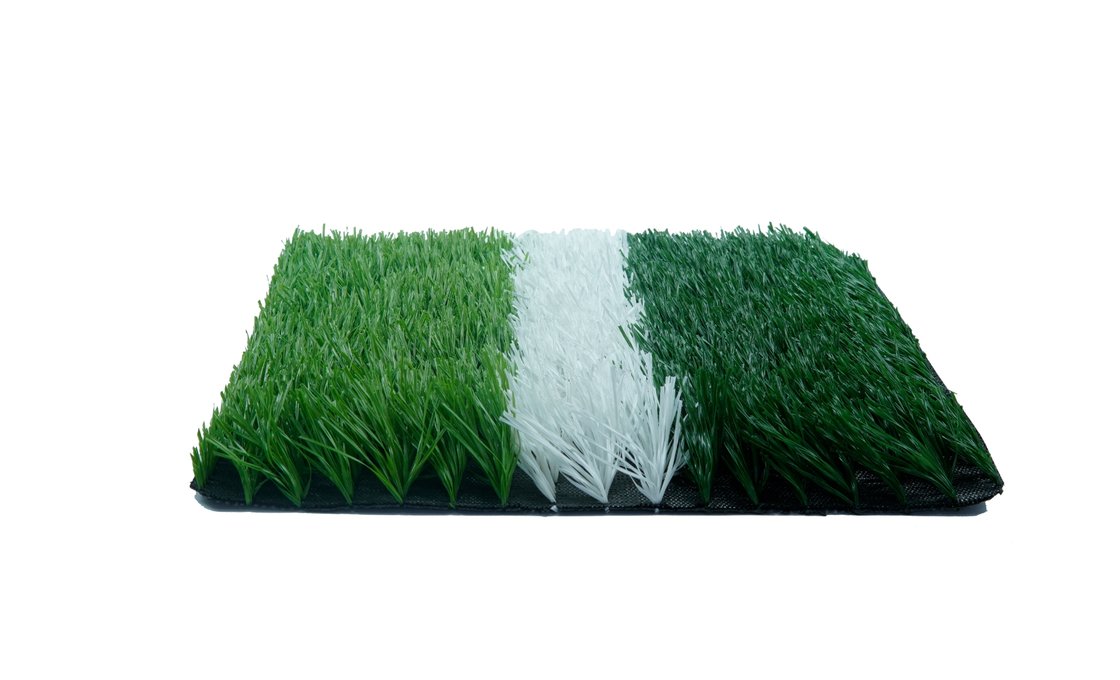
Tenacity Mono 5020 Duo
50 mm · S shape Monofil PE · 10500 stitches/sqm
Learn More
Entry
Tenacity Mono 5020 Duo
50 mm · S shape Monofil PE · 10500 stitches/sqm
Learn More
 Entry
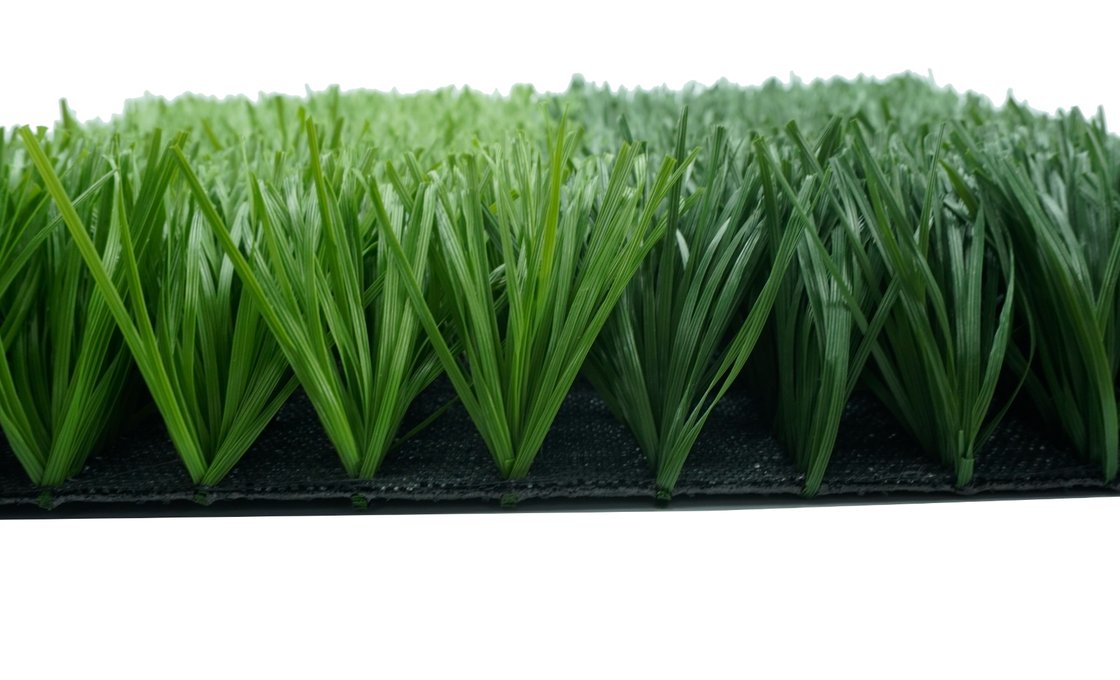
Tenacity Mono 5020 Marking
50 mm · PE-PagodaShape · 10500 stitches/sqm
Learn More
Entry
Tenacity Mono 5020 Marking
50 mm · PE-PagodaShape · 10500 stitches/sqm
Learn More
 Entry
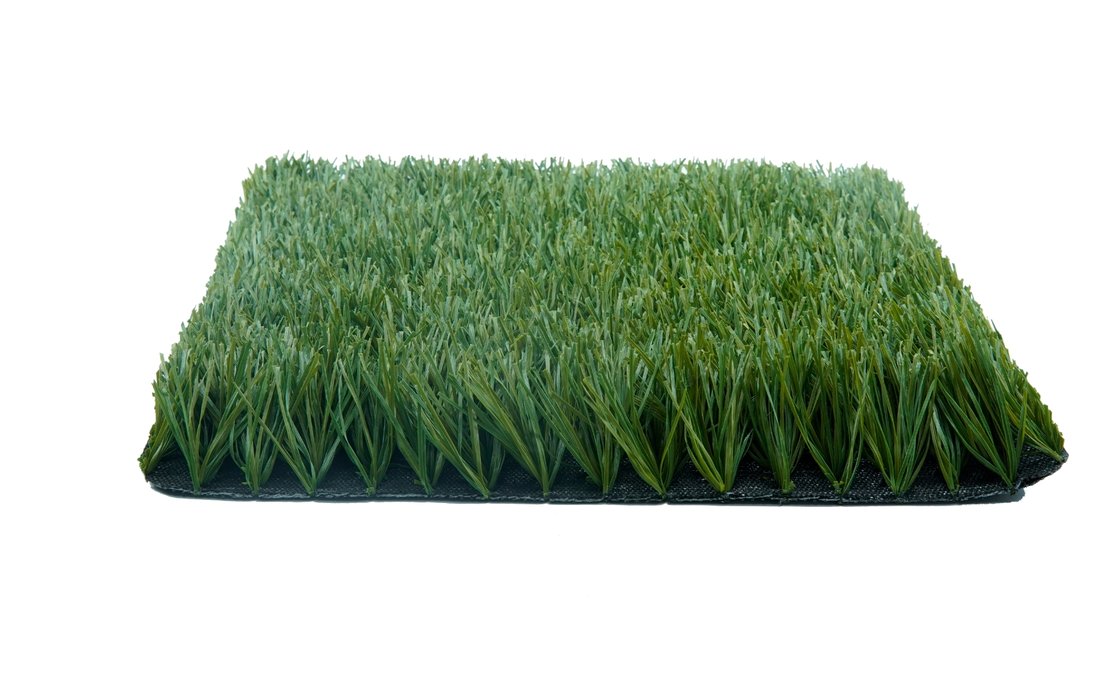
Tenacity Pagoda 5020
50 mm · PE+PP-PagodaShape · 10500 stitches/sqm
Learn More
Entry
Tenacity Pagoda 5020
50 mm · PE+PP-PagodaShape · 10500 stitches/sqm
Learn More
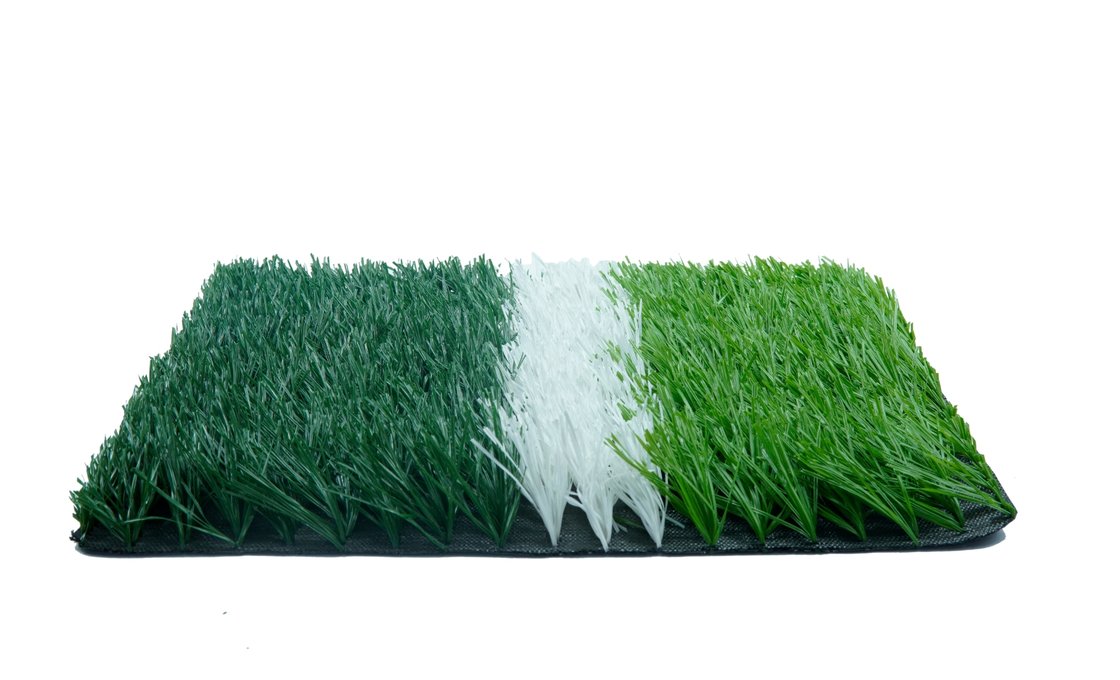 Entry
Tenacity S 5020
50 mm · S shape Monofil PE · 10500 stitches/sqm
Learn More
Entry
Tenacity S 5020
50 mm · S shape Monofil PE · 10500 stitches/sqm
Learn More
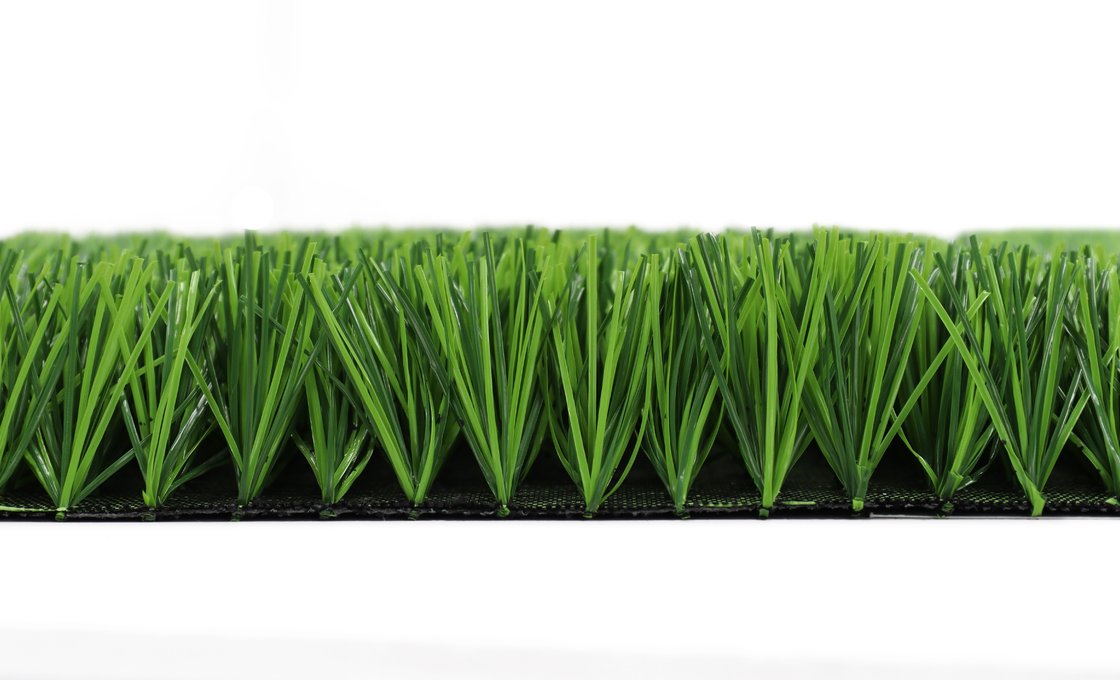 Advanced
Glory Spine 5018
50 mm · U with Spine shape Monofil PE · ,11340 stitches/sqm
Learn More
Advanced
Glory Spine 5018
50 mm · U with Spine shape Monofil PE · ,11340 stitches/sqm
Learn More
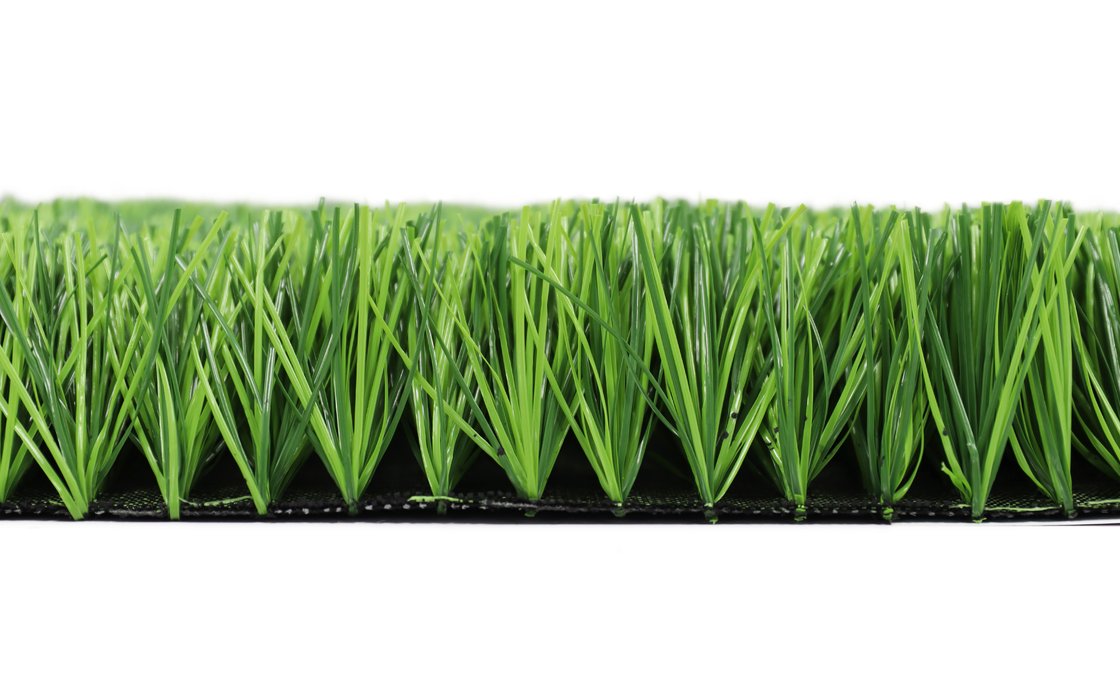 Flagship
Ultra Spine 6018
60 mm · U with Spine shape Monofil PE · ,11340 stitches/sqm
Learn More
Flagship
Ultra Spine 6018
60 mm · U with Spine shape Monofil PE · ,11340 stitches/sqm
Learn More
Performance Design
American football generates peak surface forces that dwarf most field sports. A lineman’s block transmits hundreds of pounds of lateral pressure into the turf; a wide receiver’s cut at full stride demands the surface hold firm and then release the cleat cleanly. These two requirements — energy absorption under impact and controlled rotational resistance — drive every specification choice.
The 50 mm pile depth creates room for a thick infill column that cushions vertical impacts, while the PE monofilament fibers provide the lateral stability players need when accelerating off the line. Diamond-profile fibers resist the matting that occurs in high-traffic zones between the tackles, maintaining consistent surface behavior late into the season.
Shock pads have become standard in many new American football builds — not just for player safety testing, but because they extend the field’s usable life by distributing point loads across a wider area of the backing.
Infill loading on American football fields tends to run heavier than soccer — both sand and performance rubber are specified at higher rates to keep the system firm under heavier athletes. SBR crumb rubber dominates in the US market; TPE and cork blends are specified where surface temperature or environmental regulation drives the choice.
Relyir supplies the turf product with full specification documentation and coordinates with your field-test laboratory to support projects targeting ASTM performance benchmarks.
Factory Direct from Jiangsu
Relyir has manufactured artificial grass in Jiangsu since 2006. Every step — from raw PE pellets to finished rolls — runs on-site, which is how we control quality and hold pricing 30–50% below international equivalents.
All eight production stages are managed in-house, eliminating the quality gaps that arise when compounding, tufting and coating happen in separate facilities. The automated sports turf line, commissioned in 2015, lifted production capacity by 150% and tightened consistency across high-volume orders.
Customization is built into the line: blade density, pile height and fiber colors are adjusted to each project’s specification, with PP + net and PU backing options. The export team has shipped to more than 500 customers across 50+ countries since 2009 and handles all documentation — from commercial invoices to certificates of origin.
Every order is produced to specification — pile height, density, blade shape and color, backing composition and roll dimensions are all configured to your project requirements.

System Build-Up
The turf roll is one component of a four-layer system. We supply the turf and share build-up guidance with every project so installers achieve the field behavior specified at design stage.
Compacted aggregate or asphalt with engineered drainage — the foundation that supports heavy athletic loads and moves rainwater away from the playing surface.
Silica sand, typically 20–30 kg/m², brushed into the pile to weigh the system and hold fibers upright under repeated cleat traffic.
SBR, TPE, EPDM or organic (cork) at 8–15 kg/m² — American football fields often specify higher infill rates for added impact cushioning.
Increasingly standard in new football builds — an elastic layer beneath the turf that lowers G-max and helps projects meet ASTM F355 impact thresholds.
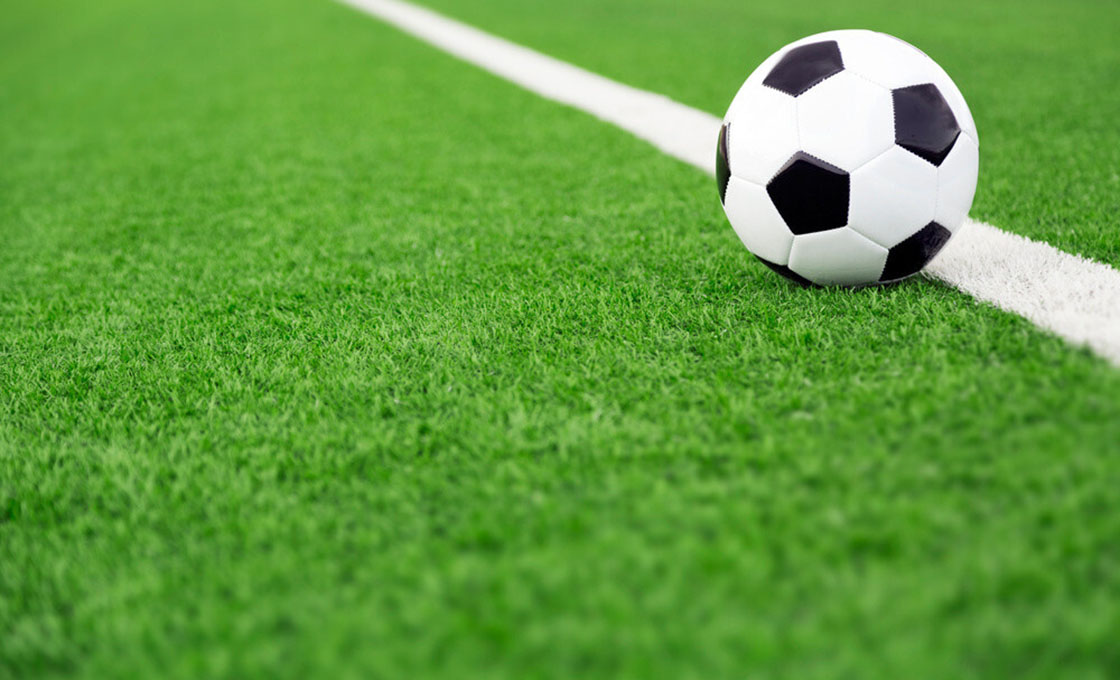
Every Relyir sports turf ships with perforated backing — drainage holes punched during our dedicated perforating step — so water moves through the carpet into the stone base rather than pooling where players need traction.
American football fields benefit from a disciplined maintenance routine: regular brushing to redistribute infill and keep fibers standing, periodic decompaction to prevent the infill column from hardening, and seam inspections before each season. UV-stabilized PE fibers resist degradation under prolonged sun exposure across all climate zones.
American football is a game of short, explosive movements played in pads and helmets, so the surface has to manage cleat grip and impact at the same time. Fields see most of their wear in the hash-mark corridors and the kicking zone, which is where fiber density and infill depth matter most. Industry testing uses Gmax impact measurements, and values above 200 are generally considered unsafe for play, so shock absorption is designed into the system rather than left to chance. Relyir builds football turf to order with the pile height, density and infill recommendation matched to your level of play.
Most football systems use longer fibers — typically around 50 mm — combined with sand and rubber infill so cleats get grip while the surface absorbs impact. Shorter, denser products suit multi-use fields where football shares the surface with other sports.
The industry standard is the Gmax test, which measures how much shock the surface returns on impact. Facilities commonly test after installation and periodically through the season; a well-constructed system with correct infill depths stays well inside accepted limits.
While both use 50 mm PE monofilament, American football fields typically run heavier infill loads for added impact absorption and often include a shock pad to address G-max requirements. Yard lines and hash marks are inlaid during tufting rather than painted, and the surface must withstand the concentrated forces of blocking and tackling that soccer does not generate.
ASTM F355 measures impact attenuation (G-max) and ASTM F1936 covers surface evenness. Many school and municipal projects also reference the NFL Players Association field testing data. Relyir supplies product documentation and works with your testing laboratory to support compliance with these benchmarks.
Not required by code, but increasingly specified in new builds. A shock pad lowers G-max readings, improves energy restitution and extends the service life of the turf carpet by spreading point loads. We recommend evaluating pad inclusion based on your usage intensity and target test values.
Yes. The 50 mm PE monofilament system with sand and rubber infill is designed for multi-sport and multi-event use. Heavier infill rates and a shock pad improve durability when the field hosts marching band, lacrosse, soccer and community events alongside football.
Standard rolls are 4 × 25 m or 2 × 25 m with a maximum width of 5 m. Yard lines, hash marks and team logos can be tufted directly into the carpet during production, giving you permanent markings that outlast painted alternatives.
Plan for regular brushing to keep fibers upright and infill evenly distributed, periodic decompaction to prevent infill hardening, seam inspections before each season, and infill top-up in high-wear zones. Relyir provides maintenance guidance with every installation package.
Yes. Samples are free of charge — you only cover the shipping. Standard swatches are 20 × 20 cm and we typically send three to four models per project so you can compare pile heights and colors side by side. Standard samples ship via DHL or FedEx within 4–6 days; custom-matched samples add 10–15 days of production.
Yes. Choose between two options: delivered to your destination port, with export customs clearance in China, international ocean freight and cargo insurance included in one all-inclusive cost; or delivered to a Chinese port if you prefer to work with your own freight forwarder. Other delivery arrangements can be accommodated on request.
Orders range from single rolls for smaller installations to full container loads for large developments. Roll sizes of 2 m, 4 m and 5 m widths (25 m length) cover most layouts, and custom dimensions are produced to order. Volume pricing applies as order size increases.
Send your field dimensions, usage plan and target timeline. Our export team replies with model recommendations, specification sheets and factory-direct pricing within 12 hours — typically 30–50% below international equivalents..
 English
  Arabic
  French
  German
  Portuguese
  Russian
  Spanish