
Picture a heavy summer rain on a finished lawn. Water hits the blades, slips between the tufts, and looks gone. In reality a chain reaction has started. Surface to pile, pile to infill, infill to the small holes punched in the backing. Then through the open-graded stone base and into the native subgrade.
The chain runs in a fixed order, and each link has one job. We inspect these failures at the factory gate, on rolls that never made it out of the plant, and the same few causes keep turning up. We take the water path and the depth-and-slope decision together. Then the target slope and cold-climate fixes, perforation specs, and the four triggers that justify an underdrain. Edges, hardscape transitions, a table across five install surfaces, a diagnosis table, and a site check round it out.
How Water Actually Moves Through Artificial Grass
Artificial grass drainage does not work by absorption. The surface lets water pass through, like a sieve stretched over a sponge. The pile lifts water off the surface so it can move sideways and downward. The infill keeps the blades upright and guides droplets toward the backing. The backing carries the perforations or open weave that finally hands the water to the base.
The base is where most failures start. Treat the grass as a sieve and the base as a holding tank and a pipe at once. The stone holds a brief flood while the soil absorbs it, and the slope inside the stone carries the surplus to an edge or a drain. When any of those jobs slips, ponding appears within minutes of a storm.
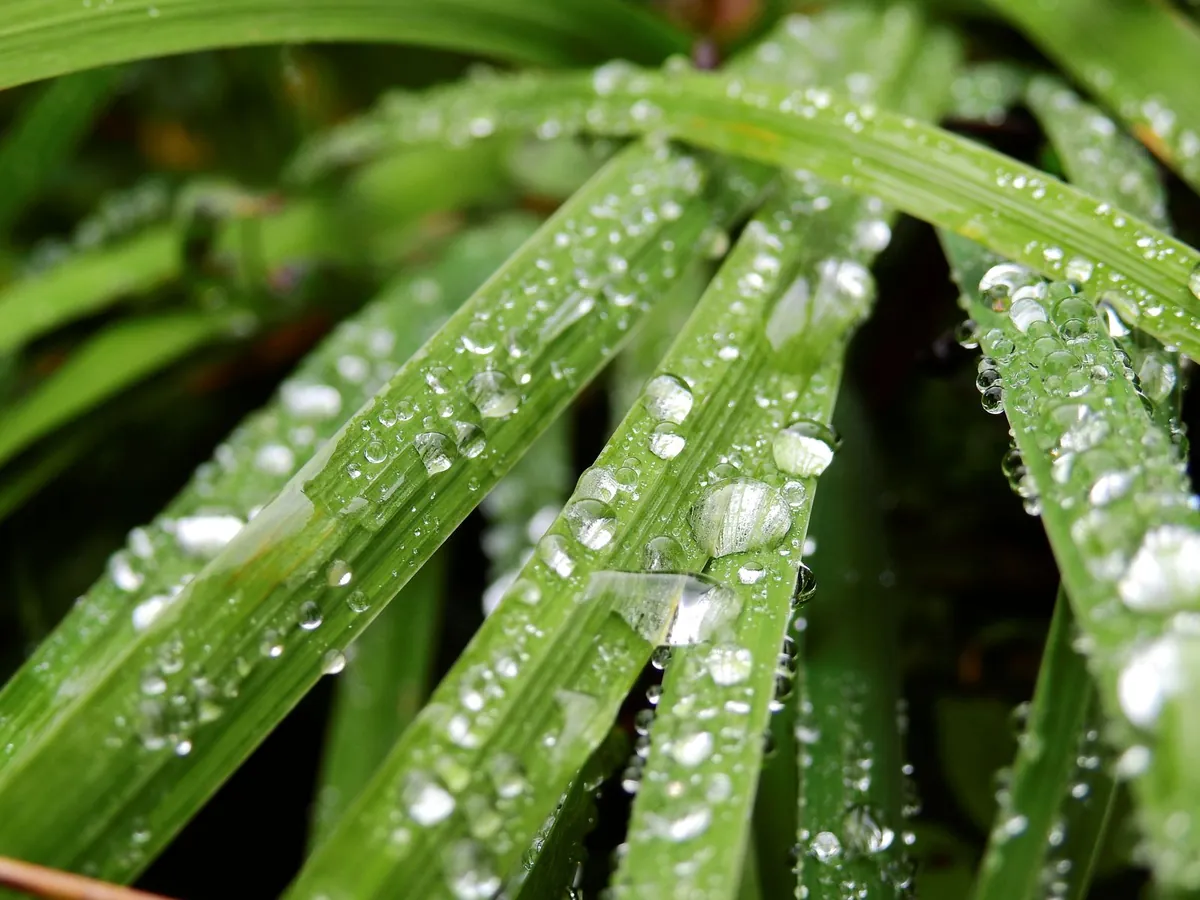
On any artificial turf installation, four layers can be the bottleneck. Infill can clog with fines and seal the surface. Backing perforations can be partly blocked by glue during install. The open-graded stone can be choked by silt washing in from above or below. The native subgrade can be slow to absorb.
Deciding Depth and Slope Together
Structural layers, stone choice and the layer-by-layer order are covered in our guide to what goes under artificial grass.
Both variables can fail alone and still ruin a lawn. A deep base on a reversed slope holds water until the subgrade slowly drinks it, and the lawn smells sour. A correct slope on a thin base overflows in the first heavy storm.
Four-quadrant depth-and-slope decision:
1. Permeable soil with usable slope: thinnest base works; the slope does most of the work.
2. Permeable soil with no usable slope: deepen the base so it can buffer a storm surge.
3. Clay-heavy soil with usable slope: deepen the base and add a geotextile separator to keep fines out of the stone.
4. Clay-heavy soil with no usable slope: deepening alone is not enough; jump to the underdrain triggers in the next chapter.
Residential base depth, heavy-use thickness and the binding layer choice sit inside the essential layers under artificial turf guide. A typical home lawn runs about 75 to 100 millimetres of compacted aggregate; a pet yard or play zone goes thicker on an artificial turf installation.
The order of decisions matters more than the numbers. Pick the slope direction first, then choose the depth. Reversing the order usually puts money into the wrong layer and leaves the real failure untouched.
Slope, Fall and Cold-Climate Drainage
The step-by-step grading actions during install prep are covered in our artificial grass installation preparation walkthrough. The 1-2% target and dig-depth context sit in the layering guide linked above. What follows is the slope spec in numbers, the direction rules, and the cold-climate fixes that most pages skip.
Across the sources we trust, the target for the finished surface is a 1-2% fall running away from any structure and toward a clear outfall. That is about 10-20 millimetres of drop per linear metre. A small well-draining patio can drop to about 0.5% when both soil and base drain freely. Flat is never acceptable.
Engineers often write the same gradient as a ratio: 1:100 for a garden or balcony, and 1:100 to 1:80 on a rooftop. Direction matters as much as the percentage. Three rules keep water moving.
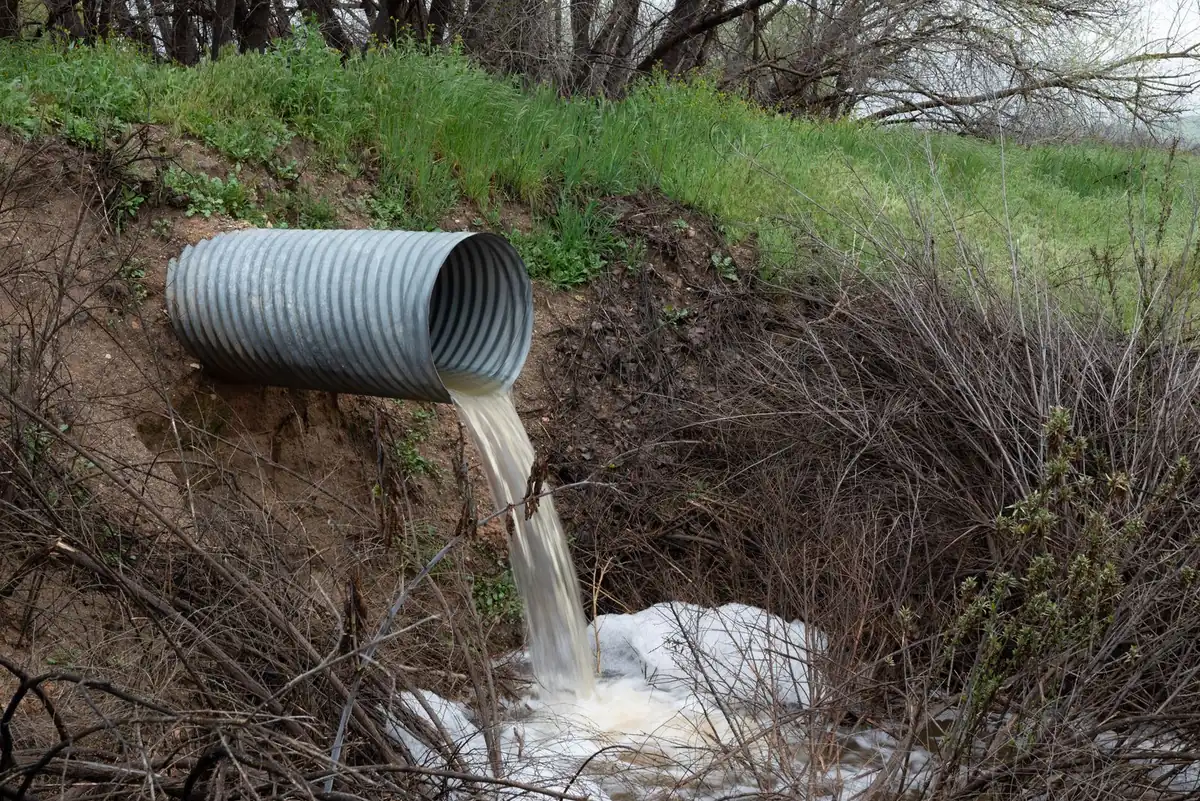
First, slope runs away from the house, never toward the damp course. Second, the surface never holds a low spot in the middle, because a birdbath fills first. Third, the finished edge aligns with the surrounding hardscape so the lawn edge does not dam the flow.
Picture the sequence when it goes wrong. A quiet corner where two falls meet. A tiny puddle that never quite goes away, and a brown patch that follows within a season.
In cold climates, freeze-thaw can lift the base and squeeze its voids shut. The fix is qualitative. Pick a non-frost-susceptible, open-graded, low-fines aggregate. Compact in thin lifts so the voids survive. Keep every outlet clear through the spring melt, because the melt is the year’s hardest test.
The cold-climate detail is mostly in the base, not the turf.
Where the yard sits low, a French drain or a dry well gives the water somewhere to go without flattening the lawn.
One note on stormwater: keeping rain on site through infiltration, rather than pushing it to the street, lowers the load on municipal systems. The EPA stormwater runoff basics cover the policy context for readers who want more.
Perforations, Backing Types and Drainage Rates
Backing materials, the layer order and the basic fact that perforations are the drainage path sit in the layering guides linked above.
Once perforated or fully permeable, a turf backing is typically rated to pass 30 to over 100 inches of water per hour. That sounds fast until you stack it against a cloudburst. A short, heavy cloudburst can deliver that much rain in minutes, which is why the backing rarely fails. The base and subgrade usually do.
Hole spacing and blockage pull against each other. Denser spacing resists surface sealing during heavy flow, yet every extra hole is a spot where glue or fine dust can close the path. Do not let glue seal a hole during seaming, and keep infill clean so fines do not migrate into the perforations.
A short spec check helps when two rolls look similar. Hole-punched suits most residential and play yards; fully permeable suits high-flow or pet-heavy sites. Hole spacing trades clogging resistance against open area. Backing polymer affects how long perforations stay open, not how fast water passes on day one.
Infill is the last interface. Clean, free-draining infill guides droplets to the nearest hole. Dusty infill migrates and slowly plugs the field. Detailed infill recipes sit in their own guide; here the drainage question is whether the water can leave, not which sand you choose.
When You Need an Underdrain and When You Do Not
Most yards do not need a buried pipe. A yard with usable slope, a clean open-graded base and an absorbing subgrade will drain for years without one. The underdrain is a fix for the four cases below, and only those.
When an underdrain earns its cost: the native soil infiltration is so poor that water sits for hours after a storm. The site is flat or fenced in by hardscape with no usable fall. The water table is high or springs are active nearby. The project sits on a rooftop or podium that already relies on a piped system.
Where one of those triggers is real, a workable spec is a 65 to 100 millimetre slotted agricultural pipe. Lay it inside drainage gravel and wrap it in geotextile. Run it at about 1% fall, around 10 millimetres per metre, to a legal outfall. The outfall should be an existing stormwater connection, a permitted soak well or an approved on-site drainage area, never a neighbouring property.
Pet yards and high-use play areas push this decision hard: they need more capacity than a quiet lawn. The pet and infill topics have their own guides; the rule here is capacity beats cleverness, so oversize the pipe rather than the gravel.
One more opinion worth stating plainly: the underdrain is both a fix and an insurance policy. Decide on paper before the base goes in, because retrofitting a pipe under a finished lawn is the kind of cost that pushes a buyer off a project. Two artificial grass drainage bases with identical stone behave differently once the subgrade changes.
Drainage at Edges, Hardscapes and Transitions
The install sequence for edging and the choice of edging material are covered in our artificial turf installation walkthrough.
An edge can quietly turn into a dam. If the lawn sits higher than the surrounding pavers, the water has nowhere to spill, and the first storm floods the surface even though the base is fine. Set edging flush with the finished surface, leave a small weep gap where the lawn meets a wall, and never bridge a weephole below.
On a concrete slab, the slab does the sloping, not the turf. Drill half-inch weepholes at its low points so water can leave. Lay a drainage mat for a thin horizontal flow layer, and add a shallow edge drain along the perimeter. Around a pool surround, build a steeper fall, because splash-out adds to the load.
Finished levels deserve one last check. The turf surface should sit at least 75 millimetres below the damp course of any adjacent wall. Keep it clear of any weephole in the structure, because covering those openings turns a working drainage detail into a hidden problem.
Drainage by Install Surface and Use Case
The same artificial grass drainage spec behaves differently depending on what sits beneath the turf. A side-by-side comparison across the five install surfaces we see most often is the clearest way to set expectations before a buyer chooses a roll.
| Surface | Main drainage path | Key requirement | Most common failure |
|---|---|---|---|
| Ground garden | Permeable aggregate base to subgrade | 1-2% fall to a clear edge | Subgrade clay blocks infiltration |
| Concrete slab | Slab slope plus weep holes and edge drain | Slab pre-sloped, never sealed at edges | Edge dam from raised lawn height |
| Wooden decking | Board gaps plus drainage mat under turf | Boards firm and rot-free | Soft boards telegraph through the lawn |
| Rooftop or podium | Existing roof drain outlets | Outlets kept clear and reachable | Turf seam blocks a roof drain |
| Playground | Perforated shock pad over aggregate base | Pad is perforated, never solid | Solid pad traps water under the pad |
Ground gardens are the easy case when the soil is reasonable. The base absorbs a brief surge and the slope carries the rest. Concrete is the opposite: the slab is the drainage layer, so turf that pretends to drain alone misleads buyers. Decking needs firm, dry boards, because a soft board telegraphs through within a season. Rooftops depend on the structure drains; never seal one with a seam or a heavy infill pile.
Playgrounds deserve a call-out because the shock pad can quietly break drainage. Use only perforated shock pad products, and confirm the pad lets water reach the layer below it. Solid foam pads trap water and turn the surface into a shallow pool after rain. Pad thickness and impact ratings sit in our guide to playground artificial grass safety; the drainage rule here is simple: the pad cannot be a lid.
One maintenance line runs through every surface type: the drain outlet must stay reachable and clearable. If a buyer cannot point to where the water leaves the lawn, the plan is incomplete. Choosing the right roll is the next step. Our residential artificial grass options line up by use case, climate and traffic, and a sample is the cheapest decision tool on any artificial turf installation.
Specify Drainage First, Then the Turf
Drainage decides the build, not the other way around. Run the site check before you pick a roll on any artificial turf installation, then confirm backing type, pile height and infill against your conditions. A photo cannot show how turf feels underfoot or how a backing drains; a sample can. Order a few, run the brush-back and hose tests, then write the spec.
Diagnosing and Fixing Poor Drainage
Most drainage problems show up the same way: a puddle that stays for hours, a soft patch that never dries, or a sour smell after a storm. The table pairs each symptom with its likely cause, the smallest fix that usually works, and whether the turf has to come up.
| Symptom | Likely cause | Smallest fix | Turf lifted? |
|---|---|---|---|
| Small isolated puddle | Local low spot in base | Lift section, re-grade, re-lay | Yes, locally |
| Slow drainage across the lawn | Base clogged with fines | Vacuum extract or replace base stone | Yes, in affected zone |
| Water trapped at the perimeter | Edge dam from raised edging | Drill weep holes or lower the edging | Often no |
| Standing water that never clears | Native soil refuses to absorb | Add a perforated underdrain to daylight | Yes, full area |
Picture a yard that floods after every moderate rain. A quick check finds water sitting in a corner near the patio. That corner looks like an edge problem, but the cause is often the base underneath, which has been slowly clogging for seasons. The repair that works is rarely the obvious one at first glance.
Do not replace the turf before locating the layer. In almost every case we see on our own inspection bench, the failure sits below the backing. Replacing the grass solves nothing if the base is the bottleneck, and it usually costs more than the actual repair.
The hose test gives a clean yes or no. On the unlaid base, water should infiltrate and spread evenly within minutes, never pool in a line. Repeat after the turf goes down: water should clear in a few minutes, never sit on the surface. Either failure means fixing the layer below.
A Site Check You Can Run Before You Dig
A short site check, run before the first machine arrives, saves most of the cost overruns on an artificial turf installation. It also shows which parts of the artificial grass drainage base to fix first. None of the steps require special tools beyond a garden hose, a long straight board and a phone.
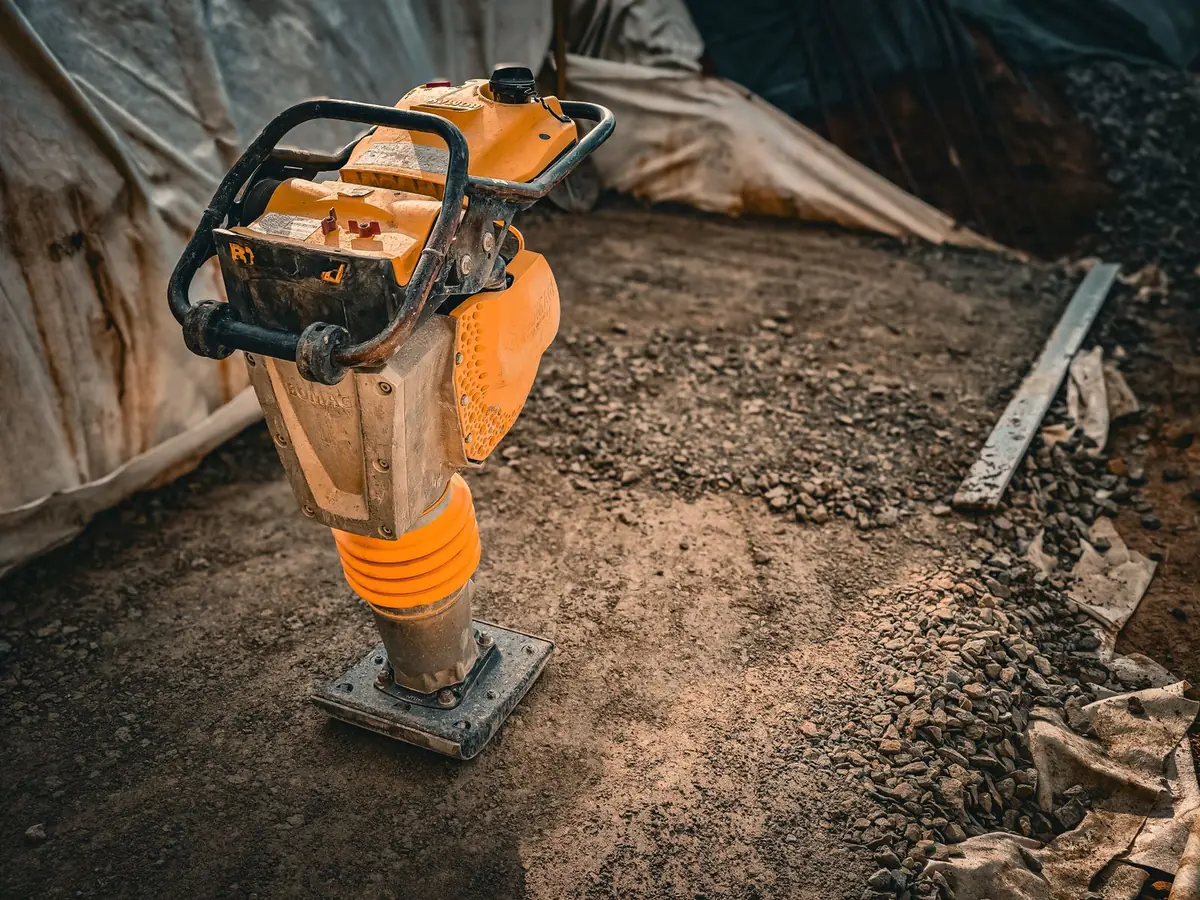
Run a slow hose at the planned low corner for ten minutes and watch how the water disappears. If it ponds for more than a few minutes, the subgrade will struggle in a real storm and the underdrain triggers above apply. A long straight board with a small level reads the slope far more honestly than the eye. A one-percent fall is essentially invisible, yet the board finds it in seconds.
Trace the water’s exit before its entry. Where does runoff actually leave the property: a curb, a stormwater pit, a gravel border, a neighbour’s yard? With no legal outfall, an underdrain has nowhere to send water and the system backs up under load.
Before any digging, locate the underground services and mark them. Confirm that the planned finished level sits at least 75 millimetres below the damp course of any adjacent wall and clear of any weepholes. Three small questions about the base itself finish the check.
Is the stone clean and free of fines. Has each lift been compacted so a boot print does not show. Is the geotextile only where it actually helps. Yes to all three is the difference between a base that drains for a decade and one that clogs in two seasons on an artificial turf installation.
Treat the list as the last gate before the first truck rolls. An artificial grass drainage spec that survives this check is the kind of spec a buyer can sign off without a follow-up call.
Frequently Asked Questions
Does all artificial grass drain water?
Most artificial grass carries perforations or a fully permeable backing, so water can pass through. How fast artificial grass drainage clears depends on the base, the native soil and the outfall. The grass itself is rarely the bottleneck.
Do I need a separate drainage system under artificial grass?
Most yards with reasonable slope and a clean base do not. An underdrain only earns its cost on clay-heavy soil, a flat or hardscape-bound site, a high water table, or a rooftop that already uses pipes.
What slope should artificial grass be laid at?
Target 1-2% on the finished surface, about 10-20 millimetres per metre, running toward a clear outfall. Small well-draining areas can drop to about 0.5%; flat is never acceptable.
Why is my artificial grass not draining?
Check the chain layer by layer: perforations blocked by glue or dust, base clogged with fines, edging acting as a dam, or subgrade that will not absorb. Find the layer before you replace the turf; new turf rarely fixes an old base.
What if my yard has clay soil?
Clay infiltrates slowly, so deepen the open-graded base, add a geotextile separator to keep fines out, and run a perforated underdrain to a legal outfall. Sample test the base with a hose before laying turf.
 English
  Arabic
  French
  German
  Portuguese
  Russian
  Spanish