

Budgets for indoor greenery tend to die quietly. A planted feature thins out under office lighting, a living lawn browns within weeks of installation day, and the replacement cost lands on the facilities team. Requests for artificial grass indoors commercial spaces now reach manufacturers weekly for exactly this reason.
Synthetic grass solves what living surfaces cannot: no sunlight, no irrigation, no mowing, no recovery time between events. We produce the rolls behind many of these projects, so we read briefs by specification rather than by catalogue photo. Six decisions decide whether an indoor surface performs: light and water, subfloor, backing, pile, cleaning routine and roll width.
Why Commercial Spaces Bring Artificial Grass Indoors
Living greenery inside a commercial building fails in predictable ways. Maintenance schedules slip during busy trading periods. Foot traffic wears bare lanes through the middle of the display. Urban floor plates receive little direct sun, and irrigation adds a utility line that nobody budgeted for. Turf removes every one of those failure modes at once, because a synthetic surface neither grows nor fades under interior lighting.

The second objection is older: it looks fake. Early products did, and buyers remember them. Modern turf blends fibre shapes and blade tones to sit close to the real thing. The finish also depends on clean joins, correct edging and proper brushing, which is why installation quality carries as much weight as the grass itself.
Precedent is not new, either. When 1,500 square metres of living grass filled York Cathedral for the 2012 Diamond Jubilee, the result was spectacular and short-lived, exactly as designers expected. Firms such as HOK have since built turf into office atriums for informal meetings, and Skype’s Palo Alto offices used it as a branded interior feature. In commercial work, an artificial turf installation is judged by how it reads at month twelve, not on the day it goes down.
Where Indoor Turf Earns Its Foot Traffic
Applications split into two groups, and the split matters for every later decision. Decorative zones are seen and touched but rarely crossed. Traffic zones carry continuous use, trolleys, chair legs and event build-ups, so they need a harder-wearing specification from the start.
Requests for artificial grass indoors commercial spaces cluster in the same places:
- Office breakout areas, lounges and reception floors that soften hard architectural lines.
- Retail displays, showrooms and themed sections where a green base frames the product.
- Hotel lobbies, cafes and restaurants that want an outdoor feel under a fixed roof.
- Trade show booths and event flooring that lifts, reuses and reinstalls between venues.
- Indoor play areas and daycares, where a soft surface carries safety expectations.
- Golf simulators, putting greens and training studios with dedicated performance zones.
Type each artificial turf installation by foot traffic before you type it by colour. A lobby accent reads well in a plusher pile, while a corridor between a lift lobby and a conference floor needs density first. Our commercial artificial grass applications follow the same logic at the project level.
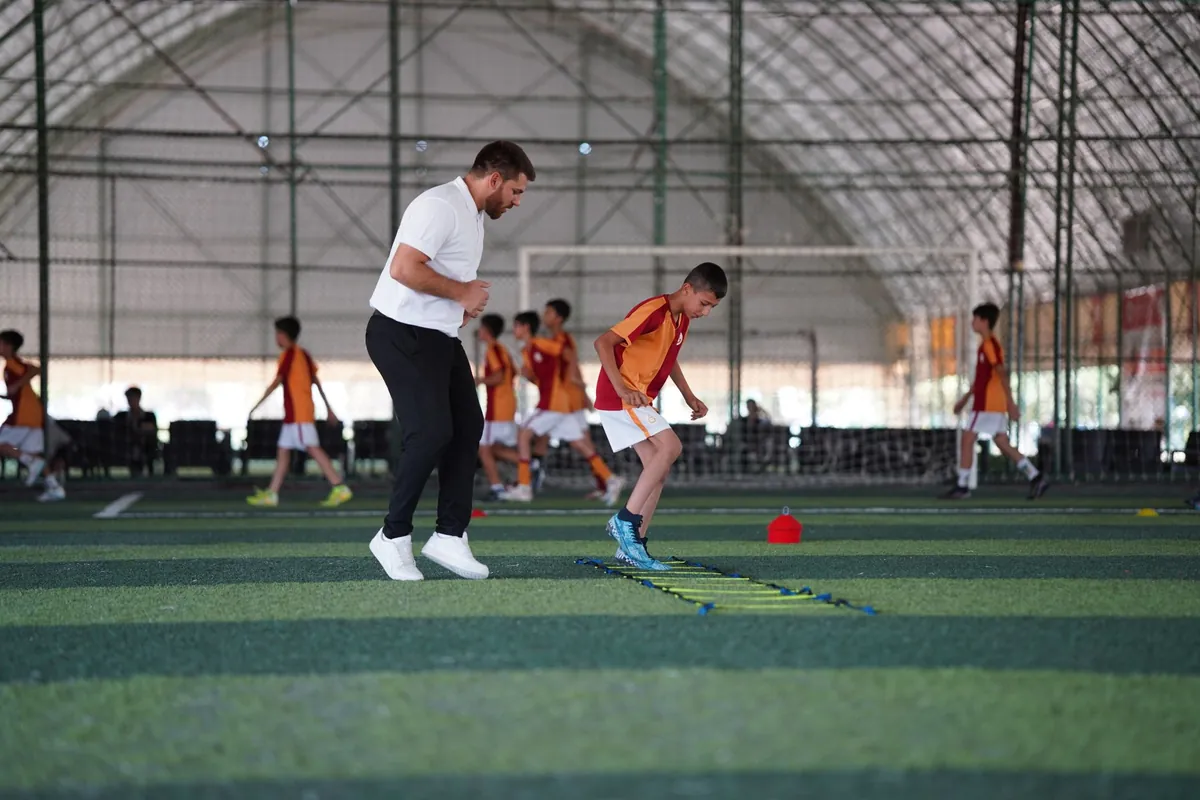
Flexibility is the quiet advantage. The same material works on floors, walls and furniture-scale features, which lets one design language run from a reception floor to an accent wall without switching trades or materials mid-project.
Walls and vertical features extend that list further. Accent walls behind reception desks, tabletop inserts in breakout areas and full feature walls in showrooms all use the same rolls cut differently. One artificial turf installation can therefore serve several visual purposes from a single specification. Keep vertical and horizontal zones in the same brief, because the pile that flatters a floor can read flat on a wall.
Which Pile Height Fits Which Indoor Application
Choosing artificial grass indoors commercial spaces starts with pile, because pile sets the comfort-versus-durability trade. Short pile holds up under equipment and constant crossing but feels firm. Long pile reads plush in lounge settings but mats early under traffic. Medium pile carries mixed use, and a shock-pad layer beneath the carpet is what turns a soft surface into a safety surface for play areas.
| Indoor application | Pile tier | Why it fits |
|---|---|---|
| Exhibition booths and temporary events | Short pile | Lays flat, lifts cleanly and survives trolleys between venues |
| Offices, showrooms and commercial gyms | Medium pile | Comfortable underfoot yet dense enough for desks, racks and displays |
| High-end retail and lounge decoration | Long pile | Plusher read for zones where customers stop and linger |
| Indoor playgrounds and daycares | Medium pile + shock-pad | Cushioned surface, best paired with a shock-pad system |
One supplier’s published indoor classification separates short pile for training areas, medium pile balancing comfort and durability for multi-use floors, and long pile for soft decorative zones. The table above maps those tiers to common commercial zones. Compare the standard product formats against your own zones before you fix a number, and weigh density and face weight together with pile rather than in isolation.
Density works with pile, not separately from it. A dense low-pile surface can outlast a sparse taller one, because fibre count per square metre is what shares the load when traffic crosses. Face weight tells the same story from a different angle, and a quote that states only one of the two is only half a specification.
One caution belongs here: pile height is the visible spec, but the layers beneath it decide whether the surface stays flat. That is the next section.
What Changes When Turf Moves Indoors
Take UV out of the equation and the selection logic inverts. An artificial turf installation indoors never faces sun fade. The specification weight therefore moves to what interior conditions actually stress: the subfloor, the backing and how the surface handles water from spills and cleaning.
Smooth floors are the first difference. Over polished concrete or tile, an under-specified backing can stretch or buckle, which reads as ripples under office lighting and cannot be hidden by furniture. Reinforced backing structures exist precisely for this case, and they belong on the checklist for any indoor project.
Preparation matters as much as product. A base that is level, clean and correctly detailed underneath turns an ordinary roll into a flat-lying surface, while an uneven one telegraphs every dip through the pile. Commercial installers confirm level and cleanliness before the first roll is laid, because correcting the base afterwards means lifting the surface entirely.
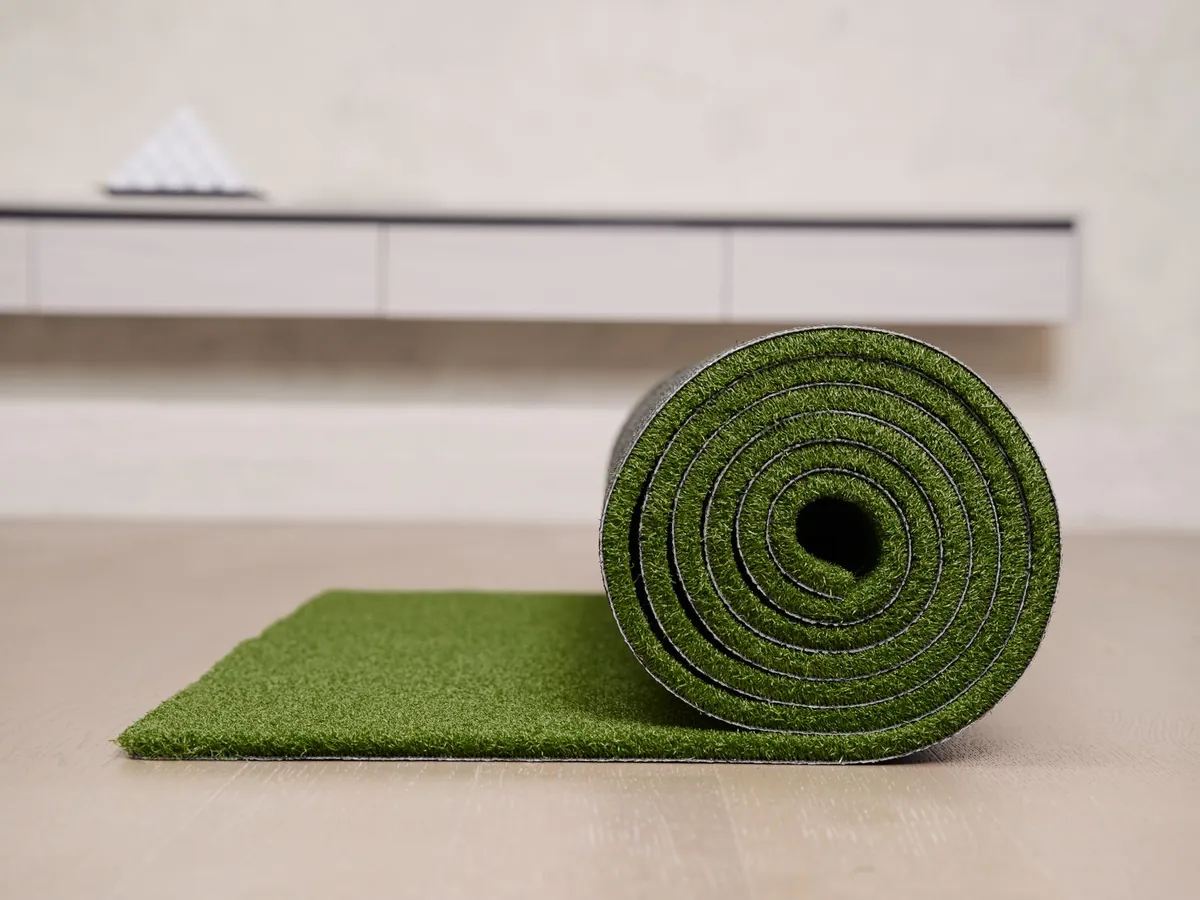
Water is the second difference, and it cuts both ways. Spills, mop water and plant watering all end up on the surface, so a drainage-capable backing over a correctly prepared base is what stops pooling at the edges. Poor drainage is almost always a preparation problem rather than a grass problem, indoors as much as outdoors. Check the roll construction and backing options before you commit to a layout.
Two interior benefits rarely make the brochure. Dense fibre structure absorbs ambient noise in open-plan spaces, and because the surface produces no pollen and no organic matter, it neither feeds allergies nor grows mould. For offices, schools and healthcare-adjacent spaces, those two lines answer more objections than any colour swatch.
Keeping Indoor Turf Clean in High-Footfall Zones
Maintenance indoors is lighter than outdoors, but it is not zero, and the routine is what keeps the surface looking new past year three. Dust settles into the pile, fibres lean under repeated crossing, and spills need fast blotting before they set.
- Weekly: vacuum or sweep the high-traffic lanes to lift dust and grit.
- Weekly: brush the pile upright along the main walking directions.
- As needed: blot spills immediately, then spot-clean with mild detergent.
- Monthly: rinse lightly in food-adjacent or pet-facing zones and let the surface dry.
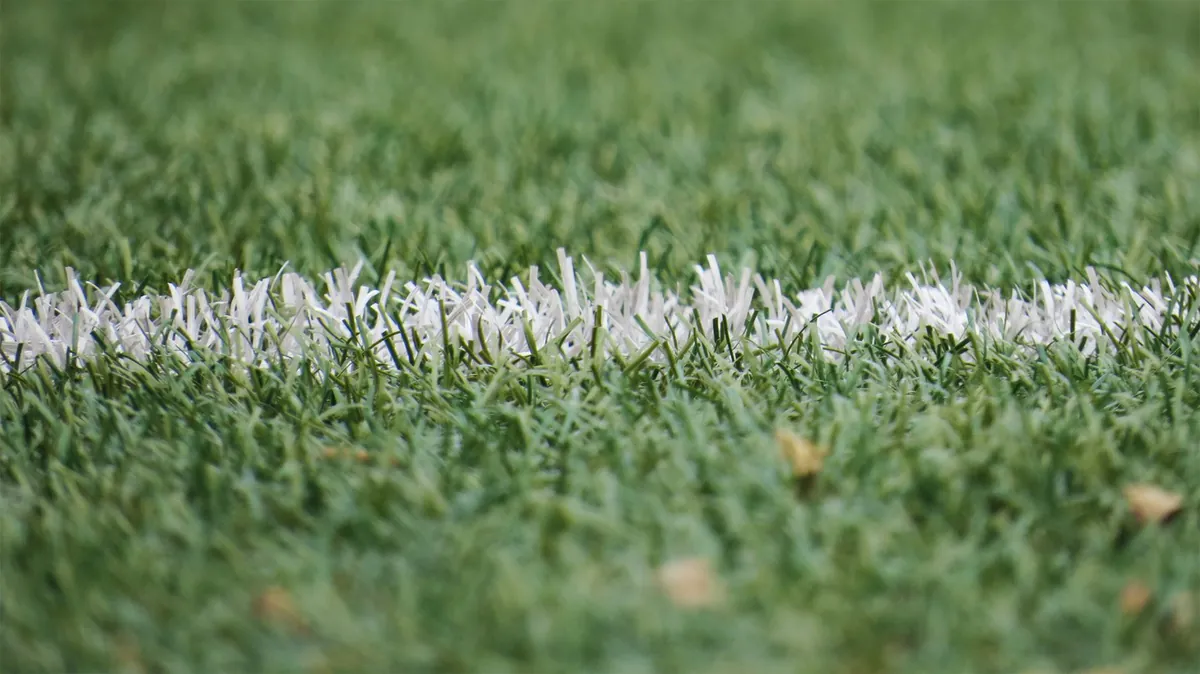
Commercial-grade turf is engineered not to flatten easily under footfall, but brushing is what restores the lanes that carry the most use. Done consistently, this routine is what keeps an artificial turf installation presentable through its second and third year rather than just its first.
Grit is the quiet enemy indoors. Fine debris works down between the fibres and grinds them every time a wheel or heel crosses, which is why vacuuming the lanes matters more than any occasional deep clean. Treat the weekly routine as protective maintenance rather than a cosmetic task, and the surface repays it in appearance.
Mistakes That Shorten an Indoor Turf Installation
Most failures in artificial grass indoors commercial spaces trace back to a handful of repeatable errors, and none of them announce themselves on install day. Each one below is avoidable with a specification conversation held early enough.
Buying Decorative Pile for Walkways
Long, plush pile sells beautifully in photos and mats down within months where people actually walk. Match the pile to the traffic class of the zone, and keep the plush specification to the decorative edges where feet only occasionally land.
Ignoring Subfloor Flatness and Backing Match
A smooth subfloor amplifies every imperfection in the backing. Without reinforcement matched to the surface beneath, turf stretches and buckles into ripples that no amount of furniture rearranging hides. Confirm the subfloor condition before the pile gets chosen, not after.
Leaving Seams on the Sightline
Joins run down the middle of the room in bad layouts because the roll plan followed the drawing rather than the viewing axis. Seams belong where the eye does not travel, which usually means planning roll direction first and the furniture plan second. Nothing dates an artificial turf installation faster than a join running straight to the far wall.
Ordering by Photo Without a Spec Sheet
Two samples can look identical in a supplier’s photography and behave completely differently under a desk chair. Density, face weight, yarn type and backing are written specifications, and a quote that cannot state them is a quote for a different product than the one in the picture.
Skipping the Sample Stage
A sample in hand under your own lighting answers questions no screen can. Projects that skip this step discover the mismatch after the rolls arrive, when the cost of being wrong has already been paid in full.
The Indoor Turf Checklist Before Rolls Ship
Four confirmations, in order, turn a design intent into an orderable specification. Work through them with the supplier before any number is discussed, because each one changes what the right product looks like.
Write the Use Brief First
State the zone, the expected daily footfall and what happens on the surface, from wheelchair crossings to exhibition trolleys. A written brief is what allows pile, density and backing to be matched against real conditions. It is also the input behind every custom pile height, density and colour specification.
Measure and Plan the Roll Width
Rolls come in 2 m, 4 m and 5 m widths at 25 m long, and width is what controls seam count. Wider rolls suit large open floors with almost no joins, while narrower widths flex around corridors and smaller rooms. Measure doorways, lifts and stair access at the same time, because the widest roll still has to reach the floor.
| Roll width | Length | Best fit indoors |
|---|---|---|
| 2 m | 25 m | Small areas and narrow rooms; the most economical format and the easiest to transport and install |
| 4 m | 25 m | The safest choice when the final layout is not settled; covers most indoor plans with the widest supply |
| 5 m | 25 m | Large open floors; almost no seams and less waste across big areas, at the cost of heavier handling |
Confirm Backing and Surface Expectations
Match the backing to the subfloor and to how water will meet the surface. State the expectation in writing: flat over polished concrete, drainage-capable in zones with spills, stable under the heaviest furniture the space will carry.
Order Samples Before the Bulk Order
Free 20 cm by 20 cm samples, usually three to four pieces, ship by DHL or FedEx in 4 to 6 days with courier freight paid by the buyer. Verify colour against your lighting and pile against your traffic before the container is booked, not after.
Matching Roll Specs to Your Commercial Layout
By this point the brief holds four answers: pile for the traffic class, density for the loading, backing for the subfloor and water, and roll width for the geometry. Turning artificial grass indoors commercial spaces from an idea into an order is a specification exercise, and customisation is what closes the gap when a standard format does not fit. Every artificial turf installation is won or lost before the rolls ship, in the accuracy of those four lines.
Which Pile Fits Your Floor Plan?
The wrong pile or backing stalls a fit-out. Send your layout and floor usage, and we return a roll spec matched to your pile, density and backing.
Where Indoor Turf Still Has Limits
Softness is not the same as impact protection. A plush pile feels forgiving, but a genuine safety surface for play areas comes from a shock-pad system specified together with the turf, not from pile depth alone. The same honesty runs across artificial grass indoors commercial spaces: a soft floor is a comfort feature, and a safety floor is an engineered system. Heavy furniture leaves dents that recover with brushing, slowly, and the marks reappear until the load is moved or spread.
Water savings continue indoors in a structural way: the surface simply has no irrigation line. As quoted in the source, published industry figures put natural grass field irrigation at 600,000 to 1,500,000 gallons a year, and none of that line exists for an interior installation.
Bringing the Indoor Specification Together
The path from concept to a correct order runs in one direction: use, footfall, pile, backing, roll width. We tuft, coat and perforate every roll on one line, so a specification agreed on paper is the specification that ships. A sample checked under your own lighting is the last confirmation before the order is cut.
Frequently Asked Questions
Can artificial grass go indoors without sunlight?
Yes. Artificial grass indoors commercial spaces needs no sunlight, soil or watering, which is why it holds its appearance in windowless lobbies and interior zones.
How long does indoor artificial grass last?
Published industry guidance puts indoor synthetic grass at 8–15 years depending on usage intensity and maintenance, with light decorative zones outlasting high-traffic walkways.
How do you clean indoor turf in a busy space?
Vacuum or brush the pile regularly to keep fibres upright, blot spills quickly, and rinse occasionally for deeper cleaning in food-adjacent or pet-facing zones.
Is indoor artificial grass safe for play areas?
Yes. Indoor-grade turf is soft and non-toxic, and play surfaces paired with a shock-pad system provide the cushioning children’s zones need.
Which roll width suits a large indoor floor?
Wider rolls mean fewer seams: 5 m widths cover large open floors with almost no joins, while 2 m and 4 m widths flex around corridors and smaller rooms.
How do I check quality before a bulk indoor order?
Order free 20 cm by 20 cm samples, usually three to four pieces. They ship by DHL or FedEx in 4 to 6 days, with courier freight paid by the buyer.

 English
  Arabic
  French
  German
  Portuguese
  Russian
  Spanish