








Buyers usually ask which grass is best first. The real decision is the supply format, because that decides what the site can actually take. A four-metre roll will not fit up a narrow stair, a tile clicks down with no adhesive, and a wall panel is a different product line entirely. Choose the wrong format and every later step follows it wrong.
We build artificial grass rolls on our own production line, which is why format choice is the first thing we discuss with specifiers. The artificial grass product types that matter for a project are rolls, tiles, wall panels, practice mats and putting surfaces, not just a single “grass” product. Browse our turf product ranges to see which formats we supply and how each one is built.
Why Supply Format Comes Before End Use
Most artificial turf installations begin as a roll, because a roll is the default that warehouses stock and crews know. That default hides a problem: the format is picked before the site is understood, and the site is what should pick the format. A loading bay, a stair width and a balcony rail are format decisions in disguise.
The lesson we repeat to specifiers is simple. Format is the first specification, not the last. Get it right and seams, fixing and transport fall into place; get it wrong and you fight the product all the way to handover. This guide navigates the formats so the site leads the choice.
The Five Formats and What They Suit
Most buying guides treat turf as one product. It is not. The format you receive changes transport, seams, edge fixing and repair, so it sets every later decision. The table below maps the five artificial grass product types to the sites they suit, the fixing each one takes and the limit each one carries.
| Format | Best for | Edge fixing | Size or module | Key limit |
|---|---|---|---|---|
| Rolls | Large lawns, sports fields, playgrounds, pet areas | Glue, nails or turf pegs, plus jointing tape | 2 m, 4 m or 5 m wide by 25 m long | Heavy; needs cutting and seam work |
| Tiles | Balconies, rooftops, gyms, pool surrounds | Interlocking edges, no adhesive or fixings | 1 by 1 ft or 1 by 2 ft modules | Many grid seams; pricier per square metre |
| Wall panels | Backdrops, fences, passageways, vertical gardens | Pin-and-hole locking with zip ties | 40 by 40 in or 50 by 50 cm panels | Fixed module sizes; vertical load only |
| Practice mats | Gym corners, trade shows, drills, events | Loose-laid, no fixing required | 6 by 9 ft mat, also 4 by 6 or 9 by 12 ft | Small area; indoor or temporary use |
| Putting surfaces | Golf practice, compact training greens | Loose-laid over a level hard surface | Cut to the practice area on site | Roll-curl memory; needs planned stowage |
Rolls own the large, flat, high-traffic site. Tiles own the small, irregular, elevated site. Wall panels and mats are not floor products at all, and treating them as such is the most common mis-specification we see. That separation is the spine of this guide, and it is the part most competitors never put in one place.
Rolls and What They Own
Rolls are continuous carpet-style sheets supplied in fixed widths. Our line runs 2, 4 and 5 metre widths at 25 metres long, and a wider roll covers more ground with fewer joins. Large artificial turf installations rely on rolls because only a continuous sheet gives a seamless field that reads as one surface.
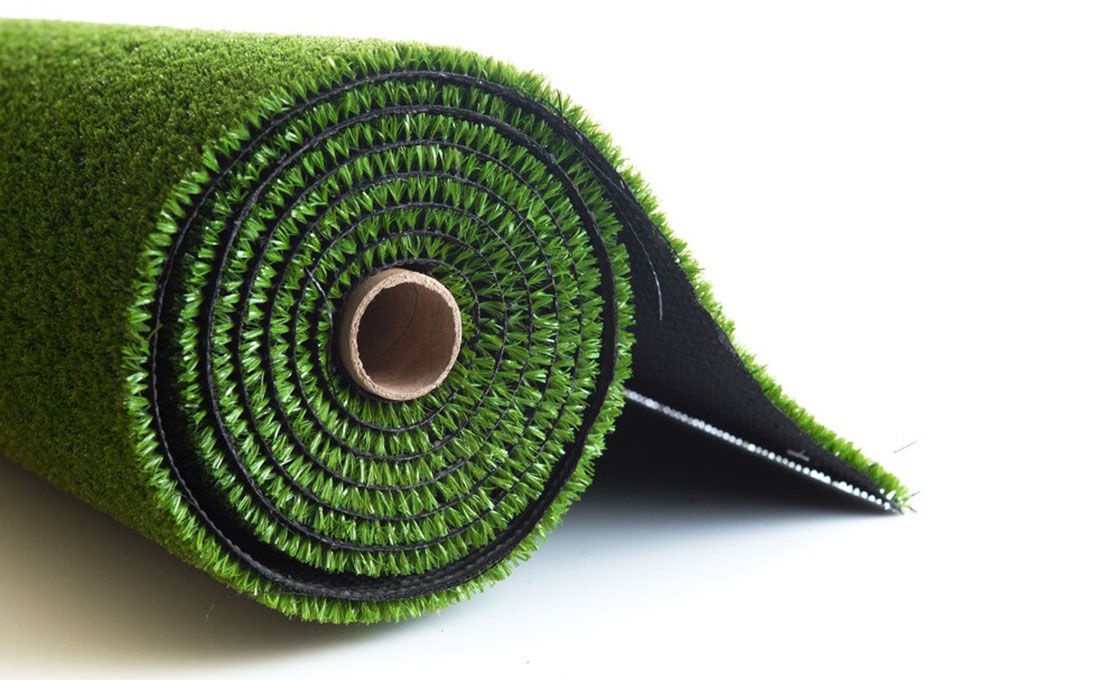
A 4 metre by 25 metre roll covers 100 square metres, while a 2 metre roll covers 50 and a 5 metre roll covers 125. For a 20 by 40 metre hall of about 800 square metres, that is 16 narrow rolls, 8 standard rolls or 7 wide rolls. See the rolls in our product range for the full width and backing menu before you fix a layout.
Rolls need cutting, seaming tape and a clean edge, so they suit crews with the right tools and a clear path. Not all artificial grass product types reach that scale, and rolls earn their place when the area is wide and flat. How synthetic turf is manufactured and supplied is covered in neutral detail by third-party reference sources. The roll stays the workhorse for sports and landscape because nothing else reaches the same