








Most complaints about a finished turf job are not fiber problems. They are process problems that surface two or three weeks after the crew leaves. A seam shows up as a dark line across the lawn. A shallow dip holds water after every storm, and blades mat flat where foot traffic arrived too early. Each of those failures traces back to a decision made before or during the artificial turf installation.
We manufacture artificial turf on our own line and load it into containers bound for more than 50 countries. In our experience, most callbacks trace back to two decisions made before a single roll is unloaded: the depth of the base and the width of the rolls. This guide follows the full sequence we walk project buyers through, from the first site survey to the first month of use.
The Site Survey That Prevents Costly Surprises
The first visit is not a sales call; it is a drainage inspection with a measuring wheel. A crew chief walks the property, marks every sprinkler head and irrigation line with spray paint, and watches where water naturally wants to go. That last part decides the slope: finished turf needs roughly a 2 percent grade, enough for rain to run off without pooling against the house. Outdoor irrigation is also why water authorities such as the EPA’s WaterSense program push property managers to plan watering infrastructure before surfaces go down.
Use the same visit to agree on machine access. Mini-excavators and plate compactors need a path to the work area, and gates, side alleys and neighbouring driveways all constrain that path. Tight sites cost more in labour because every cubic meter of soil leaves by wheelbarrow instead of machine.
Samples, Rolls and Material Logistics
Material decisions belong in this window, not on install day. Order free artificial grass samples in 20 by 20 centimetre squares, usually three or four pieces, and they ship by DHL or FedEx in 4 to 6 days. Hold those pieces against the project’s surfaces and daylight before you commit. Custom specifications add 10 to 15 days of production before shipping, so a bespoke colour or pile height needs an earlier decision than a stock roll.
Roll width is the quiet cost driver. Narrow rolls mean more seams; wider rolls mean fewer joints but heavier handling. The three standard widths cover most projects:
| Roll width | Best suited for | Seam impact |
|---|---|---|
| 2 m x 25 m | Small areas, tight budgets and detailed shape work | More seams and offcut waste on medium projects |
| 4 m x 25 m | Most residential and commercial landscaping work | Balanced seam count, waste and handling |
| 5 m x 25 m | Large open areas, sports fields and long runs | Fewest joins, heaviest rolls to move on site |
Match the width to the site geometry before you confirm the order, because seam count is planned on paper, not improvised on site. Relyir supplies artificial grass rolls in 2, 4 and 5 metre widths, and the choice changes both labour time and how the finished surface reads. A 30 metre run laid from 5 metre rolls shows one seam; the same run from 2 metre rolls shows many more. Every extra seam is another place for the eye to catch and for water to test the join.
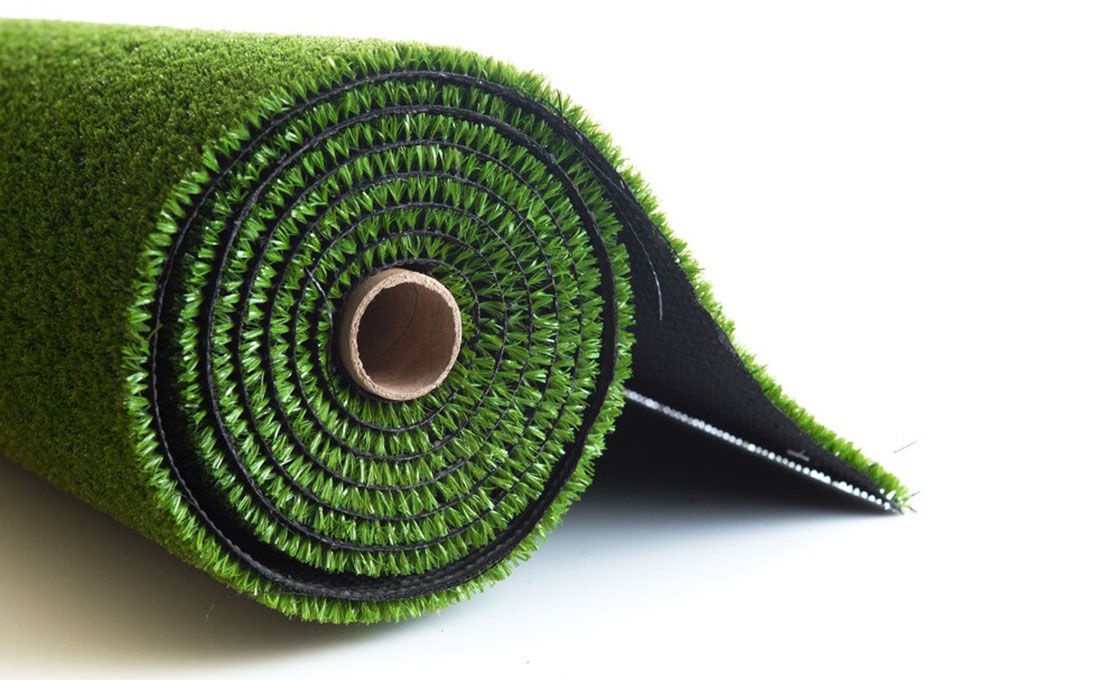
When the rolls arrive, inspect them before the crew starts. Look for crushed cores, torn packaging and colour variation between batches, and photograph anything doubtful while the truck is still at the gate. Let the turf relax in the sun with the blades facing down for 1 to 2 hours. The fibers straighten and the backing loses its roll memory, which makes the first layout far easier.
Clear, Grade and Drain the Site First
Day one of a real artificial turf installation is demolition and shaping. A turf cutter strips the old lawn, and the crew excavates 3 to 4 inches of soil and root matter, or slightly more on soft ground. Everything organic leaves the site. Buried grass and topsoil rot later and leave depressions you will see as dips in the finished surface.
Shaping comes next.