
A single installer with a utility knife and a two-person crew can face the same patch of ground and still need different formats. Rolls and tiles both cover that ground with artificial grass, yet they change how you cut, lift, seam, and replace the surface. Ask which one wins for DIY work and the answer turns on area, shape, and the hands you can put on the material. Our team has shipped rolls into both kinds of job, so we explain the choice the way we would at our plant.
This comparison covers what a roll and a tile grid contain, where seams and offcuts land, and which project shapes favor which cut. It also shows how the format moves cost per square meter and the mistakes we see when a job is priced in the wrong format.
Rolls and Tiles Solve Different DIY Problems
A roll is one continuous sheet of artificial grass. A tile is a small modular square that butts against its neighbor. Both formats use the same yarn and backing families, yet they behave very differently once they reach the ground.
The question artificial turf rolls vs tiles answers is really about handling. A roll trades easy handling for fewer seams. A tile trades more seams for easy handling. Which side wins depends on the size and shape of the area you need to cover.

For a large open rectangle, a roll usually wins on looks and labor. For a narrow strip, a curved border, or a roof terrace, tiles often win on fit. Neither format is better in the abstract; each one is better against a specific shape.
This comparison keeps both formats in view. It does not push one product line over the other. It maps the trade-offs a DIY buyer meets on site.
What a Roll Actually Covers on Site
A roll arrives as one wide sheet. Our line rolls standard turf in 2 m, 4 m, and 5 m widths, each on a 25 m length. That gives a 2 m roll 50 square meters, a 4 m roll 100 square meters, and a 5 m roll 125 square meters.
The wider the roll, the fewer the drops. A 4 m roll crosses a 12 m lawn in three passes instead of many small joins. That means less tape, less adhesive, and a smoother surface underfoot. Buyers who want the factory-direct range can review our artificial grass roll widths before they size a job.
Handling is the trade-off. A 4 m roll is heavy and stiff, so it usually needs two people to move and unroll. One installer can rarely manage a full roll alone. An artificial turf installation planned around rolls should budget that second pair of hands from the start.
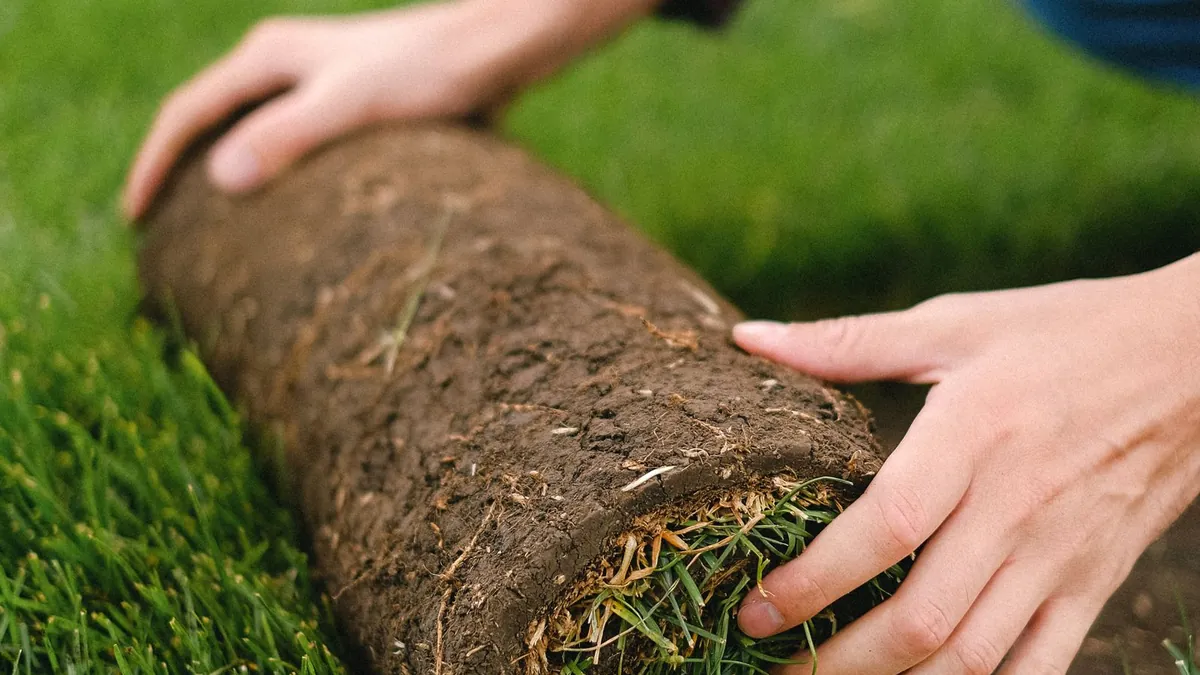
Offcuts are the hidden cost. A roll is a rectangle, so any curve, corner, or island leaves waste. On a simple square lawn the waste is small. On a garden full of curves it climbs, and the cut material is hard to reuse. The term itself carries an old engineering history, as the reference entry on artificial turf records.
What a Tile Grid Actually Covers
A tile is a small square of turf, usually sold in packs. Common sizes sit between about 30 cm and 1 m across. A tile is light enough for one person to carry, place, and trim.
Tiles shine on shapes a roll cannot follow. A balcony, a roof terrace, or a narrow side return is easier to cover square by square. A damaged square can be lifted and swapped without touching the rest of the surface.
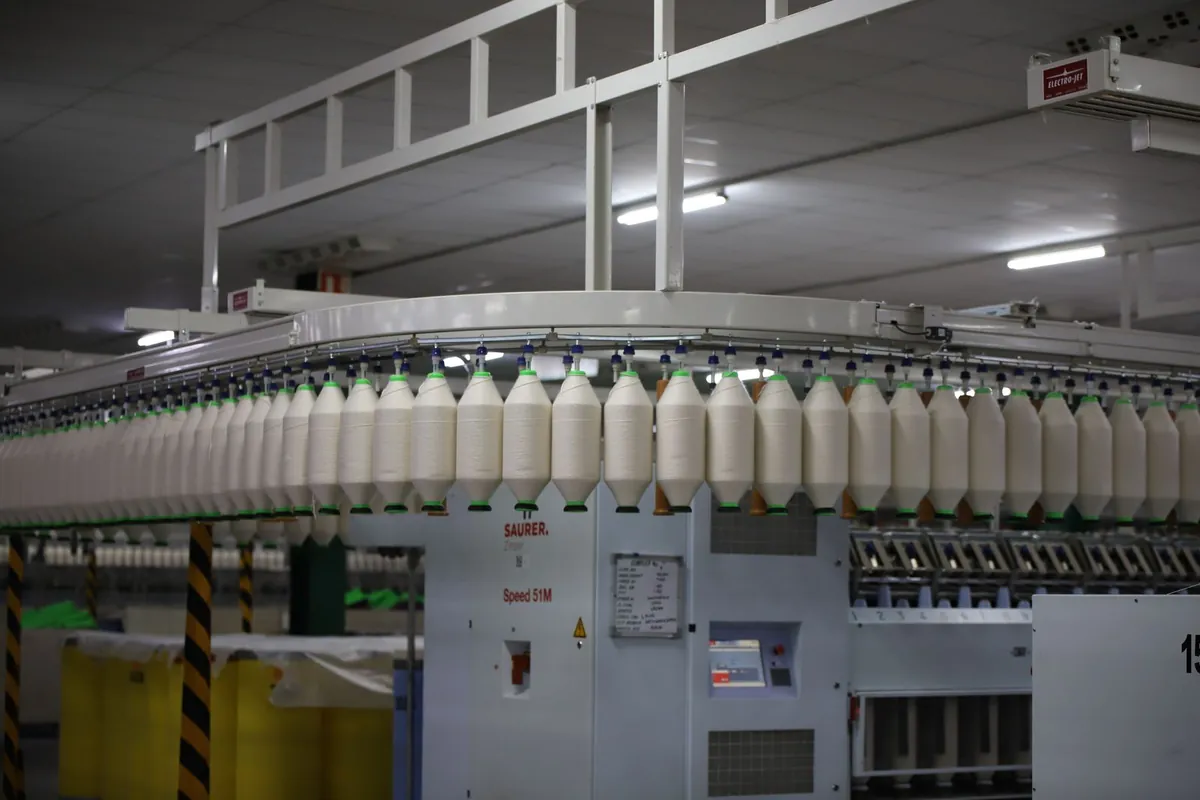
The cost of that flexibility is seams. A 5 m by 5 m area in 50 cm tiles creates a grid of joins. Each join is a line where the pile can part and the backing can peak. Getting those lines to disappear takes patience and a steady hand.
Tiles also carry a higher price per square meter than a wide roll in most markets. The extra cost buys handling comfort and easy repair, not better yarn.
| Point | Roll | Tile |
|---|---|---|
| Coverage unit | One wide sheet | Small modular square |
| Standard size | 2 m, 4 m, 5 m wide by 25 m long | About 30 cm to 1 m squares |
| Seam count | Low | High |
| Handling | Usually two people | One person |
| Best shape | Large open areas | Curved, narrow, small |
| Repair | Harder local patching | Swap one square |
| Waste on curves | Higher | Lower |
| Unit price | Lower per square meter | Higher per square meter |
Seams Waste and Installation Labor Compared
Seams decide how a surface ages. A roll plan keeps seams long and straight, usually along one edge. A tile plan spreads seams in two directions and multiplies their number. More seams mean more tape, more adhesive, and more chances for a lifted edge.
Waste runs the other way, which is why the artificial turf rolls vs tiles choice is never settled by price alone. A roll is efficient on rectangles and wasteful on curves. A tile grid wastes little on any shape but adds labor at every join.
Labor is the biggest hidden line in an artificial turf installation. Rolls cut labor on large jobs because there is less cutting and joining. Tiles cut labor on awkward jobs because each piece is easy to place. The right format depends on which kind of labor your project needs most.
The full sequence, from base to final brush, sits in our guide to what to expect during an artificial turf installation. Read it before you fix the format, because the sequence changes with the shape.
Which Format Suits Which DIY Project
Match the format to the shape and the crew, not to the brand. The artificial turf rolls vs tiles decision sorts itself once you describe the job.
A large, simple rectangle favors a roll. Two people can drop a 4 m sheet and cover 100 square meters with only a couple of joins. The result looks like one continuous lawn.
A balcony, roof terrace, or irregular garden favors tiles. Each square is light, easy to trim, and easy to replace later. The trade is a visible grid and a higher unit price.
A sports or play area often mixes the two. Rolls cover the main field, while tiles handle the edges and cut-outs around posts. Many artificial turf installation teams keep both formats on the truck.
Contractors who need a non-standard width, color, or backing can route the order through our custom artificial grass service.
| Project type | Format that fits | Why |
|---|---|---|
| Large open lawn | Roll | Few seams, low waste, lower unit price |
| Small patio or terrace | Tile | Easy to carry, trim, and replace |
| Curved garden | Tile | Follows any edge with little waste |
| Roof terrace | Tile | Light pieces, simple future repair |
| Play area with cut-outs | Mixed | Roll for the field, tiles at the shapes |
| Event or rental floor | Tile | Lifts and relocates between sites |
Cost and Coverage Compared in Practice
The artificial turf rolls vs tiles comparison always reaches the same question: which one costs less once the job is finished? Price per square meter tells only part of the story. A roll usually costs less per square meter than tiles, because a factory coats one wide sheet instead of many small squares.
The cheaper format changes with the job. On a large rectangle the roll wins on material and labor. On a small or curved area tiles win on waste and on the hours you save cutting.
Factory-direct pricing is indicative $7-60 per square meter and moves with padding, grade, and type. Request an exact quote against your own area, seam plan, and backing choice. The factors that shift that number are explained in our artificial grass cost per m2 factors breakdown.
Specify Rolls for Your Next Project Volume
Buying by the pallet changes the math. We supply these rolls factory-direct, with 18 years of export experience behind them. Our roll line runs 2 m, 4 m, and 5 m widths by 25 m lengths. Every roll ships with a choice of PP+Net or PU backing, and we cut project volumes rather than single pieces.
For contractors, landscapers, and distributors, the fastest next step is a quote on full rolls. Tell us your area, seam plan, and backing preference, and we will match the width to the job. Request a quote for pallet pricing and lock your production slot.
Common DIY Mistakes With Each Format
Most DIY failures trace back to the same few slips. Catching them early saves a weekend of rework.
The first mistake is ordering a roll for a curved garden. The offcut waste climbs fast, and the joins still need tape and adhesive. A tile grid often fits that shape with less cutting and less waste.
The second mistake is laying tiles on a soft or uneven base. Tiles show every dip because each square reads as its own plane. A roll can bridge small dips, but tiles cannot.
The third mistake is underestimating seam work on an artificial turf installation. Seams take time, the right adhesive, and a steady hand. A plan that ignores them will show lines for the life of the surface.
How to Choose Before You Buy
Run four checks before you plan an artificial turf installation. They take ten minutes and settle the artificial turf rolls vs tiles question for your job.
First, measure the area and note its shape. Second, count the hands you can put on the job. Third, list the curves, corners, and cut-outs. Fourth, decide how easy a repair needs to be.
Then match the answers to the format. Simple and large points to a roll. Small, curved, or repair-heavy points to tiles. Mixed jobs can use a roll for the field and tiles at the edges.
Before you commit, order sample squares and test them against your base. Our free artificial grass samples ship as 20 by 20 cm cuttings, so you can compare pile and backing by hand.
Frequently Asked Questions
Are rolls or tiles better for a DIY project?
It depends on the area. A large, simple rectangle suits a roll, because it needs fewer seams and less labor. A small, curved, or repair-heavy area suits tiles, which are easier to carry, trim, and replace.
How many seams do artificial grass tiles create?
A tile grid creates joins in two directions, so seam count rises fast. A five meter square in fifty centimeter tiles forms a grid of many joins. A roll covers the same area with far fewer long seams.
Can I use a roll for a curved garden?
A roll can cover a curve, but the offcut waste is high and the joins still need tape and adhesive. Tiles usually fit curves with less waste and less cutting.
Do tiles cost more than rolls per square meter?
Tiles usually cost more per square meter than a wide roll, and they add more seam labor. Rolls cut material waste on large rectangles, so they often win on total installed cost there.
Which format is easier to repair?
A tile is easier to repair, because one square lifts out and a new one drops in. A roll repair means cutting out a patch and bonding a new piece, which needs more skill and a cleaner seam.


 English
  Arabic
  French
  German
  Portuguese
  Russian
  Spanish