
What separates a premium roll from a cheap one is not the colour of the pile. It is the fibre family, the face weight, the backing and the volume behind the quote. Buyers who read those four things first rarely regret the container, and buyers who shop on look often do.
So which is the best artificial turf for your market? The one whose spec matches your application and climate, and the rest of this page turns that match into a routine. We run our own line and ship the same rolls to landscapers, contractors and distributors across dozens of countries. So we read “best” as a spec sheet, never a brochure line. We will also show you where a premium brand earns its price, and where it does not.
What “Best” Means for a Global Buyer
There is no single best artificial turf, only the best fit for an application and a climate. A lawn in a hot dry region needs a different fibre and infill than a shaded garden in a mild one. Before you compare prices, define the job: what surface, what traffic, what weather, what look, and how much you will accept in upkeep.
Frame every decision around three material families, because that is where the biggest quality gaps live. Once you place a product in the right family and the right application, the remaining choices are pile height, density, backing and roll width. Most buyers who get burned skip this framing and jump straight to a number.
Which Material Is Best for a Lawn
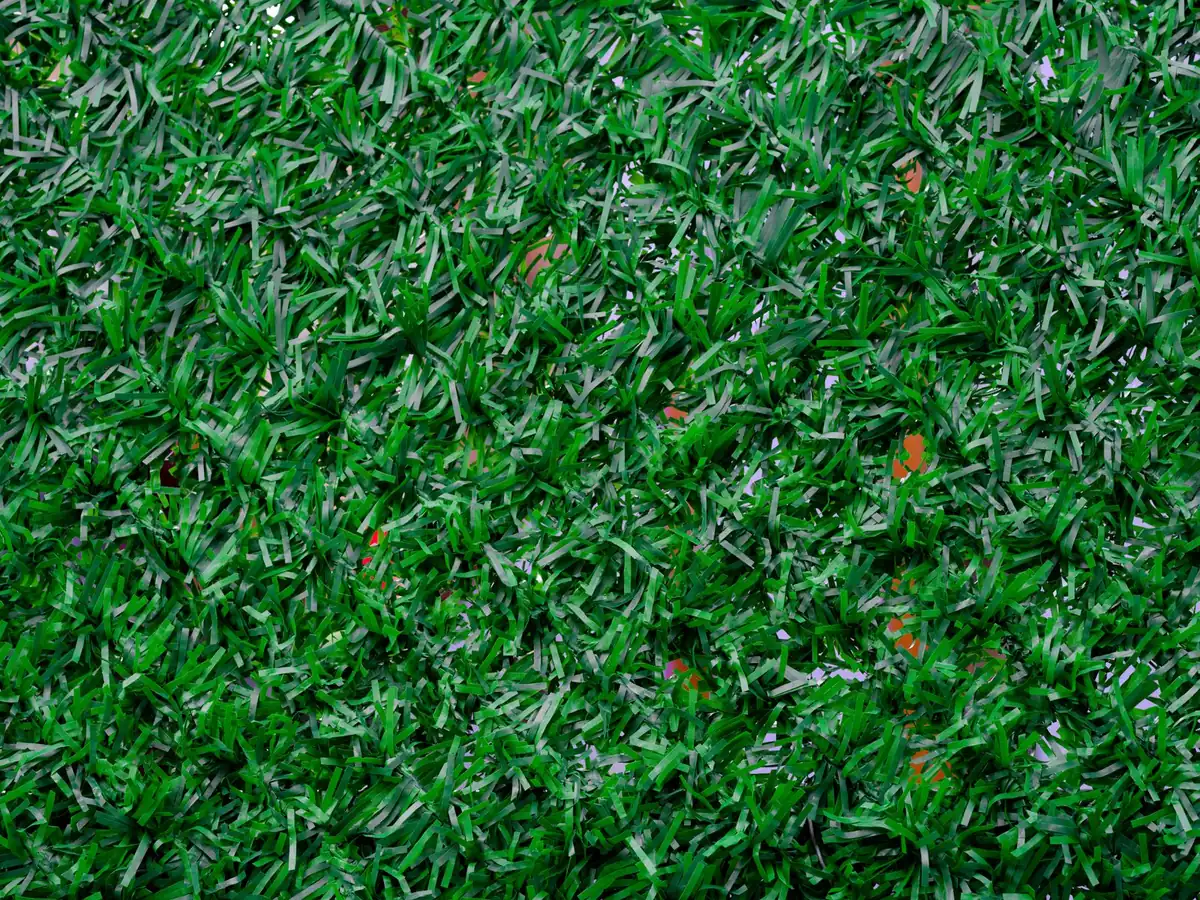
Polyethylene, or PE, is the fibre you want for almost every lawn. It holds the largest share of the global turf market, roughly half, because it is soft underfoot and reads closest to real grass. Its fibres accept multi-tone colouring and a natural blade shape. That is why most buyers pick polyethylene as the best artificial turf for a residential or commercial lawn. On our line we tuft PE monofilament with a PP thatch layer for the same reason.
Nylon is the toughest family and the right call for putting greens and high-traffic spots where a fibre must snap back and hold a consistent roll. It costs more and feels firmer, so it is overkill for a normal lawn. Polypropylene, or PP, is the budget family: cheap, light and fine for indoor or decorative use, but it softens in heat and wears fast outdoors. We would not put a PP-only lawn in full sun and heavy use.
| Material | Feel | Best use | Watch out |
|---|---|---|---|
| Polyethylene (PE) | Soft, most natural | Lawns, gardens, commercial landscape | Match face weight to traffic |
| Nylon | Firm, bouncy | Putting greens, high traffic | Higher price, stiffer |
| Polypropylene (PP) | Light, cheaper | Indoor, decorative, temporary | Weak in heat and heavy use |
When a supplier quotes a lawn product, ask which fibre family it sits in before anything else. That single answer tells you more about long-term behaviour than any two marketing photos. If the sheet says polyethylene, you are in the right lane; if it is vague, that is a flag.
Fibre Shape: What You Actually See
Within a material, the blade shape controls how the lawn looks and performs. Monofilament fibres are solid, individual blades that copy real grass leaves, give the most natural appearance and the cleanest ball behaviour. Slit-film or fibrillated fibres are wide blades split into strips; they are tougher and cheaper, which makes them a workhorse for school and municipal fields. Curled or thatched fibres grip infill and add cushion, and they are often blended with straight blades for a fuller lawn.
The practical takeaway is simple. A dense PE monofilament lawn with a light thatch layer gives the premium natural look. A coarse slit-film carpet is the budget answer for heavy use where looks matter less. Most of the “why does mine look fake” complaints trace back to a coarse fibre shape, not the colour. Check the fibre shape on the data sheet before you compare prices.
Matching Turf to the Application
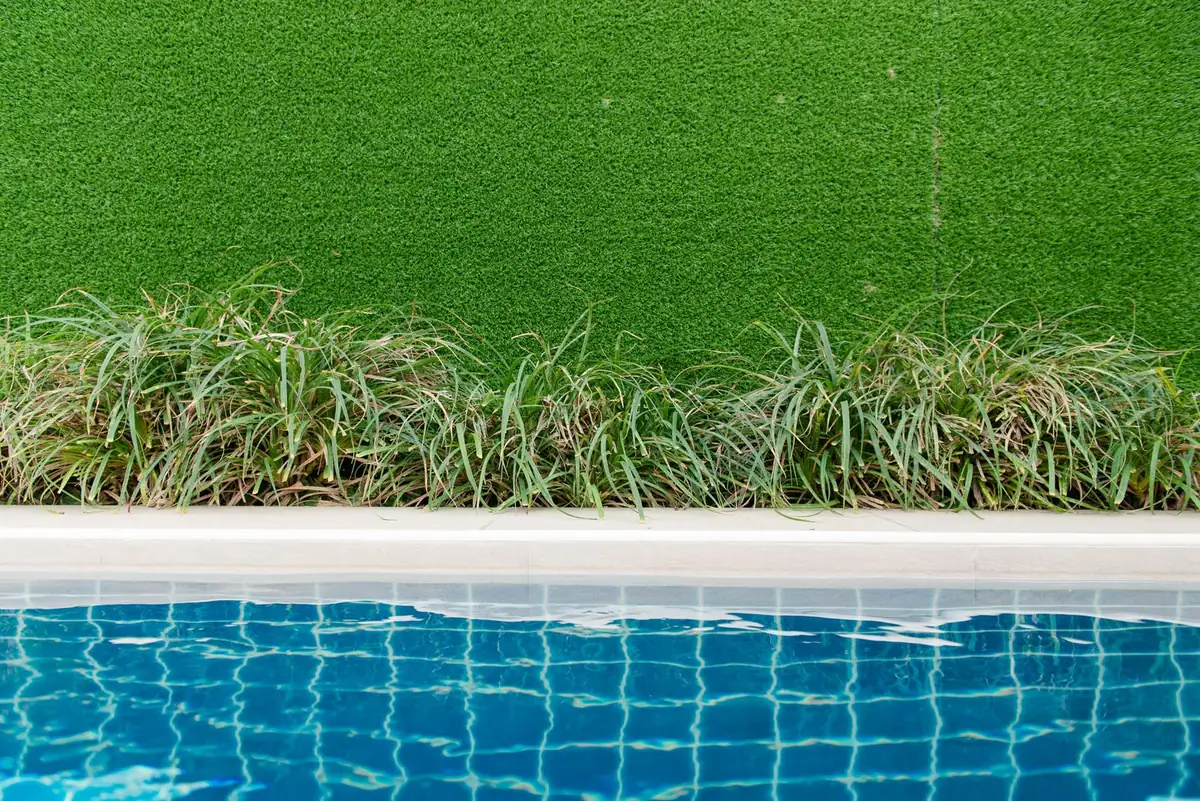
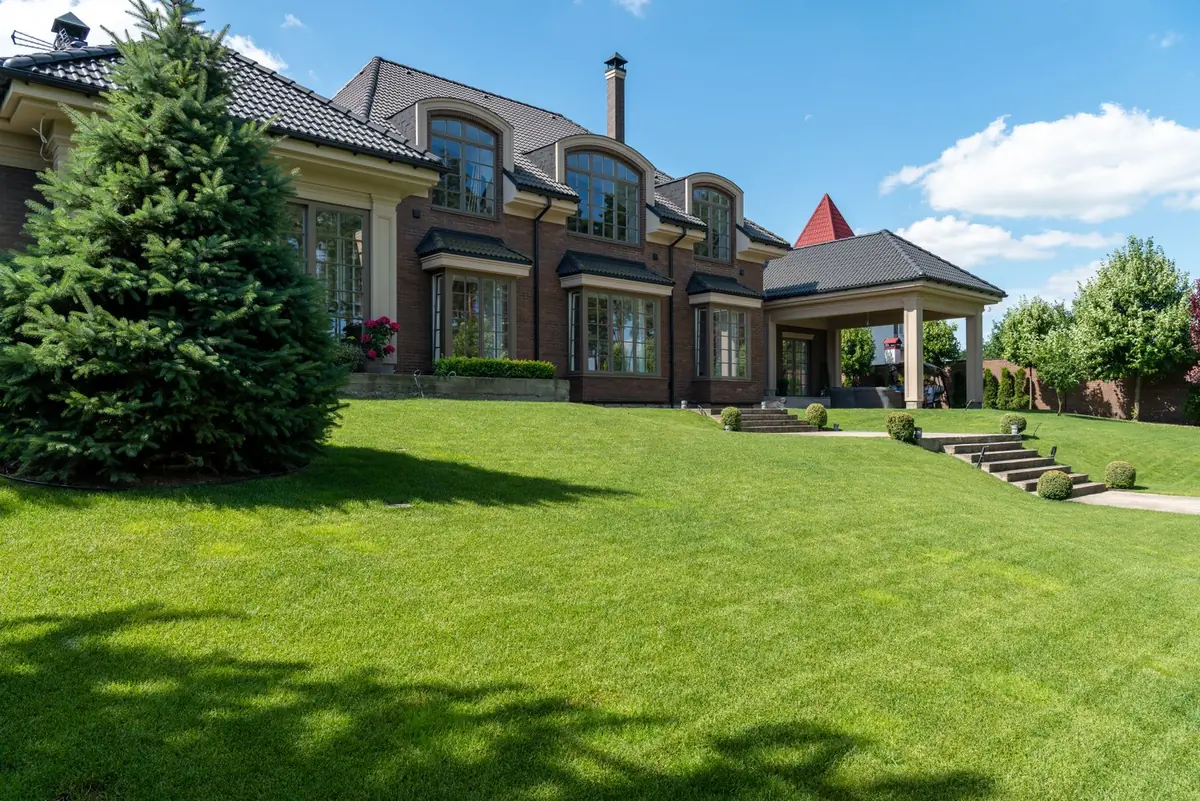
Once the material is right, match the pile height and build to the surface. A residential lawn or garden usually runs a mid pile in the 30 to 50 millimetre range, dense enough to read lush but short enough to groom easily. A commercial or public landscape needs a heavier face weight in the same fibre so it shrugs off foot traffic without flattening. Pet areas and pool surrounds run shorter pile with faster drainage, and a backyard putting green is a different product again, low and smooth.
Roll width is the hidden variable in your cost and seam count. We make rolls in 2m, 4m and 5m widths at 25m length, so each covers roughly 50, 100 and 125 square meters. A wide open lawn suits a 5m roll with almost no seams, while a small irregular garden fits a 2m roll with less waste. If you are speccing for resale, carrying the 4m default plus custom widths covers the most customer layouts.
Backing and Drainage Decide the Base
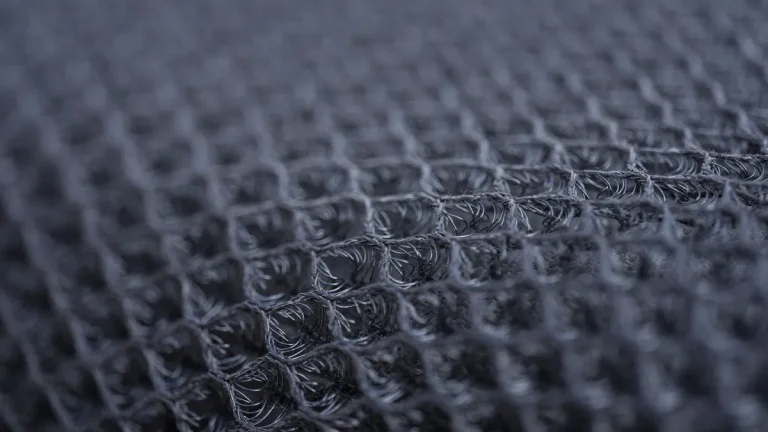
Drainage lives in the backing, and it is where cheap turf quietly fails. A perforated backing lets water pass straight through instead of pooling on the surface, which is why drainage failure shows up first as puddles and later as odour. Beyond perforation, the backing material sets dimensional stability. Our standard is PP plus a reinforcing net, with an optional PU coating for applications that need extra hold and rigidity.
When you evaluate a sample, flip it over. Look for clean, even perforations and a stable backing that does not stretch when you pull it. A turf that stretches on the base will wrinkle and shift underfoot, and no pile height can hide that. The backing is part of the decision, not a footnote, and it is covered in more depth in our guide on what goes under artificial grass.
Reading a Price Honestly: Factory vs Retail
Price is where global buyers most often get misled, because the units do not compare. A US installer quote in dollars per square foot is a different animal from a factory price in dollars per square meter. Neither includes base, infill or freight until you say so. A factory-direct indicative range of $7-60 per square meter covers the lawn grades behind most good buys. The real number depends on backing, grade and roll width.
Our honest position is that vertical integration is why we sit 30 to 50 percent below international equivalents on comparable specs. We control the line from yarn extrusion to coating, so the saving is real and not a downgrade. Still, compare like for like: same material, same face weight, same backing, same roll coverage. A number with no spec sheet behind it is not a price, it is a guess.
Spec a Roll That Matches Your Market
Tell us the application, climate and volume, and we will match a material, pile and backing to it. You get roll coverage for your area and free 20 x 20 cm samples, so the pile is judged by hand before you commit.
Contract Manufacturing vs Buying a Brand
Most of the market splits into two supply routes, and each has a fair price. An integrated Chinese factory offers deep customization and faster container lead times, often around 30 to 45 days, because it controls the whole production process. An international brand usually bundles a strong specification package and a local installer or service network, and you pay a premium for that assurance.
Contract manufacturing wins when you know your spec and want it done your way. OEM and ODM mean you can change pile height, colour, density, yarn type and backing to match your market, then put your own brand on it. That is standard for distributors, not a niche extra. Relyir is one of those integrated factories, and this is exactly the conversation we have with customers every day. You do not have to choose brand over factory; you choose the assurance model that matches your risk.
| Route | Customization | Lead time | Service | Price level |
|---|---|---|---|---|
| Integrated China factory | OEM/ODM, deep | ~30-45 days container | Remote support | Lower |
| International brand | Within product lines | Longer logistics | Certified installers | Premium |
We would be the last people to tell you certification and service are worthless, because they matter for stadiums and public tenders. But for a lawn product going into homes and gardens, an OEM roll from a factory with a clean spec sheet is often the smarter spend. That is how many distributors source the best artificial turf for their local market, and the same principle holds for a wholesale rollout.
Samples Before the Container: A Buyer’s Checklist
The single best habit a buyer can form is testing before committing. Ask for the full spec sheet first: material, fibre shape, pile height, face weight, backing type and roll sizes. Then get physical samples, because colour and hand feel never survive a PDF. Our free 20 x 20 centimetre samples are couriered out with freight charged. They put the pile under your fingertips in four to six days, or up to nine at remote addresses, which is what makes the decision an evidence-based one.
If you need a custom spec, add ten to fifteen days of production on top of the sample run, so factor that into your launch plan. When the sample matches, confirm your roll width and seam plan before you commit to a container. That last step is where ordering errors hide, and it is the cheapest fix in the whole process.
Frequently Asked Questions
Which artificial turf is most realistic?
A dense polyethylene monofilament with a light thatch layer reads closest to real grass. Multi-tone blades help the natural look.
Polyethylene or nylon for my lawn?
Polyethylene for a normal lawn: softer and most natural. Choose nylon only for putting greens or very high traffic where it must snap back.
How much turf do I order?
Measure in square meters, add five to ten percent for cuts, then divide by your roll coverage. One 4m by 25m roll gives you 100 square meters.
Is polypropylene good enough outdoors?
Not for full sun and heavy use; it softens in heat and wears fast. Reserve PP for indoor, decorative or temporary installations.
Can global buyers get samples first?
Yes. Free 20 x 20 cm samples go out with freight charged and clear most couriers in four to six days. Test before you order a container.
 English
  Arabic
  French
  German
  Portuguese
  Russian
  Spanish