
We see buyers pick a pile height from a single number on a spec sheet. Then they wonder why the lawn mats under chairs or why the pet run smells by week three. Our team reads height like any other dial on the artificial turf line.
How to choose the ideal height for your turf starts with the application, not the millimetre. Walk through this guide and you will leave with a height range, a density pairing, a backing choice and a traffic axis you can pin to a quote sheet.
Read Pile Height Against Your Application
Pile height is the vertical distance from the backing to the tip of the yarn. It is not the thickness of the finished mat underfoot. It is also not a comfort score on its own.
We treat height like a mattress spring rather than the foam layer above it. The printed height tells you the relaxed length of the fibre. What matters is how the fibre springs back after load.
That rebound is why height is read with density, face weight and backing. A short turf with high stitch density reads fuller than a tall sparse one. An unsupported long pile flattens in a busy doorway within a season.
How to choose the ideal height against your application comes down to a simple rule: name the use, name the traffic, then pick the range. The reverse order is where most rework starts on site.
Height Ranges for Residential Lawns
Residential work splits into three sub-zones. A B2B buyer who treats the whole garden as one height usually pays for it later. Front-yard curb appeal rewards a fuller look. The back garden trades some softness for family durability. A patio or terrace asks for low furniture-leg resistance.
| Sub-zone | Pile height range | Pair with |
|---|---|---|
| Front yard | 35 to 45 mm | High stitch density; PP+Net backing; PE monofil yarn |
| Family backyard | 30 to 40 mm | Mid density; PP+non-woven backing; light sand infill |
| Patio or terrace seating | 25 to 35 mm | Dense stitch; PU backing for furniture legs |
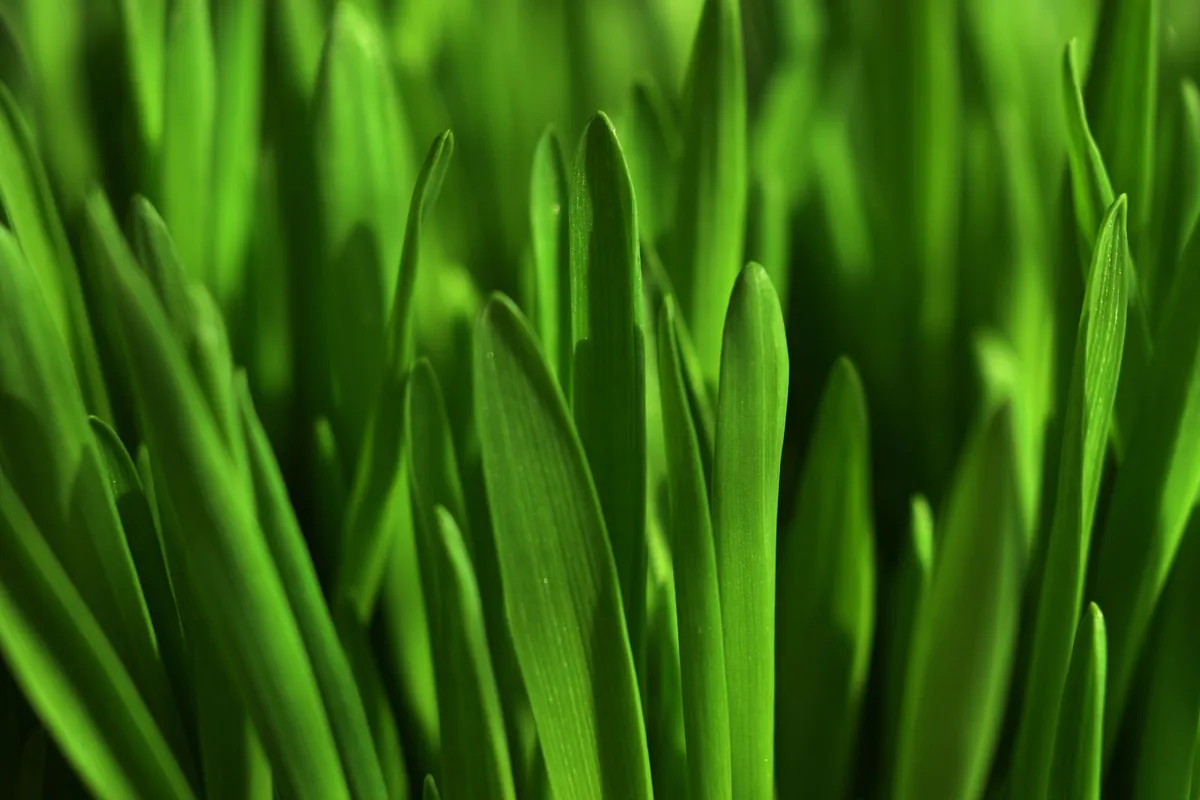
Our residential artificial grass buyers are encouraged to split the spec by zone rather than commit to one number across the whole site. A two-range quote reads cleanly and removes the trap of a tall front lawn that flattens under the post box.
Height Ranges for Commercial Landscapes
Commercial landscapes put wear on the wrong place. Office entries, retail precincts and public plazas see concentrated footfall around doors, bins and signage. The spec that wins on day one is rarely the spec that wins on day three hundred.
How to choose the right height here is to steer buyers toward 10 to 25 mm of pile with a high stitch rate. Short pile cleans faster. It hides minor soiling and keeps a uniform look under furniture moves and event rigging.
Urban green spaces that want a softer feel can push to 40 mm at most. They should only do that when traffic is genuinely light. Event and trade-show turf is a separate case. Weight, install time and rolling-up damage matter more than plushness, so 10 to 25 mm with a PP+non-woven backing is the working spec.
The commercial artificial grass range on our line lets buyers dial the same colour family across plazas, pop-ups and roof decks without changing their install crew.
Height Ranges for Sports Surfaces
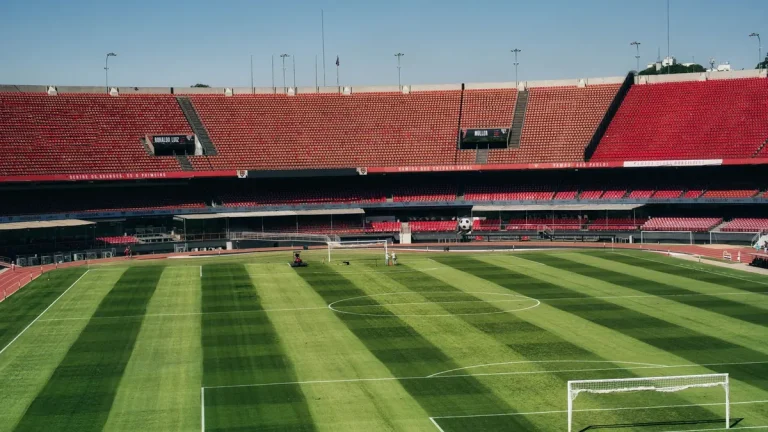
Sports turf is the easiest place to pick height wrong. Every sport sets its own range. We routinely see a football pitch side-by-side with a putting green on the same campus. The pile heights read as two different products, which they are.
A football or rugby field needs 40 to 60 mm to cushion studs and control ball roll. A tennis, hockey or walking court sits at around 13 mm to keep the surface fast and true.
| Sport or surface | Pile height range | What the height controls |
|---|---|---|
| Football, rugby | 40 to 60 mm | Stud cushion; ball roll speed; player safety |
| Tennis, hockey, walking court | Around 13 mm | Stable surface; true ball response |
| Multi-use training area | Short and consistent | Sport-specific lines overlaid |
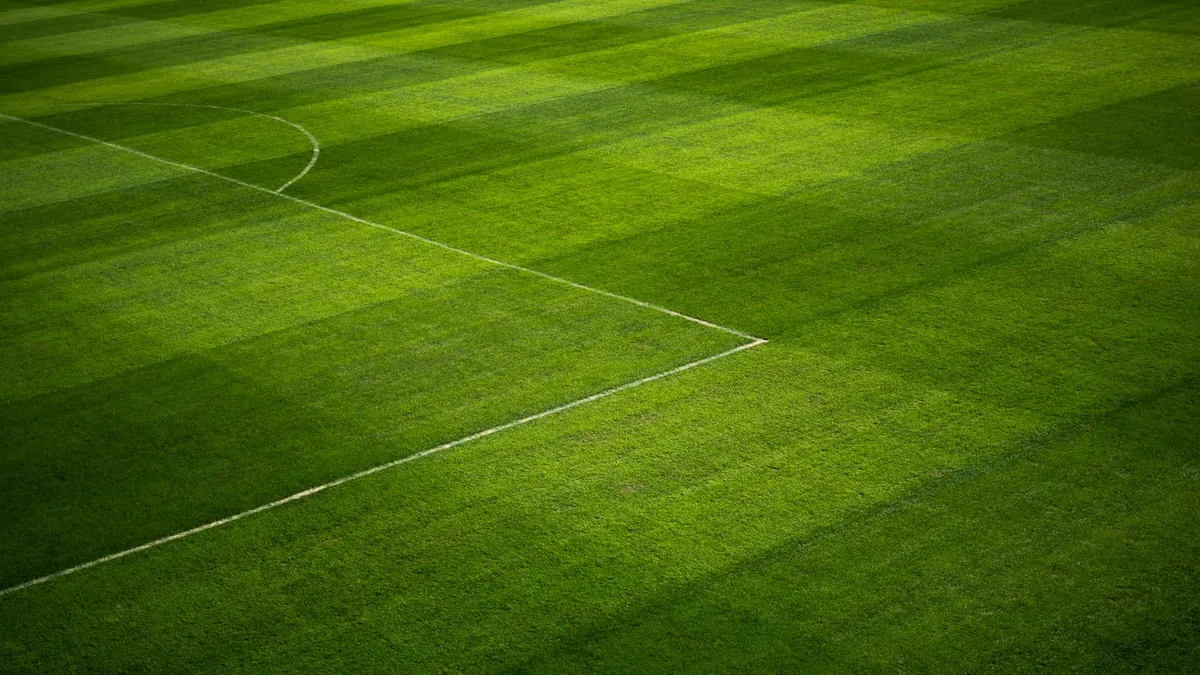
Our sports artificial grass programme is built around this principle: height is set by the sport, not by the catalogue number. A buyer who tries to standardise a campus onto one pile height pays twice, once for the wrong feel and again for the rework.
Height Ranges for Playgrounds and Schools
Playgrounds and schools are governed by safety, not by the look of the lawn. A 30 to 50 mm range is common. The pile height alone does not deliver fall protection, though.
We treat cushioning as a stack on our line. A shock pad or underlay plus a tufted face, with the pile giving the soft landing feel and the pad taking the impact load.
For schoolyards and nursery grounds our bench spec is a mid-pile face around 30 to 40 mm on a PU or PP+Grid backing. Add a closed-cell shock pad rated to the fall height of the equipment. Mid-pile gives a soft barefoot feel. Longer pile can mat under repeated foot traffic, and brushing back a schoolyard is rarely a priority.
Buyers for playground artificial grass should write the safety layer into the spec, not assume height buys safety. Density, backing and shock pad belong on the same line as millimetres.
Height Ranges for Pet and Dog Areas
Pet runs are the place where pile height and drainage interact most. Long pile traps hair, urine and soil deep in the face where hoses cannot reach. Short pile drains, rinses and dries fast.
For most dog areas we recommend 20 to 30 mm paired with a perforated PU or PP+Grid backing. Add a clear drainage path below the mat.
| Pet need | Pile height range | Backing and finish |
|---|---|---|
| Easy cleaning | 20 to 30 mm | Perforated PU; antimicrobial face yarn |
| Drainage priority | 20 to 25 mm | PP+Grid backing; high flow rate |
| Digger resistance | 25 to 30 mm | Reinforced primary backing; double-stitched rows |
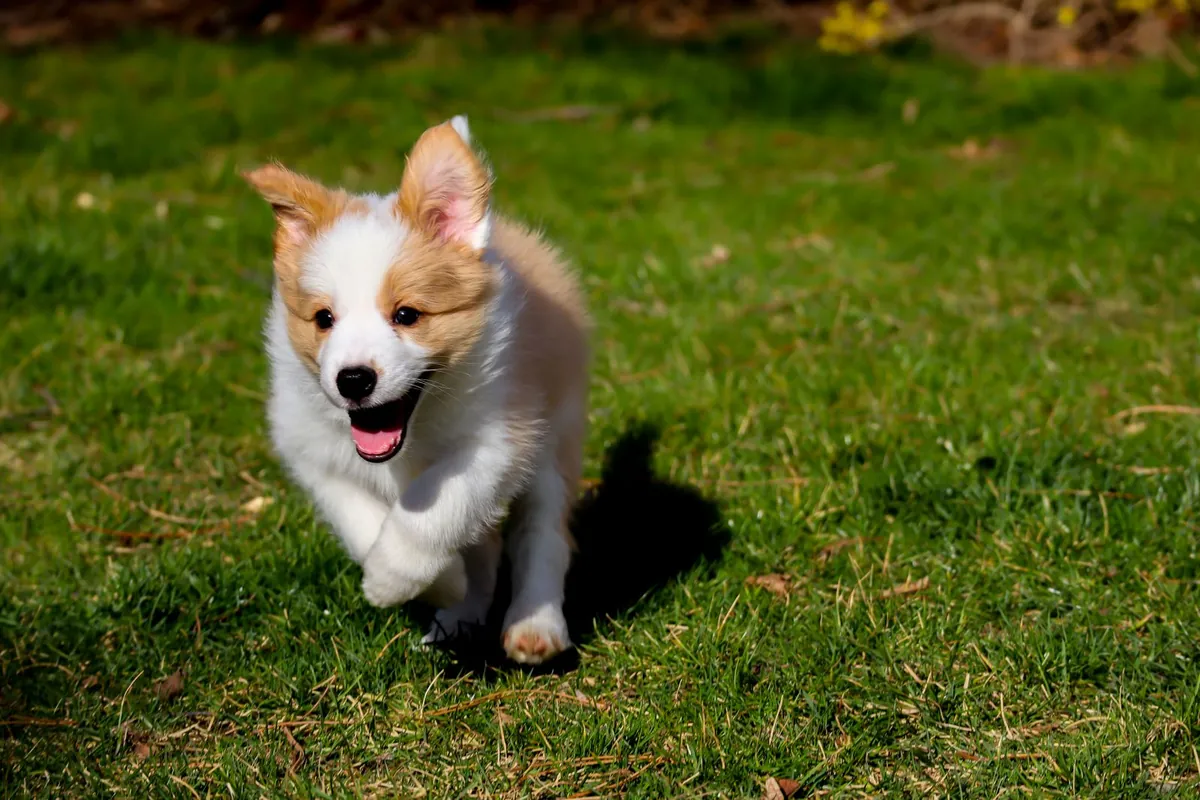
Our artificial grass for dogs spec puts drainage rate and backing on the same line as millimetres. A buyer who locks in 35 mm for a kennel run is signing up for the smell that comes back at month three.
Height Ranges for Putting Greens
A putting green is not a lawn and should not be specced like one. The face height sits in a tight 10 to 15 mm band. A high stitch density holds the ball path steady through a putt.
Anything taller and the grain begins to drift the ball. Anything shorter and the surface reads as a carpet. Putting-green turf also needs a dense thatch layer and a stable infill so the ball sits on top rather than diving into the face.
Drainage is critical because standing water ruins a round. Most putting-green installations pair a 10 to 15 mm face with a free-draining stone base.
Our putting green range is built as a separate product line from landscape turf. A buyer is not asked to repurpose a 35 mm residential roll for a 12 m putt. The millimetres matter here more than anywhere else.
Height Ranges for Rooftops and Balconies
Rooftop and balcony turf lives under wind, sun and limited drainage. Our take is to keep the pile short at 20 to 25 mm. Shorter pile sheds heat, dries faster after rain and resists wind lift better than a tall face on a light backing.
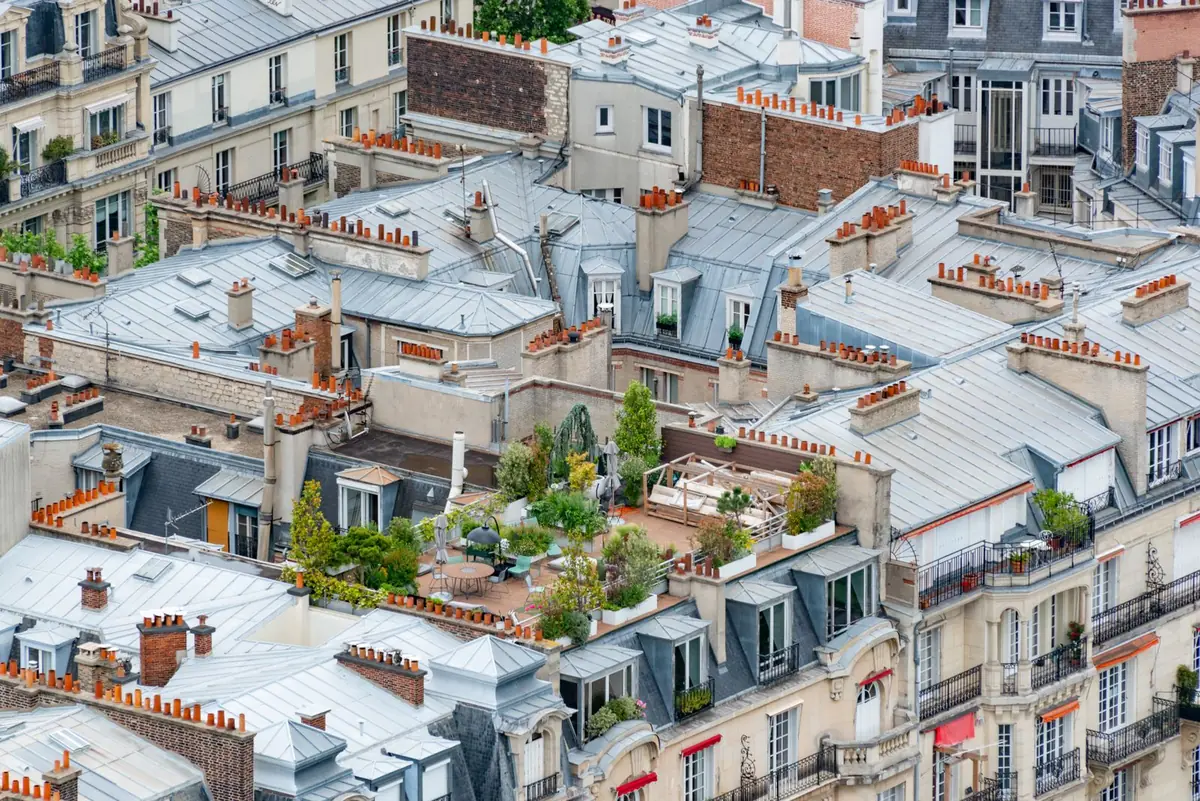
Our line opinion, drawn from rooftop installs we have run, is that the rooftop should be its own spec line. A 35 mm face that looks lush in a brochure cooks on a south-facing deck. The lift risk under a strong gust is real. Short pile, light backing, secure perimeter — that is the working spec for a deck.
Match Pile Height to Traffic Volume
Traffic volume is the second axis of the picker. Two sites with the same application but different footfall want different heights. The gap between a residential garden and a hotel entry is wide enough to flip the height range.
| Traffic band | Pile height range | Backing |
|---|---|---|
| High traffic (entries, venues) | 10 to 25 mm | PP+Net or PP+Grid; tight stitch |
| Medium traffic (family, office) | 25 to 40 mm | PP+non-woven; mid stitch density |
| Low traffic (decorative) | Above 40 mm | PP+non-woven or PU; soft finish |
How to choose the right height for any site comes down to this rule: lock the traffic band first, then read the height. A buyer who skips the traffic step ends up with the tallest roll on a hotel walkway. That roll flattens within a season.
Build Your Height Decision Matrix by Use
The matrix below is the artefact you actually send to a factory with your quote. One row per application, three columns that travel together: pile height range, density or backing pairing, and the traffic band the height tolerates.
How to choose the ideal height for any application means height never travels alone. A quote that does not list density and backing is a quote you cannot hold the supplier to.
| Application | Pile height range | Density / backing pairing | Traffic tolerance |
|---|---|---|---|
| Residential front yard | 35 to 45 mm | High stitch; PP+Net | Low |
| Residential family garden | 30 to 40 mm | Mid stitch; PP+non-woven | Medium |
| Commercial plaza | 10 to 25 mm | High stitch; PU optional | High |
| Sports football / rugby | 40 to 60 mm | Dense tuft; PP+Grid | Sport-specific |
| Sports court / hockey | Around 13 mm | Very dense; PU | Sport-specific |
| Playground / school | 30 to 50 mm | Mid density; shock pad | Medium with safety pad |
| Pet run / dog area | 20 to 30 mm | Perforated PU; PP+Grid | Medium with drainage |
| Putting green | 10 to 15 mm | Very dense; PU | Footwear only |
| Rooftop / balcony | 20 to 25 mm | Mid stitch; lightweight PU | Low to medium |
Our customization path runs against this matrix. Pick a row, then send the spec to the bench. Our line tunes yarn colour, stitch density, face weight, backing and roll size to match the row. The matrix is the contract; the bench delivers the row.
Mistakes to Avoid Before You Commit
Five traps we see every month on inbound quote requests. Each one costs a re-pile or a service visit. Each one is preventable by reading the matrix above before the deposit clears.
First, taller is not better. A 40 mm roll from a low-density line performs worse than a 30 mm roll from a high-density line. A 50 mm face in a hotel lobby flattens under luggage trolleys within a season.
Second, height without density is a half spec. Two rolls at 35 mm can look and wear very differently depending on stitch rate and face weight. Quote requests that name only millimetres get an unfair comparison for the buyer.
Third, pet areas trap waste in long pile. Anything above 30 mm in a dog run becomes an odour problem by month three. Short pile with the right backing is the working answer.
Fourth, sport height mismatch kills ball roll. A football pitch at 25 mm plays like concrete. A putting green at 30 mm plays like rough. The sport sets the range.
Fifth, full-sun long pile gets hot. A 40 mm face in unshaded summer retains more heat than a 25 mm face. The buyer who wants a plush look in a hot climate pays for it in barefoot comfort and water for cooling rinses.
How We Manufacture Turf to Your Spec
Our line builds height into the build sheet, not onto the catalogue. Yarn colour, blade shape, stitch density, face weight, backing type and roll width are all dial inputs. A buyer who sends a matrix row gets a roll built to that row.
Same-batch colour cards and pre-production samples are part of how we keep consistency across production lots. On our bench the height call is made after the application, density and backing are agreed. That ordering matters. A buyer who locks millimetres first and then tries to slot in a backing usually compromises both.
Custom ranges are routine. Our production schedule treats yarn height, blade profile and stitch density as variables on the same form. A height change of 5 mm is a settings update rather than a new product. The bench turns around colour and height samples within the same lead time as a standard line. Our export experience with shipments to over fifty countries keeps the logistics loop short for buyers working on tight install windows.
Source Your Height-Specific Turf From the Factory
Factory-direct supply means your matrix row goes to the bench, not through a distributor who adds margin on every dial. Our team turns the row into a same-batch quote. It ties the quote to a height range from our line, and pairs it with a 4 to 6 day sample dispatch so you can feel the turf before commit.
Bought the Wrong Pile Height Once Already?
Too short for the traffic, too long for the space. We cut to the use. We quote off our own line, typically 30–50% under market for matched specifications.
Cost Drivers Beyond the Square Metre
The headline number on a quote is the square-metre rate. The indicative range across our line runs from $7 to $60 per square metre depending on pile height, density, backing and yarn shape. The square-metre number is honest but it is not the only number that matters on a budget sheet.
| Cost driver | What it adds |
|---|---|
| Yarn height and density | Taller or denser face = more yarn per square metre |
| Backing upgrade | PU or PP+Grid adds to backing cost over standard PP+Net |
| Shock pad or underlay | Safety and cushion layer for playgrounds and sports |
| Roll width | Wider rolls reduce seam count but raise freight weight |
| Custom colour run | Yarn dye setup for non-standard colours |
A taller face does not always win on lifecycle cost. A commercial site running on a 10-year cycle can absorb a higher per-square-metre rate if the pile survives. A residential site that wants a 15-year service life benefits from a denser face even at a higher upfront number. Our line budgets both numbers on the same sheet so the choice is a real one.
Samples and Quote Next Steps
Two actions move a height spec from a guess to a hold-able quote. First, build the matrix row before you ask for a price: application, pile height range, density, backing, roll width, square metre. A quote request that lists only millimetres gets a number, not a guarantee.
Second, feel the turf before you commit. Standard 20 cm by 20 cm samples ship from our line by DHL or FedEx in 4 to 6 days. Custom samples add 10 to 15 days of production. A buyer who holds a swatch against the install site under daylight makes a better call than one who picks from a screen.
How to choose the right sample for your site is to ask for the same-batch colour cards and a trial roll at the agreed width. The production lot you sample is the production lot you receive. Send the matrix row, the square metre, and the install window. We return a quote, a sample dispatch date and a production slot on the same email.
Frequently Asked Questions
What pile height is best for a residential lawn?
Most residential lawns sit between 30 and 40 mm of pile with a mid-density stitch. Front yards that want curb appeal can move up to 45 mm. Back gardens with kids and pets usually stay closer to 30 mm.
How do I pick the right height for a sports field?
Pick the height from the sport, not from a generic chart. Football and rugby need 40 to 60 mm. Tennis, hockey and walking courts want about 13 mm. Match height to the ball roll you want.
Why does long pile fail in pet and dog areas?
Long pile traps hair, soil and urine below the rinse line, which holds odour and slows drying. Twenty to 30 mm with a perforated backing drains and cleans faster, and keeps the run sanitary.
Is a taller artificial turf always higher quality?
No. A 30 mm high-density roll often outperforms a 40 mm low-density roll. Tall pile flattens under traffic. Quality sits in density, face weight and backing, not in millimetres alone.
How does foot traffic change the pile height I should pick?
Lock the traffic band first. High-traffic entries and venues want 10 to 25 mm of pile for fast rebound. Medium-traffic family gardens want 25 to 40 mm. Low-traffic decorative areas can go above 40 mm.
How do I ask a factory for a height-specific quote?
Send the application, square metre, pile height range, density and backing preference. The factory returns a same-batch quote, indicative pricing and a sample dispatch so you can confirm before commit.
 English
  Arabic
  French
  German
  Portuguese
  Russian
  Spanish