

A tape measure, a floor plan and a budget sit on the workbench, and the order form is still blank. Most home gym projects stall here, because the first question buyers ask is which turf to buy, when the useful first question is what the room has to carry.
Choosing turf for home gym use is a sequence, and getting the order right saves a second purchase. We build artificial grass rolls on our own line, so we see which specifications survive sled friction and dropped plates and which quietly fail. Six steps below turn a room and a training habit into a written specification for turf for home gym projects of any size.
Start With the Workouts, Not the Turf
Write down every movement the room will host before opening any catalogue. Sled pushes and pulls, barbell work with dropped weights, agility drills, cardio machines and floor stretches all load a surface differently, and no single roll optimises for all of them.
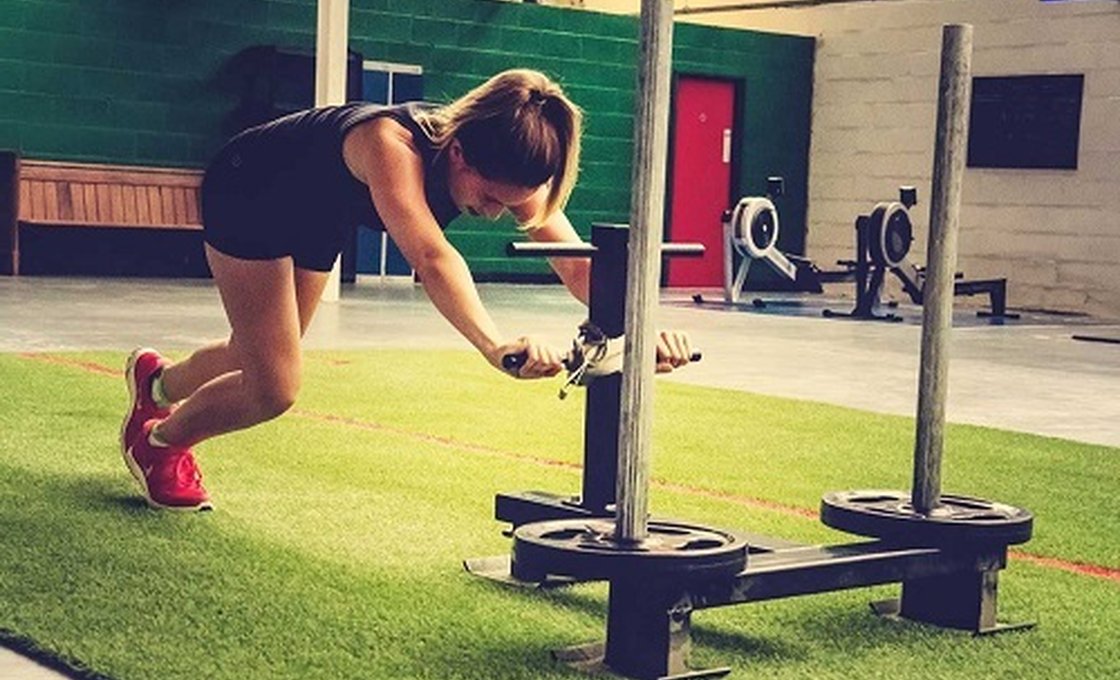
Sled work is the harshest test. Friction builds under the runners, and a soft, tall surface lets the skis sink and drag. Lifting wants the opposite: a firm, stable platform that does not compress under a standing foot. Agility work needs grip that holds through a hard cut, and floor work needs enough give to be comfortable on knees and elbows.
Rank the movements by how often you will repeat them. Most buyers evaluating turf for home gym use find the top two movements settle the spec, so let those set the direction. Our line tufts to a stated pile height and density. That is why we ask for the training list first; a roll built to the wrong spec cannot be talked into behaving.
Measure the Space and Match the Roll
Measure the usable lane, not the whole room, before you price turf for home gym work. Subtract shelving, a parked car, the swing of a door and the clearance a barbell needs. Draw the training zone only after those deductions, because the turf covers just the part you actually train on.
Then match the lane width to a standard roll width. Rolls come in 2 m, 4 m and 5 m widths at 25 m long, and a lane that lines up with a roll width needs no cross-seam at all. A 4 m lane takes a 4 m roll; a 5 m lane takes the 5 m roll. Cutting a wider roll down to size wastes material, and joining narrow rolls adds a seam exactly where feet and sled runners travel.
| Home gym space | Typical usable lane width | Roll width that avoids a cross-seam | Seam position to plan |
|---|---|---|---|
| Single garage bay, one training lane | 2 m to 3 m | 2 m roll, or 4 m roll trimmed | None across the lane |
| Double garage bay, lifting plus sled | 4 m | 4 m roll | None across the lane |
| Wide garage or converted room | 5 m | 5 m roll | None across the lane |
| Basement corner or narrow spare room | Under 2 m | Cut from a 2 m roll | Keep offcuts at the wall |
Plan the length last. A standard roll runs 25 m, so a short lane is cut from one roll and the remainder becomes offcut. Measure the lane twice and add a trimming margin rather than ordering a second roll. Read the standard roll widths and roll construction before you fix the layout.
Choose Roll or Tile and Set Pile Height
Rolls give a continuous surface with few seams and suit a lane you will not move. Modular tiles of about 23 by 46 inches or 1 by 1 metre are easier to cart in. They are also simpler to relay, and one worn area can be swapped piece by piece. For a fixed home training lane, rolls are the usual answer for turf for home gym layouts.

Pile height follows the movement. For sled pushes and agility work, a short pile of 5 mm to 15 mm gives a fast, low-resistance surface. A dedicated sled lane often lands in the 12 mm to 20 mm range with minimal or no infill. Where stability matters more than speed, 12 mm to 15 mm feels firmer underfoot, while 18 mm to 20 mm adds cushioning for jumping and high-impact drills.
Density and yarn weight decide how long the surface keeps that shape. Lighter residential turf under 2,000 dtex suits low-intensity use only. Weight of 2,000 to 3,000 dtex handles a mixed-use garage gym, and 3,000 dtex and above is built for sleds, barbells and regular hard sessions. A lighter roll used for gym work flattens and breaks down faster than its rated life suggests. It is the most common regret reported after artificial turf installations in home gyms.
| Primary movement | Pile height | Yarn weight (dtex) | Why it fits |
|---|---|---|---|
| Sled pushes and pulls | 5 mm to 15 mm, or 12 mm to 20 mm | 3,000 and above | Low drag, and fibre that resists friction |
| Barbell lifting and dropped plates | 12 mm to 15 mm | 2,000 to 3,000 | Firm footing that does not compress |
| Agility, cutting and sprint drills | 5 mm to 15 mm | 2,000 to 3,000 | Grip that holds through a hard cut |
| Jumping, HIIT and floor work | 18 mm to 20 mm | 2,000 to 3,000 | Extra cushioning under impact |
One home floor usually serves two or three of these, so pick the height and weight that cover the top two movements and accept the compromise on the third. A shortlist that fits turf for home gym use rarely satisfies every drill at once. If the room is compact and the movements are light, indoor sports turf for compact training floors keeps the profile low without giving up density.
Set the Backing and Cushion Layers
Backing holds the fibres and decides how the roll behaves on a hard floor. A PP+Net backing gives a stable base for a firm training lane, while a PU backing adds weight and holds the roll flat where the surface sees heavy loading. Both are common across artificial turf installations built for indoor training floors, where the roll must sit flat without creeping. A perforated backing lets air and moisture move and makes sweeping easier in a closed room.

Ask what the turf will sit on before you choose a cushion. Turf laid straight over concrete is firmer underfoot than turf over an aggregate base, so a concrete floor usually calls for a shock layer. Most shock pads used under synthetic turf run from 10 mm to 40 mm thick. They cut both the impact on joints and the noise that travels to the floor below.
Pad only the impact zones. The weight zone, the sled lane and a stretching corner need a shock layer; the walkway between them does not. A foam or rubber pad under the lifting and sled area with short dense turf on top keeps the rest of the floor firm and stable. That firmness is exactly what a standing lift wants underfoot.
Bolting a rack down is also easier when the pads sit under the feet rather than across the whole room. A thin rigid mat under each rack foot stops long-term indentations where a loaded rack rests for years.
Plan Ventilation, Cleaning and Moisture
An indoor gym traps what an outdoor one vents. Ventilation planning matters more across artificial turf installations indoors than it does on open ground. Concentrations of many volatile organic compounds run consistently higher indoors than outdoors, up to ten times higher, and products release them while in use and even while stored. The wet materials in a floor project, such as adhesive, are the ones to watch. Use a low-VOC adhesive if any, ventilate while it cures, or fix the turf with double-sided tape and skip glue altogether.

Test the slab before you order. Tape a square of plastic to the floor overnight and look underneath in the morning. Beads of water mean the slab is passing moisture and needs a barrier before turf goes down. Laying turf over a damp slab traps that moisture and invites mildew, which is a problem no surface fibre can fix afterwards.
Set a cleaning rhythm that matches the room. Brush the pile upright with a stiff broom, vacuum with the beater bar off, and wipe spills with mild soap and water rather than harsh chemicals. Sweat and chalk lift more easily from turf than from rubber. A lane with no infill is the simplest of all to keep clear, because there is no loose fill for dust to settle into. The EPA guidance on indoor volatile organic compounds is a useful reference for any enclosed training room.
Inspect the Delivery Before You Lay It
Check the roll against the specification sheet the day it arrives, while the courier is still reachable. Confirm the roll width and length, the pile height, the yarn weight and the colour, and check that every roll in the order carries the same batch colour. A mismatch found now is a replacement; a mismatch found after laying is a floor.
Let the roll relax before cutting. Turf arrives under tension from rolling, and the ripples settle once it lies flat on the floor for a while in a warm room. Cut after it has relaxed, not before, so the edges you trim stay true.
Preparation for laying is short: the floor must be clean, dry and level, and the fixing method must match the room. On many artificial turf installations in homes, a tape fix avoids adhesive entirely. Edge fixing keeps a lane in place without covering the floor in adhesive, which suits rented space and basements. Confirm the sequence with whoever lays it, then treat the install as a separate job from the buying decision.
Still Guessing Which Pile Height Your Gym Needs?
Guess the spec wrong and the sled lane mats out in a season. We tuft to your pile, density and backing. Factory-direct, typically 30–50% below market on like-for-like specifications.
Mistakes That Ruin a Home Gym Floor
Four errors account for most disappointing home gym floors. Every one of them, plus most problems seen on artificial turf installations in homes, is decided at the buying stage rather than on the day the roll is cut.
Mistake 1: Buying on Price Before Training
Price first, workout last is the classic order, and it produces a floor that fights the training. A roll chosen for cost alone tends toward a light yarn weight built for a garden, and it flattens under a rack or a sled within months. Write the movement list first and let it set the budget range.
Mistake 2: Bringing Landscape Turf Indoors
A tall, plush landscaping roll looks convincing in a photograph and behaves badly in a gym. It crushes flat under equipment, sinks under a sled runner and holds dust in a closed room. Indoors, short and dense wins; the plush look belongs outside.
Mistake 3: Skipping the Cushion Under the Weight Zone
Turf on its own will not protect a slab from a dropped dumbbell and will not quiet a room. Skipping the shock layer under the lifting area saves one line on the order and costs joints, the floor below the sound test. Pad the impact zone, not the whole room.
Mistake 4: Laying Over an Untested Slab
A damp slab traps moisture under the turf and invites mildew, and the smell arrives long after the roll is glued down. The overnight plastic test costs nothing and takes minutes. Test first, add a barrier if the slab is passing moisture, then order.
Pitfalls Buyers Only Notice After Laying
These three do not show up in a showroom or on a spec sheet. They surface in the first weeks of real use, and they are the faults that make homeowners regret a home gym turf for years.
Pitfall 1: A Seam Running Down the Training Lane
When the lane is wider than the roll, a seam lands somewhere, and if it lands across the sled path or the lifting position it becomes a ridge underfoot. Match lane width to roll width so the seam sits at the wall, and if a seam is unavoidable, keep it out of the travel path.
Pitfall 2: Ordering Without a Width Match
Two narrow rolls joined to cover a wide lane cost more in material, more in fixing and more in colour variation than one roll of the right width. The width match is decided on paper, and it is the cheapest decision in the whole project to get right.
Pitfall 3: Rack Feet Without a Rigid Base
Even good gym turf will take a permanent indentation under a loaded rack foot over years. A thin rigid mat or a hardwood square under each foot spreads the load, and it is far simpler than replacing a lane because four dents will not recover.
The Pre-Purchase Checklist We Walk Buyers Through
Before an order goes out, we ask buyers to confirm five items. Each one is cheap to check now and expensive to correct later, and together they cover almost every fault we see on artificial turf installations.
Check 1: The Movement List Is Written Down
List the top movements and the order they matter in. This one page sets pile height, yarn weight and cushion, and it is the document every later decision refers back to.
Check 2: The Lane Width Matches a Roll Width
Confirm the usable lane width after shelving and door swing, then match it to a 2 m, 4 m or 5 m roll. Note where any seam will fall and keep it off the travel path.
Check 3: Pile Height, Density and Backing Are on the Sheet
Write all three on the specification sheet rather than one of the three. A roll specified by height alone can still arrive with a light yarn or a backing that will not lie flat.
Check 4: Cushion Scope and Slab Test Are Done
Decide which zones get a shock layer and confirm the slab is dry with the overnight plastic test. Both answers change the order, and neither can be fixed once the turf is down.
Check 5: Cleaning and Ventilation Are Planned
Choose the fixing method and the cleaning routine together. A low-VOC or glue-free fix keeps the room ventilated, and a no-infill lane keeps the vacuum simple. We can tuft to custom pile height, density and colour, and 20 by 20 cm sample squares let you check feel and colour before the full order.
How Indoor Turf Differs From Outdoor Rolls
An outdoor roll is specified around weather and water, but the logic that governs artificial turf installations indoors is different from the logic outdoors. Drainage through the backing and UV stability carry the top of the list, because rain, sun and irrigation are the forces a garden or field has to survive. Indoors, none of those forces are present, so the ranking changes.
Inside, the priorities are cleanliness, air movement and how the surface feels underfoot. A perforated backing helps air and moisture move in a closed room. A dense short pile keeps dust on the surface where a vacuum reaches it, and a shock layer does the work that drainage does outside. Buying an outdoor roll for a basement on the strength of its UV rating is solving a problem the room does not have.
| Specification priority | Indoor home gym | Outdoor roll |
|---|---|---|
| Water management | Moisture barrier under the roll | Drainage through the backing, 80% water saving common on all-weather fields |
| Sun exposure | Not a factor in a closed room | UV stabilisation against fading and brittleness |
| Surface priority | Cleanliness, air movement, foot feel | Weather resistance and wear under open use |
| Impact handling | Shock layer under the weight zone | Base build and infill depth |
The practical takeaway is to rank the constraints the room actually has. For a covered training space, pair a short dense roll with the right backing and cushion. Treat outdoor performance claims as notes on the material rather than a reason to buy. Compare the systems on sports turf systems built to a stated pile and backing spec, and let the room’s own conditions decide the order of the list. A buyer who ranks turf for home gym needs by the room’s real constraints rarely overbuys.
Frequently Asked Questions
What pile height is best for a home gym?
It depends on the movement. Sled and agility work suits 5 mm to 15 mm, stability work 12 mm to 15 mm, and jumping or floor work 18 mm to 20 mm for cushioning.
Should I choose turf rolls or tiles for a home gym?
Rolls give a continuous surface with few seams and suit a fixed lane. Modular tiles are easier to carry in and can be swapped piece by piece, which helps small or changing rooms.
Do I need a shock pad under home gym turf?
Only under the impact zones, such as the weight area, sled lane and stretching corner. Most shock pads used under synthetic turf are 10 mm to 40 mm thick.
Does indoor turf smell, and how do I ventilate?
The wet materials matter most, so use a low-VOC adhesive and ventilate while it cures, or fix with tape instead. Indoor volatile organic compounds can run higher than outdoors.
How do I check a basement slab before laying turf?
Tape a square of plastic to the floor overnight. Beads of water underneath mean the slab passes moisture, so add a barrier before the turf goes down.
How do I check a turf roll when it arrives?
Compare the roll width, length, pile height, yarn weight and colour against the specification sheet, and confirm one batch colour across the order before you cut.


 English
  Arabic
  French
  German
  Portuguese
  Russian
  Spanish