
A facility manager we work with once laid three turf quotes side by side on one desk. One supplier offered a monofilament carpet with a deep rubber fill, the second quoted a sand-dressed fibrillated surface, and the third simply wrote premium sports system with no numbers attached. All three fields may have played well. None of the three documents could be compared line by line.
That gap is what the definitive guide to artificial turf fields exists to close. Type names are marketing; criteria are physics. Four measurable axes separate every product on the market: yarn material, yarn shape, pile height and infill depth, with backing, base and drainage forming the system around them. Once a buyer reads those four lines, every type resolves into a specification that can be audited, compared and verified on delivery. The right artificial turf installation always begins with that specification, not the catalogue.
How Buyers Should Classify Turf Fields
Synthetic turf entered professional sport in 1966, when the Houston Astrodome replaced grass that was dying for lack of sunlight. Six decades of development later, hundreds of products are on sale worldwide. A European specification for synthetic turf carpets still sorts every one of them along the same few axes. Pile height, infill depth and yarn construction carry the classification, not brand names.
The reason is structural. A field’s playing character comes from the carpet, the infill held within the pile and any cushioning layer beneath it, all working as one system. Change one layer and the other two must be retuned, which is why serious specification documents describe all three before they name a product. Our line handles the carpet itself, and we bench-test every combination before it ships. The same system logic protects every artificial turf installation, from a school pitch to a stadium.
Comparing turf types without agreed criteria is like comparing cars by paint colour alone. We read every incoming brief against the four axes first. Pile height, density, yarn shape, colour and backing can all be tuned to the use zone a client actually serves. The roll formats and product range show how those parameters land in real products.
Yarn Material Drives Feel and Wear Life
Material is the first axis because it sets feel, resilience and wear life before anything else is decided. Polyethylene is the most common sports face yarn because it is soft against skin, holds colour in sunlight and springs back after studs pass through it. For fields where players tackle, slide and fall repeatedly, polyethylene is the default choice.
Polypropylene is lighter and more economical, and its slightly stiffer feel suits lighter loads: temporary venues, decorative zones and surfaces where budget outranks comfort. It resists acids and alkalis well, though it ages faster under heavy daily use than polyethylene. Nylon, or polyamide, is the strongest of the three, with the best abrasion resistance and elasticity. It carries the highest price and a firmer feel that most football programmes do not need.
Most high-specification sports carpets therefore pair materials rather than choosing one. A polyethylene monofilament face over a polypropylene thatch layer is a classic combination, blending soft play with structural support. The pairing decision belongs in the specification, not in the brochure.
| Material | Feel underfoot | Strength | Typical zone |
|---|---|---|---|
| Polyethylene (PE) | Soft, skin-friendly | Good, UV stable | Football, rugby, multi-sport faces |
| Polypropylene (PP) | Firmer, lightweight | Moderate | Thatch layers, light-use and temporary zones |
| Nylon (polyamide) | Firm | Highest, most abrasion resistant | High-impact and heavy-wear applications |
Why Yarn Shape Decides Blade Recovery
Yarn shape decides how a blade stands, bends and recovers. Monofilament yarn is extruded as individual filaments, each blade standing alone the way real grass does. Manufacturers shape these filaments as U, S, diamond or C profiles, and the profile controls stiffness and bounce, which is why monofilament carpets dominate high-intensity professional fields.
Fibrillated yarn starts as a thin plastic sheet, slit into strands that stay linked by a matrix of cross strands, opening into a honeycomb when pulled apart. The linked structure holds infill in place and withstands abrasion cheaply, which suits heavy-traffic community pitches where budget matters. Its trade-off is recovery: fibrillated blades mat down sooner than well-profiled monofilament.
Many modern carpets combine the two, adding a thatch zone of shorter, curly yarn beneath the main pile. The thatch wraps around the infill, holds the straight blades upright longer, improves impact absorption and slows infill migration. In our view, yarn shape is the most under-specified line on a turf quote. Two carpets at the same pile height can behave completely differently depending on this single entry.
Pile Height: Short, Medium and Long
Pile height is the axis every buyer sees first, and the European carpet specification gives it a clean ruler. Short pile means an unstretched height above the primary backing of less than 25 mm. Medium pile runs between 25 mm and 40 mm, and long pile rises above 40 mm. Three classes, measurable with a ruler on delivery day.

Why the classes matter is less obvious. Taller fibres need more infill to keep standing, and every added millimetre of pile raises the sand and rubber a field consumes, plus its artificial turf installation and upkeep budget.
A full-size football pitch in Europe and the United States commonly runs around 60 mm, and 50 mm is a popular balance of durability and cost. Long-pile carpets of 40 to 60 mm suit heavy-use sports fields. Hockey and tennis take the opposite path, using short, dense fibres of 10 to 15 mm with no infill at all. Those sports need pace and a true ball roll rather than cushioning.
| Pile class | Height above backing | What it delivers | Typical use |
|---|---|---|---|
| Short | Less than 25 mm | Ball speed, glide, low infill demand | Hockey, tennis, putting, indoor halls |
| Medium | 25 to 40 mm | Bounce and footing without deep fill | Training grounds, five-a-side, residential lawns |
| Long | More than 40 mm | Room for deep infill, stud traction | Full-size football and rugby fields |
Treat the definitive guide to pile classes as a cost map, not just a height map. The class sets the infill budget, the brushing schedule and the shock-pad conversation that follows. A medium-pile training field and a long-pile stadium carpet differ in far more than fibre length, and the price of confusing them surfaces years later in maintenance invoices.
Infill Systems: Filled, Semi-Filled and Unfilled
Infill is the unbound particulate material worked into the pile to support the blades and, on many surfaces, to deliver most of the sports performance. Three families cover the market: mineral sands, rubber granules from recycled tyres, and engineered granules such as TPE or EPDM. Each material trades heat, weight, cost and drainage behaviour differently. The infill choice is the first thing an artificial turf installation feels, long before the yarn shows wear.
The classification that matters on a specification is depth. A non-filled surface contains no infill of any kind. A semi-filled surface holds infill to a depth that does not exceed 75 percent of the unstretched pile height. A filled surface holds infill equal to or deeper than that 75 percent line. The percentage, written against the pile height you chose in the previous section, is the single number that turns the word filled into a verifiable quantity.
Buyers also ask what the granules are made of, and rubber from recycled tyres is the most studied infill in the world. The United States federal research programme on tire crumb rubber characterises its constituents and how players are exposed to them. Its reports are public reading for any procurement file. Whatever the material, infill and drainage are designed together, because heavy or compacting fills slow surface flow and every fill migrates over time.
Backing, Base and Drainage Layers
The carpet is only the visible third of a field. Beneath it, the backing carries the tufts and the perforations that let water through. Our own rolls are built on PP+Net or polyurethane backings selected for the drainage and durability the brief demands. Above the prepared ground, an open-graded stone base of 8 to 12 inches is typical for sports fields. It is finished to a fall of 1 to 2 percent toward a defined outlet.
Drainage numbers deserve one caution. Quality perforated backings commonly rate 30 to 100 inches per hour, and fully permeable flow-through backings exceed that substantially in laboratory ratings. Those figures describe the backing alone in a controlled test. The effective rate of the finished field is controlled by the whole chain: hole pattern, infill depth, base aggregate and the gradient that carries water away. A fast carpet over a tight, flat base still floods.
This is why the definitive guide to field types treats base and drainage as acceptance criteria rather than options. A buyer who cannot see the stone specification, the compaction method and the fall on the drawing is being asked to buy a promise instead of a system. Write those lines into the contract, whatever the surface above them is called. No artificial turf installation should be signed off without that contract in hand.
Spec Confusion Costing You the Whole Field?
Mismatched pile, yarn and infill specs quietly drain field budgets. We build rolls to your exact pile, density and backing. Factory-direct pricing, typically 30–50% below market on like-for-like specifications.
Matching Field Type to Use Zone
A community centre director once sent us a programme sheet instead of a product enquiry. It listed hockey on Tuesday mornings, football training four afternoons, a walking group at lunchtime and a fete every June. No single carpet is best at all of that, so the classification work is really an act of matching. Use zone comes first, and pile height, density, yarn and infill follow from the hours and sports the field must absorb. A well-matched artificial turf installation repays that classification work for the whole of its service life.
The selection table below is the definitive guide to that match, judged one row at a time. Read the use zone, then check that every criterion in the row answers a fact from the programme sheet. Playing hours set pile and density, ball speed sets infill depth, and budget sets the yarn combination. Average residential lawns carry roughly 15,000 to 20,000 tufts per square metre. Premium dense products reach about 30,000, so the density line on a quote is worth interrogating too.
| Use zone | Pile class | Typical pile height | Yarn approach | Infill approach |
|---|---|---|---|---|
| Hockey and tennis | Short | 10 to 15 mm | Dense fibrillated or textured curly | Non-filled |
| School and community multi-use | Medium | 25 to 40 mm | PE monofilament with PP thatch | Non-filled, high-density yarn |
| Football training and five-a-side | Medium | 25 to 40 mm | PE monofilament | Semi-filled sand |
| Full-size football, club level | Long | 40 to 55 mm | PE monofilament, higher density | Filled sand plus rubber |
| Municipal and campus stadium | Long | Around 60 mm | PE monofilament, high density | Filled, deeper profile |
Where the field sits widens or narrows the same rows. Sports systems push toward the long-pile filled end, while residential artificial grass favours medium pile with a light dressing. School and playground surfaces lean on dense yarn with little or no fill, and commercial artificial grass for display and event zones leans on colour and durability over playing performance. The classification does the sorting, the programme sheet sets the row, and the definitive guide to the whole decision is that one table.
Specify and Verify a Turf Field
Every criterion above converges on one document: the purchase specification. Write the pile class and height, the yarn material and shape, the tufting density, the backing type and the roll width as separate lines. Each line carries a number and a unit. The European carpet specification requires manufacturers to publish declared values for exactly these entries. Asking for that data sheet costs a buyer nothing but quickly separates auditable quotes from marketing.
Verification then has tolerance bands to lean on, and five checks cover the handover. Together they turn a delivery check from an argument into arithmetic, and they apply to the roll in front of you rather than the sample card from months earlier.
Pile Height Within 5 Percent of Declaration
Measure the pile against the primary backing, not from the tips alone. A declared height carries a tolerance of plus or minus 5 percent, so the delivered roll has to sit close to the number on the data sheet. A roll outside that band is a conversation about the batch.
Tufts per Square Metre Within 10 Percent
Count tufts on the delivered roll rather than trusting the card. The declared figure carries a tolerance of plus or minus 10 percent. Density sets how well the pile holds infill and how the surface wears, so this count is worth doing on the first roll that arrives.
Yarn Material and Shape Against the Data Sheet
Confirm the polymer and the blade profile in writing. Polyethylene should read as polyethylene rather than a vague soft yarn, and a monofilament face should be listed as monofilament rather than blended into a generic description. A shape change alters recovery and ball roll.
Backing Type and Perforation Pattern Before Install
Inspect the backing before the first roll is rolled out. Check that the construction matches the order and that the perforation pattern is the one specified. Backing carries the tufts and sets how water leaves the carpet, and it cannot be swapped once the field is laid.
Roll Widths Confirmed Against the Layout
Compare the delivered widths with the drawing before cutting begins. Wider rolls cut the number of seams across a main playing area, while narrower widths trim waste on awkward shapes. Seam count is far cheaper to plan than to correct later.
Roll format is the last planning line. Standard rolls come in 2 m, 4 m and 5 m widths by 25 m. Wider rolls cut seam counts across a main playing area, while narrower widths trim waste on awkward shapes. Where a project needs something outside the standard bands, custom pile heights, densities and colours can be built to match the specification rather than bending the specification to suit stock.
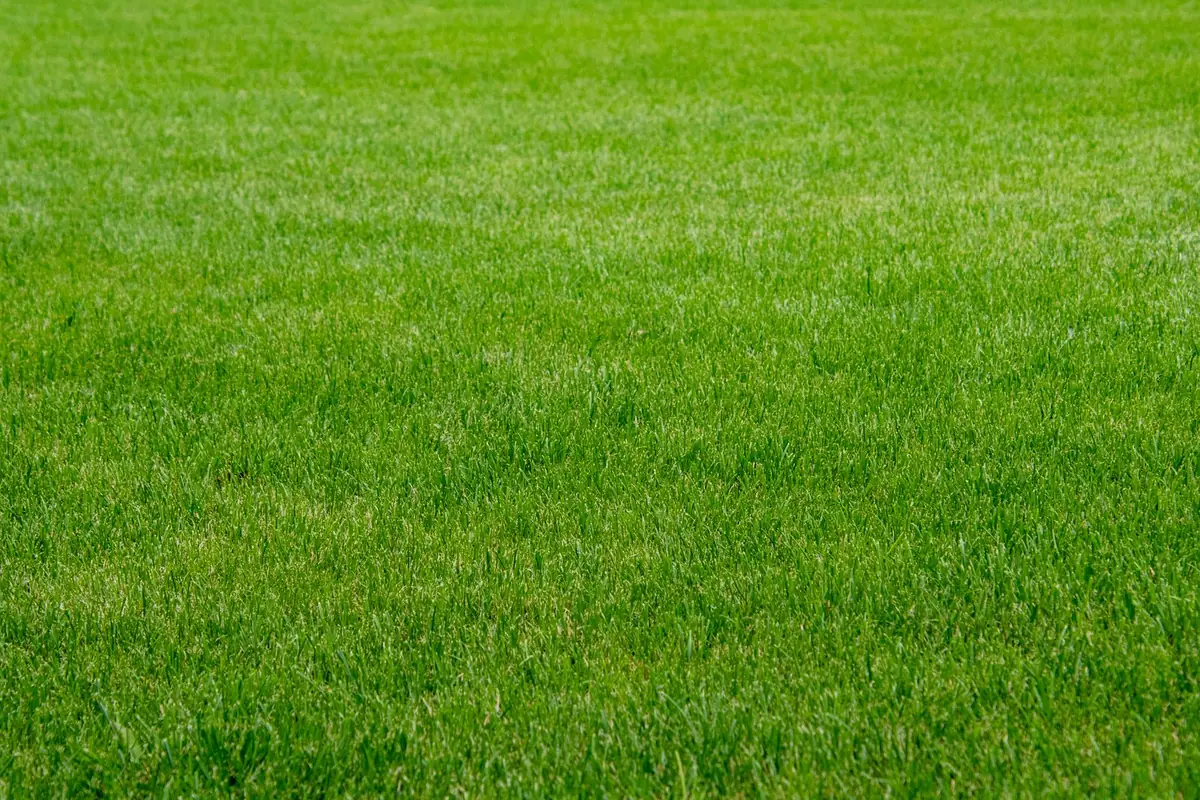
Then order sample squares before you commit. Free samples arrive at 20 by 20 cm, usually three to four pieces, and travel by courier within 4 to 6 days. Sixty years after the Astrodome, no photograph yet replaces pressing a blade between finger and thumb, and the definitive guide to any turf type ends where physical inspection begins.
Frequently Asked Questions
What are the three pile height classes?
Short pile sits below 25 mm, medium runs 25 to 40 mm, and long pile rises above 40 mm above the primary backing. The classes follow a European carpet specification, so quotes from different markets share one ruler.
How much infill does a filled field need?
A filled surface holds infill to at least 75 percent of the unstretched pile height, while a semi-filled surface stays at or below that line. The mass per square metre then follows from the pile height chosen.
What pile height does a football field need?
Around 60 mm is standard for full-size football in Europe and the United States. Other markets commonly use 40 to 55 mm, and taller fibres simply demand more infill to stand upright.
Do hockey and tennis fields need infill?
No. Both sports usually run infill-free systems with short, dense fibres of 10 to 15 mm, relying on fibre structure or an underlying cushioning layer for pace and bounce.
What drainage rate should the backing have?
Quality perforated backings commonly rate 30 to 100 inches per hour over a permeable base. The system still needs 8 to 12 inches of open-graded stone and a 1 to 2 percent fall.
How do I verify a turf roll before ordering?
Request free sample squares of 20 by 20 cm, usually three to four pieces. They travel by DHL or FedEx within 4 to 6 days, so feel, resilience and colour can be checked before committing.
 English
  Arabic
  French
  German
  Portuguese
  Russian
  Spanish