

A dog run usually fails from the ground up, not from the turf itself. Liquid gets trapped in the wrong base, a slope points the wrong way, and the surface that was sold as odor-free starts smelling like a kennel within a season.
We build artificial grass rolls for dog runs, kennels and pet yards, so we spend a lot of time on what happens before the roll arrives. Dog runs with artificial turf reward planning: sizing, grading and base depth decide the outcome long before the first paw lands. Every artificial turf installation we review starts with three questions: where the water goes, how deep the base sits, and how big the dog is. This page sets out the requirements we check against, the sequence that works, and the mistakes we see most often.
Why Dog Runs Fail Before the Turf Arrives
The most common failure is trapped liquid. Pet turf moves urine through a perforated backing into the base below. When that base holds water instead of passing it, ammonia builds up where nobody can rinse it out. Guidance for pet areas is blunt about this: skip impermeable membranes, avoid fine materials that hold urine, and treat drainage as the first specification rather than an afterthought.
The second failure is sizing. A run that is too small concentrates wear in one zone, stresses the dog, and turns a planned surface into a worn track with escape risks at the edges.

The third failure is material choice. Soil, decomposed granite fines and round pea gravel behave badly under pet traffic: they hold liquid, shift under paws, or lock drainage holes shut. Every one of these problems is fixed on paper before a roll is ordered, which is why the planning stage matters more than the product label. An artificial turf installation that buries drainage under the wrong fill inherits the smell for life.
Sizing Dog Runs With Artificial Turf by Breed
Body weight is the fastest sizing key for dog runs with artificial turf. Published installer guidance puts small dogs under 25 lb in runs as compact as 3 by 10 feet. Medium breeds of 25 to 50 lb need at least 5 by 15 feet. Large breeds over 50 lb require a minimum of 6 by 20 feet. A 6 by 20 foot large-breed run works out to 120 square feet of surface.
| Dog size | Minimum footprint | Approximate area |
|---|---|---|
| Small, under 25 lb | 3 x 10 ft | About 30 sq ft |
| Medium, 25 to 50 lb | 5 x 15 ft | 75 sq ft |
| Large, over 50 lb | 6 x 20 ft | 120 sq ft |
Energy level changes the shape before it changes the area. A long, narrow layout suits sprinters, while a wider, more open plan suits dogs that roam and sniff. One rule of thumb gives a dog at least three times its body length of running space, doubled for breeds that really move. Independent guidance lands on similar lengths, from 10 feet for small dogs up to 20 feet or more for large ones.
Placement decisions follow the same logic. Shade keeps the surface cooler in summer, sightlines keep the dog calm, and access from a door or gate makes daily cleaning realistic. Leave room for a water bowl and a shaded shelter inside the footprint. On multi-dog facilities, size each section to the largest animal that will use it, because a run built for the average dog forces the biggest one into the smallest space.
Drainage and Base Requirements That Prevent Odor
Drainage is where dog runs with artificial turf separate from ordinary landscaping, and the planning checklist has three parts: grade, depth and materials. Each part has a measurable acceptance standard.
Slope: Set the Grade Before Anything Else
Shape the excavation to a slope of 1 to 2 percent away from structures so water and urine keep moving. For dedicated pet runs, our guidance adds a steeper crown slope of 2 to 3 percent to push liquid away from high-traffic zones. Verify the grade with a level before any base material goes down, because a flat run ponds and every pond becomes an odor source. No artificial turf installation can outrun a base that points the wrong way.
Depth: Match the Base to the Traffic
Excavate 4 to 5 inches below the finished grade and build a compacted crushed-stone base of 4 to 6 inches for typical pet areas. For dedicated dog runs we specify a deeper aggregate layer of 100 to 150 mm, because the extra void space gives liquid somewhere to disperse. The finished base should sit about 1 inch below the surrounding grade so the turf finishes flush.
Materials: Angular Stone, Geotextile and the Right Infill
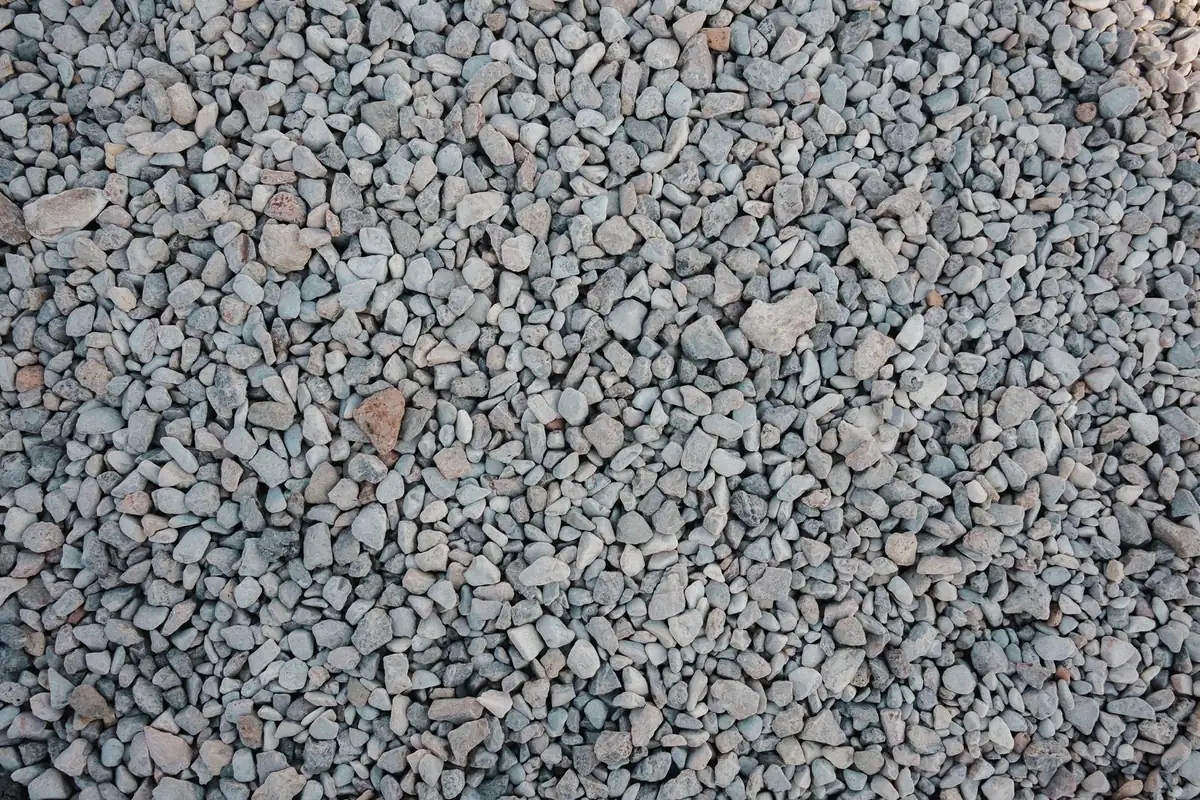
Use clean, angular crushed stone, commonly 3/4 inch or 3/8 inch, washed so it drains freely. Separate it from the native soil with a permeable geotextile, laid with 6-inch overlaps where a weed barrier is used. Compact in 2-inch lifts to a firm, unyielding surface. Quantities are predictable: a 100 square foot area at this depth takes about 1.2 to 1.8 cubic yards of stone and roughly 120 square feet of geotextile.
Infill completes the odor system. Antimicrobial-coated sand or zeolite traps ammonia at a typical loading of 1 to 2 pounds per square foot. Our pet guidance specifies a lighter sand loading of 2 to 3 kg per square metre, so moisture is not held in the pile. Avoid rubber crumb in pet zones, since it retains both heat and odor.
Acceptance is simple to test. Spray the finished base with a hose and watch: liquid should pass through quickly and leave no standing film. Installers handle drainage this way on every pet project. Professionals are worth calling when soil is heavy clay, the area exceeds 600 square feet, or a piped drain is part of the design.
| Planning item | Requirement per 100 sq ft of run |
|---|---|
| Clean angular crushed stone (3/4 in), washed | 1.2 to 1.8 cubic yards |
| Antimicrobial or zeolite infill | 100 to 200 pounds |
| Geotextile fabric, laid with overlap | About 120 square feet |
| Compaction | 2-inch lifts with a plate compactor |
| Base slope | 1 to 2 percent away from structures |
| Dedicated pet-run crown slope | 2 to 3 percent |
Installation Sequence From Excavation to Final Groom
Most artificial turf installations follow the same order, and pet projects add two extra checkpoints: drainage verification and edge security. Professional artificial turf installations differ from do-it-yourself attempts mostly in verification, not equipment. The sequence below reflects what pet-turf crews actually do.
- Mark the footprint, check utilities and confirm the fall toward the drainage point.
- Excavate to depth and strip every root and organic pocket that could settle later.
- Lay geotextile over the subgrade, then place angular stone in 2-inch lifts, compacting each layer.
- Dress the grade, verify the slope again, and run the hose test before the turf arrives.
- Roll out the turf and let it relax for 30 to 60 minutes so the fibres stand upright and the backing settles.
- Align the grain direction across seams, trim edges cleanly, and join seams on tape with a suitable outdoor adhesive.
- Fasten the perimeter every 4 to 6 inches, pulling the turf taut so no wrinkles remain.
- Brush in infill evenly, power-broom the fibres upright, and rinse the finished surface until water runs clear.

Two details deserve extra attention on a dog run. First, seam direction: aligning blade direction across every join keeps wear patterns even and makes seams harder to spot. Second, edges: dogs test perimeter edges by digging and pulling, so fastening density at the border matters more here than on a decorative lawn.
| Installation phase | Typical time required |
|---|---|
| Excavation and base prep | 4 to 6 hours |
| Weed barrier and rock base | 2 to 3 hours |
| Turf installation | 3 to 4 hours |
| Infill application and brushing | 1 to 2 hours |
Five Dog Run Mistakes That Create Permanent Odor
Most complaints we hear about dog runs with artificial turf trace back to one of five planning errors. Each one is cheap to fix on paper and expensive to fix after the surface is down.
Mistake 1: Building the Base From Soil or Fines
Soil, decomposed granite fines and heavy clay hold urine instead of passing it, and the ammonia has nowhere to go. The base must be clean, washed, angular stone over a permeable geotextile, compacted in lifts.
Mistake 2: Flat Grading With Nowhere for Liquid to Go
A level run looks tidy and performs badly, because pooled liquid saturates the pile and feeds bacteria. Set the 1 to 2 percent fall before the base goes in, and verify it twice: after excavation and after compaction.
Mistake 3: A Run Sized Too Small for the Dog
Undersized runs concentrate wear, stress the animal and invite escape attempts at the fence line. Use the weight-based table above, add the three-times-body-length rule for shape, and size up for multiple dogs.
Mistake 4: Loose Perimeter Edges That Invite Digging
Edge gaps start small and grow fast under a determined digger. Fasten borders at 4 to 6 inch spacing, tuck edges against a rigid restraint, and check the perimeter during every maintenance visit.
Mistake 5: Treating the Surface as Zero-Maintenance
Synthetic turf is low-maintenance, not no-maintenance, and skipped upkeep is why odors build after a few months of heavy use. The fix is a fixed rhythm, which the next section lays out.
Has Mud and Odor Turned Your Dog Run Into a Liability?
Trapped liquid and ammonia kill a dog run after month six. We build rolls to your pile, density and drainage spec, factory-direct, typically 30–50% below market on like-for-like specifications.
Maintenance Rhythm That Keeps a Dog Run Fresh
A fixed cleaning cadence keeps the drainage system doing its job. No artificial turf installation stays fresh without a rhythm behind it. Pick up solids promptly, rinse high-traffic zones with a hose on a weekly cycle, and apply an enzyme cleaner monthly where residue builds. Seasonal tasks are just as short: top up infill where levels settle, and power-broom to lift the fibres and restore airflow through the pile.
Rinsing matters more on a dog run than on a decorative lawn because urine salts accumulate invisibly. A weekly hose pass flushes them through the backing into the base, which is exactly where they were designed to go. After an accident or a busy weekend, rinse until water runs clear.
Monthly brushing stops matting in the zones where the dog turns and paces. If odor persists despite the routine, the cause is almost always below the surface, in base compaction or blocked drainage. Treat that as a construction defect rather than a cleaning problem.
Specifying the Right Roll for Pet Traffic
Surface choice follows traffic. Dedicated dog runs and kennels suit shorter pile, which drains faster, cleans easier and resists concentrated wear; family gardens shared with dogs can carry a taller, more natural-looking pile.
| Application | Recommended pile | Why it works |
|---|---|---|
| Dog runs and kennels | 5 to 20 mm | Faster drainage, easier cleaning, wear resistance |
| Family gardens with dogs | 30 to 40 mm | Natural appearance that still handles paw traffic |
Density is the second lever. Denser turf spreads claw load across more fibres and resists pull-out. That is why shorter, denser models such as Mesh Lite at 42,000 tufts per square metre handle dedicated runs best. The same logic drives every artificial turf installation that expects claws: more tufts mean more fibres sharing the load.

Roll format matters more on dog runs with artificial turf than on decorative lawns, because seams are where waste and odor collect. Our pet turf comes in 2 m and 4 m widths at 25 m long, with a maximum width of 5 m. Drainage holes are punched through the perforated backing in a dedicated production step, so performance stays uniform across the roll. Plan the layout around the widest roll the site allows. A look at the pet drainage-optimized turf models shows the recommended range, and roll construction and widths explain how the surface is built.
Confirm the choice before committing volume. Samples ship worldwide at no charge, with most destinations receiving a kit in 3 to 7 business days. Custom pile heights, densities and colours are available against a stated brief through custom specification. Order free sample swatches, test drainage with water on site, and compare models in daylight.
Frequently Asked Questions
How deep should the base be under a dog run?
Most residential pet areas use a compacted crushed-stone base of 4 to 6 inches. For dedicated dog runs, our guidance specifies a deeper aggregate layer of 100 to 150 mm to hold more drainage void space.
What slope keeps a dog run draining?
Set a slope of 1 to 2 percent away from structures. For dedicated pet runs, our guidance adds a steeper crown slope of 2 to 3 percent to push urine away from high-traffic zones.
Does dog urine damage artificial grass?
No. Polyethylene fibres do not absorb liquid, so urine passes through the perforated backing into the base below. Regular rinsing keeps the surface fresh, and an enzyme cleaner breaks down any residue.
How often should a pet dog run be cleaned?
Pick up solids daily and rinse high-traffic zones weekly. A monthly enzyme cleaner handles residue, and a seasonal top-up restores infill levels that settle through use.
How long does artificial turf last in a dog run?
Expect a 10- to 15-year lifespan with minimal maintenance. Where it lands inside that band depends on drainage quality, traffic volume and how consistently the surface gets rinsed and brushed.
What roll sizes work best for dog runs?
Rolls come in 2 m and 4 m widths at 25 m long, with a maximum width of 5 m. Wider runs reduce seams, which is where waste and odors collect.
 English
  Arabic
  French
  German
  Portuguese
  Russian
  Spanish