

Saturday rain washed out the wicket again, and two junior teams sit on the fixture list with nowhere to play. Grounds staff need a dry window, a roller and a day or three before the square survives another match. That arithmetic repeats all season at schools and clubs everywhere.
Turf cricket pitches exist to delete that arithmetic. A manufactured wicket plays the same in week one and week forty, with no recovery days between fixtures. We build artificial grass rolls on our own line, and the specification decides the bounce. The surface family, the ball behaviour and the upkeep rhythm are the three things worth understanding before you buy.
What a Turf Cricket Pitch Really Is
A turf cricket pitch is a manufactured playing strip built to take the place of a prepared grass wicket. The dimensions stay fixed by the game: 20.12 metres between the stumps, 3.05 metres across, and a bowler’s run-up of about 15 metres at each end. In area that is 61.4 square metres of surface, and every layout decision starts from those numbers.
Everything above the ground is the carpet itself: a short, dense synthetic grass engineered for cricket rather than adapted from another sport. Every artificial turf installation inherits the dimensions of the game, so the roll plan, the crease markings and the run-up all hang off the same strip. Get the definition right and the rest of the decisions sort themselves.
Clubs usually meet this surface through a simple trade. A prepared grass square needs a groundskeeper, a roller and a week of dry weather to present a match wicket, and plenty of committees have none of the three. A manufactured strip swaps that craft for a specification, which is why it shows up first at schools, councils and smaller clubs rather than at first-class grounds.
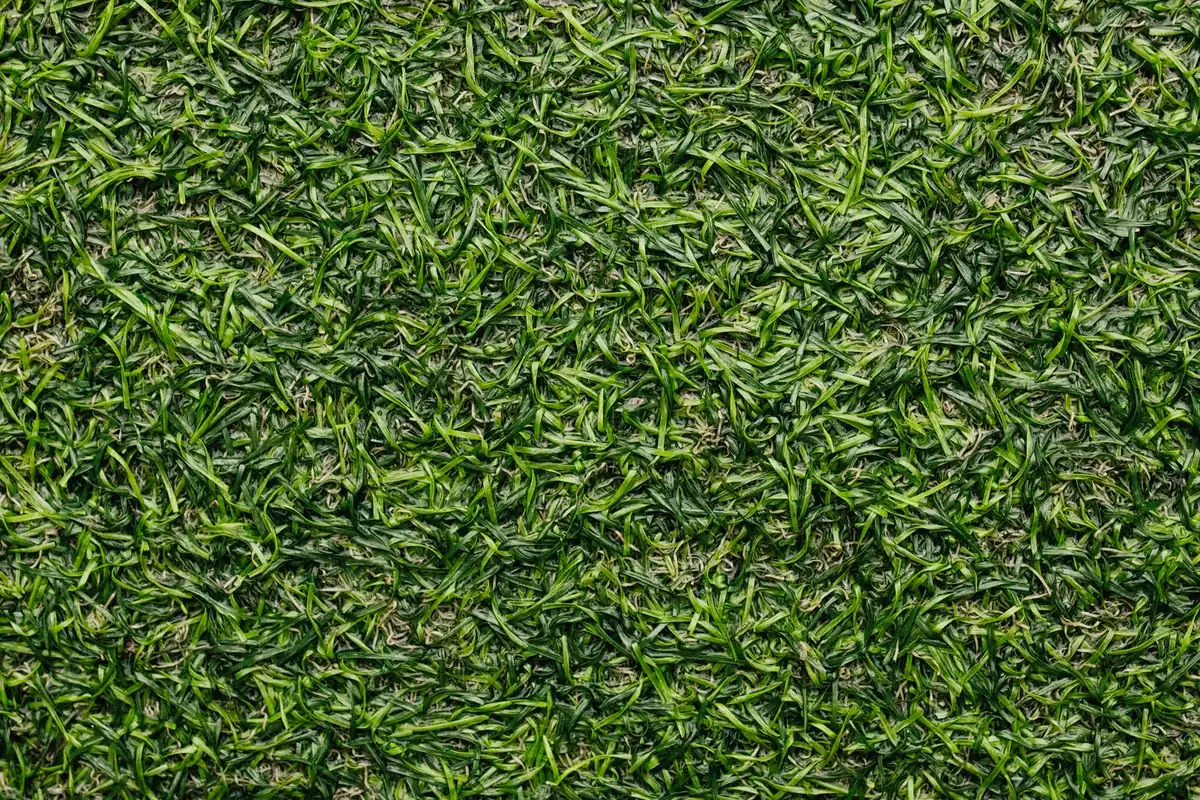
The point of the surface is repeatability. Weather moves on around it, while the bounce and pace of the pitch stay where the specification put them. Turf cricket pitches can be installed as permanent fixtures or as portable solutions, depending on how the site is shared through the year.
The Family of Turf Cricket Pitches
Turf cricket pitches are not one product but a family of formats, each shaped by where the game is played and how often it is played there.
The full-length synthetic wicket replaces a grass square for match and training use. Practice net lanes extend the format to about 25 metres by 4 metres including the run-up, which is the layout most schools and academies build first. Box cricket arenas compress the game into roughly 40 by 25 metres for commercial and corporate venues, and indoor academy turf brings the same logic inside. Portable matting rounds the family off where a surface has to move between sites.
| Format | Where it plays | What it optimises |
|---|---|---|
| Full-length synthetic wicket | Match and training strips | Replacing a prepared grass square |
| Practice net lane, about 25 m x 4 m | Schools and academies | High-frequency net sessions |
| Box cricket arena, about 40 m x 25 m | Commercial and corporate venues | Fast league turnaround |
| Indoor academy turf | Enclosed sports centres | All-year coaching without weather risk |
| Portable matting | Shared or temporary venues | A surface that moves between sites |

Choosing inside the family is less about brand and more about hours: who plays, how often, and what the surface must survive.
Roll format shapes the answer before pile height does. Standard rolls come in 2, 4 and 5 metre widths at 25 metres long. A full-length wicket can be laid from a single 4-metre run, with offcuts trimmed at the edges. Custom widths are made to order for jobs that want the main run seam-free. Every seam you avoid is one less place for the ball to find a story to tell.
A hybrid format sits between the extremes, combining synthetic turf with natural grass where a venue wants a natural look over a stable base. It asks for more care than a full synthetic build and less than a grass square, which suits premium academies that can fund a maintenance line.
How Construction Shapes Ball Behaviour
Ball behaviour comes from the top dozen millimetres. Cricket-grade turf runs short fibres of 8 to 12 mm at 45,000 to 60,000 stitches per square metre. That tightness mimics a rolled clay surface and keeps the seam movement predictable. The yarn is monofilament polyethylene on a dual-layer PP backing with SBR latex coating, and UV stabilisation rated beyond eight years keeps the pile in the equation for seasons.
Under the carpet the stack is simple to describe: a stable base of compacted crushed rock or concrete, with an optional shock pad between base and turf for cushioning. Bounce is decided by the whole stack, which is why our guide to what happens during an artificial turf installation treats the layers as one system.
One warning belongs here: football turf is the wrong donor. That surface runs long pile of 40 to 60 mm with infill, which is completely wrong for a cricket bounce. A pitch can also be laid straight onto existing concrete where a slab is sound, with a shock pad carrying the cushioning duty. Concrete sub-bases return the most predictable bounce, while compacted aggregate costs less and needs periodic re-levelling to stay true.

Consistency is the payoff. Fast bowlers find steady bounce, spinners find enough grip to turn the ball, and bowling machines deliver repeats that a worn natural surface cannot. Season-ball academies report 8 to 10 hours of daily net use without the surface churning out divots.
That consistency is also a coaching asset. A junior who trains on the same bounce every session builds timing on evidence instead of excuses, and drills repeat with the conditions they were designed for. In our experience the surfaces that draw complaints are rarely the wrong products. They are the right products specced against the wrong programme, which is the next question to settle.
Matching the Surface to the Programme
The buyer decides the format more than the sales sheet does. Five profiles cover most projects:
- Schools want multi-lane practice strips that survive daily physical education and after-school coaching with general-staff upkeep.
- Clubs need a full-length wicket that carries weekend fixtures plus weekday training on the same surface.
- Councils and community hubs prioritise public access, where low upkeep matters more than match-grade pace.
- Academies specify net lanes for season-ball loads and bowling-machine work.
- Box cricket venues tune arenas for fast league turnaround and easy cleaning between matches.
Match the surface to the hours first and the specification second, because an artificial turf installation chosen against its programme wears out in the places players use most. Our artificial cricket turf is made to order, so pile, density, colour and backing follow the brief rather than the shelf.
Wondering Which Pitch Fits Your Fixtures?
Fixture queues and washouts drain a season. We build cricket rolls to your pile, density and backing spec, factory-direct. Request free samples and a spec sheet before you commit.
What Changes Against a Natural Wicket
Natural wickets are not the enemy; they are a different contract. A grass square rewards skilled preparation and repays it with variation that elite batters read like text. A synthetic surface trades that character for availability, and an artificial turf installation holds the same profile whether the week brings drought or a storm.
| Measure | Natural grass wicket | Artificial turf wicket |
|---|---|---|
| Matches per week on one surface | 1 to 2 | 4 to 6 or more |
| Downtime after wet weather | 1 to 3 days | Often playable within hours |
| Weekly preparation | Rolling, mowing, watering, marking | Brushing and inspection |
| Surface lifespan | Seasonal wear, regular preparation | 8 to 12 years with upkeep |
| Suitability for elite play | Preferred | Not used at top level |
| Ball wear | Moderate | Higher |
Read the table as a scheduling document rather than a verdict. Where fixtures, juniors and shared bookings dominate, the synthetic column wins on arithmetic, and that is the trade turf cricket pitches make. Where first-class character matters most, grass keeps its crown.
The mixed model is how most organisations actually run it. Artificial wickets take the weekday load, junior programmes and wet-weather fixtures, while a prepared grass square is saved for senior match days. That split stretches maintenance budgets further and keeps every team in the fixture list, which is the outcome committees actually care about.
Rain recovery is where the arithmetic sharpens. A synthetic surface is typically playable within 30 to 45 minutes of rain stopping. A soak heavy enough to saturate the shock pad needs several hours of drying before full-pace play resumes. Either way, the fixture survives; the calendar no longer depends on a forecast.
The Maintenance Rhythm Through the Season
Low upkeep is the headline reason turf cricket pitches spread through schools and councils, and it is real: no mowing, no rolling, no watering. No artificial turf installation removes the maintenance calendar entirely; it shortens the list and hands it to general staff instead of a specialist groundskeeper.
The tasks themselves are few. Brushing keeps the pile upright, sweeping clears debris, and surface checks catch seam lifting or worn patches early. High-use facilities brush weekly, general schedules run monthly to quarterly, and an academy-level pitch earns a professional inspection every six months. Lines are usually pre-marked, so match-day setup all but disappears.
There is no infill top-up on a cricket carpet, which removes a whole line item that sports like football carry. A quarterly power-wash keeps the surface clean where usage is heavy. Beyond that, the rota is enforcement, not expertise: the same volunteer crew that marks pitches can run it.
- Weekly: brush the pile upright and clear debris from the high-wear lanes.
- Monthly to quarterly: inspect seams, edges and surface condition, and sweep as needed.
- Every six months: book a professional inspection where use is academy-level.
- As needed: rinse dust off the pile and clear moss or debris from shaded areas.
Kept to that rhythm, the surface reaches the far end of its design life instead of the near end. That is the quiet half of the value case.
Watch for end-of-life signs as the years pass: pile lying flat in the wear corridors, bounce reading low, or seams lifting at the edges. Spot repairs can handle isolated wear long before a full resurface is due, which is why the inspection habit pays for itself.
The Limits Worth Pricing In
Heat is the first limit. Synthetic surfaces warm up in strong sunlight, and UV-resistant fibres only soften the problem rather than remove it. Scheduling sessions away from the midday peak is the cheap fix.
Ball wear is the second. Cricket balls wear faster on synthetic turf than on grass, while shoes barely suffer at all. Clubs running expensive match balls should price that in.

The third limit is status. Natural grass remains the preferred surface at professional and high-performance levels, and artificial wickets are not used for top-level competition. Bowlers lose a little too: because the surface does not weather the way soil does, reverse swing develops far less. Footwear belongs on the same list: metal spikes can damage the pile, so rubber studs or flat soles are the sensible default. A free sample square shows the surface for what it is before any purchase order.
Set against 8 to 12 years of service with upkeep, these limits read as conditions of use rather than deal-breakers. A well-specified artificial turf installation still owns community and junior cricket outright. The buyers who stay happy are the ones who priced the conditions in at the start, matched the format to their fixture list and kept the brushing rota honest. Turf cricket pitches ask for less than grass does, but they still ask.
Frequently Asked Questions
What size is a turf cricket pitch?
The playing strip runs 20.12 m stump-to-stump and 3.05 m wide. Practice lanes commonly extend to about 25 m by 4 m including the bowler’s run-up.
How many matches can a synthetic wicket take each week?
Four to six or more, against one or two on a natural wicket. The surface needs no recovery days, so junior and senior fixtures can share it.
How long does an artificial cricket wicket last?
Eight to twelve years with upkeep, and outdoor resurfacing is typically needed every ten years. Playing hours and grooming habits decide where a surface lands in that band.
Does a turf cricket pitch need watering or rolling?
No. Daily rolling, mowing and watering drop off the calendar. Care comes down to brushing, debris clearing and periodic surface checks by general facility staff.
Can you use metal spikes on artificial cricket turf?
Better to avoid them, because metal spikes can damage the pile. Rubber studs or flat-soled shoes protect the surface and keep the bounce consistent.
Can I test a surface before ordering in bulk?
Yes. Free 20 by 20 cm samples, usually three to four pieces, ship by DHL or FedEx in 4 to 6 days, with courier freight covered by the buyer.


 English
  Arabic
  French
  German
  Portuguese
  Russian
  Spanish