
A storm cancels Friday training and the grounds crew starts doing the arithmetic on lost bookings. For a school, club or municipal venue the playing surface is a safety and budget decision, not just a line item.
What is g max is the question behind most of those decisions. We build artificial grass rolls on our own line, so we watch surface hardness closely. A field that passes on installation day can drift out of spec within two seasons if nobody tests it.
What G-Max Measures on a Playing Surface
So what is g max in plain terms? It is the peak deceleration a surface transmits when something hits it, written as a multiple of gravity. A lower number means the field soaked up more of the impact before it reached the athlete.
On most artificial turf installations, the surface is rated by one hardness figure that a buyer can compare across suppliers. We watch that figure on our own line, because a field that looks fine can still return too much force to a player who falls.
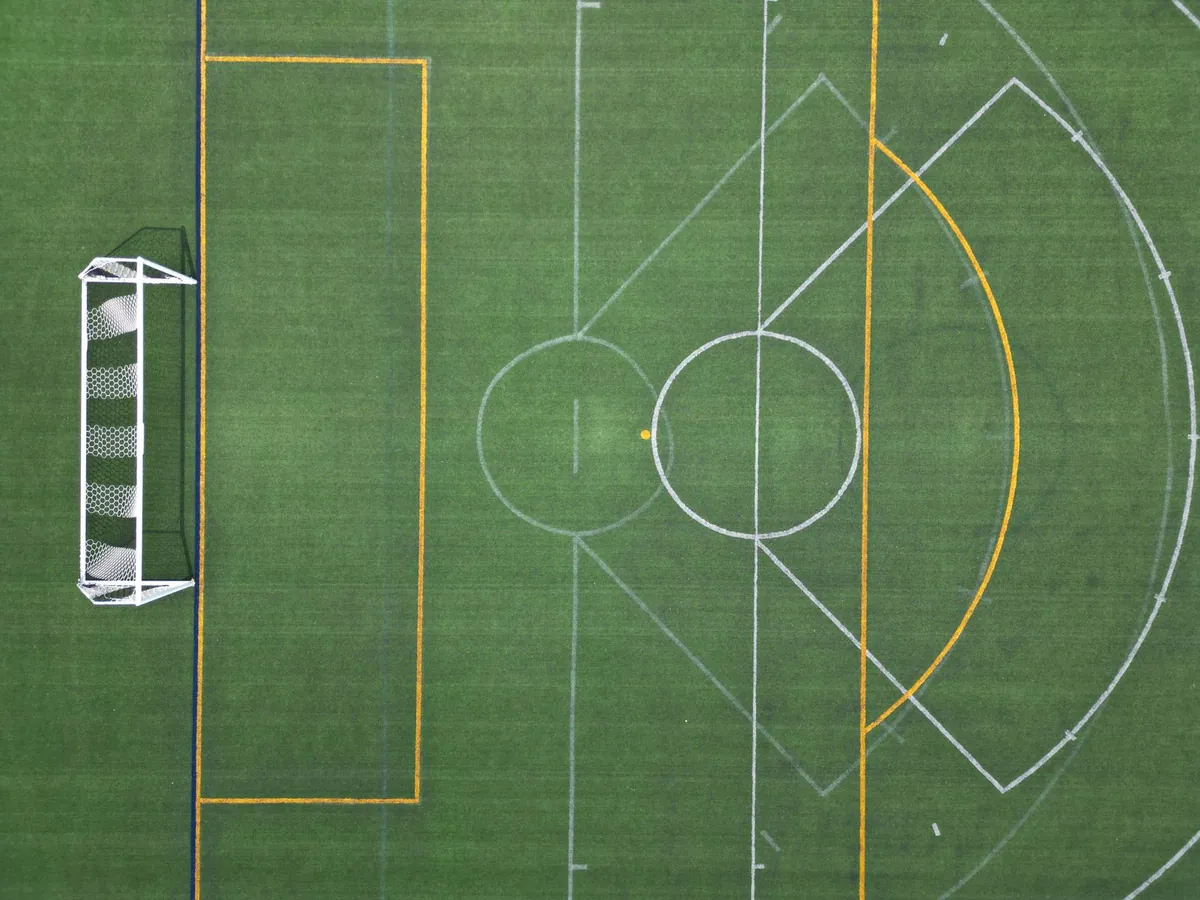
The measure answers one practical question: how much of a fall does the ground take, and how much lands on the body. That is why procurement leads treat it as a safety spec, not a marketing line.
A useful anchor is that a near-rigid surface such as concrete measures far higher on the same idea of peak deceleration, so the field number sits on a soft-to-rigid line. What is g max places a supplier’s claim on that line instead of in a brochure.
How the Field Hardness Test Works
The standard method drops a weighted missile from a fixed height and lets an accelerometer record the slowdown. The peak of that deceleration curve is the g-max reading. When buyers ask what is g max, the method matters as much as the number, because the setup defines the scale.
A common missile weighs about 20 pounds, and the result is the single highest point of the impact, not an average. That single-point logic is why one bad spot can fail a whole field even when the rest feels soft.
The reading is a snapshot of one moment and one point, which is exactly why a field needs several points and repeated checks. A single clean reading proves little; a map of the whole field over time proves the surface is safe to play on.
Why a Harder Surface Raises Injury Risk
A hard surface gives the fall nowhere to go, so the force travels into the athlete instead of the ground. Artificial turf installations at schools see daily wear that pushes values upward faster than most managers expect.
Studies estimate roughly 10 percent of football concussions come from the head hitting the playing surface, not from contact with another player. Surface hardness is therefore a real variable in any head-injury plan, not a side note.
For a procurement lead the takeaway is direct: specify a hardness target, not only a colour and pile. Artificial turf installations that meet a stated impact band protect players on the day and protect the venue’s liability story over the years.
The Safety Limits Buyers Should Know
Three thresholds circulate in the trade, and mixing them up is the fastest way to buy the wrong field. Knowing what is g max helps a procurement lead set a purchase spec instead of trusting a vendor’s headline.
| Measurement scale | Upper safety limit | Lower protective target | When it is used |
|---|---|---|---|
| Standard field hardness scale | 200 | 165 | Routine field acceptance and annual checks |
| Game-day scale | 100 | Not separately stated | Elite match-day checks before play |
| Reading rule | Values are single-point; one over-limit point fails the field even if the average is low | ||
The standard field scale uses a hard upper limit of 200, above which a surface is treated as unsafe. A lower protective target near 165 is preferred by careful specifiers who want margin, while a separate game-day scale sits near 100 and is checked before each match. Review the standard product formats to see how roll build affects the result.
Buyers should record which scale a vendor quotes, because the three numbers are not interchangeable. A field sold on a game-day figure can look safer than it is on the routine scale, so the report scale must match the scale in the spec.
What Drives G-Max Values Up Over Time
Across artificial turf installations, compaction is the most common driver of hardening. The fill between fibres settles under repeated load, so the cushion it provided thins out and the surface stiffens.
Fibre flattening and base settlement add to the climb, especially under goal mouths and high-traffic lanes. What matters for a buyer is that installation-day numbers are not a lifetime promise; the field drifts, and only testing catches it.
This is why a maintenance plan and a retest schedule belong in the same document as the purchase order. A field bought on installation-day numbers alone is bought on a snapshot, not on the trajectory it will actually follow.
| Hardness driver | How it raises G-Max | What the buyer should do |
|---|---|---|
| Infill compaction | Settles under repeated load and thins the cushion between fibres | Top up and redistribute fill on a set schedule |
| Fibre flattening | Lowers the fibre’s own share of impact absorption | Brush regularly and track wear against the spec |
| Base settlement | Stiffens local spots unevenly across the field | Inspect the base and regrade problem areas |
| High-traffic lanes | Compact first and fastest, ahead of open areas | Test those zones point by point, not as one average |
Common G-Max Testing Mistakes to Avoid
A few habits quietly undermine the whole safety case. Each one is easy to fix if it is named early, before a field is specified on the wrong evidence.
Mistake 1: Trusting a Single Field Average
Reports often average every test point into one score. Averages hide the one hard corner where an athlete lands, and the working rule is that players hit points, not averages.
Mistake 2: Skipping the Annual Retest
G-Max rises with use, so a field that passed at handover can fail two seasons later. Treating the opening test as permanent is the second way fields drift out of spec without anyone noticing.
Mistake 3: Ignoring the High-Traffic Zones
Goal mouths, seams and painted areas compact first. Testing only the open centre misses exactly the spots where hardness climbs fastest and where injuries are most likely to occur.
Specifying Turf That Holds Its G-Max
We build artificial turf installations to a stated shock and pile spec, so the roll a buyer receives matches the number on the quote. The lever a procurement lead controls is the build: shock layer, fill depth, pile height and backing composition together set the field’s hardness behaviour.
Our team produces custom pile heights, densities and colours to your written brief, treating impact as a day-one design input.
The shock layer beneath the carpet does most of the work, so ask how it is specified and tested rather than assuming the fibre alone sets the number. A written impact target in the brief is what keeps the delivered roll honest.
Specifying Turf That Fails G-Max Less Often?
Hard fields drive injuries and lost bookings. We build sports rolls to your shock and pile spec. Factory-direct pricing, typically 30–50% below market prices on like-for-like specifications.
Your Pre-Purchase G-Max Testing Checklist
Before signing, a short checklist keeps the safety case honest and comparable between suppliers. Use it on every bid, not just the first one.
Confirm the Supplier’s Test Reports
Ask for the actual field hardness report, not a catalogue claim. A real report lists test points, dates and the scale used, which is the only way to compare two bids on equal terms. Request free samples alongside the paperwork.
Ask for Zone-by-Zone Results
Demand point-level results across the whole field, with extra points on high-traffic lanes. A single averaged number should be rejected as incomplete for a safety-critical spec.
Plan a Yearly Retest Budget
Bake annual testing into the operating budget from year one. Fields that are tested on a schedule stay inside their target band and avoid the sudden closure that an untested field can trigger.
Reading a G-Max Report Before You Buy
Artificial turf installations should ship with a test report you can actually read. The three things to check are the number of test points, the peak value at each point, and whether any single point crossed the limit for its scale.
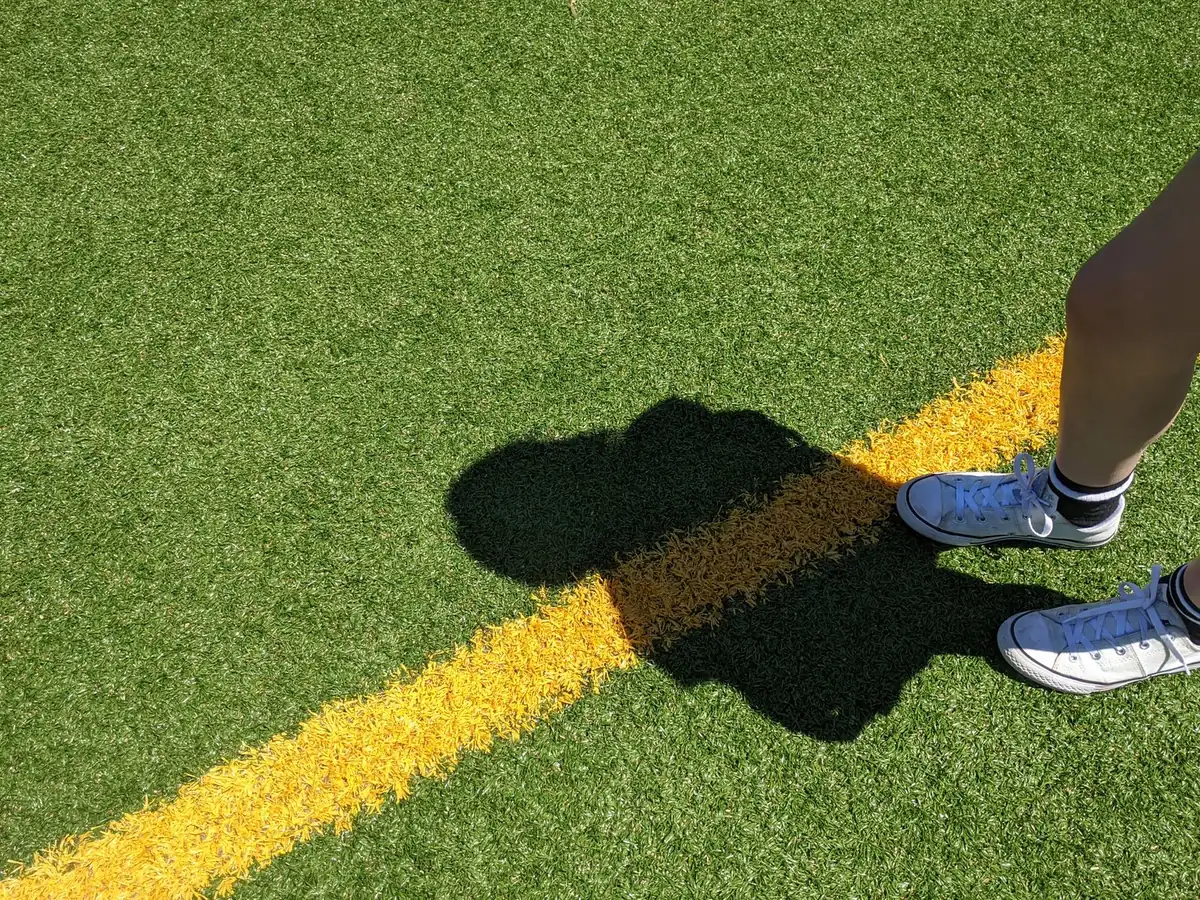
A clean report shows every point inside its band and names the scale used. If a vendor cannot show point-level data, treat the hardness claim as unverified and keep looking before you commit a season’s budget.
Treat the report as an acceptance gate, the same way you would a structural sign-off. Artificial turf installations that cannot show point-level data should not pass a buyer’s desk, whatever the sales headline claims about softness.
Frequently Asked Questions
What does a G-Max reading actually tell you?
It reports how hard a surface is. A lower number means more impact energy is absorbed by the field, so less force reaches the athlete on a fall. It is the single figure most buyers use to compare field safety.
What G-Max limit should a safe field meet?
On the standard field scale the upper safety limit is 200, with a lower protective target near 165 used by careful specifiers. A separate game-day scale sits near 100 and is checked before matches.
How often should a field be G-Max tested?
Test at installation, then at least once a year. High-use school and club fields benefit from more frequent checks, and measurements should cover every zone, not just one average.
Why does G-Max rise as a field ages?
Infill compacts, fibres flatten and the base can settle, all of which stiffen the surface. Grooming, infill top-up and zone-by-zone testing catch the climb before a field becomes unsafe.
Can a hard surface really cause injuries?
Yes. A harder surface returns more force to the athlete on impact. Studies estimate roughly 10 percent of football concussions come from the head hitting the playing surface, not another player.
How do I check turf before a bulk order?
Request free 20 by 20 cm samples, usually three to four pieces. They ship by DHL or FedEx in 4 to 6 days with freight paid by the buyer, and ask the supplier for the test report.

 English
  Arabic
  French
  German
  Portuguese
  Russian
  Spanish