

Type lay artificial grass indoors hard floors into any search bar and most results hand you a trowel, a bag of sand and advice written for a garden. The brief behind the phrase is rarely a garden. It arrives from a gym fit-out, an office breakout zone, a shop floor or an exhibition hall, and it carries an opening date.
An artificial turf installation indoors skips the digging, the compacting and the drainage layers, so the job looks simpler. It is not. The work moves from the ground to the decisions: the floor you start from, the fixing you commit to and the roll you order. We see both outcomes from our side of the line — floors that still read factory-poured years on, and seams that telegraph through the pile within months. The difference is decided before the roll ships.
Why Indoor Artificial Turf Is a Different Job
The six words compress three separate trades into one enquiry. Hard floors arrive in at least four tempers: sealed concrete, porcelain or ceramic tile, timber boards, and raised access floors hiding services in commercial buildings. Each one accepts a different fixing, and each one hides a different defect.
Outdoors, a contractor budgets for excavation, a compacted sub-base and drainage falls. Indoors all three vanish, and what remains is unforgiving in a different way: whatever the hard floor hides, the turf will display.
The callers do not ask identical questions, either. Gym fit-outs ask about impact and noise. Offices ask about cables and chair wheels, because a wheeled chair does not roll across pile the way it rolls across tile, and the layout needs that admission up front. Retail teams ask about colour under warm lighting, which no screen shows honestly.
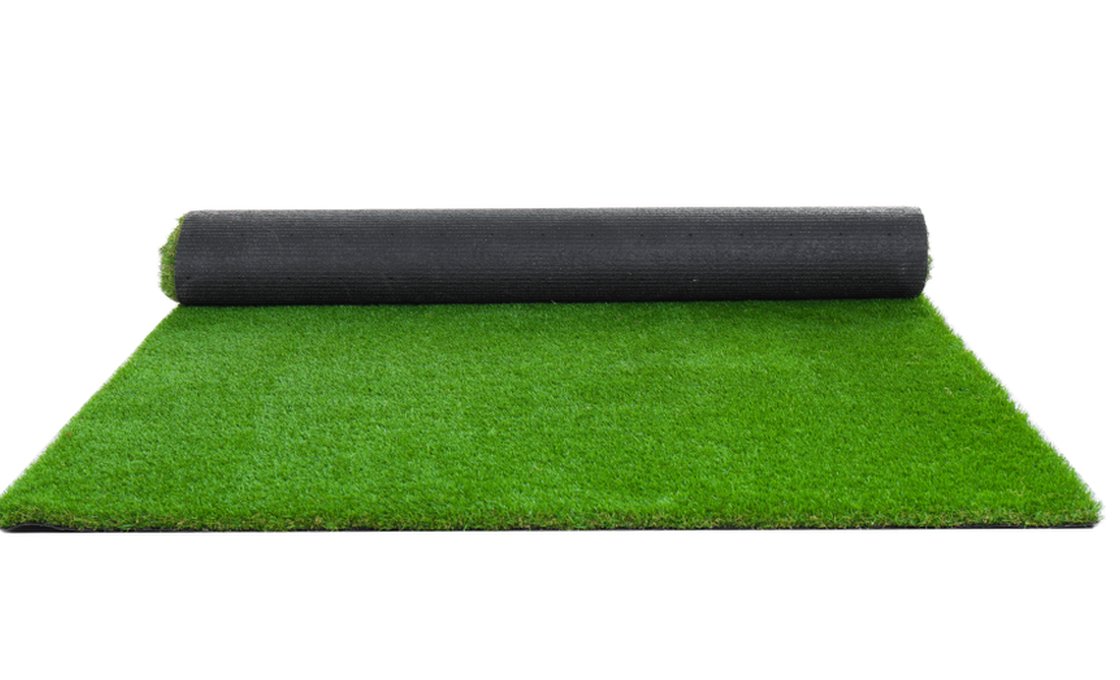
That is why our team treats an indoor enquiry as a subfloor question first and a grass question second. Roll spec, pile height and fixing method all follow from what the floor will admit.
Check the Hard Floor Before You Start
Every artificial turf installation over a hard floor lives or dies on three checks: level, dry and sound. Teams that plan to lay artificial grass indoors hard floors such as sealed concrete, porcelain tile or timber boards should interrogate the slab before they price the grass.
Concrete flaws do not disappear under a carpet of green. Cracks, bumps and low spots eventually print through the pile and wear it unevenly. Patching compounds and self-levelling fills therefore get their full curing window before the roll goes anywhere near the room.
Moisture is the quieter failure. Water trapped beneath an indoor surface has nowhere to go, and it turns into odours, mould or backing damage rather than draining away. A slab that dries dark after a mop test needs attention before it needs turf.
| Floor type | Check before laying | Why it matters |
|---|---|---|
| Sealed concrete | Cracks, hollow patches, level across doorways | Slab flaws print through the pile and wear it unevenly |
| Tile | Hollow or loose tiles, proud grout lines | Movement under the roll rocks every seam above it |
| Timber boards | Protruding fixings, loose boards, old adhesive | A proud screw or nail reads straight through thin pile |
| Raised access floor | Panel flatness, load spread at joints | Panels deflect under point loads and open the joints |
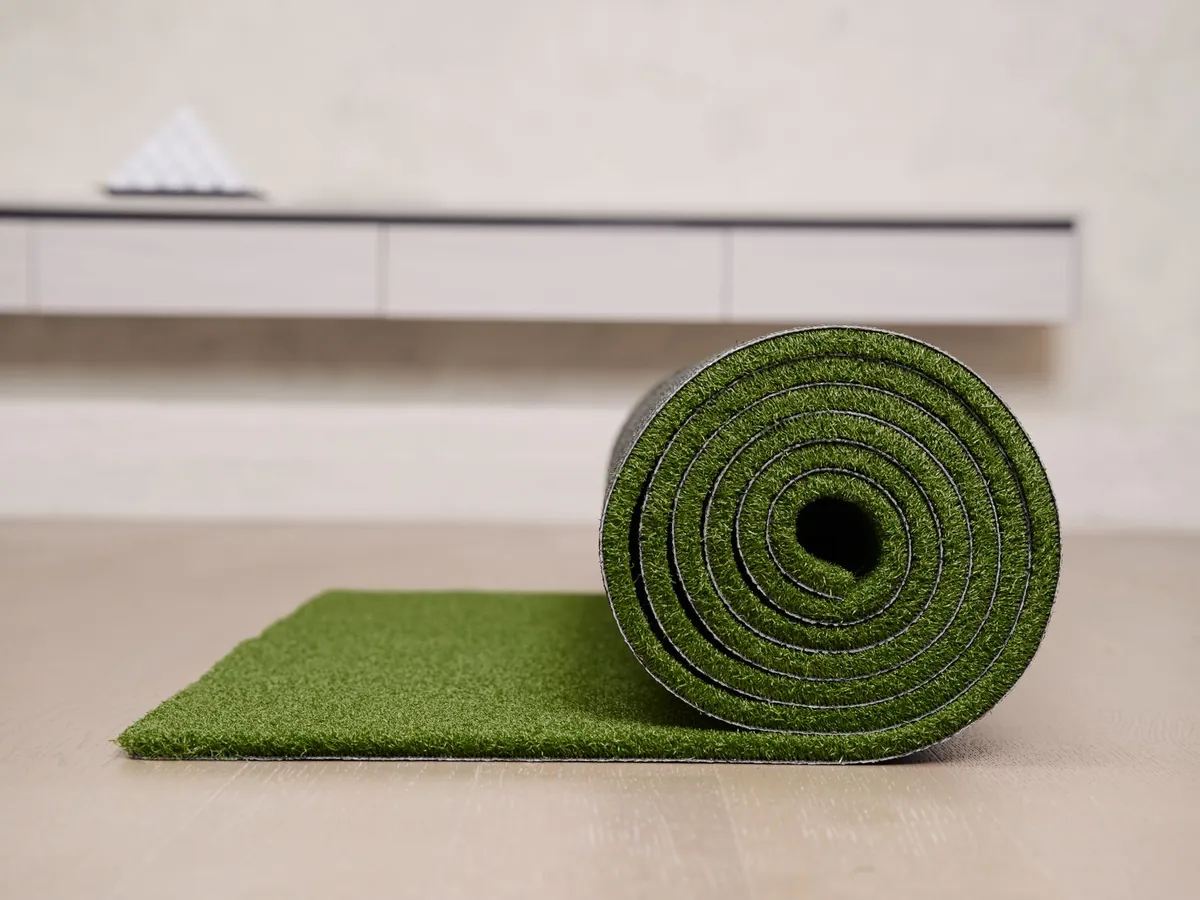
Indoors there is one mercy: unlike patios, interior installs usually need no drainage layer and no weed membrane at all. The checklist is shorter, not softer — it is simply non-negotiable.
Choose the Fixing Method That Matches the Floor
The enquiry leaves you three fixing routes, and the room — not the catalogue — picks the right one. Concrete cannot take nails. Rented floors cannot take glue. Exhibition halls cannot take either, because the floor has to be gone overnight.
Full adhesive bonds for permanence, applied at the perimeter and anchor points rather than across the whole sheet, so the floor underneath can still breathe. Double-sided tape runs the middle path: perimeter bond, clean removal, no scarring. Loose lay with corner tape or edge weighting is the only route for floors that must be handed back intact.
No artificial turf installation over a concrete slab reaches for nails, and that constraint alone reshapes the decision for most commercial rooms.
| Fixing route | Best suited to | Trade-off |
|---|---|---|
| Full adhesive | Owned floors, high traffic, gym zones | Permanent bond; hardest route to reverse |
| Double-sided tape | Offices, retail, semi-permanent layouts | Reversible with care; bond needs a clean, dry floor |
| Loose lay plus edge fixing | Rented floors, exhibitions, temporary installs | No damage at all; edges and joints must be planned |
Wooden floors sit between categories. Boards accept a combination of adhesive and tacks, and screws or staples remain an option where the subfloor is expendable. Whatever the route, keep bonding at the edges and anchor points — a full carpet of glue seals the floor and traps whatever moisture the slab still gives off.
Plan Seams, Pile Direction and Roll Width
Before the first roll opens, draw the room. Fibre direction is the first decision, because every roll must run the same way: reversed pile reads as two different greens under one light. Mark the direction on the back of each roll as it is positioned.
Seams come second. A joint crossing a doorway or running through the middle of a gym floor reads from the door, while a joint tucked along a low-traffic edge disappears. The joins themselves are seaming tape and adhesive work, pressed firmly and brushed until the fibres hide the line.
Roll width decides how many of those lines exist. Standard rolls come in 2, 4 and 5 metre widths at 25 metres long, and the wider the roll, the fewer the joins across an open floor. Review the standard roll formats and product widths before you commit a layout to paper.

Cutting comes last, with a margin. Crews leave roughly 50 mm of excess at walls and doorways for a clean final trim. The rolled grass settles for a couple of hours first, so the backing relaxes before that trim happens.
Mistakes That Ruin an Indoor Turf Installation
Most failures in jobs that set out to lay artificial grass indoors hard floors trace back to four habits. Every one of them is decided before the roll is unrolled.
Skipping the Slab Survey
A defect missed at survey time is a defect printed through the pile by month three. Grinding a bump after the turf is down means lifting the sheet, and lifting the sheet means re-fixing everything the sheet held.
Fixing for Price Instead of Reversibility
Full adhesive is the cheapest fixing and, on a rented floor, the most expensive mistake in the building. An artificial turf installation holds only as long as its fixing matches the ownership of the floor, so match the route to the lease before matching it to the quote.
Ignoring Pile Direction Across Rolls
Rolls cut from the same line still carry a grain, and mixed directions read as patches under raking light. Direction belongs on the drawing and on the back of every roll and every offcut, not in the installer’s memory.
Buying Spec From a Photograph
Screen colours flatten and photographed pile always looks taller than it stands. Felted backing looks like foam at thumbnail size. Samples exist because rooms are lit better than screens, and every one of these mistakes is cheaper to catch on a sample square. Order three or four sample pieces and judge them under the lighting of the room that will receive them.
Indoor Roll Specs Worth Locking Early
Four specs decide how an artificial turf installation indoors wears: pile height, density, backing and roll width. Corridors and reception floors take shorter, denser pile that springs back under traffic. Play zones and gym areas lean taller and softer, usually over a foam underlay for comfort and sound.
Backing is the quiet decision. PP+Net and PU are the two systems on offer. The room picks between them: moisture exposure, traffic, and whether the roll must hold a hard edge or drape into corners. Both come off our line in custom pile heights, densities and colours against a written brief, which is what the customisation programme is for.
Timing matters as much as spec. Let the roll rest for two to three hours after unrolling so the backing settles and the wrinkles relax, then trim to the margin you left at the walls.
Worried the Roll Will Not Match Your Floor Plan?
A mis-sized roll turns an indoor fit-out into seams, patches and delays. We cut pile height, density, backing and roll width to your spec, factory direct.
How Indoor Projects Differ From Garden Installs
An outdoor artificial turf installation budgets for excavation, a graded base and drainage falls. Indoors those three line items vanish, and the budget moves to surveying, fixing decisions and seam planning instead.
The physics differ as well. A garden base drains downward and a hard floor does not. Indoor moisture control is therefore an acceptance test on the slab, not a layer under the turf. Sound behaves differently too: a hard floor reflects footfall, which is why foam underlay appears in indoor specifications far more often than in garden ones. Cleaning changes register too: with no rain to rinse the pile, vacuuming and damp-cloth spot cleaning carry the maintenance calendar.
Crews who lay artificial grass indoors hard floors for a living treat the indoors as a different trade rather than a smaller garden, and their quotes show it. Cost framing shifts as well, though the arithmetic stays third-party. One installer’s published rate card put indoor work at $12 to $15 per square foot, with padding and optional materials extra. Read such figures as market context, not as a quotation.

What transfers unchanged is the product itself. Yarns are polyethylene or polypropylene, and the non-toxic, allergen-free composition that suits a playroom is the same specification our commercial buyers order for retail floors.
A Buyer Checklist for Commercial Indoor Projects
Procurement teams and contractors who buy indoor turf by the roll work from a short list. Four items decide whether a crew can lay artificial grass indoors hard floors once, without a second visit.
Bring a Floor Report Before a Quote
Level, dryness and fixability, documented before anyone prices the roll. A floor report turns fixing advice from guesswork into specification, and the commercial artificial grass range covers the floor types these reports usually name.
Write the Reversibility Clause Into the Job
Lease terms decide the fixing route, so write them into the brief: owned, leased or temporary. The adhesive-versus-tape question is a contract question before it is a glue question.
Draw the Seam Map Before the Roll Ships
Pile direction, joint positions and roll widths belong on one drawing. That drawing is what a factory needs to cut and label rolls that arrive in sequence and land in the right rooms.
Prove the Spec on a Sample First
Hold the pile, check the colour under the room’s own light and confirm the backing type against the brief. Request free 20 by 20 cm samples, usually three to four pieces, through the sample programme before anything is cut. They ship by DHL or FedEx in 4 to 6 days.
Frequently Asked Questions
Can you lay artificial grass directly on concrete indoors?
Yes — concrete is the easiest indoor base once it is level and dry. Fill cracks and low spots first, then fix with adhesive or tape rather than nails.
Is glue or double-sided tape better for indoor turf?
Glue for permanent, high-traffic floors; tape when the layout may change. Rented floors and event spaces should use loose lay with edge fixing only.
Does indoor artificial grass need infill sand?
Usually not. Most indoor rolls stand upright after brushing, and infill is optional rather than part of the indoor system. Confirm against the roll spec before delivery.
How long does indoor artificial grass last?
Commercial-grade artificial grass has a service life of up to 10 to 15 years. Indoors, where weather never touches it, traffic and cleaning decide where it lands.
Can it be installed without damaging the floor underneath?
Yes. Loose lay with corner tape or edge weighting leaves the original floor untouched, which is how rented offices and exhibition venues stay deposit-safe.
How do samples work before an indoor project?
Request free 20 by 20 cm samples, usually three to four pieces. They ship by DHL or FedEx in 4 to 6 days, with courier freight covered by the buyer.


 English
  Arabic
  French
  German
  Portuguese
  Russian
  Spanish