

When a recreation centre or school plans an indoor athletic field, the surface decides what happens on every session that follows. The choice between filled and unfilled carpet shapes how the hall is cleaned, booked and trained on once the doors open. Most managers weigh the playing feel first and only notice the maintenance gap later, when the cleaning and booking rows start to bite.
Non-infill turf indoor fields have moved from a niche option to a default for training halls, multi-sport centres and agility studios. We build artificial grass rolls on our own line, which is why we watch the specification closely. Six reasons explain why facilities keep choosing the unfilled route, and each one maps to a problem an indoor manager actually faces during a normal week. The build also changes how the space is sold, insured and inspected, so the decision reaches well past the playing line.
What Non-Infill Turf Means for Indoor Fields
Non-infill turf carries no sand or rubber layer between the blades. The carpet stands on its own yarn, backing and density, so nothing migrates when athletes cut, slide or fall. Indoor artificial turf installations often skip infill entirely because the hall never faces rain and the floor is a shared hygiene surface that everyone walks across.
The difference shows up the moment you compare care routines. Filled systems need grooming, brushing and periodic infill top-up, while an unfilled carpet needs only a vacuum and a light brush. Indoor turf also omits the drainage layer that outdoor turf relies on, because the ceiling keeps the weather out entirely. The general background on artificial turf covers how the category developed, but the indoor decision rests on what the hall actually demands.

An artificial turf installation indoors also skips the UV stabilising brief that outdoor carpet carries, because the roof blocks the sun that fades and brittles exposed polymer. That lets the spec focus on density, pile and backing instead of weather defence. For non-infill turf indoor fields, the brief is simpler: build a dense, upright, easy-clean carpet that the programme can trust hour after hour.
Yarn choice matters more without infill to hide weak construction. Polyethylene monofilament with a polypropylene thatch is the common mix, and a polyurethane backing keeps the floor non-porous and simple to sanitise. Where an indoor hall runs sleds and loaded bars, the stitch count and face weight do the work that infill would otherwise do outdoors. The omission of infill is therefore not a shortcut; it is a deliberate shift of the load-bearing job onto the yarn and the cloth.
Six Reasons Non-Infill Turf Fits Indoor Athletics
Reason 1: No Infill Spills Across the Indoor Floor
Filled carpet sheds sand and rubber crumb onto shoes, into vacuum cleaners and across the surrounding floor. Non-infill turf indoor fields remove that pathway, so the crumb stays out of adjoining courts, change rooms and storage. For a shared building, that single change cuts daily cleanup and stops the constant tracking of granules between zones.
The spill is not only cosmetic. Rubber crumb collects in ventilation intakes and clings to equipment, and once it is in the building it is tedious to remove completely. An unfilled surface leaves nothing to escape, which is why schools and multi-tenant centres favour it where several user groups share the same floor each day. The cleaner perimeter also makes the hall easier to pass a routine hygiene inspection.
Reason 2: Skip Grooming Between Back-to-Back Sessions
A filled pitch needs brushing and infill levelling before it plays true again, which eats the gap between a 6 p.m. class and a 7 p.m. booking. Non-infill turf skips that step: a quick pass with a vacuum is enough. The surface is ready the moment the previous group steps off, which is why most artificial turf installations in busy halls favour the unfilled build.
Grooming is also a labour line that disappears from the budget. There is no infill to top up, no brush schedule to enforce and no drop in play quality when the groomer is late. An artificial turf installation that needs no between-session reset simply books more cleanly, and the programme runs on the clock rather than on the maintenance crew. The saving compounds across a hall that runs sessions from early morning to late evening.

Reason 3: Protect Limited Ceiling Clearance
Indoor halls run to a fixed beam height, and every millimetre of surface build-up eats into it. Published indoor builds run from about 10 to 16 mm for training turf to 12 to 25 mm for commercial gym installations. A filled system stacks a taller carpet on top of an infill layer. That thinner profile protects clearance for high balls, hanging rigs and jumping drills, and it keeps the hall comfortable to use.
Ceiling clearance is rarely the headline reason, yet it is the one that blocks the alternative. A filled build can push a training hall past the height where hanging rigs, basketball rims or suspension trainers belong. Non-infill turf indoor fields keep the floor low and the airspace free, so existing kit stays usable without a costly rebuild of the roof zone. The point matters most in older sports halls where the beams were never designed for a thick build-up.
Reason 4: Convert the Hall Between Sports Fast
One indoor field now carries football, athletics, PE and agility in the same week, and conversion speed decides how many programmes fit. Unfilled rolls lay flat and stay put, so markings, colours and widths can be planned into the roll itself. Where an artificial turf installation must serve several sports, a fast, seam-light layout turns a cost centre into a bookable space.
A flat, unfilled carpet with inlaid markings removes the loose elements that can trip a class moving between drills. It also stores without the extra crumb that a filled system sheds. For operators, one well-specified surface quietly replaces several single-use floors and the hours spent swapping them. The same roll can host a youth football drill at noon and a Pilates circuit by evening without a reset crew on site.
Reason 5: Keep Indoor Air Clear of Dust and Odour
Filled systems can release fine dust and, with a cheap latex backing, trap sweat into a lasting locker-room smell. Non-infill turf pairs a non-porous backing with no crumb to circulate, so the air stays cleaner and the floor is easy to sanitise. In a shared facility where the surface is a hygiene plane, that matters more than it does outdoors under open sky.
Indoor air is a compliance topic as well as a comfort one. Less circulating dust means fewer complaints from asthmatic users and a cleaner result from the routine vacuum pass. Non-infill turf indoor fields keep the particle load down by design, which is why clinics, schools and hotel fitness floors specify the unfilled route deliberately. The benefit shows up most during packed classes when the ventilation system is already working hard.
Reason 6: One Surface Carries Many Training Demands
Short-pile and indoor surfaces often run unfilled, which suits the lighter training loads of a hall rather than full match play. The same carpet takes sled work, footwork, sprint lanes and stretching without an infill layer to compact or clump. A full product walkthrough sits in the complete indoor turf buying guide. For operators, one well-specified surface quietly replaces several single-use floors.
The economics follow the versatility. A single hall that hosts a morning bootcamp, a school PE block and an evening club session no longer needs three surfaces and three maintenance plans. Non-infill turf indoor fields earn their place by absorbing the variety of a real weekly timetable without the overhead that infill would add indoors. The operator gains a floor that pays back across every programme rather than serving one sport alone.
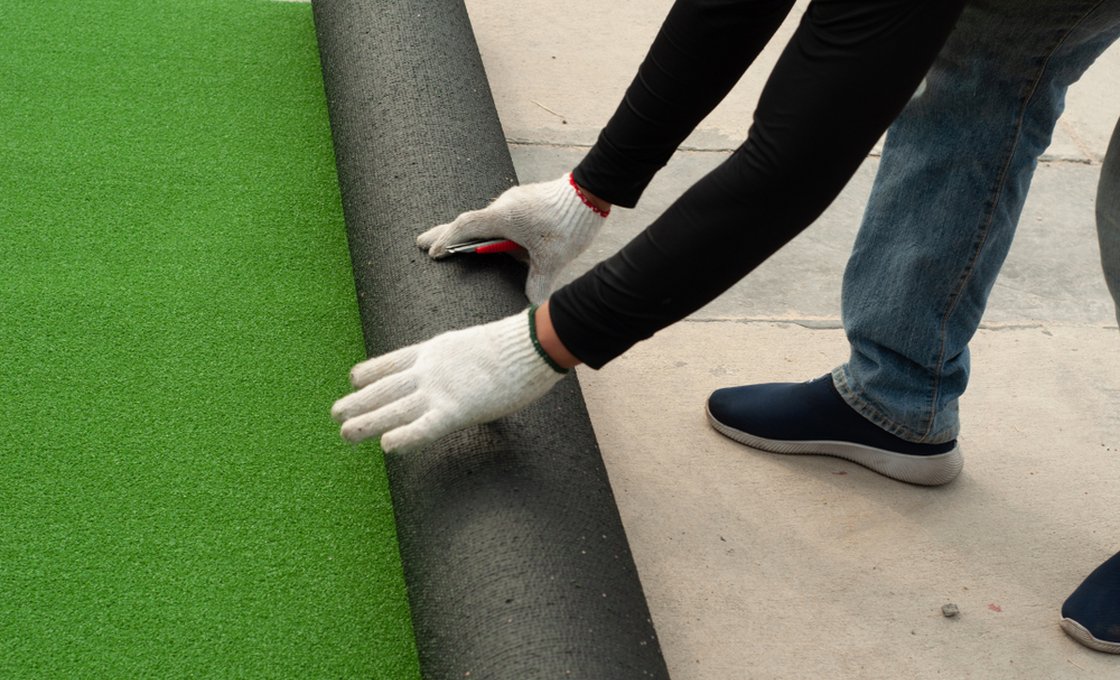
Those six reasons share one theme: the indoor hall is a controlled room, not an open pitch. Removing infill suits that room because the weather, the drainage and the heavy match load are all absent. The spec then shifts to density, pile and backing, which is exactly where a good indoor carpet should win or lose. Getting those numbers right is the real job, and it is the subject of the comparison that follows.
Non-Infill Versus Filled Turf in Indoor Halls
The table below compares the two builds on the points that actually change an indoor programme. Each row reflects how artificial turf installations behave once the carpet is down and the bookings start, so the comparison is about daily operation rather than marketing claims.
| Attribute | Non-infill (indoor) | Filled: sand or rubber (indoor) |
|---|---|---|
| Infill requirement | None; indoor installs skip infill | Sand or rubber required for support |
| Typical pile height | 10 to 16 mm (training); 12 to 25 mm (commercial gym) | Taller carpet plus the infill layer |
| Surface density (face weight) | Dense, commonly above 2,000 g/m² | Lighter carpet; infill supplies the mass |
| Between-session care | Vacuum and light brush only | Grooming, brushing and infill top-up |
| Indoor dust and hygiene | No crumb; easy to sanitise | Crumb tracks and collects dust |
| Ceiling clearance | Thinner build-up at equal play height | Taller build-up from pile and infill |
| Drainage | Not needed indoors; layer omitted | Not needed indoors; layer omitted |
That column drives most indoor decisions once the cleaning and clearance maths are done. It is why the unfilled route keeps winning the spec for shared halls. Neither build needs drainage under a roof, but only the unfilled option removes the infill row entirely, and that single omission is what the daily cleaning crew feels first.
The comparison also shows where filled turf still earns a place. A hall built for elite contact practice or heavy match simulation may want the extra mass and shock that infill supplies. The right answer is therefore a spec decision, not a blanket rule, and it should be made against the sports you actually run rather than a catalogue default.
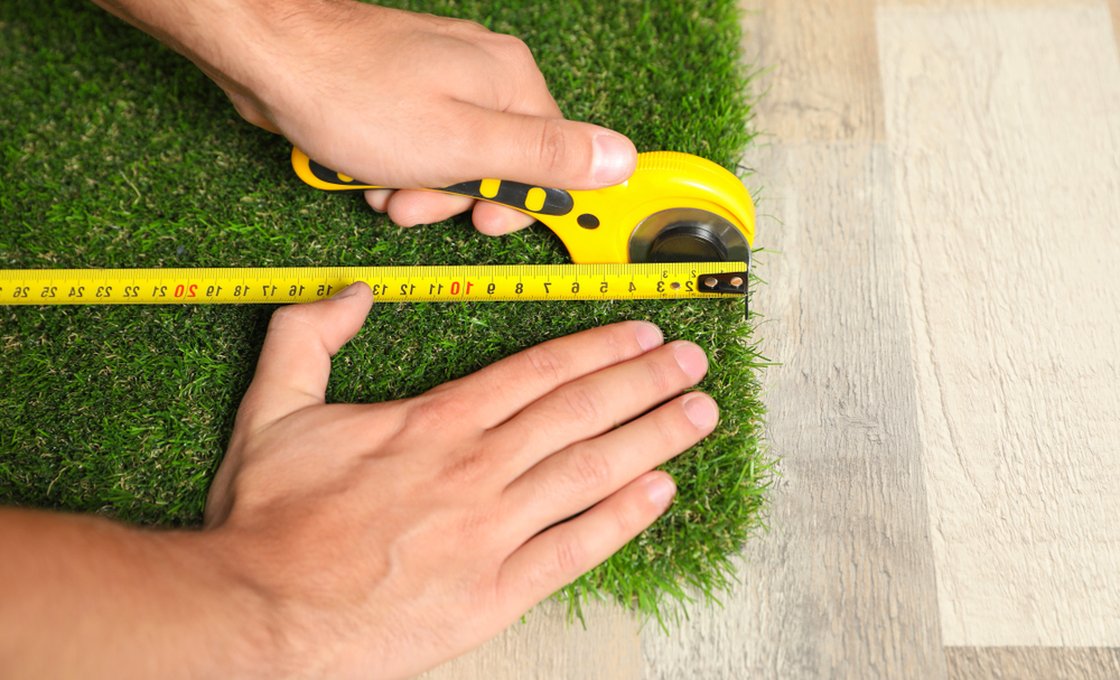
Before ordering, weigh the weekly timetable against the care routine each build demands. A hall that changes sports several times a day gains the most from a surface that needs no groomer between bookings. A hall that hosts one sport at match intensity may value the cushion of infill more than the cleaning saving. The table is the starting point, not the verdict.
A short site survey settles the question quickly. Measure the beam height, list the sports and note how many user groups share the floor each day. Those three numbers predict whether the infill row in the table above is a deal-breaker or a minor trade. Most multi-use indoor fields land firmly on the unfilled side once the maths are written down.
Get a Non-Infill Turf Specification for Your Hall
A mismatched pile or backing wastes the whole hall’s layout, and the wrong density flattens under loaded sleds within a season. The fastest fix is to spec the roll against the sports you actually run before you order, rather than accepting a generic off-the-shelf width that leaves seams everywhere.
Tired of Turf That Never Fits Your Hall?
A wrong pile or backing wastes your whole hall layout. We build non-infill rolls to your exact pile, density and backing spec so the surface fits your sports.
Specifying a Non-Infill System for Your Hall
Specification starts with the sports you host and the hours they fill, then works back to pile, density and backing. Dense indoor non-infill turf commonly sits above 2,000 g/m² face weight, with stitch counts from 20,000 to 63,000 per square metre depending on the load. An artificial turf installation that skips infill must lean harder on those numbers to stay upright.
| Parameter | What it means | Indoor non-infill reference |
|---|---|---|
| Surface density (face weight) | Mass of yarn per square metre | Commonly above 2,000 g/m² |
| Ball rebound | Vertical return of the ball off the surface | Filled-system governing-body reference band 60 to 85 cm (Pro), 60 to 100 cm (Quality) |
| Uprightness | Fibres recover after being crushed | Curled or texturized monofilament acts like a spring |
| Stitch density | Tufts per square metre | 20,000+ to 63,000 stitches/m² |
Ball rebound is a tested parameter. International football field testing sets vertical ball rebound at 60 to 85 cm for Quality Pro and 60 to 100 cm for Quality. That band is the reference most suppliers tune against. Our team produces custom pile heights, densities and colours against a stated brief, and rolls of 2, 4 or 5 metres cover most halls without avoidable seams. For sports turf systems, the spec is the whole game.
Before you commit, order a sample roll and check the pile, density and backing in daylight against your actual use. A free 20 by 20 cm swatch is the fastest way to confirm the surface you are buying, and it shows whether the fibres recover after a deliberate crush test. The swatch turns a written spec into something your coaching staff can feel before the hall is committed.
Where Non-Infill Turf Meets Its Limits Indoors
Non-infill turf suits lighter training loads rather than full match play, so a hall built for elite contact sport may still want an infilled system. Uprightness also depends on a dense, well-shaped yarn; a thin carpet will lie down under heavy, repeated sled traffic and then it reads as worn long before its time.
Heat is rarely the indoor issue it is outdoors, because the ceiling blocks the sun, but ventilation still matters during packed classes. Treat the build as a specification problem, not a one-size label, and the unfilled route pays off across cleaning, clearance and conversion. A poorly specified artificial turf installation indoors will disappoint no matter how the infill question is answered.
The honest limit is load, not location. If your hall runs repeated heavy sled drags or full-intensity scrimmages every day, pilot a dense sample under that exact load before you carpet the whole floor. Non-infill turf indoor fields reward a careful spec and punish a lazy one, so the last step is always a real-world test rather than a catalogue guess.
Frequently Asked Questions
Does non-infill turf work for indoor athletic fields?
Yes. Indoor artificial turf installations often run unfilled, which suits the lighter training loads of a hall rather than full match play. The carpet stands on its yarn and backing, so nothing migrates into adjoining spaces.
What pile height is best for indoor non-infill turf?
Published indoor bands run 10 to 16 mm for training turf and 12 to 25 mm for commercial gym installs. Lower pile suits sled work; the upper end gives a fuller multi-sport feel.
How do you clean non-infill indoor turf?
Vacuum or brush the pile and wipe with mild soap; there is no mowing, watering or infill top-up. Because the backing is non-porous, the floor is easy to sanitise between user groups.
Does non-infill turf affect ceiling clearance indoors?
It runs a thinner build-up than an infilled system of equal play height, leaving more clearance for high balls and hanging equipment. That matters in halls with a fixed, often tight, beam height.
How long does indoor non-infill turf last?
Commercial-grade turf serves up to 10 to 15 years. A busy training hall that sees loaded sleds daily often lands closer to 7 to 10 years, depending on density and upkeep.
Can markings and logos be built into the roll?
Yes. Dimensions, colours, line markings and logos are planned into the roll so one hall serves several programmes without a second surface or seasonal re-turfing.


 English
  Arabic
  French
  German
  Portuguese
  Russian
  Spanish