The polymer resins for artificial grass sit at the top of every specification, yet they are the hardest lines to verify on a quote. Colour and pile height are visible on a sample; the polymer grade, the masterbatch and the UV stabilizer package are locked inside the yarn where no eye can reach them. Three polymers carry the industry: polyethylene for softness, polypropylene for structure and economy, nylon for raw endurance.
We buy resin by grade, not by price tag, because our compounding and extruding stages fix the recipe before a single tuft is punched. Once the yarn leaves the die, no later step can soften a harsh polymer or strengthen a weak one. Working through the three resins the way we set them on the line shows where each one earns its place and where each one fails.
What A Resin Recipe Controls On The Line
A resin recipe is three things mixed into one melt: the base polymer, a colour masterbatch that carries pigment and additives, and a stabilizer package. These components are dosed, blended and extruded together, so the finished fiber is a single engineered material rather than plastic with paint on it. Change any share of the mix and the whole character of the carpet moves with it.
That is why the recipe decides what buyers later measure on site. Softness, recovery after footprints, color hold through summer, resistance to flattening — all of these are fixed at extrusion, years before the first complaint could arrive. Tufting sets how the yarn is arranged; the yarn itself is already finished when it reaches the tufting machine.
It also means polymer resins for artificial grass are never traded as raw plastic. The masterbatch and the stabilizer package ship inside the recipe, so the grade on the quote should describe the whole melt. For a buyer comparing offers, the visible specifications are downstream outputs. The product range looks like pile heights and roll widths, but underneath those numbers sits a resin decision that was made once and cannot be revised. The sections below take the three polymers one at a time, then the stabilizer package, then the point where the recipe is locked.
Polyethylene Resins For Soft Natural Blades
Polyethylene is the default blade material for good reasons. It feels soft against skin and reads as natural grass to the eye. It also keeps its color under strong sun better than the alternatives, and it causes less abrasion when players or children slide across it. Most medium and high-end landscaping turf is PE for exactly this combination.
Extrusion turns PE into monofilament: individual strands, each formed through a shaped die. Cross-sections such as C, S or diamond profiles are chosen at this stage to give the blade memory. Fibers then bend under traffic and stand back up instead of lying flat. The shape is a resin-stage decision — no installation practice can add recovery that the extrusion never built in.
The trade is tensile strength. PE gives up some raw toughness for its feel, which is why extreme-traffic zones lean on other polymers and why density matters alongside material. For lawns, gardens, rooftops and playground work, the residential range shows how PE carries the specification.
Cold weather also suits PE. The polymer keeps its flexibility at low temperatures instead of turning brittle, so a lawn installed in a frost-prone market survives its first winter without cracking. That behavior is baked into the polymer grade, which is one more reason the recipe deserves a line on the purchase order.
Polypropylene Resins For Thatch And Economy
Polypropylene is the lightest and cheapest of the three, with good dimensional stability and easy processing. Its stiffness reads as a drawback in a decorative blade, so PP rarely plays the lead role. Instead it works the positions where stiffness and cost are advantages: curled thatch beneath PE blades, backing cloth, and low-traffic decorative turf.
The thatch layer is where PP earns its keep on most modern rolls. Curled PP yarn fills the space between upright PE blades, hides the backing, supports the pile and gives the carpet body without the cost of turning every fiber into monofilament. The thatch ratio is a factory parameter — it sits on the customization list next to pile and density.
PP has one honest weakness: under long, hard sun exposure it ages faster than PE, gradually fading and shedding where UV protection is thin. Among polymer resins for artificial grass it is the one most dependent on a generous stabilizer package. In shaded balconies, indoor walls and short-lifetime decorative work, that weakness never gets a chance to show. Matching the polymer to the exposure is worth more than upgrading the whole recipe.
Nylon Resins For The Hardest Traffic
Polyamide, sold as nylon, is the strongest fiber in the set. It resists abrasion better than PE or PP, springs back under heavy pressure instead of matting, and holds its shape through years of concentrated footfall. Training areas, commercial entrances and high-wear sports zones are where nylon justifies itself.
The costs are real. Nylon is the most expensive of the three, and the texture is firmer underfoot. A nylon surface also runs hotter in direct sunlight than PE — a detail that matters on playgrounds and pet runs in hot climates. Under blazing sun the fiber can lose color faster unless the stabilizer package is generous.
Many builds use nylon as a reinforcement rather than a full surface: a share of nylon yarn in high-wear zones, or hybrid constructions where nylon backs up PE blades. On commercial installations where traffic is the defining constraint, that hybrid logic usually beats switching the whole roll to a single hard polymer.
UV Stabilizers That Keep Yarn Color Alive
Sunlight degrades polymers through photo-oxidation. Radiation breaks molecular chains, and the damage shows up as brittleness, surface micro-cracks, fading and fibers that wear faster than the day they were made. The process is invisible at delivery and accumulates over seasons, which is why two identical-looking samples can age in completely different ways.
Protection is a three-part package mixed into the resin. Hindered amine light stabilizers scavenge the radicals that degradation produces; UV absorbers soak up radiation before it reaches the polymer; antioxidants slow the oxidation chain itself. The blend is tuned per polymer, because PE, PP and nylon degrade at different rates and respond to different chemistries.
The package has two engineering constraints that separate serious formulations from cheap ones. It must survive extrusion, because melt temperatures above 200°C will boil off or break down the wrong stabilizer. It must also stay inside the fiber: a stabilizer that migrates or leaches in rain leaves the polymer bare within a few seasons. High-molecular-weight stabilizer grades exist precisely to hold that position through years of weather.
Balanced dosing is the quiet difference between grades. Overdosing wastes money and can disturb pigment; underdosing shows up as a lawn that fades two summers early. The polymer stabilizer family is standard chemistry, but the formulation behind polymer resins for artificial grass is a supplier decision that deserves a written answer, not a colour card.
How Compounding And Extruding Lock The Formula
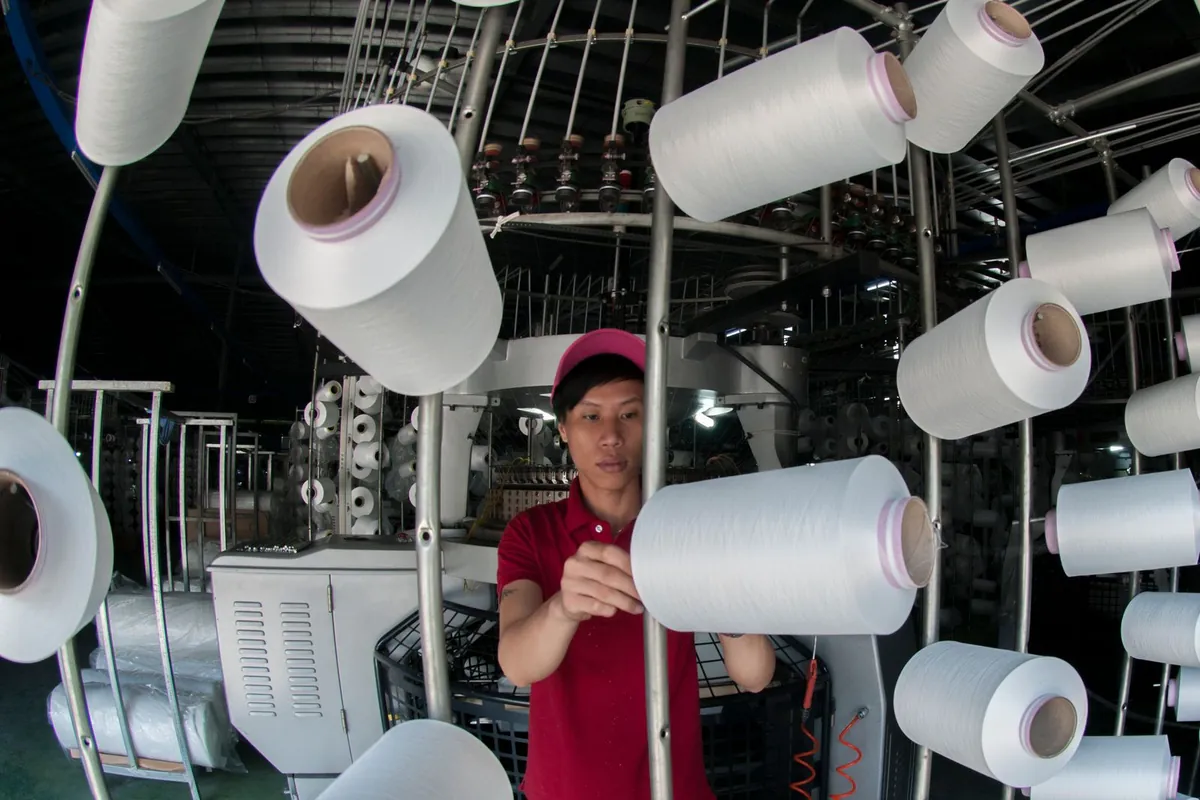
Our line runs eight steps: Compounding, Extruding, Twisting, Tufting, Coating, Drying, Perforating, Rolling Up. The resin story belongs to the first two. In compounding, pellets of the base polymer are blended with the colour masterbatch and the stabilizer package in the proportions the specification calls for. In extruding, that blend is melted, filtered, pressed through shaped dies, quenched in a water bath, then drawn and annealed so the molecules align and the strand gains strength.
Two things are permanently fixed by the time extrusion ends. The colour number is in the melt, so every meter of yarn from that batch carries it. The stabilizer package is likewise distributed through the fiber wall, where it will spend its working life. Nothing downstream adjusts either one. Coating, perforating and rolling can only treat the yarn well or badly, never improve its chemistry.
This is the practical meaning of a resin decision: it is a commitment made before the carpet exists, in writing or not at all. A buyer who confirms the polymer grade, the masterbatch route and the UV package before compounding starts gets exactly those materials in the container. A buyer who skips that step is buying whatever the extruder was fed that week.
Fibre Spec Promised but Never Proven?
Resin and fibre grades get blurred in sales talk. Ours are made under one roof. Factory-direct pricing, typically 30–50% below market on like-for-like specifications.
Matching Polymer Grades To Climate And Traffic
Set side by side, the three resins divide the work cleanly. The table below is how the choice presents itself on a specification sheet.
| Property | Polyethylene | Polypropylene | Nylon |
|---|---|---|---|
| Touch | Softest, most natural | Stiffer, slightly rough | Firm, resilient |
| Wear resistance | Moderate | Lower | Highest |
| UV behavior | Strong color retention | Weakest — ages under hard sun | Good with a strong package |
| Heat underfoot | Coolest of the three | Moderate | Runs hottest |
| Cost position | Medium | Lowest | Highest |
| Typical role | Blades on lawns and landscape turf | Thatch, backing, light decorative use | Hard-wear zones, reinforcement |
Climate narrows the choice before budget does. High sun load pushes the UV package to the front of the conversation; frost argues for PE over anything that stiffens; covered or indoor work tolerates PP happily. Traffic hours decide how much recovery the blades need, which is why a school field and a display wall can share a colour and nothing else.
The default answer for most projects is the hybrid: straight PE monofilament blades for the surface, curled PP thatch for body, nylon added only where the traffic map demands it. Playground work adds its own layer to the decision, since playground surfaces balance softness against wear across a very specific user group. A recipe built from the site reads better than one built from a catalogue.
Reading Resin Specifications Before You Commit
A specification worth signing answers four questions. Which polymer grades are in the blades and the thatch, and are they virgin or recycled? What does the UV package contain, described in terms of stabilizer types rather than adjectives? Is the colour carried in a masterbatch mixed into the melt, or applied another way? And what yarn weight is being quoted, with figures available on request where the sheet runs quiet?
Samples turn those answers into evidence. Bend a swatch and listen for stiffness, leave one on a south-facing sill for a month and hold it against a fresh one, rub two surfaces together to feel abrasion. Twenty-centimetre swatches cost a courier fee and settle debates that specification sheets cannot.
Suppliers who volunteer this level of detail usually have the line discipline to match. The polymer resins for artificial grass are decided once, at compounding, and every later promise depends on that decision. The supplier conversation therefore belongs before the melt, not after the container lands.
Frequently Asked Questions
Which polymer resin lasts longest outdoors?
Nylon resists wear best and recovers fastest under traffic, but outdoor life is a recipe outcome. Polymer grade, UV package and density work together, so no single resin guarantees the longest service on its own.
Are the polymers in artificial grass safe for children and pets?
Yes. Polyethylene, polypropylene and polyamide yarns are non-toxic and free of allergens, and a finished lawn needs no herbicides, pesticides or fertilizers to stay presentable.
Can one roll combine two polymers?
Yes, and it is the standard build: straight PE monofilament blades with curled PP thatch underneath. Nylon can join the recipe where traffic calls for extra reinforcement in defined zones.
Why do two green samples fade at different rates?
Different masterbatch dosing and stabilizer packages. Pigment quality and stabilizer content decide how long a shade holds, which is why the recipe matters more than the colour card in your hand.
Does pile height change the resin choice?
Indirectly. Taller piles expose more fiber surface to sun and traffic, so recovery and UV package quality matter more as pile height grows. Short piles forgive a weaker recipe.
What does Dtex mean on a resin specification?
Dtex is yarn weight per 10,000 meters — an indicator of blade thickness and strength. Exact figures for each build are available on request together with the specification sheet.
 English
  Arabic
  French
  German
  Portuguese
  Russian
  Spanish