

A poor base never announces itself on day one. The turf looks flawless at handover, and the first heavy rain finds every flat spot. By the second season, seams stand proud of dips that no brush can fix.
Knowing how to prepare for your artificial turf installation means turning each step into something you can check rather than hope for. We manufacture artificial grass rolls on our own line, and the questions contractors raise with us are practical ones: measurement, clearing, fall, base and compaction. Each stage here carries a requirement plus an acceptance standard you can walk out and verify.
Why Site Preparation Decides the Whole Installation
Site work is the least photogenic part of a project and the one that decides whether the surface performs. Water that cannot escape softens the base and lets it settle. Organic matter left under the carpet decomposes and leaves voids. A base that was never compacted properly keeps sinking under foot traffic and equipment. None of these show on installation day, and all of them show within the first year of use.
Contractors who treat preparation as a footnote on the quote pay for it later in re-grades and seam repairs. Preparation is where artificial turf installations are won, so the steps below run in the order the work happens on site. Review the residential artificial grass range early as well, because pile height and backing choices influence how the base should finish.
Measure and Map the Site Before Anything Arrives
Every plan for how to prepare for your artificial turf installation starts with a tape and a notepad. Measure the length and width of the full area, including curves, and sketch obstacle positions such as trees, beds and steps. Set stakes and run string along the outline so the boundaries are visible to everyone on site. Note access gates, slopes and where a delivery vehicle can unload.

Accurate dimensions do two jobs. They size the roll count, and they expose awkward shapes early, while changing the plan is still cheap on paper. Record every measurement in metres and keep one person accountable for the numbers.
Clear the Ground of Vegetation and Debris
Remove existing grass, weeds, plants and roots from the marked area, digging below the surface so nothing organic is left to regrow. Material left behind decomposes, creates uneven spots and invites weeds up through the new surface. Rake the cleared ground to lift rocks, sticks and builders debris.
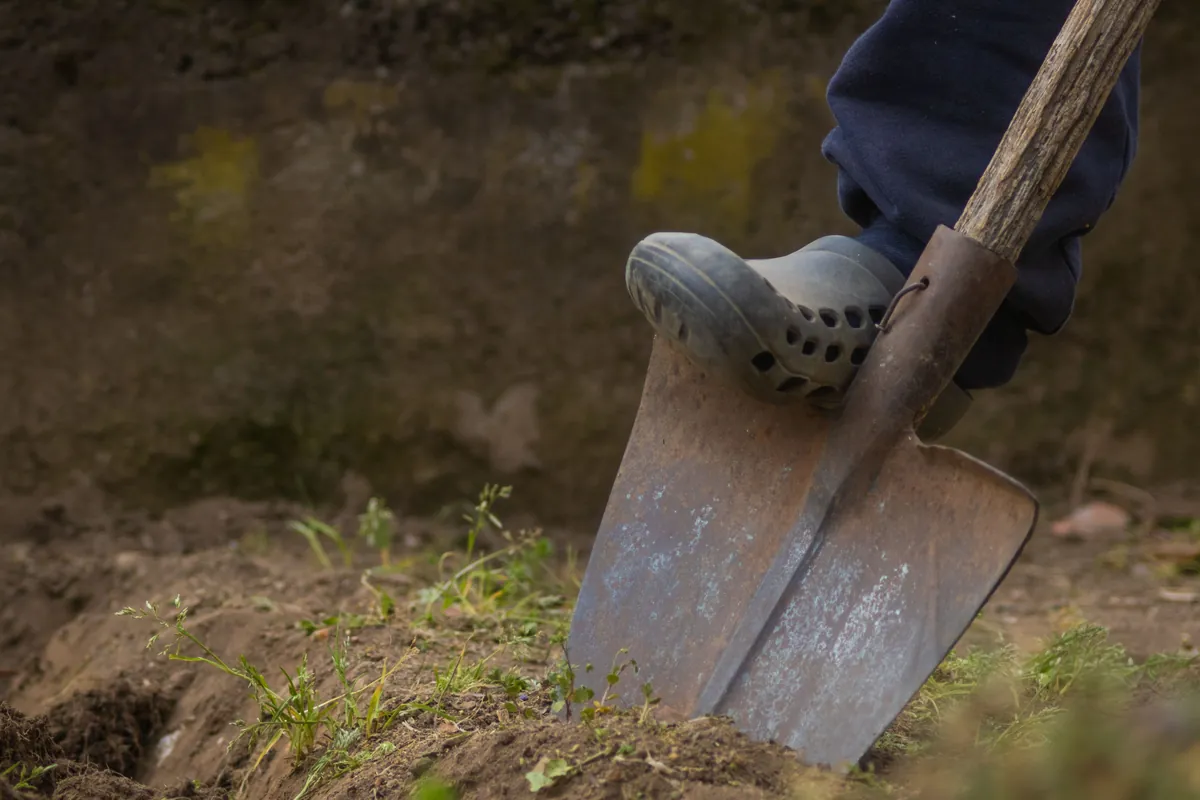
Excavate roughly 3 to 4 inches of soil across the area to make room for the base layers. The acceptance standard here is simple: a clean mineral surface with no visible roots, no organic pockets and no debris.
Set the Grading and Drainage Fall Correctly
Water is the patient enemy of a turf system, and grading is how you answer it. Shape the subsoil so the finished area carries a fall of roughly 1 to 2 percent away from buildings and paved edges. On a ten-metre run that is a modest drop, yet it decides whether rain leaves the surface or sits on it.
Where soil retains water or rainfall is heavy, plan sub-drainage such as French drains or perforated pipe to carry water away. The acceptance check is a hose test: water applied anywhere on the graded subsoil should move toward the outlet and never pool.
Choose and Compact the Base Layer Properly
Base selection is the last technical decision in how to prepare for your artificial turf installation, and material matters more than brand loyalty. Crushed aggregate in the Class II road base family compacts tightly while still letting water pass, which makes it the default for most installations. Decomposed granite suits dry regions, where its clean, tight compaction is an advantage. Spread the base 2 to 4 inches deep, or 3 to 4 inches where ground movement is a concern.

Compact with a vibratory plate compactor in multiple passes, wetting the material lightly so voids close. The finished base should feel firm underfoot, take a loaded wheelbarrow without rutting, and hold the fall you graded. The table below compares the common choices.
| Base material | Where it performs best | Why crews choose it |
|---|---|---|
| Class II road base / crushed aggregate | Most residential and commercial installs | Compacts tightly while water still passes |
| Decomposed granite | Dry regions | Compacts well with a clean finish |
| Crushed stone or gravel | General stability layer | Common at a 2 to 4 inch depth |
Preparation Mistakes That Ruin Artificial Turf Installations
Most failures in how to prepare for your artificial turf installation trace back to a handful of repeat habits. Each one below has a cheap fix at preparation stage and an expensive fix afterwards.
Skipping Utility Marking Before You Dig
Every underground service line must be marked before excavation starts. A digger through a cable or pipe costs far more than the marking visit ever will.
Burying Organic Material Under the Base
Roots and turf left in place decompose and hollow the ground from below. Strip them out rather than turning them under, because the voids they leave become dips.
Flattening the Site Instead of Grading It
A level pad is not the goal; a graded one is. Without fall, water pools on the surface and softens the base beneath it.
Under-Compacting the Base Layer
Loose base settles under traffic and drags the surface down with it. Compact in multiple passes with a plate compactor until the finish resists a boot heel.
Your Pre-Installation Checklist Before the Rolls Arrive
Run this sequence in order and knowing how to prepare for your artificial turf installation becomes a page you can initial rather than a memory test.
Confirm Measurements Against the Final Layout
Walk the string line with the sketch in hand and re-read every dimension. Discrepancies cost nothing on paper and everything in roll count.
Mark Utilities and Plan the Access Route
Have every underground service marked and keep the markings visible until digging is done. Confirm gate width and turning room for the delivery vehicle.
Clear Vegetation and Strip 3 to 4 Inches of Soil
The acceptance standard is a mineral surface: no roots, no organic pockets, no debris. Excavation depth should leave room for a 2 to 4 inch base.
Verify the 1 to 2 Percent Fall
Check the grade with a level and string line across the fall direction. Run the hose test and confirm water exits the area without pooling.
Compact and Proof the Base
Multiple plate compactor passes, lightly wetted, until the surface is firm. A heel press should leave no deep imprint, and a 10 to 15 mm sharp-sand finishing layer is optional for fine levelling.
Stage the Site for the Rolls
Decide where rolls will unroll, which way the grain should run, and where tools will sit. Clear the route from the unloading point to the final position.
Can a Rushed Base Survive the First Season?
Rushed preparation returns as pooling, dips and call-backs. Send measurements and intended use; we match pile height, backing and roll width. Pricing, typically 30–50% below market on like-for-like specifications.
Matching the Roll Specification to the Site
Preparation ends with a specification decision, and it should be driven by the site you just measured. Roll width sets seam count, because wider rolls cross big areas with fewer joins. Pile height, density and backing then follow from the use case, from light decorative cover to play areas under constant traffic.
| Roll width | Best fit | Seam behaviour |
|---|---|---|
| 2 m x 25 m | Small areas, tight access, budget-led projects | Most economical; more joins on wide spans |
| 4 m x 25 m | Uncertain final dimensions; covers most layouts | Fewer joins than 2 m; widest availability |
| 5 m x 25 m | Large open areas such as sports surfaces | Almost seam-free; heavier to handle |
| Custom width | Irregular shapes and premium layouts | Made to the layout with no seams |

Write the chosen width, pile height, density and backing into the site file before you order, so the ground works and the material spec move together. Our team produces rolls against a stated brief through our custom specification service, and the standard roll formats cover most residential layouts.
Receiving and Staging the Rolls on Delivery Day
Rolls should be laid flat and given time to acclimate to site temperature before they are fixed, which relaxes transport curls and keeps the finish smooth. Plan the unroll direction so the grain runs the same way across every roll on site; mismatched grain shows as shade bands.
Check the spec on arrival against your site file and confirm pile direction before the first roll leaves the ground. If material is still under review, a free sample set settles the questions at a bench instead of on site.
Working through how to prepare for your artificial turf installation step by step protects everything you spend on the surface itself. The ground does the quiet work for the next decade, so give it the days the site asks for.
Frequently Asked Questions
How far ahead should preparation start before the rolls arrive?
Start as soon as the layout is final. Ground preparation runs from a few hours to several days, depending on area size, access and existing conditions.
What slope should the finished base have?
Aim for a fall of roughly 1 to 2 percent away from buildings and hard edges. Water should always exit the surface rather than pool on it.
How deep should the base layer be?
Plan on a base layer 2 to 4 inches deep, with 3 to 4 inches recommended where shifting is a concern. Excavate about 3 to 4 inches of soil first.
Do you need a weed barrier under artificial grass?
Yes, a quality weed membrane or geotextile layer stops growth pushing up through the surface. It also helps water filter evenly into the base below.
Can turf be laid straight after compaction?
Lay the rolls flat and let them acclimate to site temperature first. This relaxes transport curls and prevents wrinkles from locking into the finished surface.
Which roll widths suit residential projects?
Rolls come in 2, 4 and 5 metre widths at 25 metres long, with custom widths available. Two metres suits small areas; four metres covers most layouts.


 English
  Arabic
  French
  German
  Portuguese
  Russian
  Spanish