
At two in the afternoon, a concrete pool deck is the hottest square of the property. Bare feet dance across it, kids sprint for the water, and every splash that lands outside the pool either steams off the stone or sits in a shallow puddle. Anyone weighing the pros and cons of artificial grass around a pool is asking a simpler question. Does a green surface fix those afternoons, or does it trade them for new problems?
We tuft, coat and perforate turf on our own production line, so we read pool projects through factory parameters: backing structure, drainage holes, pile height and roll width. Both sides get equal space here, because the wins are real and so are the heat, the upfront invoice and the brushing the surface will still ask of you. Where a number matters, it carries its source.
What a Pool Deck Asks of a Surface
A pool surround is the hardest working ground in the landscape. It is wet for half the day and walked on by bare feet for the other half. Chlorine splashes and sunscreen drips arrive daily, and the deck must still look good in every photograph. Very few materials survive all four demands without a complaint worth hearing.
So before judging turf, define the job description. A poolside surface needs grip when wet and drainage that moves splash water away fast. It must stay cool enough for bare feet and stable against pool chemicals and sunlight. It should also keep debris out of the water. Concrete, pavers, porcelain tile, wood decking and natural grass each fail at least one demand to some degree, and those failures are where most poolside regrets are born.
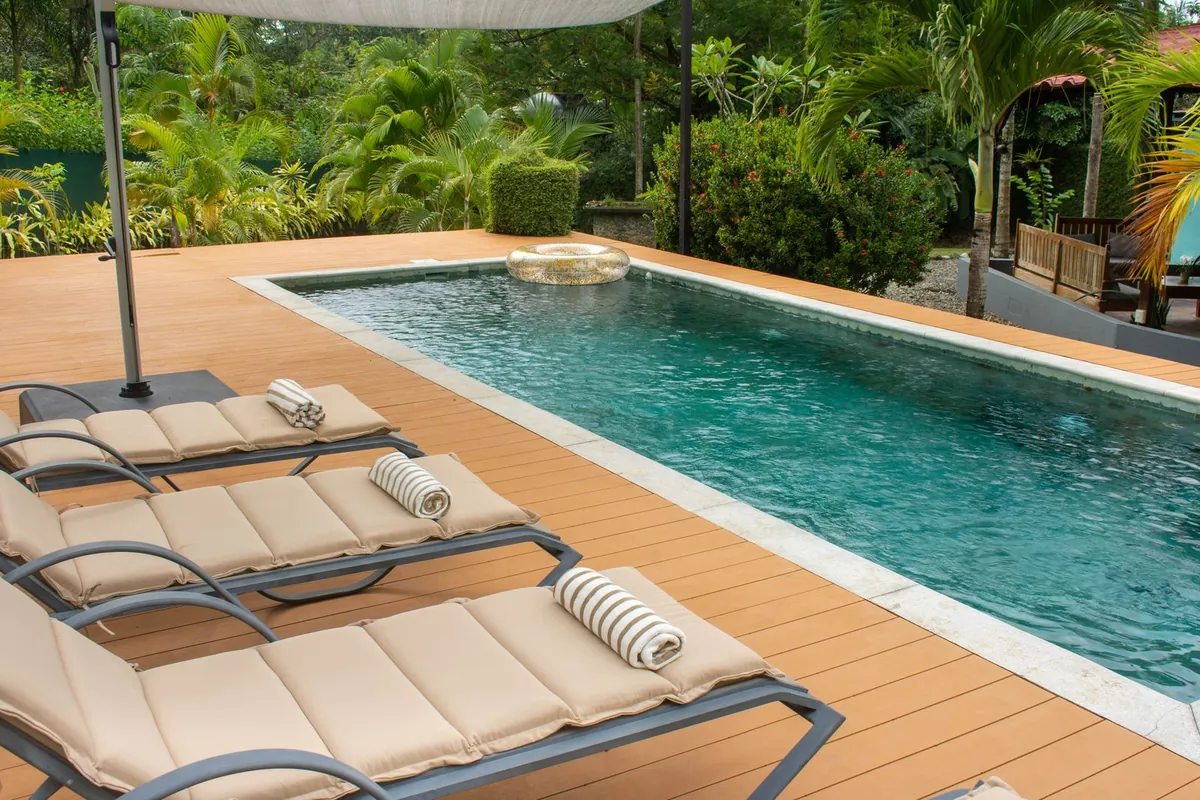
Artificial grass enters the comparison with an unusual profile: it is the only option that is soft, textured and permeable at the same time. That combination is why pool builders keep specifying it, and why the honest answer below is not a sales pitch in either direction. Weigh the pros and cons of any poolside material against the five demands above, and the decision stops being a matter of taste.
Where Turf Wins Around the Water
The first win is what never lands in your skimmer. Natural grass sheds clippings, mud and soil into the pool after every mow or heavy rain, and the mess always arrives at the waterline. Turf has no clippings, no mud and no soil to wash away, so the water stays cleaner and the filter works less. When the pros and cons of turf are listed honestly, this cleanliness dividend is the item pool owners mention first.
The second win is traction. Wet tile and sealed concrete are famously slick, while the textured fibers of a quality turf give wet feet something to grip. A child who slips on turf lands on a forgiving, cushioned surface instead of a slab, which is why family pools were among the earliest adopters of synthetic grass surrounds.
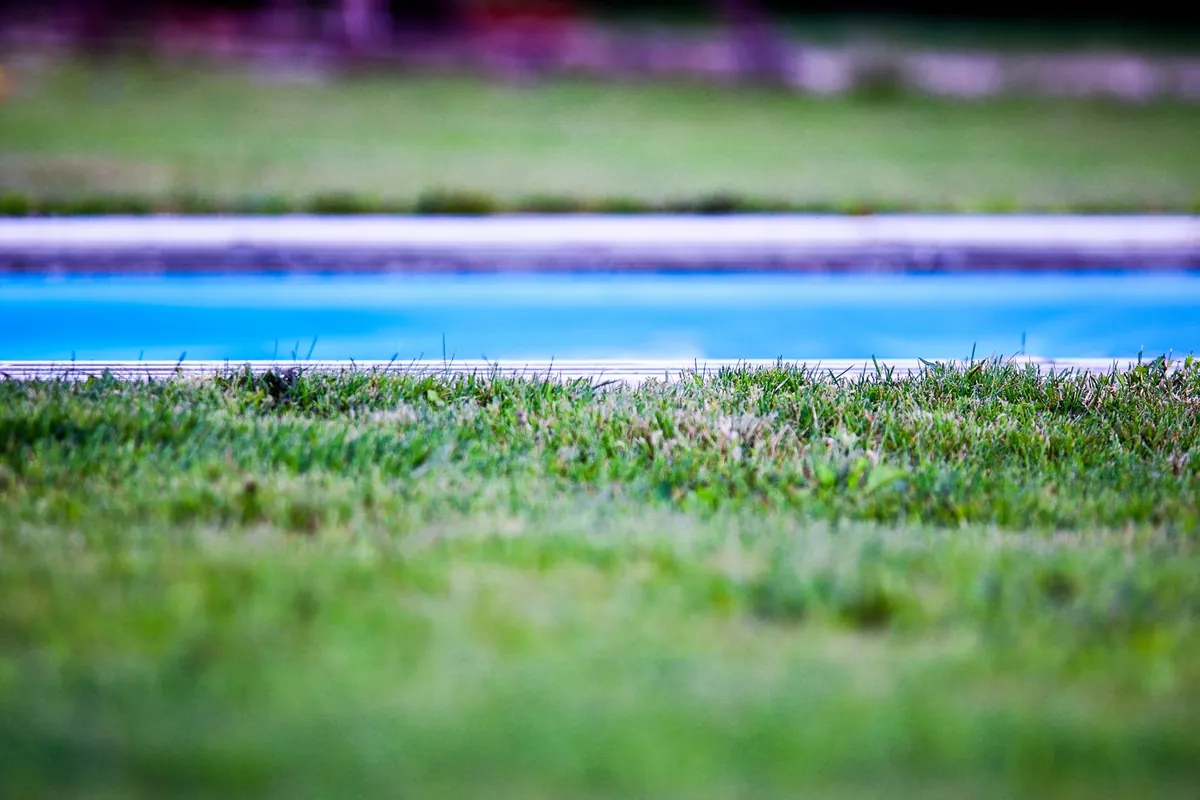
Third comes the end of lawn care at the waterline. No mowing, no watering, no fertilizer running into the pool — and no brown, dormant season waiting for spring. Water savings belong on the same list. The EPA puts outdoor use at 30 percent of household water nationally, and far higher in dry regions. A surround that never drinks removes a thirsty strip of landscape, and the turf keeps its colour through the season the pool is actually open.
Finally, appearance holds year after year in a way natural grass next to a pool rarely does. Chlorine splashes that scorch a natural lawn leave no burnt rings on synthetic blades, and shaded corners that stay damp and patchy under real grass stay green under turf. The resort look that hotels chase is, in practical terms, the absence of those dead zones.
The Honest Drawbacks Worth Weighing First
Heat is the first honest drawback. Synthetic blades under full sun run hotter than natural grass, which cools itself through evaporation, and on a windless afternoon the difference is felt immediately by bare feet. Concrete and pavers heat up too, often worse, but that is cold comfort to someone crossing the deck. Half of the pros and cons of any synthetic surface live in this one paragraph.
The second drawback is the invoice. Turf costs more upfront than seed or sod by a wide margin, and a pool surround adds base preparation, fixing and cutting around the coping. The savings arrive slowly, through the mowing, watering and re-sodding that never happen, so the payback is a multi-year story rather than a same-season one.
Third, low maintenance is not zero maintenance. Leaves, dust and sunscreen film still settle on the surface, and the fibers still need an occasional brush to stay upright under traffic. Guides that promise a completely hands-off lawn are selling the pros and cons of a product that does not exist; plan on a rinse routine instead.
Fourth, the wrong specification fails in wet places. A turf built on solid foam or rubber backing traps splash water underneath. The trapped water breeds mold, odor and a slippery layer where dry ground should be. Blades with a glossy finish can also turn slick when soaked. These failures are spec failures, not turf failures, but they land on the owner either way.
Last, the environmental ledger has a debit column. The product is made from petroleum-based polymers, and worn-out rolls are difficult to recycle in most regions. A synthetic lawn also removes the habitat that a natural one offers insects and soil life. Anyone installing twenty square meters should know what those square meters replace.
Heat and How to Engineer Around It
Surface heat is a physics problem, and physics answers to specification. Dark, dense surfaces absorb solar radiation all morning and release it through the afternoon. The poolside question is not whether turf warms up, but by how much and how fast it lets go. Shaded, irrigated natural grass keeps an edge that no synthetic can fully match. The pros and cons of a green pool deck in July are decided here more than anywhere else.
Engineering closes most of the gap. Lighter blade colours reflect more than deep greens, a quick hose-down drops the surface temperature within minutes, and misting systems or strategic shade planting do the same work continuously. Pool-grade projects in hot regions also lean on heat-reducing infill instead of dark rubber crumb, which is a major hidden heat source in older installs.
Yarn choice matters for bare feet as much as temperature does. Polyethylene blades stay soft and skin-friendly under the sun, while stiffer nylon mixes can feel wiry and abrasive on a hot afternoon. Installers recommend a simple test: walk the candidate surface barefoot at peak sun before signing anything, because a two o’clock reading tells the truth a showroom never will.
The honest framing is this: heat around a pool can be engineered down to a comfortable range, but it cannot be engineered away. Projects that accept the trade gain the cleanliness and drainage wins described above. Projects that cannot accept it should weigh shaded natural grass or hybrid layouts with planted strips.
Drainage and Backing Decide Everything Wet
Around a pool, drainage is the first specification, not the last. A splash zone receives more water per square meter than any lawn ever will, between cannonballs, ladder drips and rain. Every liter that cannot leave the surface becomes a puddle, a slip risk or a smell. Get the drainage story wrong and every other advantage on the list shrinks.
Here the industry carries a dispute worth settling. One camp tells buyers to demand perforated backing with drainage holes; another insists only fully permeable backings belong near water. Our read, from the coating bench outward, is that the two are rungs on the same ladder rather than rival religions. Punched holes are the proven baseline that lets water drop straight through, while fully permeable sheets drain across their entire area for sites that stay wet for days. A splash zone with a free-draining base does well on either; a constantly soaked one earns the upgrade.
The factory view adds something catalogues skip: those drainage holes are not a site improvisation. They are punched in the Perforating stage of production, after the backing has been coated and dried, at regular spacing the factory controls. Drainage is designed into the roll before it is ever packed, which is why two rolls that look identical on a rack can behave completely differently beside a pool.
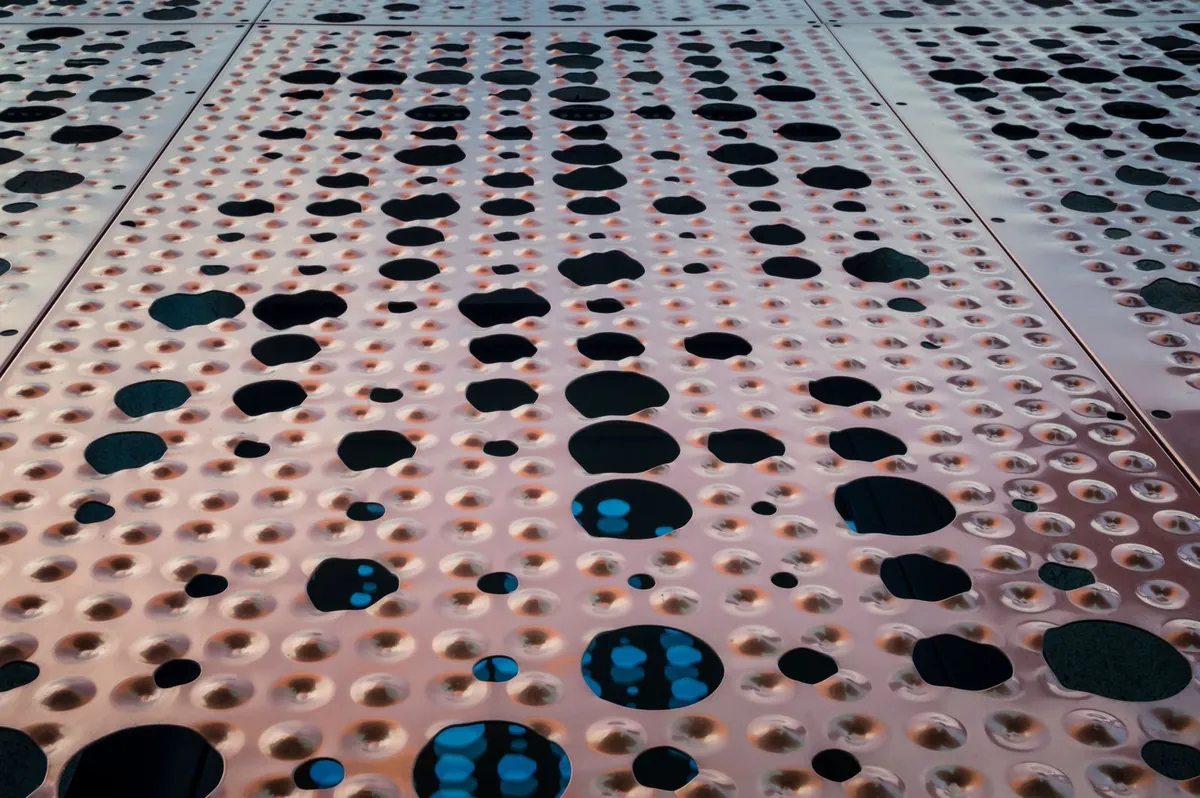
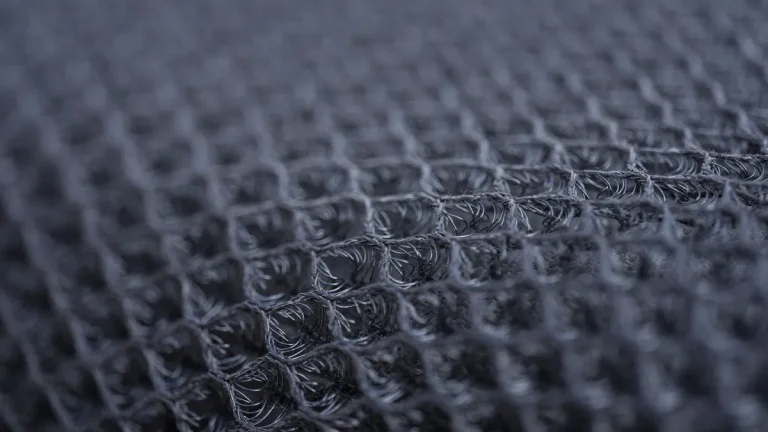
Turf is built on polypropylene primary cloths with PP+Net or PU secondary backings. The composition decides how the sheet handles a soaked week, from stiffness to bond behaviour to drying speed. Treat backing structure and composition as the two questions you ask before pile height. Then let the base underneath finish the job, as our walkthrough of how the base carries the water away explains.
One warning closes the section. Whatever the brochure says, a solid foam or rubber layer under a poolside roll undoes the whole chain, because water that enters cannot leave. Drainage is a chain from blade to soil, and a single sealed link breaks it.
Chlorine, Saltwater and Years of Sunlight
Pool water is chemistry in motion, and the surface has to live with it. At normal splash-zone concentrations, chlorinated water is something quality turf tolerates without drama — a spilled bucket will not yellow the blades overnight. The honest caveat is time. Unrinsed chlorine residue and years of ultraviolet exposure slowly work on any polymer, which is why manufacturers treat chemical resistance as a specification line rather than a slogan. A weekly rinse where splashing is heavy is the routine that keeps the surface honest.
Saltwater systems deserve their own sentence. Salt crystallizes as splash water evaporates and holds moisture against the fibers, so pools running on salt need a saltwater-safe specification and the same rinse discipline. Neither chemistry is a dealbreaker; both reward buyers who say the word “saltwater” out loud before ordering.
Sunlight is the quieter variable. Ultraviolet stabilization is built into the yarn during production and keeps colour stable through seasons of exposure. It is the difference between a lawn that fades to pale green and one that does not. Sunscreen, body oils and dust ride along with splash water, so the rinse routine from the chlorine paragraph doubles as the UV maintenance plan.
The takeaway is calibration, not fear. No surface around a pool ignores chemistry and sun forever, and turf is no exception. Still, a UV-stabilized polyethylene yarn with a permeable backing ages on the slow end of its range when rinsed weekly where splash lands. That is the whole chlorine story told without adjectives.
Pile Height, Density and Roll Width
Specification turns the theory above into a shopping list. Poolside pile heights cluster in a 25-35 mm band, tall enough to cushion bare feet yet short enough to rinse clean and dry fast. Where loungers, slide run-outs and constant traffic pack the deck, a firmer 20-30 mm pile holds its shape better under load. Density works the same way: the higher the stitch rate and face weight, the better wet blades spring upright instead of matting into a flat, shiny path.
| Specification | Why it matters poolside |
|---|---|
| Pile height 25-35 mm | Barefoot comfort with fast rinsing and drying |
| Pile height 20-30 mm | Firmer under loungers, slides and constant traffic |
| Textured polyethylene yarn | Soft on skin, grips when wet, tolerates UV |
| High density / face weight | Blades spring upright instead of matting wet |
| Permeable backing, no foam layer | Splash water leaves the chain instead of pooling |
| Roll width 2, 4 or 5 m × 25 m | Longer pool runs laid with fewer seams |
Roll width is the parameter most pool projects leave unexamined. Seams are the vulnerable lines of any installation, and a pool surround collects them along its longest runs unless width is planned first. Rolls come in 2, 4 and 5 meter widths, each 25 meters long.
The 2 meter roll suits small splash strips and tight access. The 4 meter roll covers most deck shapes safely. The 5 meter roll runs long pool edges with almost no seams at all. For curved copings and freeform pools, rolls can be produced to custom widths so the layout follows the water without internal joints.
Each width carries its own pros and cons of freight, handling and seam count, and weighing them takes one drawing and ten minutes.
Poolside Turf That Sits Wet All Season?
Splash and runoff punish the wrong backing. Choose a spec built to drain. Buying direct from the maker usually lands 30–50% below like-for-like market pricing.
What the Numbers Say About Cost
Start with the national picture. Averages collected by Angi put a US artificial grass installation near $5,175 against roughly $2,000 for the same area in sod. That gap pays for itself only through the mowing, watering and re-sodding that never happen. For pool-grade product specifically, trade guides put turf material in the $5-10 per square foot range, with chlorine-safe and UV-heavy specifications at the top of that band.
Factory-direct rolls are priced differently from installed lawns, and the units matter. Our rolls run $7-60 per square meter (indicative — request exact quote) depending on padding, grade and type. That is the material line before base preparation, fixing and labor are added. Comparing that figure against the installed averages above is the fastest way to see how much of a quote is turf and how much is everything under it.
Longevity is the third number. Industry lifecycles run 15-20 years before matting or fading forces replacement, and commercial-grade installations reach up to 10-15 years of hard use. Spread the upfront gap across two decades of zero mowing and zero irrigation, and the ledger usually turns.
Read as a ledger, the pros and cons of artificial grass against a natural lawn come down to timing. The full arithmetic sits in our complete cost breakdown. It ends with one line: the money leaves all at once, or a little every month for twenty years.
Where Turf Fits and Where It Struggles
Verdicts are more useful than vibes, so here is ours. Turf is a strong fit wherever water, children and appearance meet: resort and hotel decks, family pools, splash pads and shaded courtyards where natural grass sulks. It struggles where full sun hits a small enclosed deck with no shade plan. It struggles where a wild, meadow-like aesthetic is the actual goal. And it fails where a budget comparison against bare soil is the entire framework.
| Setting | Honest verdict |
|---|---|
| Resort or hotel pool deck | Strong fit — density and wide rolls carry the traffic |
| Family pool with children | Strong fit — grip when wet, softer landings, cleaner water |
| Shaded courtyard pool | Strong fit — heat risk at its lowest, grass sulks in shade |
| Small full-sun enclosure | Weigh heat first — mitigations or hybrid layout advised |
| Saltwater pool | Fit with a saltwater-safe spec and a rinse routine |
Read as a whole, the pros and cons of turf around water resolve into one sentence: the surface rewards a correct specification and punishes a rushed one. Heat, cost and maintenance are real and permanent; so are the clean waterline, the wet-weather grip and the lawn that never browns beside a pool built for summers.
Frequently Asked Questions
Does chlorine damage artificial grass around a pool?
Not quickly at normal splash-zone levels. Unrinsed chlorine residue plus years of sunlight slowly fade fibers, so a weekly rinse where splashing is heavy keeps colour and strength on track.
Will artificial grass get too hot for bare feet?
In full summer sun it runs hotter than natural grass. Lighter colours, shade planting, misting and a quick hose-down bring the surface back to comfort; test it barefoot at peak sun before committing.
What pile height works best around a pool?
A 25-35 mm pile balances barefoot comfort with easy rinsing. Where loungers and constant traffic pack the deck, a firmer 20-30 mm pile holds its shape better and dries faster.
How does water drain through the turf?
Through drainage holes or a fully permeable backing, then into the free-draining base below. Choose a permeable backing system around a pool, and never a solid foam layer that traps water.
How long does artificial grass last around a pool?
Well-specified and maintained, industry lifecycles run 15-20 years before matting or fading forces replacement. Weekly splash-zone rinsing, periodic brushing and a draining base decide which end of that range you get.
Is artificial grass safe for children around a pool?
Textured polyethylene blades grip better when wet than smooth tile or concrete, and the surface cushions a tumble. Modern turf is a non-toxic polymer, though hot afternoons still call for shading care.
 English
  Arabic
  French
  German
  Portuguese
  Russian
  Spanish