








A bocce ball tells the truth about the surface it lands on. On a dense, flat carpet it runs a clean line for the full length of the throw. On a flattened, poorly drained one, it stalls in soft patches and drifts where the pile leans, and players blame each other instead of the court.
That gap is exactly where quality bocce ball field turf earns its name. We tuft bocce carpet on our own line, and the same court brief has succeeded or failed on four properties: yarn, pile, density and what sits underneath. Each one changes how the ball behaves. Each one is checkable before a single roll ships.
What a Bocce Ball Surface Must Get Right
Bocce gives turf a narrow target. A regulation court runs 91 ft long by 13 ft wide, and common residential builds come in near 60 by 10 ft. Backyard courts often shrink to about 12 by 60 ft, so every metre of the surface has to play the same from end line to end line.
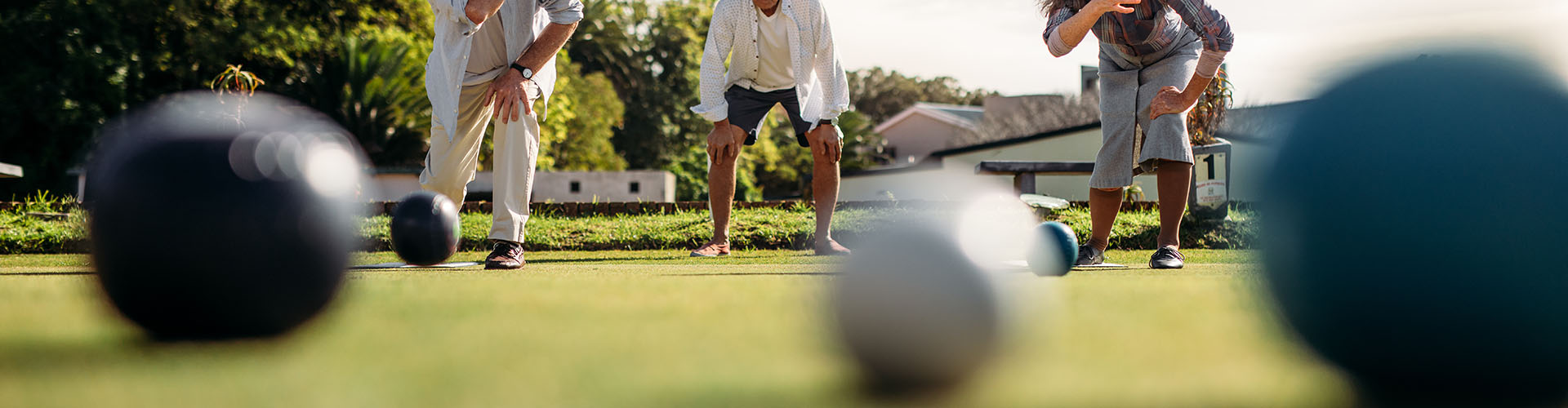
Unlike most artificial turf installations, a bocce surface is judged on consistency before anything else. Cushioning matters less than predictability, because the sport rewards the player who can read a roll, not the one who sinks into the carpet. Quality bocce ball field turf starts with that brief, and every specification downstream exists to protect it.
| Court type | Length | Width |
|---|---|---|
| Regulation tournament | 91 ft (27.7 m) | 13 ft (4.0 m) |
| Common residential build | 60 ft (18.3 m) | 10 ft (3.0 m) |
| Backyard version | About 12 ft | About 60 ft |
| Suggested clearance buffer | Around the perimeter | 3 ft (1 m) |
Quality bocce ball field turf has to cover those runs without a seam crossing the throwing line. Roll width belongs in the same conversation as pile and density.
Yarn Choice Sets the Feel of Play
Bocce asks more of its yarn than most artificial turf installations do. A soft polyethylene fibre gives the ball a clean release, while polypropylene brings resilience, which is why many bocce products blend the two. On our line, the most common combination is a PE monofilament with a PP thatch layer, so the surface rolls fast but stands back up after foot traffic.
Yarn shape matters as much as material. Rounded, low-friction profiles keep the contact patch small and the line true. Heat and ultraviolet exposure are the quiet enemies here. Over years of sun, degraded fibres stiffen, lose their sheen and start grabbing the ball, so stabilisation is built into the yarn rather than sprayed on afterwards.
The backing under the yarn does the structural work. A two-layer PP backing with a latex coating holds the tufts locked in place and keeps the sheet dimensionally stable. That stability is what stops a court from developing slack waves that a rolling ball would find. Where a project brief demands it, a PU backing option is available against specification.
Pile Height Sets the Speed of Play
Pile height is the most quoted number in bocce for a good reason. Published guidance puts the optimal band between 10 and 15 mm, with 12 mm described as the sweet spot for most applications. Manufacturer specification sheets for bocce products commonly list 10 to 12 mm or 12 to 14 mm, all inside that same narrow window.
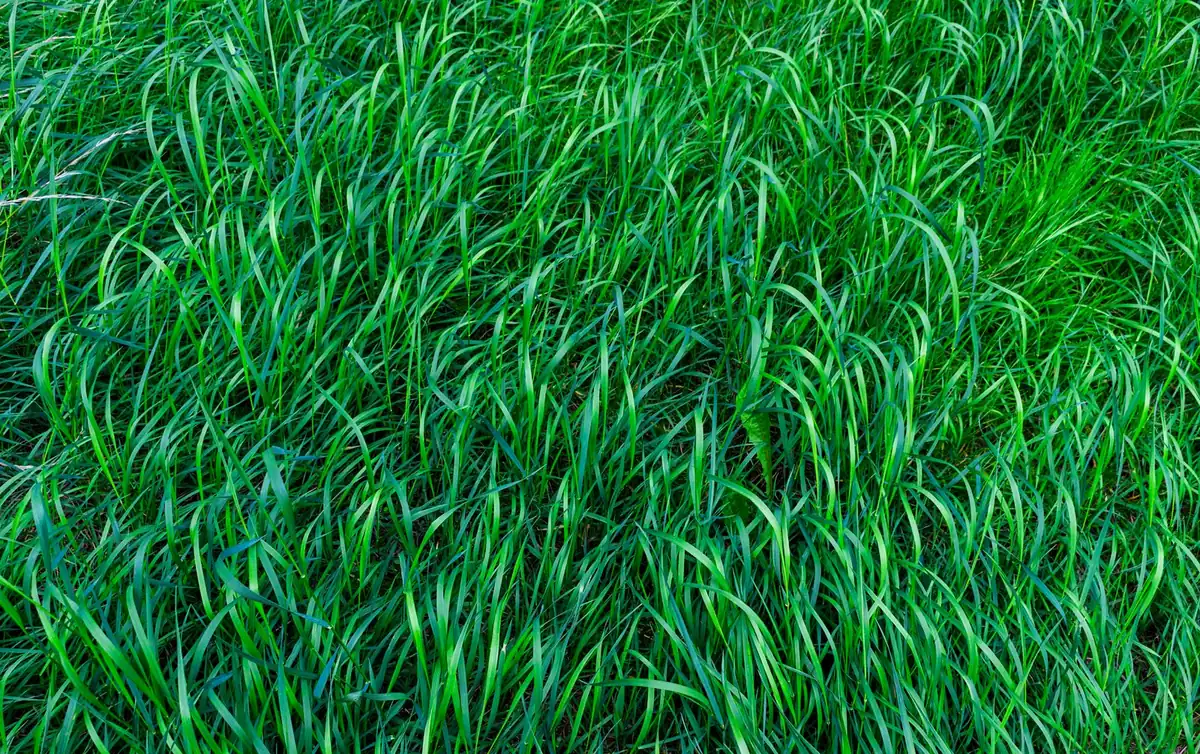
The physics are unforgiving. A taller pile makes the ball drop and slow unevenly, so a measured volesso becomes a guess. A pile in the short band keeps the contact point low and the friction constant. That is why installers describe bocce turf as tight, low and built for smooth roll rather than a lush landscape look.
Speed itself can be stated. One tournament-grade specification lists a 12 to 13 second Stimpmeter reading, the device golf greens use. That figure is the clearest single description of quality bocce ball field turf. Sand depth is the everyday lever for tuning it: more sand slows the ball, less sand lets it run.
Face Density Keeps Every Roll Consistent
Density is the number that protects pile height over years. One manufacturer lists 16,800 to 21,000 stitches per square metre on its bocce surfaces, and the stated purpose is explicit: an extremely dense face prevents matting and keeps long-term performance. Face weight, commonly specified between 50 and 65 ounces per square yard, expresses the same idea from the other side, how much fibre actually sits above the backing.
When fibres are too few, foot traffic pushes them flat in the running lanes first. The court then has fast lanes and slow lanes, and no amount of brushing fully restores the missing fibre. This is why density separates bocce carpet from ordinary artificial turf installations, where a flattened patch is only a cosmetic problem.
| Spec lever | Typical stated range | What it changes on the court |
|---|---|---|
| Pile height | 10 to 15 mm | Roll speed and predictability of a full-length throw |
| Stitch density | 16,800 to 21,000 stitches/m2 | Resistance to matting in the running lanes |
| Face weight | 50 to 65 oz/yd2 | Fibre support without drag that slows the ball |
| Roll speed | 12 to 13 seconds (Stimpmeter) | The pace a club can calibrate its play around |
| Backing drainage holes |