
Two rolls of artificial grass can look identical on a showroom floor and behave nothing alike three seasons later. Colour, softness and shine are set at the compounding stage, and any factory with the same resin can copy them. What separates a good installation from a bad one is everything the surface hides.
Specifying turf is about the layers and numbers beneath that surface: the backing, the drainage path, the density and the yarn itself. Our line tufts and coats every roll we ship, and failed jobs we have re-laid taught us where the cheap roll went wrong. Read the data sheet the way we do — one line at a time.
Why the Data Sheet Beats the Showroom Sample
Appearance is the least informative line on any turf product. Two factories can match colour, softness and shine from the same resin batch within a week. What they cannot copy quickly is the specification underneath.
A data sheet records the decisions that bite later: what holds the fibers in place, where the water goes, and how much yarn sits in each square meter. Reading it line by line turns a shopping decision into an engineering one. The habit pays most on artificial turf installations where replacement is expensive, such as sports surfaces, large lawns and commercial frontages.
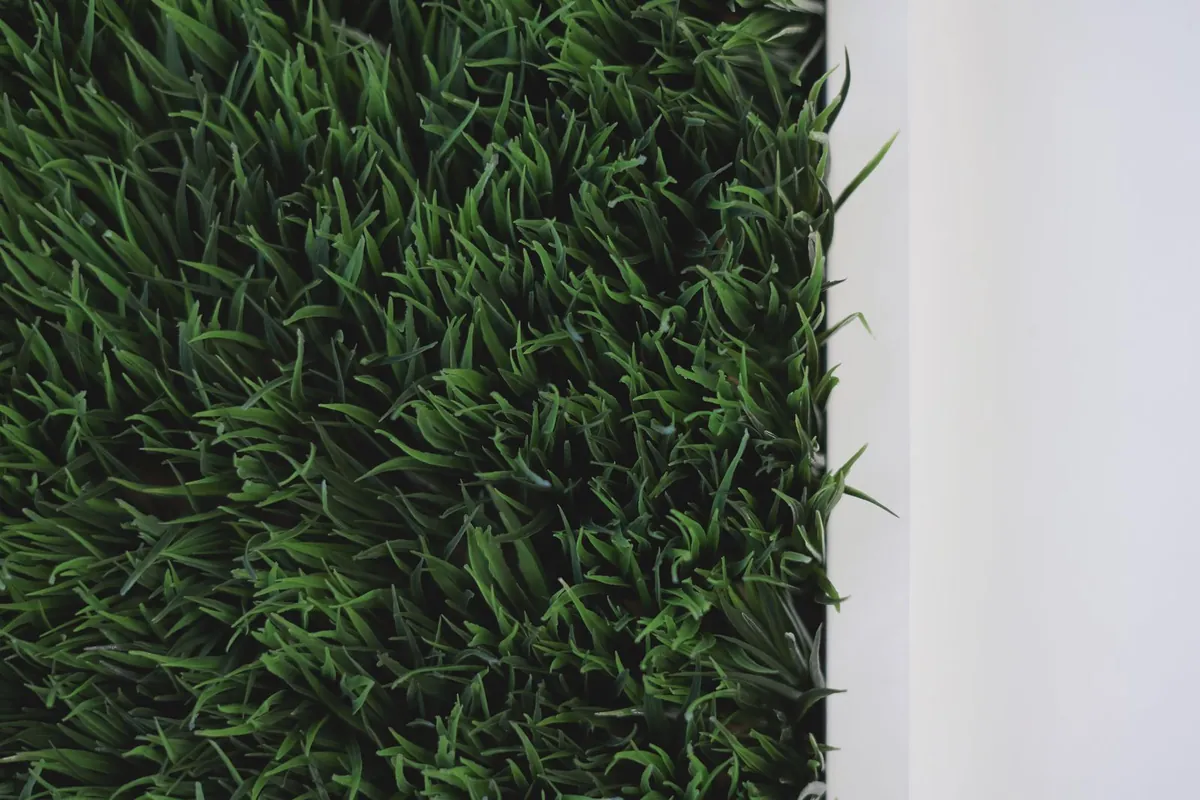
Sample squares still earn their place. Touch, colour and pile feel are legitimate checks, and a swatch that disappoints by hand will disappoint on the ground. But a small square cannot show how a roll ages, drains or survives a wet winter — those answers live in the lines below.
Backing Is the Line That Sets Lifespan
Every tufted roll starts with a primary backing, a woven or nonwoven cloth — usually polypropylene — through which needles punch the yarn in rows. A secondary coating then locks the tufts from below, adds weight so the carpet lies flat, and carries the drainage holes.
Coatings split into two mainstream chemistries. Latex is the traditional option: cheaper and flexible, but susceptible to extremely wet conditions, where tuft lock can fall and fibers can come out after a number of years. Polyurethane is not affected by wet conditions, resists tearing, and keeps fibers anchored through soaked seasons, which is why it dominates sports pitches and coastal work.
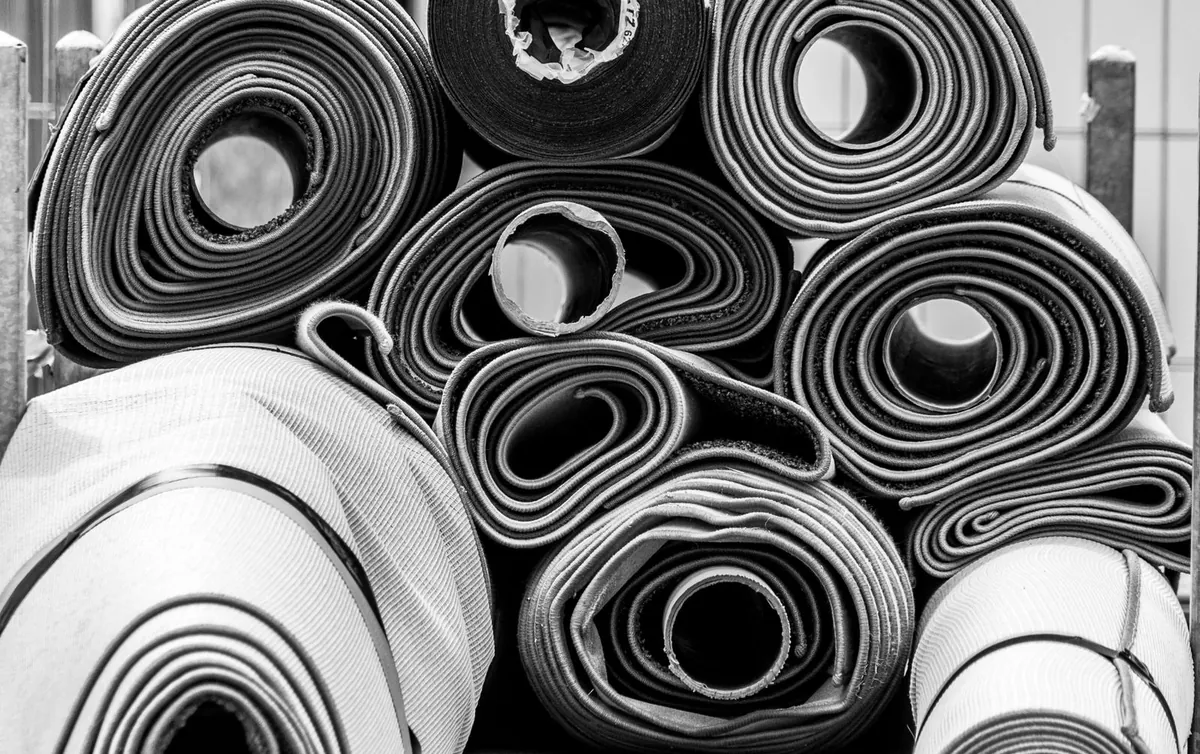
On our line the sequence is fixed. Yarn is tufted through the primary cloth, the coating goes on wet, curing ovens set it, and the perforating stage cuts the drainage holes before rolling. We run both PP+Net and PU systems across our roll range, with backing composition inside our customization scope. The right answer depends on the site, not on a price list.
Low-quality coatings fail in predictable ways: fibers shed, layers separate, and the carpet thins where traffic concentrates. Manufacturers who cut the coating content to save cost export that problem to the buyer. The failures rarely show in the first season, which is exactly why the backing line is where a cheap roll hides its price.
| Spec line | PP+Net system | PU-coated system |
|---|---|---|
| Secondary build | PP cloth with a reinforcing net layer | PP cloth under a polyurethane coat |
| Water behavior | Drains through punched holes; coat holds up in normal wet cycles | Non-absorbent coat; bond holds through soaked seasons |
| Wet-season tuft lock | Absorbs water; the cost trade-off versus PU | Non-absorbent coat; bond holds through soaked seasons |
| Weight and handling | Standard weight, standard stiffness | A little lighter and more flexible |
| Typical fit | Temperate residential landscapes, standard drainage | Sports use, pets, coastal and high-rain sites |
Neither system changes how the roll looks on delivery day. The gap opens over seasons of rain, traffic and cleaning, and it cannot be closed after installation. That is why the backing line deserves the same attention as the pile height above it.
Drainage Holes Only Work Over a Working Base
Almost every landscape roll leaves the factory with holes punched through the backing at regular spacing. Water that clears those holes is only halfway out — it still needs a base that carries it away. Specifying a turf system is about the whole water path, not the last centimeter of it.
Three drainage layouts exist in the market. Hole-punched backing is the residential standard: small holes at fixed spacing, suited to gardens and parks. Flow-through designs drain across the whole surface and suit pet areas, where urine needs a fast exit. Non-perforated sheet is reserved for putting greens and bocce courts, where a stable, hole-free plane matters more than throughput.
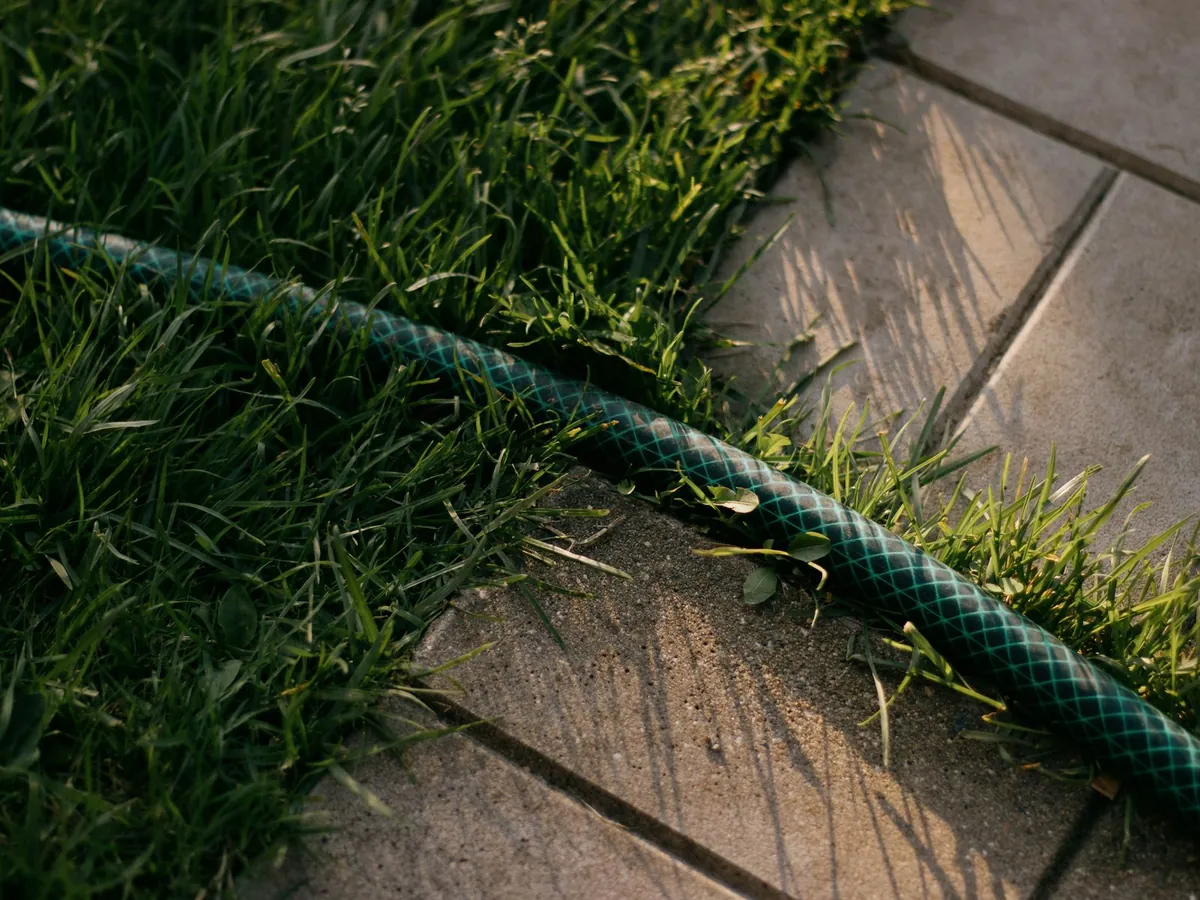
Then the holes meet the base. A compacted aggregate base with a slight fall moves water toward an edge or a drain; a roll laid flat over saturated clay traps whatever gets through. Matching the backing layout to the base build is a site decision, and no product upgrade can replace it.
Pets sharpen the stakes. Urine that drains slowly sits under the carpet and feeds odor; a flow-through layout over a free-draining base lets a hose rinse carry it away. Our artificial grass for dogs guide pairs the drainage routine with the backing choice.
Reading Pile, Density and Denier as One System
Pile height is the fiber length above the backing, and taller is not automatically better. Around 20 to 30 millimeters suits putting-style surfaces and balconies. Anything from 30 to 37 millimeters covers most residential lawns, while piles above 40 millimeters trade wear for a lush, decorative look.
Density and stitch rate describe how tightly that yarn is packed: stitches per meter along each row, gauge between rows, and tufts per square meter as the combined result. Face weight adds the yarn mass, typically from around 1,500 grams per square meter at entry level to 2,800 and beyond at the premium end.
Denier, or Dtex, rates the thickness of each fiber — higher numbers mean heavier, more durable blades, and residential products commonly sit between 10,000 and 16,000. The exact value for any roll we build is available on request, because yarn thickness is one of the parameters set per specification.
Specifying turf is about the combination, never one line alone. A 40-millimeter pile at a low face weight is sparser per blade than a 30-millimeter lawn at the same weight. The roll that feels densest in the hand is not always the one that wears longest. Read the numbers together, then match them to the traffic the surface will actually take.
Those lines become concrete the moment two products compete. Put the sheets side by side and every weakness in one of them shows.
Chose Turf on Colour and Regretted It?
Backing, pile and drainage decide how long it lasts, not the shade. We build to spec. We quote off our own line, typically 30–50% under market for matched specifications.
How to Compare Two Turf Data Sheets
Line the sheets up and compare one line at a time, never the headline price. Hold pile height, face weight and gauge equal first, then read the lines that differ. Those differences are the real quote.
Watch for what is missing as much as what is printed. A sheet with no denier, no stitch rate and no drainage figure is not a specification — it is a photograph. Ask each supplier to state the value or confirm it in writing before you commit.
Convert claims into checks wherever possible. Bend a swatch to feel the backing’s stiffness, pour a cup of water through it and time how long the exit takes, and weigh a cut square in your hand. Two minutes with water and a scale settles arguments that adjectives cannot.
When the shortlist is down to two, order swatches of both and run the same checks on each. Our free samples page explains how the swatch loop works for wholesale buyers.
Specifying Turf Is About Matching the Site
Pull the lines together and the decision becomes a site brief. Rainfall and drainage design set the backing system, foot traffic sets density and pile, and climate sets both the yarn and the coating. Appearance comes last, not first.
Roll width is the practical last line of that brief. Wide rolls leave fewer seams across big open areas, while narrower widths suit small or awkward spaces and move more easily through tight access. Our residential range runs in standard 2, 4 and 5 meter widths by 25 meters long, with custom sizes on request.
| Roll width | Where it fits | Trade-off |
|---|---|---|
| 2 m × 25 m | Small areas, tight access | Most economical; more seams to join |
| 4 m × 25 m | Standard landscapes, uncertain layouts | Widest supply; covers most installs |
| 5 m × 25 m | Large open areas | Fewest seams; heavier to handle |
| Custom | Irregular, seam-critical layouts | Tailor-made; premium pricing |
Where children play, the same logic extends to padding and impact protection, and our playground guide walks through that side of the specification. The brief stays the same: numbers first, looks last.
Specified this way, the surface you chose for its looks keeps those looks for years. The sample got you interested; the specification is what you actually bought.
Frequently Asked Questions
What is the difference between PP+Net and PU backing?
PP+Net pairs a polypropylene cloth with a reinforcing net; PU adds a polyurethane secondary coat. PU does not absorb water and resists tearing, so it suits wet, hard-used sites, while PP+Net stays the economical standard for temperate residential work.
Does a higher face weight always mean better turf?
No. Face weight only reads correctly next to pile height: 40 millimeter blades at 1,800 grams per square meter are sparser than 30 millimeter blades at the same weight. Judge density against height and traffic together.
What pile height suits a residential lawn?
For most lawns, 30 to 37 millimeters is the working band: natural looking, comfortable underfoot, and able to hold shape under family traffic. Above 40 millimeters, expect a lush look that needs more brushing to stay upright.
How fast should artificial grass drain?
For landscape use, aim for a permeability figure around 25 inches per hour or better, confirmed for the whole system rather than the sheet alone. The backing holes only finish the job if the base underneath carries water away.
Can I judge turf quality from a small sample?
Partly. A swatch shows colour, pile feel and backing stiffness, but not drainage across a wet winter or fiber retention after seasons of traffic. Use samples to shortlist, then let the specification decide.
Why do two identical-looking rolls perform differently?
Because appearance is set at compounding while performance is set underneath: backing, density and drainage. Colour and softness are easy to copy; the hidden lines are where factories cut cost. That is why the data sheet beats the sample.

 English
  Arabic
  French
  German
  Portuguese
  Russian
  Spanish