
Relyir Grass
Factory-direct artificial grass since 2006 — full customization, samples and fast quotes.
Sports Turf Systems
12 mm textured turf for athletics track runways and field event areas. Factory-direct from Relyir since 2006.
Why Specify Short-Pile Turf for Athletics Facilities
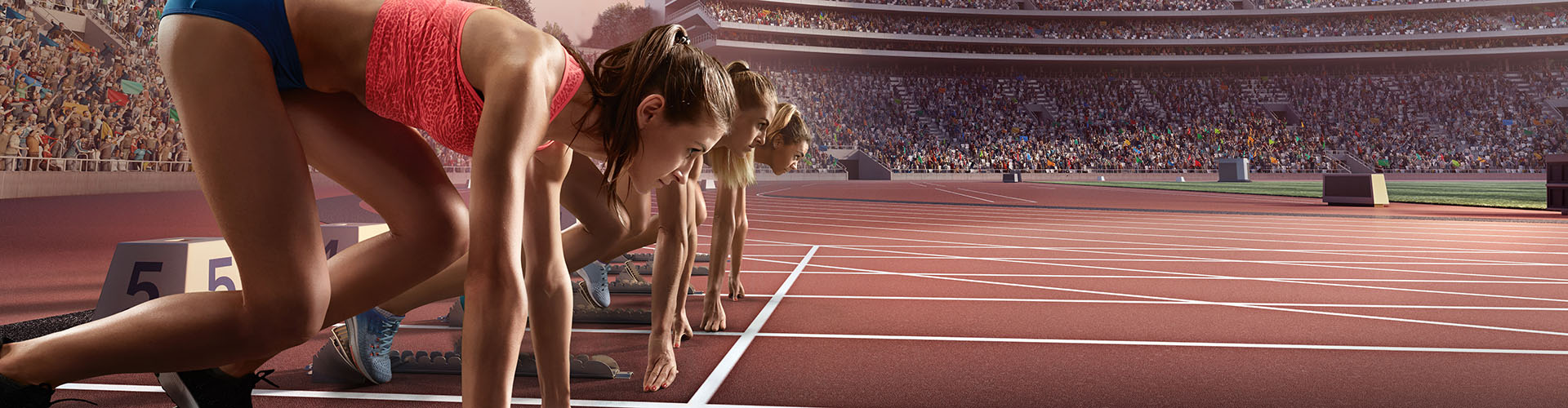
Athletics track facilities need artificial grass in multiple zones — infield areas, warm-up zones, field-event runways and general training space. Each zone has distinct surface requirements, and the turf must integrate seamlessly with the synthetic running track surface.
The 12 mm pile at 52,500 tufts/m² creates a firm, responsive surface for sprint-lane training zones and approach runways. Athletes get the grip and energy return they need without the surface instability that taller pile can introduce.
Javelin, discus and hammer landing sectors endure concentrated impact from implements landing at speed. Dense PE monofilament with three-layer backing resists the puncture and displacement forces these events generate.
Infield turf must align with the track surface level and drainage infrastructure. Perforated backing ensures water moves through the carpet into the facility’s water-management system, preventing pooling in either zone.
Product Range
Athletics surfaces must accept a spike without tearing, cushion a landing without feeling soft, and stay seamless over a full lap.
Every Relyir surface is extruded, tufted and coated in our own plant, so the specification above is a starting point, not a catalogue limit. Send us your sport, level of play and sub-base and we will engineer the pile height, gauge, yarn, backing and infill around it.
Request a QuotePerformance Design
An athletics track facility is a multi-zone environment where each area serves a different function. The running track itself uses a synthetic rubber surface governed by World Athletics certification. But the infield — where throwing events, warm-up drills and often football or multi-sport activities take place — requires artificial grass that complements the track system.
For warm-up areas and sprint-lane training zones, a short, dense pile provides firm, responsive footing that matches the feel athletes expect from track-event surfaces. The high tuft density distributes wear from repeated sprint starts and landing impacts across a dense fiber field.
Where the infield doubles as a football or multi-sport pitch — common at schools and municipal facilities — taller 50 mm pile systems from our sports range may be specified instead. Relyir supplies all zones from one factory with coordinated color matching.
The transition between turf infield and synthetic track surface requires careful seaming and drainage detailing. Our turf backing options — PP + non-woven + PP with optional PU coating — support clean boundary integration with most track-surface systems.
Landing sectors for throwing events need extra infill and reinforced seaming to withstand implement impacts. Zone-specific build-up details are part of our installation guidance package, and we work with your installer through the project.
Factory Direct from Jiangsu
Relyir has manufactured artificial grass in Jiangsu since 2006. Every step — from raw PE pellets to finished rolls — runs on-site, which is how we control quality and hold pricing 30–50% below international equivalents.
All eight production stages are managed in-house, eliminating the quality gaps that arise when compounding, tufting and coating happen in separate facilities. The automated sports turf line, commissioned in 2015, lifted production capacity by 150% and tightened consistency across high-volume orders.
Customization is built into the line: blade density, pile height and fiber colors are adjusted to each project’s specification, with PP + net and PU backing options. The export team has shipped to more than 500 customers across 50+ countries since 2009 and handles all documentation — from commercial invoices to certificates of origin.
Every order is produced to specification — pile height, density, blade shape and color, backing composition and roll dimensions are all configured to your project requirements.

System Build-Up
Athletics track infield turf must integrate with the running-track surface and handle the drainage demands of the full facility. We supply the turf and share build-up guidance for every zone.
The infield base must align with the track surface level and drainage system. Asphalt or engineered aggregate base with perimeter drainage connected to the track’s water-management infrastructure.
A thin pad may be specified for warm-up areas where impact absorption is desired. Throwing zones typically skip the pad for firmer landing-surface behavior.
The short-pile carpet is installed and seamed to the track boundary. The turf-to-track junction is detailed for clean transition and drainage continuity.
Throwing-zone reinforcement, distance markings and line indicators are added per the facility plan. Each zone receives the infill level appropriate to its use.
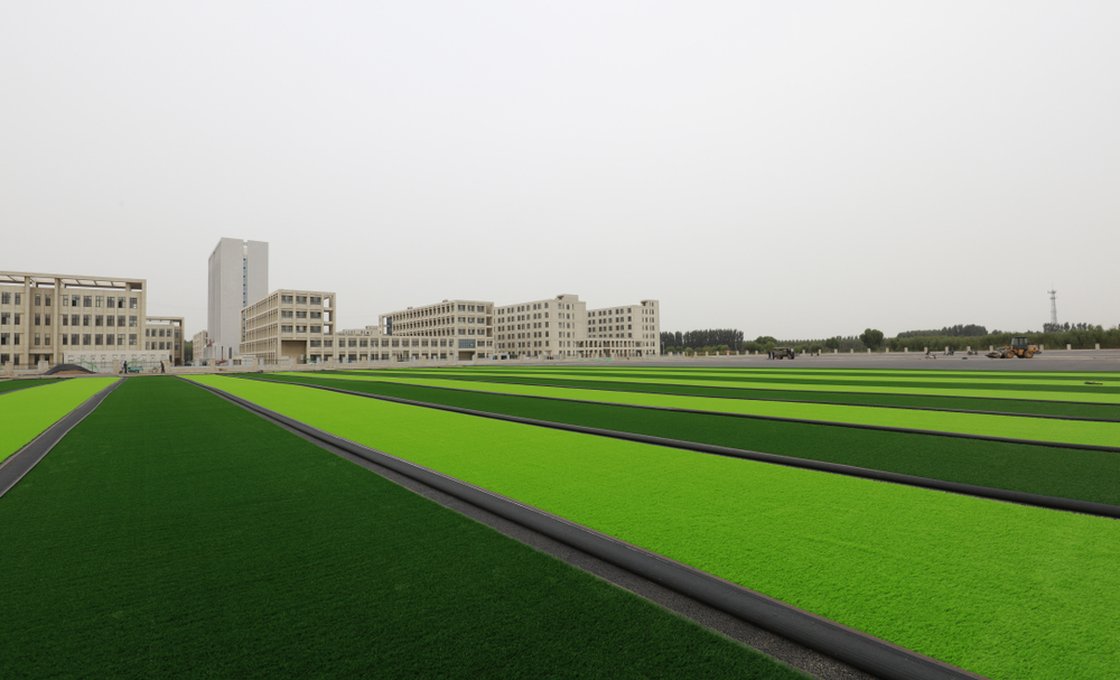
Relyir supplies infield, warm-up and training-zone turf from one factory. That means pile heights, densities and colors are coordinated across zones — and the whole facility ships on one schedule. Perforated backing ensures drainage compatibility with the track system, and UV-stabilized fibers maintain appearance through full sun exposure.
Track-and-field training surfaces are judged on grip and shock absorption at sprinting speeds: athletes plant hard at maximum velocity, so the surface must give stable traction without grabbing, and absorb impact stride after stride. All-weather behavior is the other non-negotiable — training schedules do not stop for rain, and a perforated, free-draining surface keeps lanes usable through wet weeks when cinder or loose surfaces would close.
Yes — synthetic turf is widely used for warm-up zones, run-up strips and training lanes beside the main track, where consistent footing and all-weather availability matter more than competition-track surface speed.
Dense, UV-stabilized construction tolerates repeated spike and shoe traffic across the week. As with all our sports products, pile height and density are produced to your training program rather than one fixed spec.
The infield field area is the primary turf zone — used for throwing events, warm-up drills and sometimes multi-sport activities. Warm-up areas, sprint-lane training zones and approach runways for field events may also use turf. We supply all zones from one factory with coordinated specifications.
Yes. Multi-sport infield use is the most common arrangement at schools and municipal facilities. Where football is a primary use, our 50 mm monofilament systems can be specified instead. We review the facility’s usage plan to recommend the right pile height for each zone.
The turf infield must align with the track surface level and drainage system. Our turf backing options support clean boundary transitions with most synthetic track surfaces. We provide installation guidance for the turf-to-track junction as part of every project package.
Warm-up and sprint-lane areas typically use a short, firm pile for responsive footing that matches the feel athletes expect from track-event surfaces. Our made-to-order running-surface turf serves these zones, specified to your spike and impact requirements.
Landing sectors for throwing events need reinforced turf with extra infill to absorb implement impacts. Dense PE monofilament with three-layer backing resists the puncture and displacement forces that javelins and discuses generate. We provide zone-specific build-up guidance for throwing areas.
Standard rolls are 4 × 25 m or 2 × 25 m with a maximum width of 5 m. Line markings and distance indicators can be tufted on request. Blade density and colors are adjustable to project requirements.
Yes. Samples are free of charge — you only cover the shipping. Standard swatches are 20 × 20 cm and we typically send three to four models per project so you can compare pile heights and colors side by side. Standard samples ship via DHL or FedEx within 4–6 days; custom-matched samples add 10–15 days of production.
Yes. Choose between two options: delivered to your destination port, with export customs clearance in China, international ocean freight and cargo insurance included in one all-inclusive cost; or delivered to a Chinese port if you prefer to work with your own freight forwarder. Other delivery arrangements can be accommodated on request.
Orders range from single rolls for smaller installations to full container loads for large developments. Roll sizes of 2 m, 4 m and 5 m widths (25 m length) cover most layouts, and custom dimensions are produced to order. Volume pricing applies as order size increases.
Send your facility layout and zone requirements. Our export team replies with model recommendations, specification sheets and factory-direct pricing within 12 hours — typically 30–50% below international equivalents..
 English
  Arabic
  French
  German
  Portuguese
  Russian
  Spanish