








Every volleyball court is three surfaces pretending to be one. The jump-landing zones take players off the floor and put them back down hard. The dive lanes in front of and behind the net take landings all match long. The back court takes the lateral stop-and-sprint lanes that punish every change of direction. We manufacture rolls to specification at our own line, so the surface can be written around those load cases instead of picked off a shelf.
Published guidance knows the load exists, but page one splits the answer across a homeowner comparison guide, a construction geometry page and a marketplace listing. None of those pages converts the load map into a roll a purchaser can actually order. That translation is what this page supplies.
Why Volleyball Loads a Court Surface Differently
The load premise is easy to state and easier to get wrong. One suitability guide notes that in volleyball, players frequently jump, dive, and land on the court. A soft surface is essential to reduce the risk of injuries such as sprains and bruises. The same load shows up in the wear record: high-traffic zones near the net and back line thin out over time, whatever the surface is made of.
Each zone asks something different of the surface. Landing zones need cushioning that absorbs the impact a harder floor passes into knees, ankles and hips. Dive lanes need a face that does not abrade, because grass burns are the published penalty for diving on natural grass. Back-court lanes need traction under lateral stops, where a foot that slides is an ankle at risk.
Name the load, name the number, name the acceptance test. That cadence is how we read a court before a roll is specified. It is also why our conclusion departs from the comparison guides: the volleyball court artificial turf specification starts from the load map, not from a product catalogue.
Sand, Grass or Turf: Which Plays True?
Sand, natural grass and artificial turf each show up on court quotes, and the published bands explain why the choice is hard. A proper sand court is a layered build. It takes 18 to 24 inches of excavation, 4 to 6 inches of compacted gravel, and 12 or more inches of coarse washed play sand. That volume is where the money goes, and third-party backyard guides put a sand court at $2,000 to $8,000 once the build is professional rather than DIY. Upkeep never stops either: raking to keep the surface level, weed control, and a few inches of fresh sand added each year as wind, rain and play displace it.
Natural grass publishes its own drawbacks on a harder stand of turf. Mowing to a 2 to 3 inch height, slippery wet surfaces, and impact passed into knees, ankles and hips are the published list. Artificial turf sits in the middle ground per the same published backyard guides, third-party figures and never ours, at a published $3,000 to $7,000 court-sized install. Ongoing upkeep is minimal, though a flooring-cost breakdown stretches the band: turf at $5,000 to $15,000, high-grade synthetic from $10,000 to over $50,000. That specification route is how we treat every order: our sports turf systems are built against the court drawing, not against a fixed catalogue line.
| Surface | Published install cost (third-party) | Maintenance load | All-weather play |
|---|---|---|---|
| Sand | $2,000 to $8,000 per published backyard guides (third-party research) | Raking after heavy play to keep the court level, weed control, plus a few inches of fresh sand added each year as wind, rain and play displace it, with 80 to 150 tons ordered depending on size and depth | Drains almost instantly on a proper gravel base; neither sand nor grass is usable when frozen |
| Natural grass | No published band in the fetched guides; the middle ground sits between grass and sand per the published comparison (third-party) | Mowing to a 2 to 3 inch height, watering and weeding, with spring renovation after a dormant winter; Bermuda grass and tall fescue are the popular sports-turf choices for traffic tolerance | Waterlogged and unplayable for days after heavy rain |
| Artificial turf | $3,000 to $7,000 for a court-sized area per the same published backyard guides (third-party research) | Occasional brushing to keep fibres upright, debris removal, and line repainting as needed; no mowing, no watering, no weeding | Drains efficiently, so play continues through wet weather in all seasons |
| Second published band | Turf at $5,000 to $15,000 versus high-grade synthetic at $10,000 to over $50,000 per a third-party flooring-cost breakdown | High-grade synthetic systems add specification depth, not a lighter routine | All-weather positioning is the published norm for synthetic courts, usable in all weather conditions per the types guide |
Every cost cell above is a third-party published research price from the guides named, never a quotation from us. For a volleyball court artificial turf decision, the two turf bands disagree, and the honest comparison states that divergence rather than averaging it away.
Pile Height and Density for Volleyball Turf
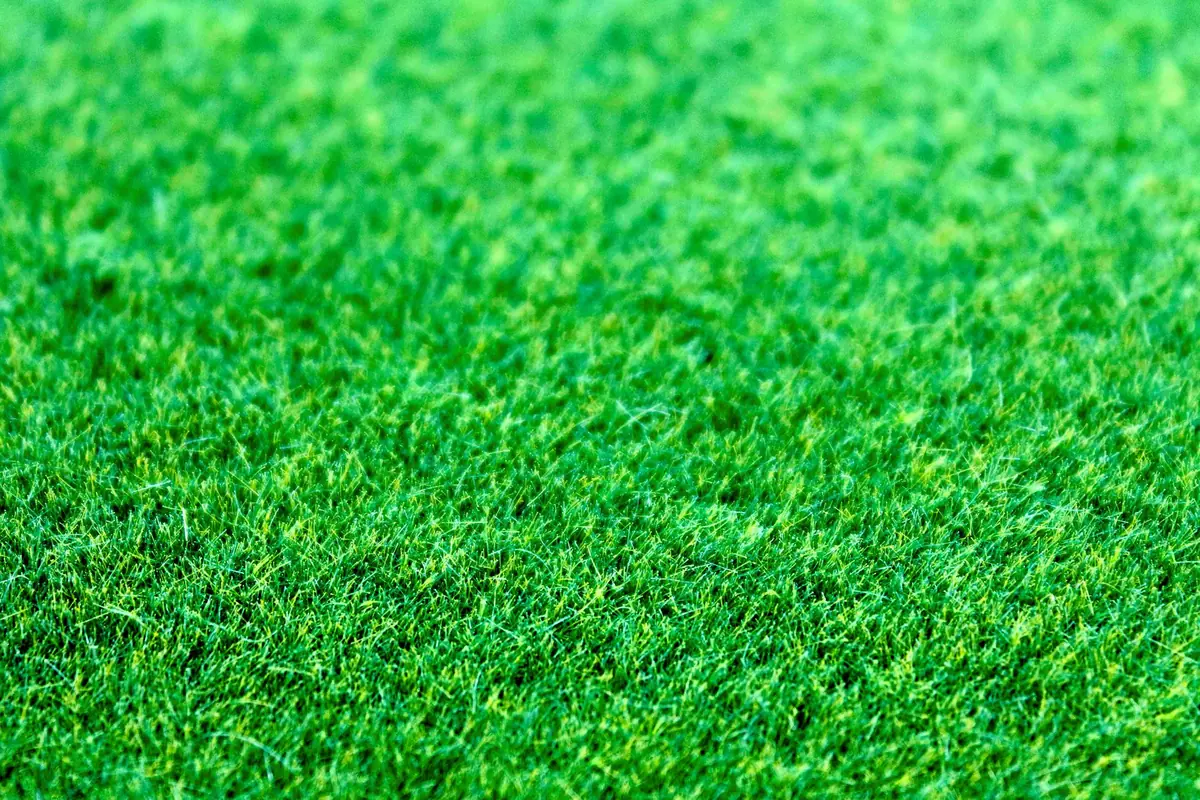
Figure 1 shows the face a volleyball court artificial turf spec is aiming at: short, dense and standing upright after play. One sourcing guide puts volleyball pile height at 12 mm to 20 mm, with density over 16,000 stitches per square meter for ball consistency. Those are the only published pile numbers on the entire first page of results, which is exactly why the band deserves its own section.
Contractor guidance converges on the same direction: a shorter pile and denser turf for ball bounce and traction, with sand infill for stability and to keep fibres from matting. Yarn choice follows published practice too, where UV-stabilized polyethylene is the standard for softness and durability and polypropylene is advised against for sports. Bounce itself is engineered through fibre density and stiffness, so the surface can be tuned toward the response a traditional court gives.
Our conclusion from that record: the pile height band and the density value must be specified together, because density is what keeps bounce co