
Two venues sit in the same winter climate and still end up with opposite surfaces. One lays a synthetic carpet and books concerts on top of it; the other grows grass and plans the calendar around recovery days.
We build artificial grass rolls for sports facilities, so a surface list is a working document for our team rather than trivia. As of the 2026 NFL season the league splits almost exactly in half, and the reasons behind each choice are more practical than the noise suggests.
Which NFL Stadiums Have Artificial Turf in 2026
As of the 2026 NFL season, 16 of the league’s 32 clubs play home games on artificial turf and 16 play on natural grass or a hybrid system. Because the Rams and Chargers share SoFi Stadium and the Giants and Jets share MetLife Stadium, those 32 clubs occupy 30 venues.
Which NFL stadiums have artificial turf comes down to operator choice rather than league rule, and 14 of the 30 venues carry a synthetic surface. FieldTurf remains the most widely used brand across the league, though the supplier mix shifts with every replacement cycle.
Which NFL stadiums have real grass instead is the other half of the list, and two of those fields are hybrids that stitch synthetic fibres into a living rootzone. Hybrids behave like grass for most of the season and resist wear better at the end of it.
The table lists every club, its home venue and the surface in use as of the 2026 season. A note appears only where a documented change exists; a dash means nothing has changed recently enough to record.
| Club | Home venue | Surface | Documented note |
|---|---|---|---|
| Atlanta Falcons | Mercedes-Benz Stadium | Artificial turf | Temporary grass laid for the 2026 World Cup |
| Carolina Panthers | Bank of America Stadium | Artificial turf | — |
| Cincinnati Bengals | Paycor Stadium | Artificial turf | — |
| Dallas Cowboys | AT&T Stadium | Artificial turf | Temporary grass laid for the 2026 World Cup |
| Detroit Lions | Ford Field | Artificial turf | — |
| Houston Texans | NRG Stadium | Artificial turf | Temporary grass laid for the 2026 World Cup |
| Indianapolis Colts | Lucas Oil Stadium | Artificial turf | — |
| Los Angeles Rams | SoFi Stadium | Artificial turf | Shared venue; temporary grass for the 2026 World Cup |
| Los Angeles Chargers | SoFi Stadium | Artificial turf | Shared venue; temporary grass for the 2026 World Cup |
| Minnesota Vikings | U.S. Bank Stadium | Artificial turf | — |
| New England Patriots | Gillette Stadium | Artificial turf | Temporary grass laid for the 2026 World Cup |
| New Orleans Saints | Caesars Superdome | Artificial turf | — |
| New York Giants | MetLife Stadium | Artificial turf | Shared venue; temporary grass for the 2026 World Cup |
| New York Jets | MetLife Stadium | Artificial turf | Shared venue; temporary grass for the 2026 World Cup |
| Seattle Seahawks | Lumen Field | Artificial turf | Temporary grass laid for the 2026 World Cup |
| Tennessee Titans | Nissan Stadium | Artificial turf | — |
| Arizona Cardinals | State Farm Stadium | Natural grass | Retractable field tray grown outdoors |
| Baltimore Ravens | M&T Bank Stadium | Natural grass | — |
| Buffalo Bills | Highmark Stadium | Natural grass | New venue opened 2026; field re-sodded in September |
| Chicago Bears | Soldier Field | Natural grass | — |
| Cleveland Browns | Huntington Bank Field | Natural grass | — |
| Denver Broncos | Empower Field at Mile High | Natural grass | — |
| Jacksonville Jaguars | EverBank Stadium | Natural grass | — |
| Kansas City Chiefs | GEHA Field at Arrowhead Stadium | Natural grass | — |
| Las Vegas Raiders | Allegiant Stadium | Natural grass | Retractable field tray grown outdoors |
| Miami Dolphins | Hard Rock Stadium | Natural grass | — |
| Pittsburgh Steelers | Acrisure Stadium | Natural grass | — |
| San Francisco 49ers | Levi’s Stadium | Natural grass | — |
| Tampa Bay Buccaneers | Raymond James Stadium | Natural grass | — |
| Washington Commanders | Northwest Stadium | Natural grass | — |
| Green Bay Packers | Lambeau Field | Hybrid grass | Bluegrass with stitched synthetic fibres |
| Philadelphia Eagles | Lincoln Financial Field | Hybrid grass | Natural grass with stitched synthetic fibres |
Treat every row as a snapshot rather than a permanent fact. The replacement cycle described later in this piece moves faster than most procurement paperwork, so re-check any venue before you specify against it. Where two published lists disagree, the later and internally consistent one is used here.
Why Neighbouring Venues Pick Opposite Surfaces
Latitude explains less than people expect. Two clubs in the same climate can reach opposite answers because they are solving different problems: one is protecting a living surface, the other is maximising bookable hours.
Upkeep is the first divider. A synthetic surface needs brushing, infill checks and seam inspections. Grass needs water, sunlight, mowing, fertiliser and a grounds crew, and it has to be protected when the building hosts anything else.
Programming is the second. A venue that wants concerts, college fixtures and community sessions in the same week cannot give a living pitch recovery days, so the surface follows the revenue plan.
Which NFL stadiums have grass for sentimental reasons is the wrong question. The pattern tracks roofs, tenancy agreements and event calendars far more closely than tradition does.
How Roof Design Drives the Surface Call
Stadium architecture falls into three structural categories: open-air, retractable roof, and fixed dome or translucent roof. Each one changes what a grass field can survive.
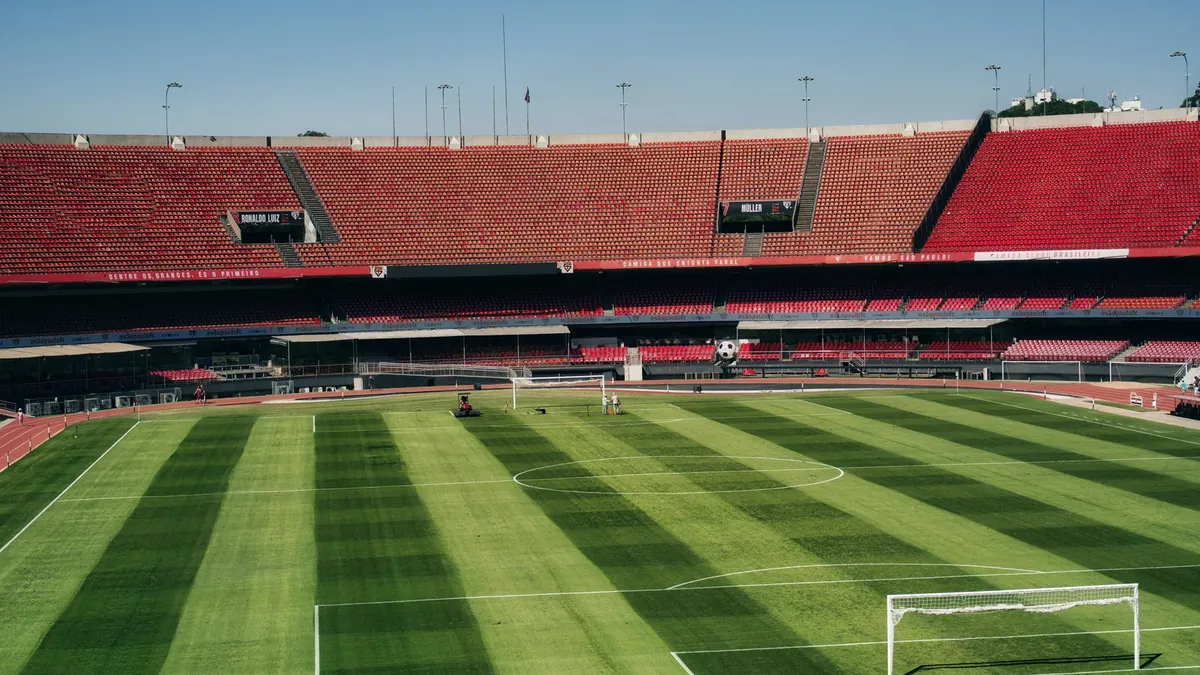
A covered roof removes rain and wind, but it also removes sunlight and airflow, and grass needs both. That is the structural argument for synthetic surfaces in fixed-roof venues.
Engineering has narrowed the gap. Two domed venues, State Farm Stadium and Allegiant Stadium, run retractable natural grass field trays that grow outdoors under sunlight and roll inside the building on match days.
Which NFL stadiums have a roof is therefore a better predictor than latitude. Covered venues cluster on turf, and the exceptions tend to be the ones that invested in moving the field itself.
Cold pulls in the opposite direction. Open-air venues in northern markets deal with dormancy, frost and a short growing season. Industry summaries of the new approval regime accept that the case for synthetic turf stays strongest in colder climates and shared buildings.
Shared Stadiums and a Crowded Calendar
Two venues carry two clubs each. SoFi Stadium hosts the Rams and Chargers, MetLife Stadium hosts the Giants and Jets, and shared tenancy roughly doubles the home dates one surface has to absorb.
A single artificial turf installation carries that load more comfortably than a living pitch, because there is no recovery period between bookings. That is the whole commercial case for turf inside a shared building.
Which NFL stadiums have two tenants also explains why the busiest turf venues sit under roofs. Cover lets operators sell college playoffs, stadium tours and conventions straight through the calendar year.
The 2026 World Cup stress-tested the logic. Eleven NFL markets hosted matches, and seven venues that normally run turf laid temporary natural grass over an artificial turf installation to satisfy the tournament requirement. Those fields came out afterwards and the turf went back in.
At SoFi Stadium the conversion was a logistics project in its own right. The grass was grown roughly 1,600 miles away in Washington. It was installed on a field raised higher than for any NFL game at the venue, and nothing about it was permanent.
What the Injury Evidence Actually Shows
Players have been consistent. Union surveys from 2023 and 2024 put support for natural grass at about 92 percent. A 2026 survey found 93 percent describing artificial surfaces as an impediment to their careers, with 91 percent reporting more fatigue and soreness afterwards.
The league reads the data differently. Its chief medical officer has stated that there are no statistically significant differences in lower-extremity injuries or concussions attributable to surface type. He points instead to workload, prior injury, fatigue, footwear and positional demands.
Independent work points the other way. One review of league injury data from 2012 to 2018 found a 28 percent higher rate of non-contact lower-extremity injuries on artificial turf. The same review put non-contact foot and ankle injuries 69 percent higher.
For a specifier the honest reading is that the argument is unresolved. Surface quality, drainage and upkeep shift outcomes more than the material category does, which is where a buyer can actually add value.
How the League Approves Playing Surfaces
The league and the players’ association run a Joint Surfaces Committee of engineers and experts selected by both sides. Its remit is consistency across both surface types rather than a material mandate.
Two devices do most of the measurement. The Biomechanical Elite Athlete Shoe-Turf Tester, known as BEAST, simulates on-field movements to measure traction. The STRIKE impact tester measures how much energy the ground absorbs when a player lands on it.
On 4 December 2025 the league issued updated field requirements in the Mandatory Practices for NFL Playing Surfaces, alongside a best-practice guide for grounds teams.
Beginning with the 2026 season, clubs choosing a new surface must select from an approved set of metrics and styles covering natural and synthetic options. By the start of the 2028 season every stadium, domestic and international, has to comply.
The requirements reach into everyday grounds work: impact testing, infill depth on synthetic fields, moisture, traction and documented field inspections. Every new artificial turf installation now has to pass that joint testing regime before it can be approved.
Which NFL stadiums have approved surfaces will stop being a question by 2028, because all of them will. The programme still leaves the choice of grass or turf with the club, which is why cold-climate and shared venues keep leaning synthetic.
Constraints That Shape a Surface Changeover
Five constraints decide whether a changeover lands cleanly. Each one is worth fixing in writing before anything is ordered, because none of them can be solved on site.
Roof, Sunlight and Airflow
Covered venues must solve light and air before grass is even a candidate. Where a tray system is not viable, the roof settles the question and the rest of the brief follows from that single fact.
Base and Drainage Under the Carpet
Water has to leave the system. A graded open base with the right fall, working with a perforated backing, is what keeps a surface playable after a storm. Skipping this check is the most common cause of a failed handover.
The Reinstallation Window
An artificial turf installation is typically replaced every two to three years, while a grass field can be re-sodded several times in a season. Plan the closure window against that cadence, not against a single free weekend.
Testing Before Handover
For an artificial turf installation, the tested metrics now include impact absorption, traction and infill depth. Agree the method and the thresholds before the surface is laid, not after the first complaint.
What the Change Does to Programming
Switching material changes what the building can sell. Turf removes recovery days and opens non-football bookings, while grass brings restrictions the events team will feel in the first month.
Reading a Surface Spec Like a Buyer
Most artificial turf installations fail long before the fibres wear out. The base, the drainage and the infill plan decide the outcome, and all three are specification decisions rather than product decisions.
Pile height, yarn density and backing follow from the sports and hours the field must carry. Start the brief with the programme and work backwards to the roll; our team sees most disputes begin where a spec was copied from a different venue.
Roll format is the last variable and the easiest to get wrong. Standard widths of 2 m, 4 m and 5 m at 25 m long let you plan seam placement. Wider rolls across the main playing area cut the seam count on a full-size field. Seams are where a surface opens up first under load, so placement belongs in the brief. The sports surface range shows where each width fits.
Replacing a Worn Stadium Pitch This Cycle?
Another season on a tired surface costs you bookings. We build sports rolls to your pile, density and backing spec, typically 30–50% below market prices on like-for-like specifications.
Checks Before You Commit to a Spec
Four checks catch most of what goes wrong on replacement projects. Run them before the order, in this order.
Match Pile Height to Sport and Hours
A training hall and a stadium bowl place different demands on the same roll. Set pile height against the primary sport and the weekly hours, then confirm secondary markings as inlays rather than paint.
Fix the Infill Plan Before the Carpet Arrives
An artificial turf installation without a defined infill depth cannot be tested against traction and impact thresholds. Fix the material, the depth and the top-up schedule in the same document as the carpet.
Confirm Roll Widths Against the Field Layout
Map seam positions before ordering. Rolls of 2 m, 4 m and 5 m at 25 m long give enough options to keep seams out of high-wear zones. Ordering to your own pile height, density and backing removes them altogether.
Set Acceptance Criteria in Writing
Write down the impact, traction and drainage results the surface has to hit at handover, and who measures them. An artificial turf installation that passes on paper still has to be verified in place, so book the testing slots before the crew leaves site.
Where the Surface Split Goes Next
Which NFL stadiums have already changed tells you where the next replacements land. Buffalo’s new Highmark Stadium opened for the 2026 season with natural grass after decades on turf, and the grounds crew re-sodded the field in September before the first home game.
Compliance will force the rest. Every stadium has to sit on an approved surface by the start of the 2028 season. The next few offseasons will therefore bring replacements regardless of which material each club prefers.
For our team that shows up as briefs that start with a tested performance target and work backwards to the roll. Contractors and distributors who prepare commercial and multi-use surface specifications that way move faster when a tender lands.
The split itself will probably hold near even. Climate, roofs and shared tenancy keep pulling in both directions, and the new rules raise the floor without choosing a side.
Frequently Asked Questions
Which NFL stadiums have artificial turf in 2026?
Fourteen of the league’s 30 stadiums use artificial turf as of the 2026 season. They house 16 clubs because the Rams, Chargers, Giants and Jets share two venues.
How many NFL teams play on real grass?
Sixteen of the 32 clubs play on natural grass or a hybrid system in 2026. Green Bay and Philadelphia use hybrid fields with synthetic fibres stitched into grass.
Do NFL stadiums switch surfaces during a season?
Yes. Seven turf venues laid temporary natural grass for the 2026 World Cup and reinstated turf afterwards. Clubs also re-sod grass fields mid-season when wear demands it.
Why do covered stadiums usually choose turf?
A fixed roof removes sunlight and airflow that grass needs. Turf removes that constraint and lets operators book concerts and other events without protecting a living surface.
Is artificial turf more dangerous than natural grass?
The league cites no statistically significant difference in lower-extremity injuries or concussions by surface type. Independent reviews of league data report higher non-contact injury rates on turf.
How often is an NFL playing surface replaced?
Synthetic surfaces are typically replaced every two to three years. Natural grass can be re-sodded several times in a season, depending on climate and how hard the field is used.
 English
  Arabic
  French
  German
  Portuguese
  Russian
  Spanish