
A roll leaves the line flat and still waves on site. Why artificial grass wrinkles is rarely about the fibre itself; it is about how a rolled carpet behaves once it meets heat, tension and a base it has to copy.
We build rolls for a living, and most wrinkle calls we get trace back to the section under the carpet, not the yarn on top. Reading the cause before the fix saves a reinstall that nobody wants.
Why Artificial Grass Wrinkles After Installation
Wrinkles, ripples and creases are a system symptom. In the artificial turf installations we get called back to, the carpet usually passes the test and something underneath sets the pace.
The backing is a sheet with memory. Once it is wound on a core and shipped, it wants to keep that curl. Heat relaxes it, cold stiffens it, and a base with any wave teaches the surface the same shape. The short answer to why artificial grass wrinkles is roll memory plus a base the turf is forced to copy.
None of that is a fibre fault. It is why artificial grass wrinkles shows up most often in the first warm weeks after handover. The roll finally learns the ground it sits on, and the backing lets go of its travel curl.
Five Causes of Wrinkles in Artificial Turf
Five patterns account for almost every wave we are asked to explain. Most artificial turf installations we supply into follow the same order, so the list maps straight onto a site checklist.
Roll Memory From Storage and Transit
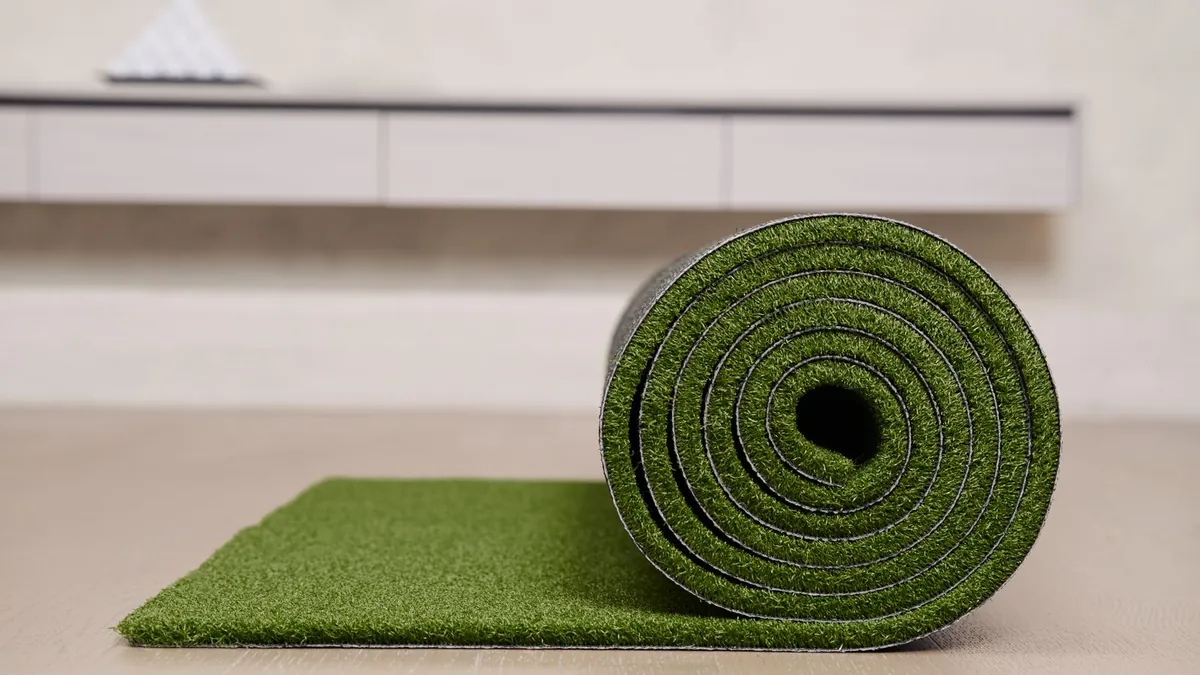
A turf roll is wound tight on a cardboard core and can stay that way for weeks. The backing memorises the curl, and minor creases after unrolling are normal until the sheet relaxes in sunlight.
Thermal Expansion of the Backing
Backing expands slightly under heat and contracts as it cools. A poor artificial turf installation skips the warm-up, so the sheet is fixed while still tight and then ripples once the site warms.
Skipping the Stretch Before Fixing
Turf must be laid under tension, much like carpet. Crews that rush the fix or staple one edge first leave slack in the middle, and that slack reads as a wave the moment foot traffic or heat finds it.
A Base the Turf Copies
The backing takes the shape of whatever sits beneath it. A ridge in the sub-base, a soft spot, or a folded weed membrane all print straight through the pile as a visible line after the lawn is in use.
Loose Perimeter and Weak Ballast
Edges carry the most load, so loose perimeter fixing lets the carpet creep. Without enough ballast weight to hold the backing down, the sheet lifts and wrinkles exactly where the eye lands first.
How the Backing Remembers Its Curl
Understanding why artificial grass wrinkles starts with the backing. PP+Net and PU are the two families we run; PU holds its shape better because the coating locks the sheet flatter during curing and resists curl after laydown.
A roll that has travelled cold arrives stiff. Let it relax in shade-to-sun for a few hours before you cut, and the curl lets go on its own. Pile direction matters just as much: every roll must face the same way or the sheen itself reads as a wave across the area.
Why Do Wrinkles Mean a Costly Reinstall?
Wrinkles force a costly reinstall that wastes finished roll and crew time. Rolls are made to your pile, density and backing spec, factory-direct.
After the carpet is fixed, the base still decides the long run. A well-stretched artificial turf installation resists curl, but only over a base that was checked and approved before the first roll was opened.
A Prevention Checklist for Flat Lawns
This prevention checklist is the practical answer to why artificial grass wrinkles: turn each cause into a check you can enforce on site. Every artificial turf installation benefits from the same six steps, in the same order.
| Cause | What it looks like | Check that prevents it |
|---|---|---|
| Roll memory | Curved creases along the lay direction | Relax the roll in sun before cutting |
| Thermal movement | Ripples that appear on hot afternoons | Warm, stretch and fix in one pass |
| No stretch | Slack dome in the centre | Kick the carpet taut from a fixed edge |
| Base copy | Lines that match a ridge below | Laser-check the base flat and even |
| Loose edge | Wave at the border under load | Fix the perimeter solidly and evenly |
| Weak ballast | Lift where the sheet is light | Agree the ballast weight up front |
Relax the Roll Before You Cut
Unroll every roll and let it lie flat for a few hours before any cut or seam. Cold-backed turf stays curled, so the relax step is what lets the travel shape release instead of locking into the floor.
Stretch Under Tension Like Carpet
Anchor one edge, then work the carpet taut with a stretcher or kicker before fixing. A loose middle is the single most common source of post-install waves, and it is the easiest to avoid.
Keep the Base Flat and Even
The backing copies what is beneath it, so the base has to read flat under a straightedge. Fill soft spots, recompact lifts, and keep the weed membrane smooth before the roll touches the ground.
Fix the Perimeter Solidly
Edges take the most stress, so perimeter fixing has to be solid and even, denser at corners. Loose border fixing is where most ripple complaints start, and it shows within weeks.
Lay Every Roll the Same Way
Mark pile direction on every roll and lay them all one way. Mixed direction throws the sheen out of line, and that line reads as a wave even when the backing is perfectly flat.
Confirm Ballast Before Handover
Ballast weight holds the backing down and limits expansion and contraction. Agree the ballast spec before the roll is laid so the finished lawn stays put through the first hot season.
Roll Spec Choices That Reduce Wrinkles
Roll spec is the lever you control when why artificial grass wrinkles is the worry. Backing, pile and width all change how willing a carpet is to stay flat once it is down.
PU backing resists curl better than the lighter PP+Net family, which suits sites with big temperature swings. Pile height and density set how the surface responds to foot traffic, and a stable backing supports both. Our residential artificial grass and commercial landscape turf pages start from the backing because that is what fights the wave.
Width is the quiet win. Wider rolls need fewer seams, so the surface has fewer lines to wave along. We build 2 m, 4 m and 5 m widths and cut custom roll widths to drop seams entirely on awkward plans. Artificial turf installations over a sound base show fewer waves when the seam count is designed out before the order is placed.
Acceptance Checks Before You Unroll
Acceptance on an artificial turf installation starts before the roll is opened. Run these five checks while the base is still exposed, because every one of them is cheaper to fix than a lifted lawn.
| Control point | What good looks like | Note |
|---|---|---|
| Acclimatisation | Roll relaxed 2-24 h before cut | Longer in cool weather |
| Perimeter fixing | Spaced 150-300 mm, denser at corners | Edge carries the load |
| Base compaction | 95-98% and laser-checked | Flat beats merely firm |
| Ballast | Enough weight to hold backing flat | Agreed before laydown |
| Pile direction | One way across the whole area | Stops sheen waves |
Verify the Backing Has Relaxed
Unroll a sample length and watch the curl for an hour. If the sheet still wants to re-roll, give it more relax time; cutting a curled backing locks the wave into the finished floor.
Walk the Base for Soft Spots
Walk the whole base in boots and flag anything that gives. Soft pockets settle into dips once the lawn is loaded, and those dips become the first wrinkles a client notices.
Check Pile Direction Across Rolls
Match the pile arrow on every roll before it goes down. Mixed direction is a sheen fault that reads exactly like a wave, and it cannot be stretched out once the seams are closed.
Confirm Perimeter Fixing Points
Mark where the perimeter will be fixed and how dense. Edges fail first, so a written fixing plan stops the job being rushed at the border when the crew is tired.
Agree the Ballast Weight Up Front
Ballast is what holds the backing down through heat cycles. Agree the weight and the spread method before the roll is laid, so handover is not the first time the question is asked.
The same checks scale to bigger areas, so the spec carries across to sports turf and putting green turf without change. Wrinkles are cheap to prevent and costly to fix, which is why the base gets checked before the carpet moves.
Frequently Asked Questions
Why does artificial grass wrinkle after installation?
Wrinkles come from roll memory, heat expansion and loose fixing rather than the fibre. Let the roll relax, stretch it under tension and ballast the backing to keep it flat.
How long should artificial turf relax before installation?
Most guides cite a 2-24 hour window, longer in cool weather. Unroll the roll and let it lie flat in shade-to-sun before you cut and seam.
Can wrinkles come out on their own?
Minor ripples from storage relax in sun once the roll is unrolled. Fixed waves need the carpet released, stretched and re-secured, so catch them early.
Does backing type affect wrinkling?
Yes. PU backing holds its shape better than PP+Net because the coating locks the sheet flatter during curing. Pick the backing against the site, not the price.
How do I stop edges from rippling?
Fix the perimeter solidly and keep the ballast even. Loose edges are the most common failure point, so agree fixing spacing and weight before the roll is laid.
What roll width reduces seams and waves?
Wider rolls need fewer seams, so the surface has fewer lines to wave along. We build 2 m, 4 m and 5 m widths and cut custom widths to drop seams entirely.

 English
  Arabic
  French
  German
  Portuguese
  Russian
  Spanish