
The worst patch in most backyards is the one the family wants most: the strip under the old tree, beside the back door, where the hose line never quite reaches. Grass there gets the least light and the most feet.
We build artificial grass rolls on our own line and have shipped them abroad since 2009. That is why we read a backyard brief as a specification problem, not a shopping trip. Artificial turf for backyard spaces earns its place when the numbers behind shade, drainage and wear are settled first.
Why Artificial Turf for Backyard Use Wins
A lawn is the most water-hungry thing most households own. Federal figures put outdoor water use above 30 percent of household use on average, reaching 60 percent in arid regions. Up to 50 percent of it never reaches a root.
That water leaves through wind, evaporation and runoff. A synthetic surface needs no irrigation to stay green, so the saving is structural. See the federal figures on household water use for the underlying numbers.
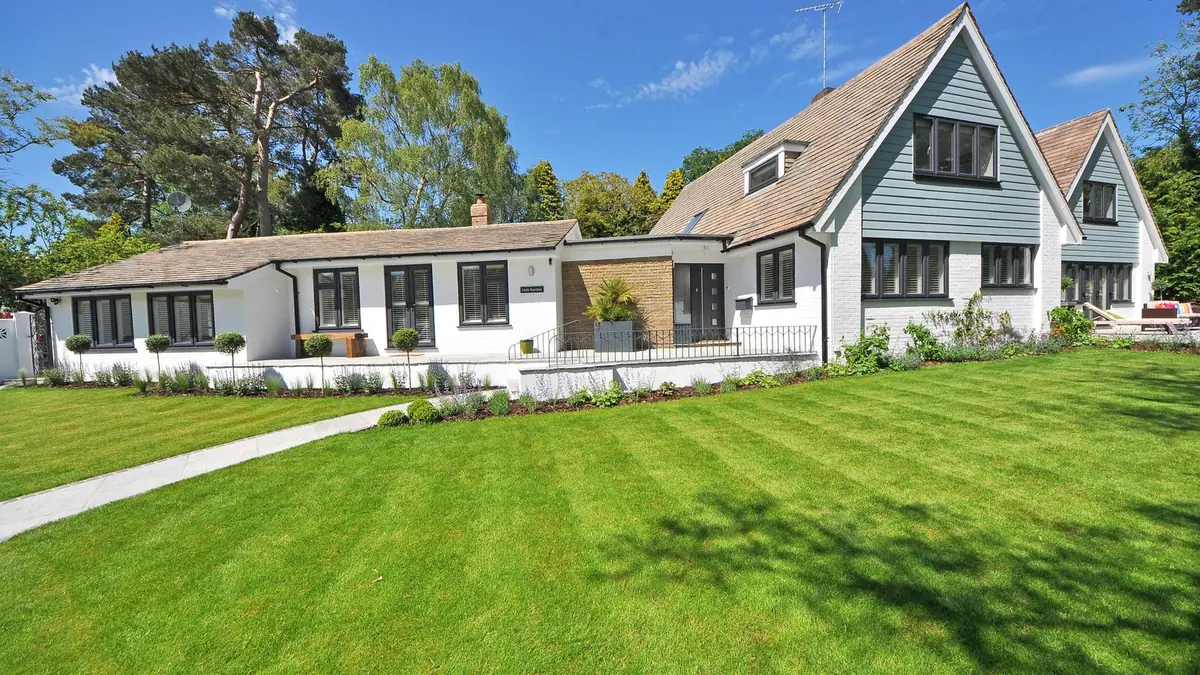
Mowing, feeding and patch repair leave the calendar too, replaced by a short routine: brush the pile, clear debris and rinse the busiest zones. Our residential artificial grass range is built to a stated pile height, face weight and backing.
Where Shade Kills Backyard Grass First
Shade is the argument that ends most lawn debates, because it is measurable. Extension guidance is blunt: if an area gets less than 4 hours of sunlight a day, it is too shady for grass to grow well.
Even the toughest shade blends want more. Illinois Extension recommends at least 2 hours of direct sun daily for them, while noting that this minimum does not produce a quality stand. Tall fescue still wants about 5 hours.
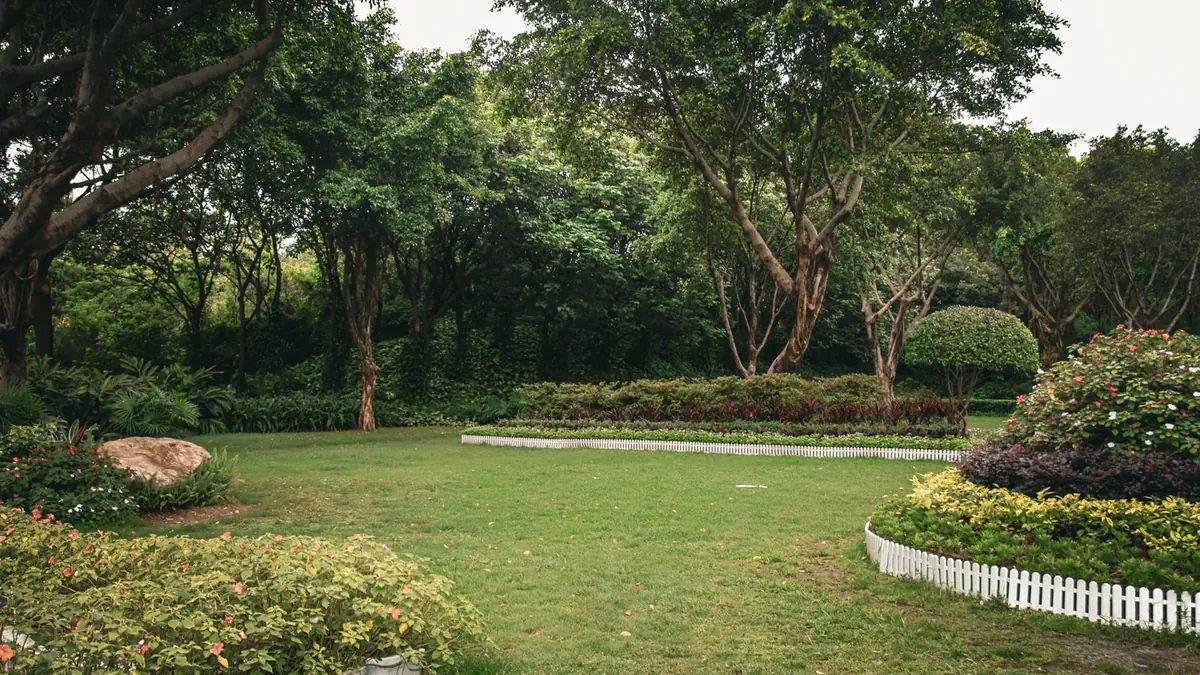
Under a canopy it gets worse. Roots compete for water, humidity lifts disease pressure, and extension guidance records a steady decline in density over a period of years. Artificial turf for backyard shade removes the light variable: the surface looks the same in October as in April.
Drainage Decides Whether a Backyard Works
Water that cannot leave is the failure that costs the most to fix. Artificial turf installations move water vertically, through the backing and into the base, so the backing rate and the base design have to be planned as one system.
Perforated backings with engineered hole patterns typically rate 30 to 100 inches per hour over a permeable base. Residential bases are commonly built 3 to 6 inches deep in open-graded aggregate. A surface grade of 1 to 2 percent then carries water to a drain, a swale or daylight.
Match the rate to the zone rather than to the whole garden. Landscaping without pets targets 30 to 50 inches per hour, and homes with dogs and frequent rinsing target 250 inches per hour or higher. The same reasoning drives how wet zones are detailed around pools.
Tired of Re-Seeding the Same Shade Patch?
The same bare patch returns every spring. We match pile height, backing and roll width to your brief, then send 20 cm samples to check in daylight.
Pets and Kids Change the Specification
Artificial turf installations in family yards carry a very different load from a front lawn. Dogs run the same line along a fence until it shines, and children land on the same square metre under a swing.
Two parameters absorb that load. A fully permeable backing keeps liquid moving instead of pooling between holes. A fibre dense enough to spring back stops the worn line from becoming permanent.
Texture matters as much as toughness. A polyethylene monofilament with a polypropylene thatch stays soft under bare feet, and the material carries no weedkiller, pesticide or fertiliser.
Artificial turf for backyard play areas handles that combination well, provided the backing rate and the fibre mass were chosen for the traffic rather than for the showroom.
How Pile Height and Face Weight Read
Pile height is the number everyone asks for and the one that means least alone. Published buying guidance puts 20 to 30 mm on putting greens and balconies, and 30 to 37 mm as the sweet spot for most residential lawns. Above 37 mm suits decorative lawns.
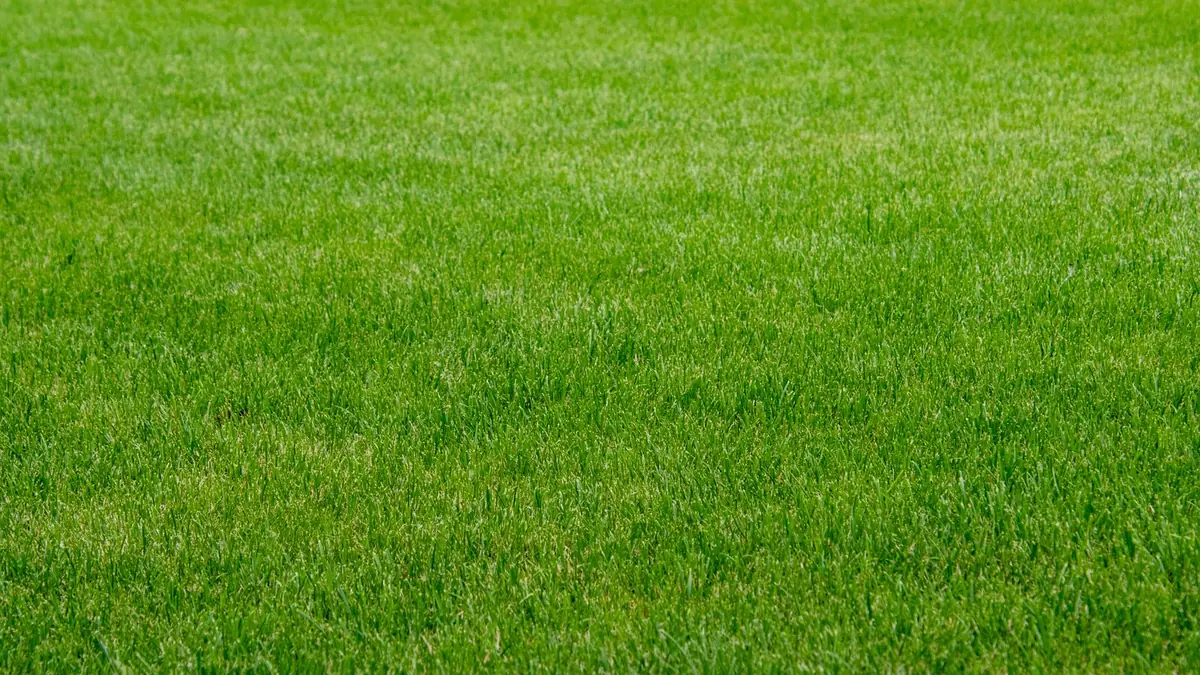
Face weight decides whether the pile still stands in year five. Entry-level products run around 1,500 to 2,000 gsm, mid-range residential sits at 2,000 to 2,800 gsm, and 2,800 gsm and above is premium.
Read the two together, because a tall pile at a low face weight spreads the same fibre over more length and mats faster. Artificial turf installations that skip this comparison look identical in month one and very different in year three. Blade profile does the rest: blade shape and how it recovers matters more than height once traffic arrives.
Cutting Around Beds, Posts and Edges
Offcuts are where budgets quietly leak. Standard rolls come 2 m, 4 m and 5 m wide, each 25 m long. A 4 m roll covers 100 square metres, a 2 m roll 50 square metres, and a 5 m roll 125 square metres.
Width choice is a seam calculation, not a price calculation. A 5 m roll crosses a wide lawn with almost no joints. A 2 m roll suits narrow side returns and small courtyards. Check the roll widths and lengths against your plan before you commit.
Edges decide whether the job looks finished. Artificial turf installations are trimmed from the backing side, so a clean border starts with a marked cut line. Beds, posts and steps are cut from one piece where geometry allows, because a joint on a corner opens every season.
Reading a Backyard Turf Spec Sheet
A specification sheet should let two quotes be compared line by line. These are the rows worth insisting on, with the ranges that residential work usually lands in.
| Backyard zone | Pile height | Drainage target | Roll width | What the row is really deciding |
|---|---|---|---|---|
| Family lawn and play area | 30 to 40 mm | 30 to 50 in/hr | 4 m | The default: enough pile to read as lawn, and enough fibre to recover from daily traffic. |
| Dog run and pet zone | 30 to 40 mm | 250 in/hr or higher | 2 m | Rinse cycles, not rainfall, set this target, so the backing must flush fast and evenly. |
| Shaded strip under trees | 30 to 40 mm | 30 to 50 in/hr | 2 m | Dew and leaf litter linger without sun, and a narrow width trims easily around roots. |
| Wide open lawn, fewest seams | 30 to 40 mm | 30 to 50 in/hr | 5 m | Seam count and offcut waste both fall, but the roll is heavier to handle on site. |
Artificial turf for backyard projects compares easily once every quote fills these rows. Face weight deserves its own line: residential guidance points to 1.5 kg per square metre and above, with a backing clearing 30 litres per square metre per hour. Face weight explained goes deeper into why it predicts service life better than pile height.
Three Mistakes That Ruin Backyard Turf
Three decisions sink most artificial turf installations long before a roll is opened.
Buying Pile Height Instead of Face Weight
A long pile looks generous in a showroom and flat within two summers if the fibre mass is thin. Below roughly 1.3 kg per square metre, matting and discolouration arrive quickly in hot climates and no amount of brushing reverses it.
Letting the Base Absorb the Savings
Drainage is a system result, and the slowest layer sets the ceiling. A high-rate backing over a thin or fines-heavy base still ponds, and lifting the surface to regrade costs more than building the base correctly the first time.
Approving Colour Under Indoor Lighting
Showroom lighting flatters every sample and hides sheen. Carry the piece outside at midday, because the same roll reads olive in the shade and bright against full sun.
A Short Checklist Before You Buy
Four checks catch nearly everything that goes wrong later, and artificial turf for backyard gardens fails at the edges first.
Zone the Garden by Use, Not by Area
Mark the dog line, the play square and the shade strip separately. Each one wants a different drainage target, and treating the whole yard as one specification is what produces a wet corner that never dries.
Fix the Drainage Path Before the Surface
Confirm where water leaves: drain, swale or daylight. Then confirm depth and grade, because artificial turf installations only perform as well as the base beneath them.
Order Enough From One Batch
Dye lots vary slightly, and a top-up roll from a later run can read as a different green. Measure the offcut allowance at the planning stage rather than after the last bed is cut.
Hold a Sample Back for Handover
Keep one labelled square from the delivered batch. It is the reference for any future claim about colour, pile or backing, and it costs nothing at the time of ordering.
Frequently Asked Questions
Is artificial turf safe for dogs in a backyard?
Yes, when the drainage rate matches the load. Homes with dogs and high rinse cycles target 250 inches per hour or higher, with a fully permeable backing and a routine rinse.
How much sun does natural grass need to survive?
Most turf needs far more than a shaded yard gives. Less than 4 hours of sunlight a day is too shady for grass, and tall fescue still wants about 5 hours.
Does artificial turf drain well enough for heavy rain?
Yes, over the right base. Perforated backings typically rate 30 to 100 inches per hour, and the surface grade should sit at 1 to 2 percent.
How long does backyard artificial turf last?
Commercial turf carries a service life of up to 10 to 15 years. Where a lawn lands inside that band depends on traffic, shade and how well the base drains.
How hot does backyard turf get in summer?
Hotter than living plants, because it cannot transpire. University readings found surfaces more than 65 F above plants in Palm Springs, with a peak of 173 F.
How do I check a roll before committing to a lawn?
Request free 20 by 20 cm samples, usually three to four pieces. They travel by courier in 4 to 6 days, and you should view them outdoors in full sun.
 English
  Arabic
  French
  German
  Portuguese
  Russian
  Spanish