








A tennis court earns its keep by staying open, and a surface that shuts down after every shower quietly drains the bookings a club depends on. Rain, wear and recovery time are the three costs a facility manager feels first.
We build artificial grass rolls on our own line, so the case for synthetic tennis turf starts with the hours a court can actually sell. The points below show why artificial grass for tennis courts keeps appearing in club and school upgrade plans.
Why Tennis Clubs Are Reconsidering Their Surface
A natural court is a living plant system, and the hidden cost of that is recovery time between matches. Published guidance puts natural grass out of action after roughly 2 to 4 mm of rainfall, while a synthetic surface recovers almost at once and keeps the schedule intact.
The reasons clubs switch rarely come from one cause. Once a court is used hard, running costs, chemical handling, multi-sport pressure and player safety all push in the same direction. Artificial grass for tennis courts answers each of those pressures without a second site.
For a school or municipal facility, the gain is steadier rental income and fewer weeks lost to a muddy baseline. That is why more operators now treat the surface as infrastructure rather than decoration.
All-Weather Play Through Rain and Heat
Water is the first exam a surface faces, and it is here that artificial grass for tennis courts starts to earn its keep. Rain drains through a perforated backing into an open-graded base rather than pooling on top, so a shower no longer writes off the afternoon session.
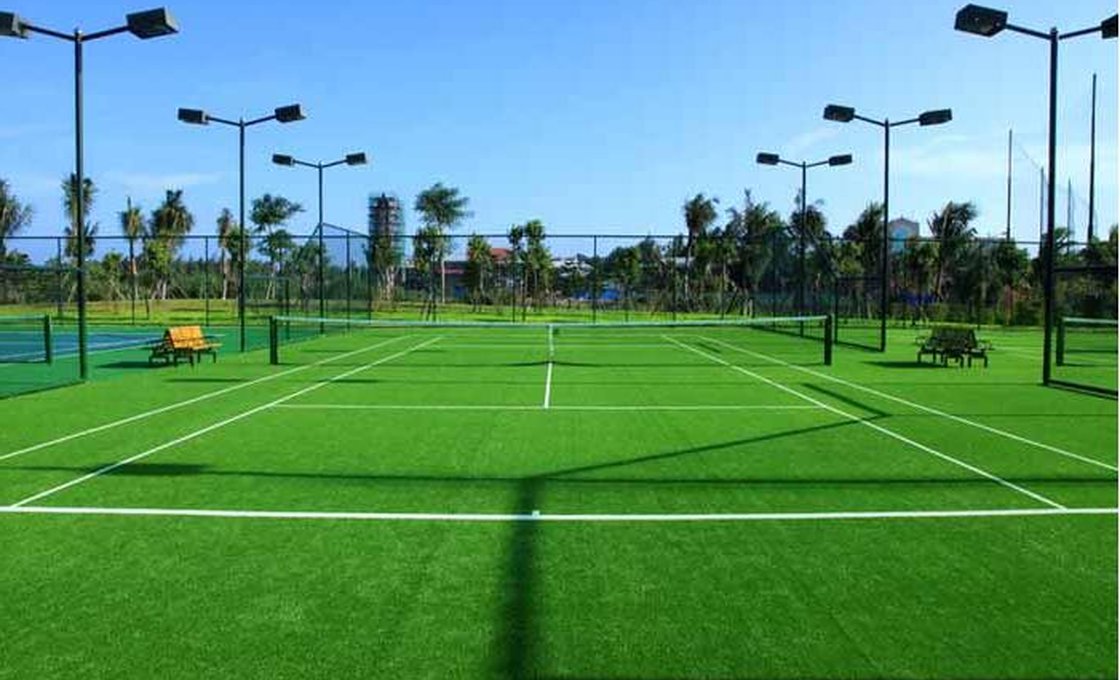
Rain and drought stop being schedule risks because the carpet does not turn to mud or bake hard. Heat is the one exception: a dark synthetic surface runs warmer than grass in direct sun, so clubs shift the heaviest sessions to cooler hours and rinse the pile.
That trade is honest. You give up some midday cool and you get back every rainy afternoon that a grass court would have lost.
Consistent Ball Bounce and True Court Lines
Natural grass changes through a season. Heavy use thins the landing zones, rain turns low spots soft, and a ball that behaved in September skids oddly by November. A synthetic surface holds one profile week after week, which is why sports artificial grass systems are built to a declared pile, density and backing spec.