
Does artificial turf drain is the first question every buyer asks before a lawn is signed off, because one stubborn puddle can fail the whole handover. The direct answer is yes: quality turf with a perforated backing sheds water fast. The trouble almost always lives in the base or the slope, not in the grass itself.
We have watched enough handovers stall on standing water to know the turf is rarely the culprit; the backing lets water through, and the ground beneath decides the result. Water drops onto the blades, slips through the perforations, and keeps moving only if the layer below is open and sloped. A single credible feature carries the whole system: the holes punched across every backing, evenly spaced so no spot becomes a birdbath. That even spacing is what keeps a downpour from pooling in one corner of the lawn.
Does Artificial Turf Actually Drain
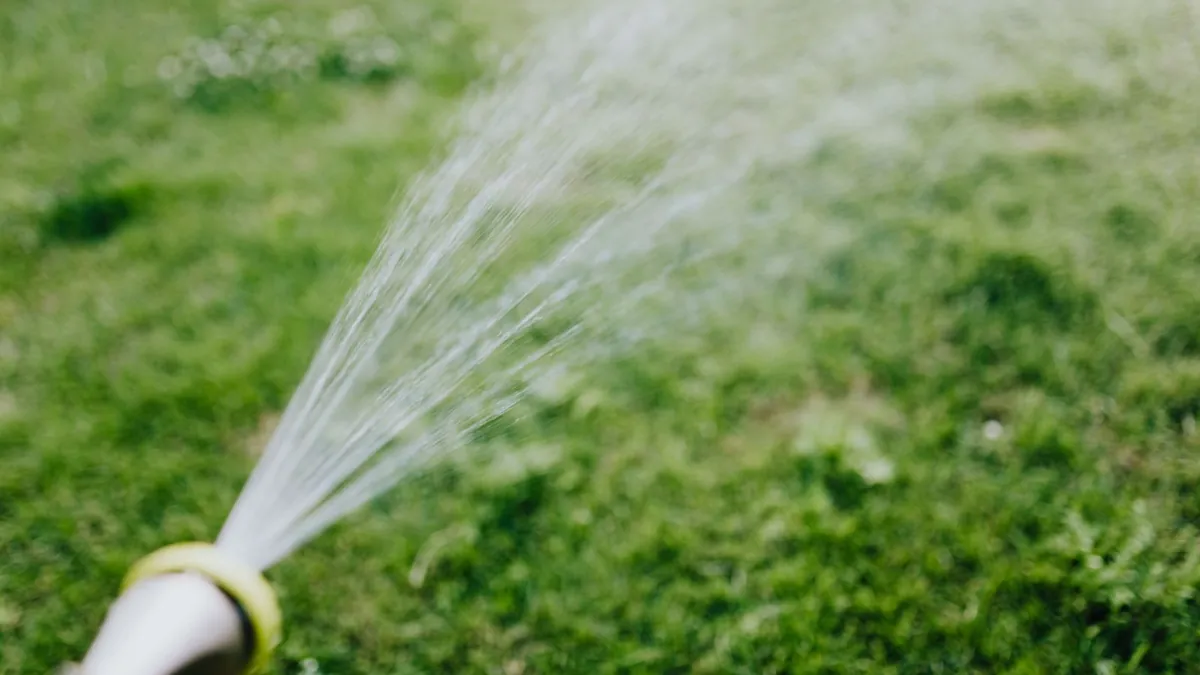
So does artificial turf drain? Yes, when the roll carries a perforated backing and sits over an open, sloped base. Rain lands on the fibres and finds its way down through the holes instead of pooling on top of the surface.
Our team has walked sites where a car park beside the turf flooded while the grass stayed dry, because the lawn was never the weak point. The backing did its job; the slab under it set the pace, and a flat grade let water sit at the door. Spec the fall before you lay, not after the first storm arrives.
For the base design that makes this work, our artificial grass drainage bases guide compares stone and slope options in detail.
How Water Passes Through Turf
Water moves in three layers. It beads off the blades, drops through the perforated backing, then spreads into the open base below and runs to soil or a drain at the edge.
Think of the backing as a sieve and the base as a sponge: the sieve catches nothing, while the sponge sets how fast the water finally leaves. Every artificial turf installation lives or dies on that third layer, not the first. The backing is rarely the bottleneck; the sub-grade and the outlets decide the timing.
The wider hydrology of how water enters ground is covered on infiltration at Wikipedia. For the terms used here, our artificial grass glossary defines backing, infill, and sub-base. Our installation walkthrough shows where drainage fits the sequence.
What Actually Sets the Drainage Rate
Three things decide how fast a lawn dries. Miss one and water lingers; get all three right and the surface clears within minutes of normal rain. Our view is blunt: drainage failure is almost never the grass. Each factor is cheap to get right and costly to miss.
| Factor | What it does | Trade note |
|---|---|---|
| Perforated backing | Lets surface water fall through the roll | Even hole spacing prevents local puddles |
| Free-draining infill | Keeps fibres upright without clogging holes | Avoid dusty fills that seal the pores |
| Open, sloped base | Stores and conveys water to soil or a drain | Compact in thin lifts; hold a consistent fall |
It is a thin base, a flat grade, or a clogging infill — all fixable before the roll ships. Choose the fill with our best infill options guide, and read the base walkthrough in the drainage bases guide above.
Test Drainage Before You Buy
You do not need to trust a brochure. Does artificial turf drain water the way the sample shows, or the way a photo implies? A 20 by 20 cm sample answers that in a single afternoon, with no container committed.
Before any artificial turf installation is quoted, run the sample through four checks. Our free 20 by 20 cm samples ship in three or four variants, and trade buyers usually order a set per project family to compare side by side. A sample shows the real backing, not the promise printed on a brochure.
Pour water on the face and time the pass-through. Flip it and count the holes. Hold it to the light for thin spots. Wipe it with a damp cloth and smell for trapped odour that signals a sealed backing. Samples reach you by courier in four to six days, so the check costs days, not weeks.
Fix Poor Drainage After Laying
Sometimes the roll is down and the water is not leaving. The fix depends on where it sits. A small puddle means a local dip; widespread slow drain means the base is choked with fine material.
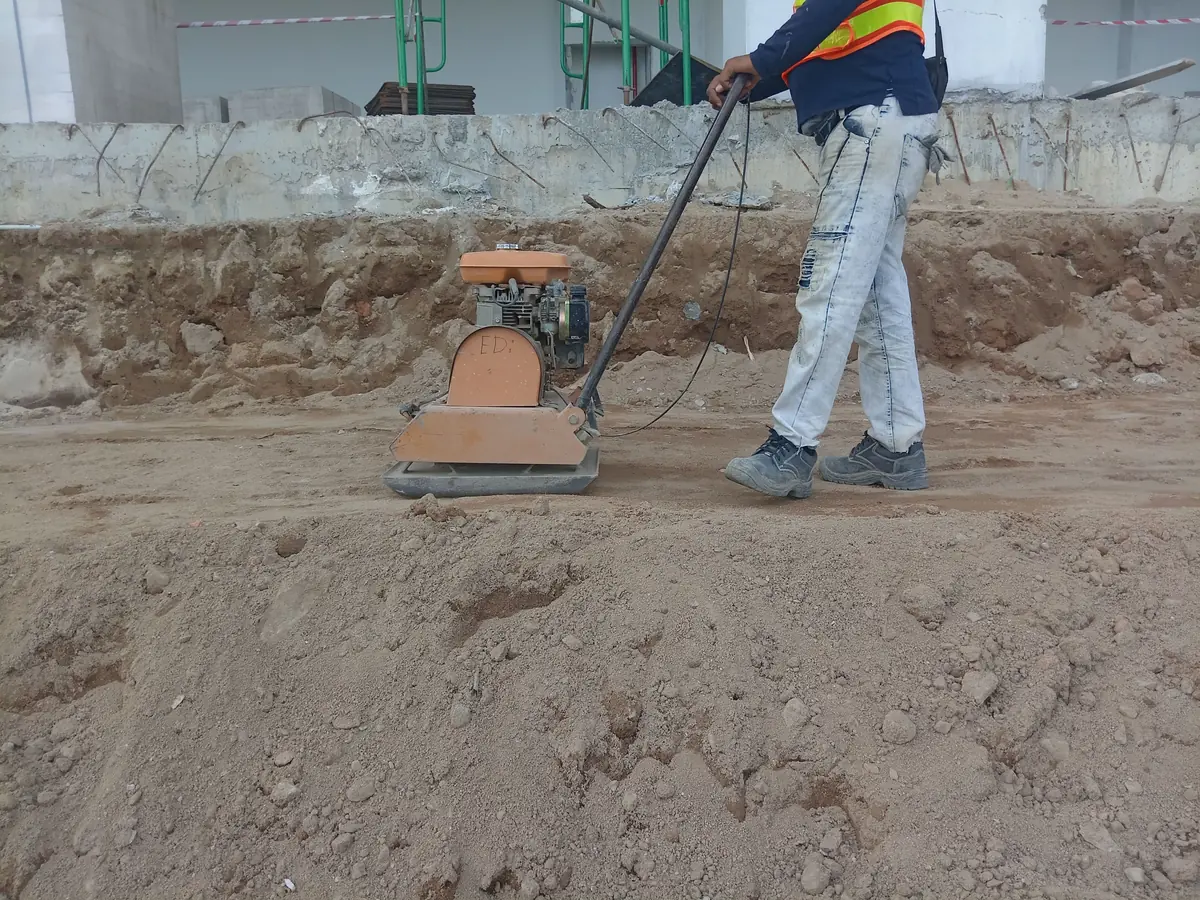
Lift the turf at the low spot, re-true the base, and reset — often a half-day job. At edges, cut a weep gap so water stops damming behind a lip. On tight clay, add a perforated underdrain tied to a legal outlet rather than fighting the soil.
A school field we supplied once failed a morning inspection because the slab held a thin film. A channel drain cut at the low edge cleared it before the afternoon match, with no roll lifted. Most failures trace to one of those three causes, not the grass.
Factory Direct Drainage for Trade Buyers
Factory direct supply removes the distributor margin, and our production costs run 30 to 50 percent below international competitors. Pricing is indicative $7-60 per square meter depending on grade, backing, and padding; request an exact quote against your drawings and total square metres.
Volume shapes the number. A single plot and a twenty-site programme for a landscaping firm do not price the same. Each artificial turf installation carries its own area, backing choice, and roll width mix, and our lines quote every project on those three inputs.
Confirm Drainage on Samples Before You Commit Volume
Our lines run landscape and sports rolls on the same automated equipment. Every roll carries PP+Net or PU perforated backing, with custom roll widths on request. Production costs run 30 to 50 percent below international competitors, and a long export record stands behind every container we ship.
Landscapers, contractors, and distributors supplying drainage-critical projects in volume: request free 20 by 20 cm samples and confirm flow on your own site before you commit a full order.
Drainage on Concrete and Roofs
Hard surfaces change the path. Water cannot sink, so it travels sideways across a slight fall to a drain or a gutter. An artificial turf installation over concrete needs that fall planned before the adhesive sets, not discovered after.
On roofs and balconies, a drainage mat or panel routes water to the existing outlet; edge weep gaps stop a lip from damming the flow. Our what goes under artificial grass guide covers the layers for each hardscape type and how they meet a built-in drain. Balconies need the same thinking, just sent to a different outlet.
Common Drainage Mistakes to Avoid
Three mistakes repeat across enquiries. The first is a base too shallow or uncompacted, so water stays trapped. The second is skipping the natural slope, leaving a film on the surface. The third is the wrong infill clogging the holes and slowing every storm.
Every one is cheaper to fix before the roll ships than after. Brush the pile upright, clear leaves before they settle, and top up infill so the perforations stay open through the season. A half hour with a broom beats a relaid lawn later.
Rinse pet zones and groom often; our artificial grass for dogs guide covers urine flow, and our how to clean artificial grass guide lists the routine that keeps drainage moving.
Frequently Asked Questions
Does artificial turf drain well in heavy rain?
Yes. Quality turf with a perforated backing over an open, sloped base clears surface water within minutes of normal rain. Failure almost always sits in the base or the slope, not in the grass itself.
How fast does artificial turf drain water?
The backing is rarely the limit. Drain time is set by the base depth, its grading, and the outlet. Water falls through the perforations and then relies on the open stone below to carry it away.
Can artificial turf drain on concrete or a roof?
Yes, by horizontal flow. A slight fall sends water to a built-in drain or gutter, and a drainage mat routes roof water to the outlet. Leave weep gaps at edges so a lip never dams the surface.
Why does my artificial turf hold water?
Three causes: a shallow or uncompacted base, no natural slope, or a clogging infill. Lift the turf at the low spot and re-true the base; widespread slow drain needs clean open stone.
Does pet urine drain through artificial turf?
Yes. Urine follows water through the perforated backing into the base. Choose a free-draining infill and rinse weekly with an enzyme cleaner to stop mineral build-up slowing the flow.
How do I test artificial turf drainage before buying?
Use a free 20 by 20 cm sample: pour water and time the pass-through, flip and count holes, check thin spots against light, and smell after a damp wipe. Trade buyers sample per project family in four to six days.
A Balanced Take on Turf Drainage
Artificial turf drains well by design, but only when the base and slope underneath are built to match. If your site already sheds water, a standard perforated roll will likely serve you without extra works. If the ground is flat, clay-heavy, or boxed by hardscape, plan the base and an outlet before you order rather than after. Flat sites with good soil rarely need more than a standard base.
Our soft suggestion: confirm flow on a free sample and a real slope check first. That small step removes most of the risk that shows up as a puddle at handover, and it costs days, not a relaid lawn.
 English
  Arabic
  French
  German
  Portuguese
  Russian
  Spanish