

Two quotes land on the same desk for the same field. One prices the job by the square foot, the other by the roll, and neither lists the base depth. Three weeks later the cheaper number has grown a change order for drainage nobody priced.
The gap between quotes like these is rarely the grass itself. It is what each line quietly assumes. We build artificial grass rolls and read tenders from the maker’s side, and an artificial turf pricing guide only works when it sorts those assumptions into rows you can check. The frame below does exactly that: what a quote contains, what the market pays per published figures, and where budgets actually break.
What an Artificial Turf Quote Actually Contains
Every artificial turf installation splits into the same six blocks: surface material, base work, infill, seams and edges, labor, and freight. When a quote collapses them into one number, you cannot tell a better turf from a better salesman. Published US figures show why the split matters. Material alone runs roughly $2 to $6.40 per square foot depending on yarn, while installed residential projects land between $8 and $20 per square foot per published guidance. An artificial turf pricing guide is only useful when it starts with that split.
Ask for the breakdown before anything else. A quote that names pile height, face weight, backing type, base depth and waste factor can be compared line by line. A quote that says “premium grass, full install” is a guess wearing a price tag. We have watched tenders stall for months on exactly that omission.
The six blocks are not equally visible. Material and labor show up on every quote; infill, seams and freight hide inside the installation line unless you ask. Base work is the least standardised block of all, spanning everything from a thin leveling layer to an engineered sub-base with drainage falls. Published models price base work at $850 to $1,250 on a 400-square-foot job, which is not a rounding error.
Freight deserves its own row even on domestic jobs, and it becomes a block of its own the moment a container is involved. Buyers who compare a factory gate against a warehouse door are comparing two different logistics products. Put the delivery basis next to the price and most quotes explain themselves. We ask for that basis in writing before any figure is discussed, because the same roll carries a different total depending on where the seller’s responsibility ends.
Published Price Ranges in the 2026 Market
Third-party research puts numbers on the spread. LawnLove’s 2026 national figures list installed artificial grass at $2,725–$10,000 per project with a $12.75 average per square foot. FieldTurf Landscape’s residential guidance shows $8 to $20 per square foot installed. Install-It-Direct’s San Diego tiers run $11 to $14 per square foot for a family lawn, up to $21 to $26 or more for pet and cooling systems. Every figure in this section is a published third-party range, not a factory offer.
| Scope | Published range | Published source |
|---|---|---|
| Material, polyethylene | $2.20–$4.10 per sq ft | LawnLove, 2026 |
| Material, polypropylene | $2.00–$6.35 per sq ft | LawnLove, 2026 |
| Material, nylon | $5.00–$6.40 per sq ft | LawnLove, 2026 |
| Installed, US residential | $8.00–$20.00 per sq ft | FieldTurf Landscape |
| Installed, San Diego tiers | $11.00–$26.00+ per sq ft | Install-It-Direct |
| Installed, putting greens | $16.00–$35.00 per sq ft | Install-It-Direct |
| Labor, national average | $3.45–$12 per sq ft | LawnLove, 2026 |
| Labor, 500 sq ft job | $1,725–$6,000 | LawnLove, 2026 |
| Road base | $0.30–$0.70 per sq ft | LawnLove, 2026 |
| Weed barrier fabric | $0.05–$0.85 per sq ft | LawnLove, 2026 |
| Installed project, US national | $2,725–$10,000 | LawnLove, 2026 |
| Full DIY, 500 sq ft | $1,761–$5,393 | LawnLove, 2026 |
| DIY labor saving, 500 sq ft | $2,800 average | LawnLove, 2026 |
| Natural sod install, 500 sq ft | about $653 | LawnLove, 2026 |
| Natural lawn care, monthly plan | $1,500–$6,000 a year | LawnLove, 2026 |
No artificial turf pricing guide can settle a specific job from a chart, because access, slope and local labor rates sit outside any published range. What the chart does settle is the order of magnitude. If a bid lands far below the published band for its tier, the difference is hiding in a row that was never written down.
How Specs Move the Price of a Roll
Four spec levers move the price of an artificial turf installation: pile height, face weight, yarn polymer and backing. The polymer lever is the easiest to verify against published data. LawnLove’s 2026 breakdown lists polyethylene at $2.20–$4.10 per square foot, polypropylene at $2.00–$6.35 and nylon at $5.00–$6.40. The same source notes that staying with polyethylene or polypropylene can save up to 50% on the turf itself. Nylon earns its premium under heavy sun and traffic, so the right polymer is a workload question, not a status question.
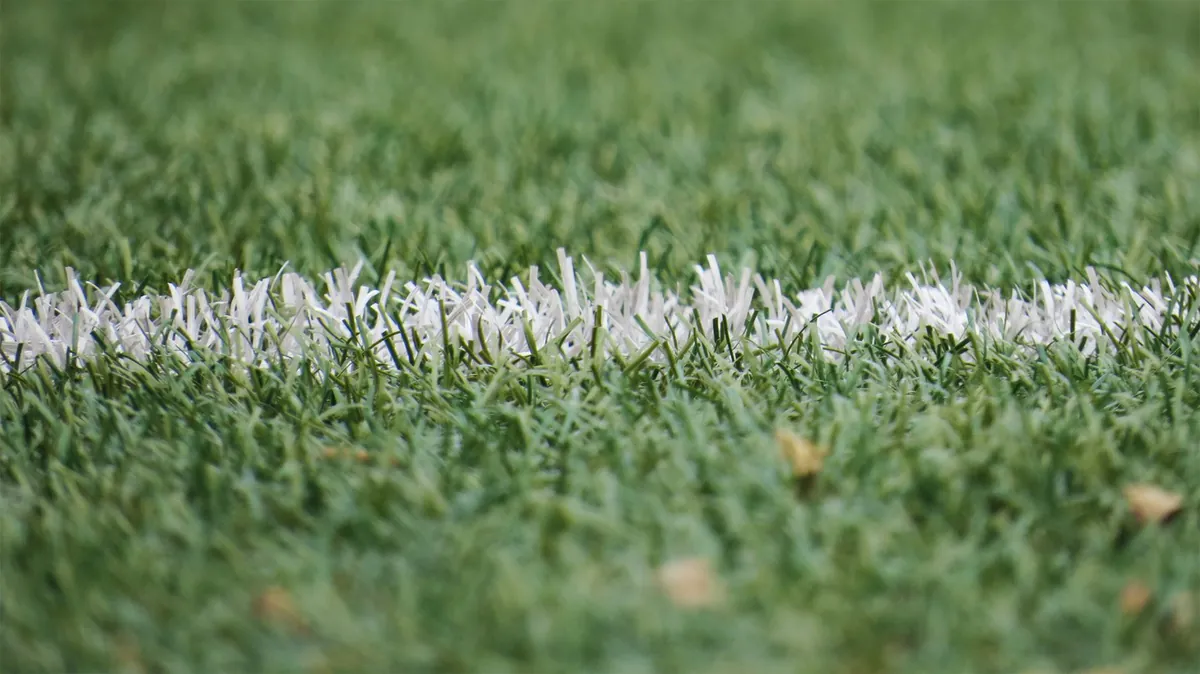
Face weight is the next lever, and published spec models make it concrete. Install-It-Direct’s “Good” family-lawn package uses standard turf of about 50 to 65 ounces per square yard over a prepared base, which is the band most landscape quotes occupy. Ounce bands like that are worth writing into a tender, because “standard turf” is not a specification. Density written as stitches or tufts per metre behaves the same way: more yarn in the same width means more machine time and more material.
The backing row is the one buyers skip, and it is where a cheap quote gets cheap. Our line runs PP+Net and polyurethane (PU) backing systems, because coating choice decides how the roll handles water and how long the tuft lock holds. When two quotes show the same pile and weight but different backings, they are not the same price at all. They are two different products that happen to look alike in a photo.
Pile height moves price for a plain reason: taller pile means more yarn extruded per square metre and slower tufting. Colour and shape move it less directly, but they belong in the quote all the same, because two-tone mixes and specialised blade shapes change the yarn programme on the line. Our extrusion and twisting stages run to the ordered recipe, which is why we ask what the surface must survive before we ask what it should look like. A quote written from that answer prices the job once. A quote written from a photo prices it twice.
Where Installation Labor Dominates the Project Budget
Labor is the widest variable in any artificial turf installation, and any artificial turf pricing guide that stops at the material price misses half the bill. Published estimates put professional installation labor at $3.45 to $12 per square foot, which adds $1,725 to $6,000 on a 500-square-foot lawn. LawnLove attributes roughly 50% to 60% of the total installed cost to labor. The grass gets argued about; the ground work quietly costs more.
Doing it yourself narrows that gap, on paper at least. The same source prices a full 500-square-foot DIY project at $1,761–$5,393 with materials included, an average saving of $2,800 against a professional crew. What the saving buys back in risk is seam alignment, base compaction and drainage grade, the three jobs crews do daily and first-timers do once. The lesson is not that crews are expensive. It is that skilled ground work is a trade, and trade hours are priced like it.
Install-It-Direct publishes a 400-square-foot line-item model that shows where the money actually sits. Its published ranges are reprinted below so you can see the shape of a real bill.
| Line item, 400 sq ft model | Published range |
|---|---|
| Demo and haul-off | $1,000–$1,500 |
| Base install, compacted road base | $850–$1,250 |
| Turf material, 440 sf at 10% waste | $1,200–$2,000 |
| Infill, brushed in | $350–$750 |
| Seams and edges | $400–$800 |
| Skilled crew labor | $2,600–$2,800 |
| Total | $6,400–$9,100 |
The model’s own warning belongs in bold: cheap installs cut corners in base, drainage, and seams, leading to failures, as Install-It-Direct puts it. Labor at the bottom of that table is also the line that repairs those failures. A bid that shaves the crew line usually inflates the repair line a season later.

Freight and Landed Cost for Import Buyers
For importers and distributors, the quote does not end at the factory gate. The landed cost of an artificial turf installation is the roll price plus ocean freight, insurance, clearance and the inland legs on both ends. A unit price that looks sharp on FOB terms can lose its edge once a half-empty container is priced per roll. Freight does not forgive odd dimensions.
Settlement terms decide who carries which leg. Under destination-port terms, the seller covers China export clearance, international ocean freight and transport insurance. Under Chinese-port terms, the seller covers inland haulage to the port, export clearance and loading, and your freight forwarder takes the story from there. We quote both structures regularly, and the right one depends on who controls freight cheaper, not on which term looks lower on paper. Neither term is expensive by nature; each simply assigns the legs to whoever runs them cheapest.
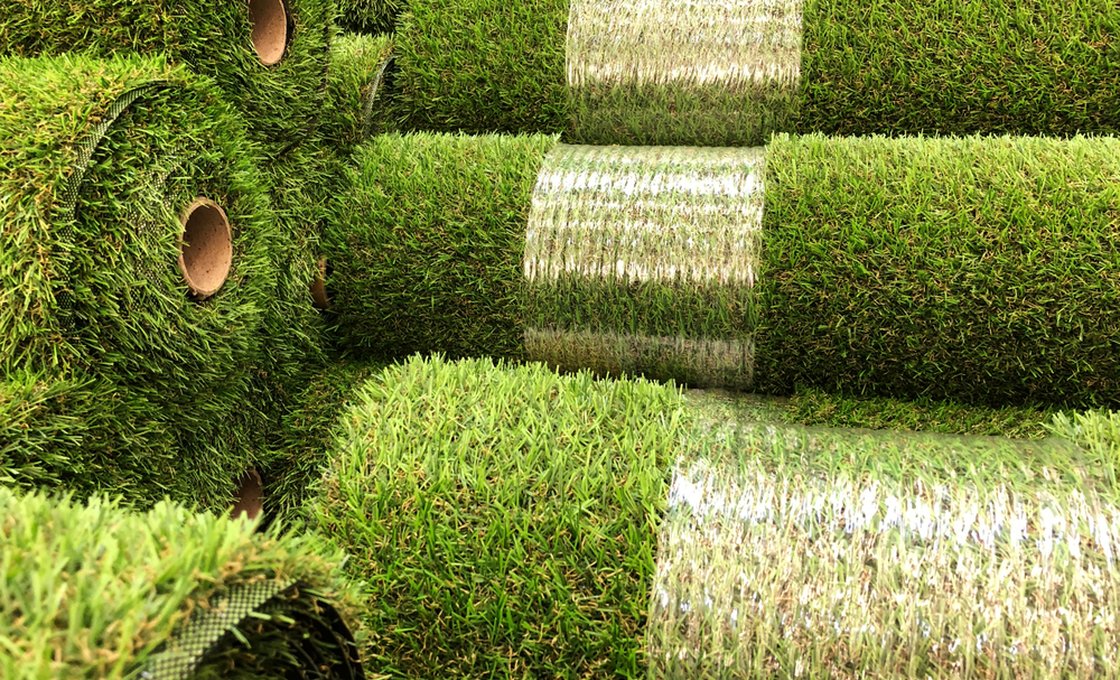
Roll width is the freight variable buyers underrate. Standard production widths run 2 m, 4 m and 5 m by 25 m long, and each width trades handling against seams. A review of roll widths and roll construction shows the trade-off plainly: a 4 m roll covers most layouts, while 5 m crosses a sports field with almost no seams. Fewer seams also means a smaller seams-and-edges line of the kind published models price at $400 to $800. Waste allowance belongs in the same calculation, because a width that fights the room turns offcuts into freight you paid for twice.
Common Mistakes That Inflate Artificial Turf Budgets
Most overruns we see trace back to four buying habits, not to bad luck. Each one is avoidable with the same artificial turf pricing guide logic used above: align the rows before you compare the numbers. Worth noticing how often the cheapest bid and the most expensive mistake turn out to be the same document. None of the four requires a better product, only a better reading of the same quotation.
Mistake 1: Comparing Total Prices Across Different Specs
A nylon quote and a polyethylene quote are answers to different questions. Until pile, weight, polymer and backing match row for row, the totals measure nothing except the salesman’s confidence. The fix is mechanical: extract the five surface rows into a spreadsheet and refuse to discuss price until they match. Compare the spec sheet first and the price second.
Mistake 2: Reading the Material Price as the Whole Cost
The published record is unambiguous: labor carries roughly half or more of an installed project, between $1,725 and $6,000 on a 500-square-foot lawn per LawnLove’s figures. A buyer who negotiates the grass to the last dollar while accepting an unpriced labor line has optimized the smaller half. Ask each bidder to price the surface and the ground work as separate documents. Numbers that cannot be separated were never really numbers to begin with.
Mistake 3: Ignoring Waste, Width and Seams
Published models budget 440 square feet of material for a 400-square-foot area, a 10% waste allowance, and they price seams and edges as their own line. An artificial turf installation quoted without a waste factor is a quote that plans to surprise you. A quote that omits the waste row is not cheaper; it is quoted on a different quantity. Reprice both bids on the same 440-for-400 basis and the gap usually closes. Width selection, covered above, is the lever that keeps both rows small.
Mistake 4: Letting the Lowest Bid Define the Spec
Install-It-Direct’s tiers exist because quality has a floor, and its warning about cheap installs failing in base, drainage and seams is the reason. The lowest bid is only cheap if the surface survives its first winter. One season of drainage repair can cost more than the line that was cut. Ask what was removed to reach that number, and the answer is usually a row you would have demanded anyway.
Still Comparing Quotes That Never Line Up?
Mismatched specs let budgets drift fast. We tuft rolls to your stated pile, density and backing spec, and factory-direct supply is typically 30–50% below market prices on like-for-like specifications.
A Buyer Checklist Before Comparing Quotes
Treat the artificial turf pricing guide rows below as a pre-quote check. Run every bid through them and the comparable ones will separate from the vague ones on their own. Five checks, ten minutes, and the field of bidders usually shrinks by half. This is the list we wish every tender arrived with.
Check 1: Align the Surface Rows First
Pile height, face weight, yarn polymer and backing type should appear in both quotes without being asked for. The base under an artificial turf installation deserves the same treatment, because it is the row a failing surface always points back to. If a row is missing, the missing row is the message. Suppliers who will not put pile and weight in writing have told you something already.
Check 2: Make the Base a Written Line
The published 400-square-foot model spells out a 2 to 3 inch compacted road base with a slight cross-slope for drainage. If a quote says “base included” without depth or compaction, it has not said anything. Depth and fall are checkable numbers, so insist on them. Compaction and fall are what make the surface drain after a storm, and they are cheap to specify when written and expensive to fix when not.
Check 3: Price Infill and Drainage Separately
Infill systems split published tiers on their own. Pet-ready builds run $15 to $19 per square foot against $11 to $14 for a basic family lawn in the same market. Ask which infill is quoted by name, not by grade adjective. Silica sand and coated antimicrobial sand are different products with different price tags, and a combined infill-and-labor number hides which one you are getting.
Check 4: Normalize Waste and Width
Convert every quote to the same units, the same waste allowance and the same roll width before comparing. A quote priced by the roll and one priced by the square foot describe the same money differently. A per-roll price on a 2 m width and a per-square-metre price on a 4 m width can land within dollars of each other and still describe different jobs. Normalizing them takes ten minutes and kills most disputes later.
Check 5: Hold a Sample Against the Quote
Color, density and hand-feel do not survive a PDF. Order a sample swatch and check it against the written spec before locking the price. Our free samples ship as 20 × 20 cm pieces, usually three to four per request. They travel by DHL or FedEx in 4 to 6 days, with courier freight covered by the buyer.
How Factory-Direct Supply Changes the Quote Math
A trading-house quote carries two margins: the maker’s and the reseller’s. Factory-direct supply removes the second, so the number you negotiate is the number the line produced. We run the full sequence in-house, from extrusion to twisting to tufting to coating, which is why the spec on the contract is the spec on the machine. The difference is easiest to see on repeat orders, where a trading house re-quotes and a factory re-runs.
That control shows up in the rows that matter. Yarn colour, shape, density and pile height, backing composition and roll dimensions are all made to order on our line. An artificial turf installation quoted at the factory gate lists the roll rather than a reseller’s markup. See how custom pile heights, densities and backing specs are built before you fix a tender document.
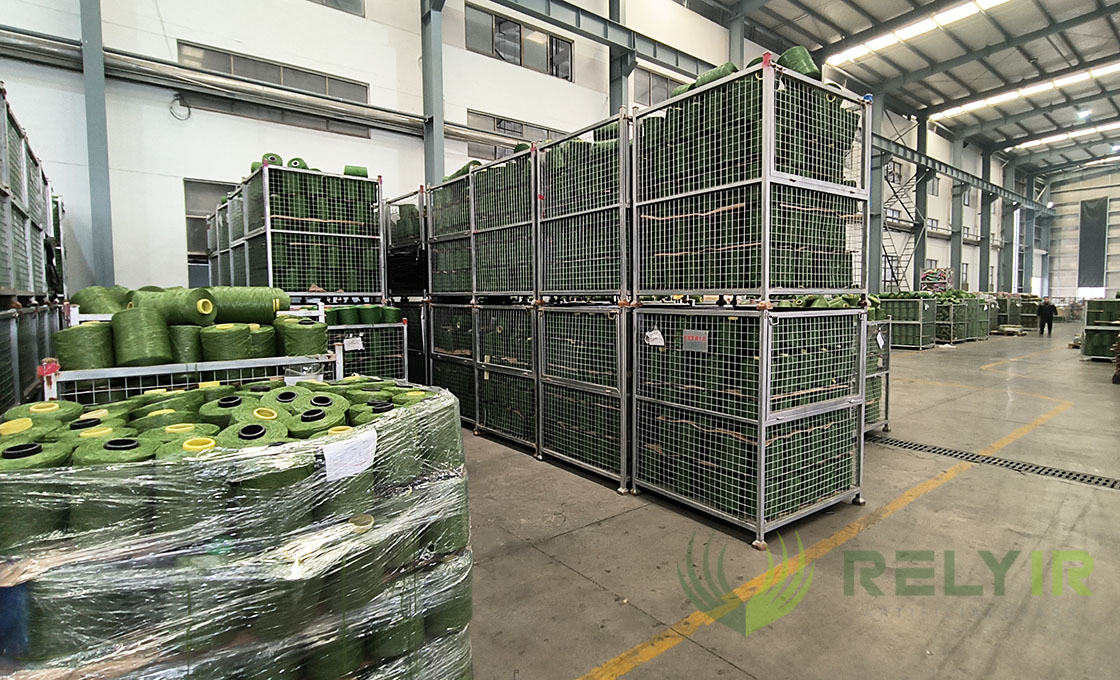
An artificial turf pricing guide can frame the market and expose the missing rows, but it cannot price your field. Published ranges, a written spec and a sample in hand will do more for the final number than any chart. Bring the spec sheet, and the quote stops being a guess.
Frequently Asked Questions
How much does artificial grass cost installed?
Published US figures put most residential installs between $8 and $20 per square foot, with premium pet and cooling systems running higher in some regional markets.
What share of a project does labor take?
About half or more. Published estimates put installation labor at 50 to 60 percent of the total, roughly $1,725 to $6,000 on a 500-square-foot lawn.
Why do quotes for the same turf differ so much?
Because each quote bundles different specs. Pile height, face weight, backing, base depth, infill system and crew quality all move the number, so identical totals can describe different surfaces.
Is the cheapest installation a real saving?
Rarely. Install-It-Direct warns that cheap installs cut corners in base, drainage, and seams, leading to failures that cost more to fix than the bid saved.
How do I compare two quotes fairly?
Line up the spec rows first. When both quotes state pile, face weight, backing, base, infill and waste factor, an artificial turf pricing guide comparison becomes arithmetic instead of guesswork.
Can I check the turf before a bulk order?
Yes. Free 20 × 20 cm samples, usually three to four pieces, ship by DHL or FedEx in 4 to 6 days, with courier freight covered by the buyer.


 English
  Arabic
  French
  German
  Portuguese
  Russian
  Spanish