
Last quarter a distributor we work with wired a deposit on a full container of grass wall panels. The cartons landed clean, but the green ran darker than the sample he had approved, and two pallets arrived crushed at the corners. He spent six weeks arguing about a replacement while his retail customers waited on a spring launch. Every failure in that story was preventable at the sourcing stage, before anyone touched a wire transfer.
Wholesale artificial grass wall buying is a procurement problem, not a shopping problem. It rewards a fixed sequence: verify the supplier, lock the specification, approve the sample, then fix terms and inspection. We run that sequence with importers, distributors and contractors every month, and this guide lays it out the way we run it on the factory floor. Where a claim has no honest number behind it, we say so plainly. Installation steps and consumer decorating ideas are deliberately left to their own guides.
What Wholesale Artificial Grass Wall Panels Include
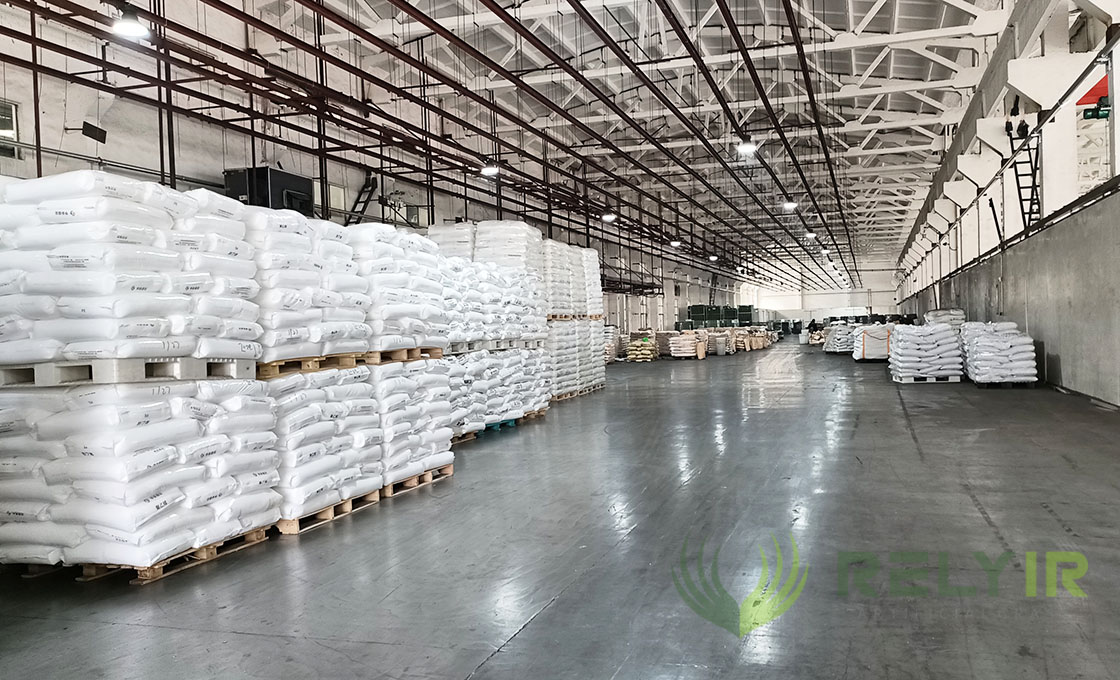
Bulk product reaches you in two physical formats. Rigid panels come in a standard 1m x 3m module or custom sizes, and they tile together into walls of almost any width. Turf for wall cladding also ships in rolls 2m, 4m or 5m wide by 25m long, covering 50, 100 or 125 square meters per roll. Custom widths are made to measure without joins, which matters on long commercial facades and feature walls.
Under the yarn, the backing decides how a panel handles moisture, weight and fixing. The two workhorse options are PP+Net and PU backings, and the right pick depends on the wall and the climate it lives in. On the face, yarn is typically a polyethylene monofilament paired with a polypropylene thatch, the same construction used across landscape grades.
Whatever the format, the quote lives or dies on the spec sheet behind it. Demand the line items below in writing before you compare prices, because two quotes that look identical rarely are. The same discipline applies across the whole artificial grass products range, from wall panels to colored turf and logo mats.
| Spec line | Why it moves the price | What to confirm in writing |
|---|---|---|
| Panel size | Module dimensions decide cartons and loading plans | 1m x 3m standard or custom, with tolerances |
| Pile height | Taller yarn consumes more polymer | Exact millimeters per panel face |
| Pile density | Stitch count drives both look and cost | Stitches per square meter, never a photo |
| Yarn construction | Realism and recovery live in the yarn mix | PE monofilament with PP thatch, named explicitly |
| Backing | PP+Net and PU differ in weight and moisture behavior | Coating type and backing weight |
| Color reference | Batch matching is the top repeat-order risk | A color code tied to the approved sample |
| Packing plan | Carton and pallet layout decide container fit | Panels per carton, cartons per pallet |
How Wholesale Artificial Grass Wall Pricing Is Built
Start from the honest band: material pricing for this product runs $7-60 per square meter, indicative rather than fixed. That spread is not negotiation padding. It reflects real specification distance between a light privacy screen and a dense, high-grade feature wall. Treat every exact price quoted without a specification as noise.
Five levers move a quote inside that band. Density is the loudest, because stitches per square meter are material you can literally count. Yarn quality, backing choice, padding and customization each add or remove cost, and volume nudges the unit rate at the margin. Pricing works a bit like concrete: the per-cubic-meter number means nothing until both sides agree the mix design.
Our standing advice is simple. Never compare quotes per panel or per roll. Convert every offer to price per square meter at equal density, backing and pile height, and the cheap quote that hides a lighter spec collapses on its own. Ask each supplier to price the same spec sheet line by line, then judge the deltas.
Vetting a Wholesale Artificial Grass Wall Supplier
Picture the vetting call. You ask who tufted the panel, and a factory names its own production lines, while a middleman names a friend. That one answer decides your price, your QC access and your leverage when a batch drifts. Factory-direct is not a slogan here; it is the difference between fixing a problem and forwarding a complaint.
Samples are the cheapest insurance in this trade, and the standard protocol is generous. Reputable manufacturers send free 20 x 20 cm swatches, usually three to four pieces, with you covering only the courier charge. DHL or FedEx delivers standard swatches in 4-6 days, or 7-9 days to remote areas. Custom samples take an extra 10-15 days of production before dispatch, which is why bespoke colors should be decided early.
Then interrogate the export record, because a good domestic factory is not automatically a good export partner. Ask which markets the company already serves and how it handles claims across time zones. Scale is a fair proxy: a supplier serving 500+ customers across 50+ countries has already solved paperwork problems you have not met yet. If your model is resale rather than projects, the artificial grass distributor route formalizes the relationship with territory and pricing terms.
MOQ and the Numbers a Quote Must State
Ask three suppliers for a minimum order quantity and you will get three different answers, all technically correct. MOQ depends on panel size, density, customization level and what is already scheduled on the line. Honest suppliers quote it per project instead of publishing a magic number. Treat any figure given before your specification is read as a sales tactic, not a commitment.
A quotable inquiry states six things: target square meters, panel size, density and pile height, backing choice, color reference, and destination port. A complete quote answers with the price basis per square meter, the packaging plan, the loading port and the validity period. If either side of that exchange is vague, the gap becomes the dispute later.
One caution keeps business buyers out of retail framing. The pitfalls that sink homeowners, like wrong wall measurements or indoor suitability, are real but different, and we cover the consumer side separately in grass wall buying mistakes. Your risks are contractual: spec drift, packing failures and silent material substitutions.
Customization: Locking the Sample Before Production
Customization is where wholesale pricing earns its spread, and the scope is wider than most buyers expect. Yarn color, shape, density and height can be tuned to your market. Backing composition can be adjusted for durability, and sizes can be cut to your wall modules. A private-label green or a bespoke panel size is a normal request, not a favor.
The discipline is in the sign-off. Approve a golden sample, photograph it, and reference it by batch in the purchase order, because that swatch becomes the arbitration standard for the entire order. Custom samples need an extra 10-15 days before courier dispatch, so build that window into your launch calendar. The useful mental model: the golden sample is the master copy, and every panel in the container is a photocopy of it.
Container Loading and Shipping Terms Explained
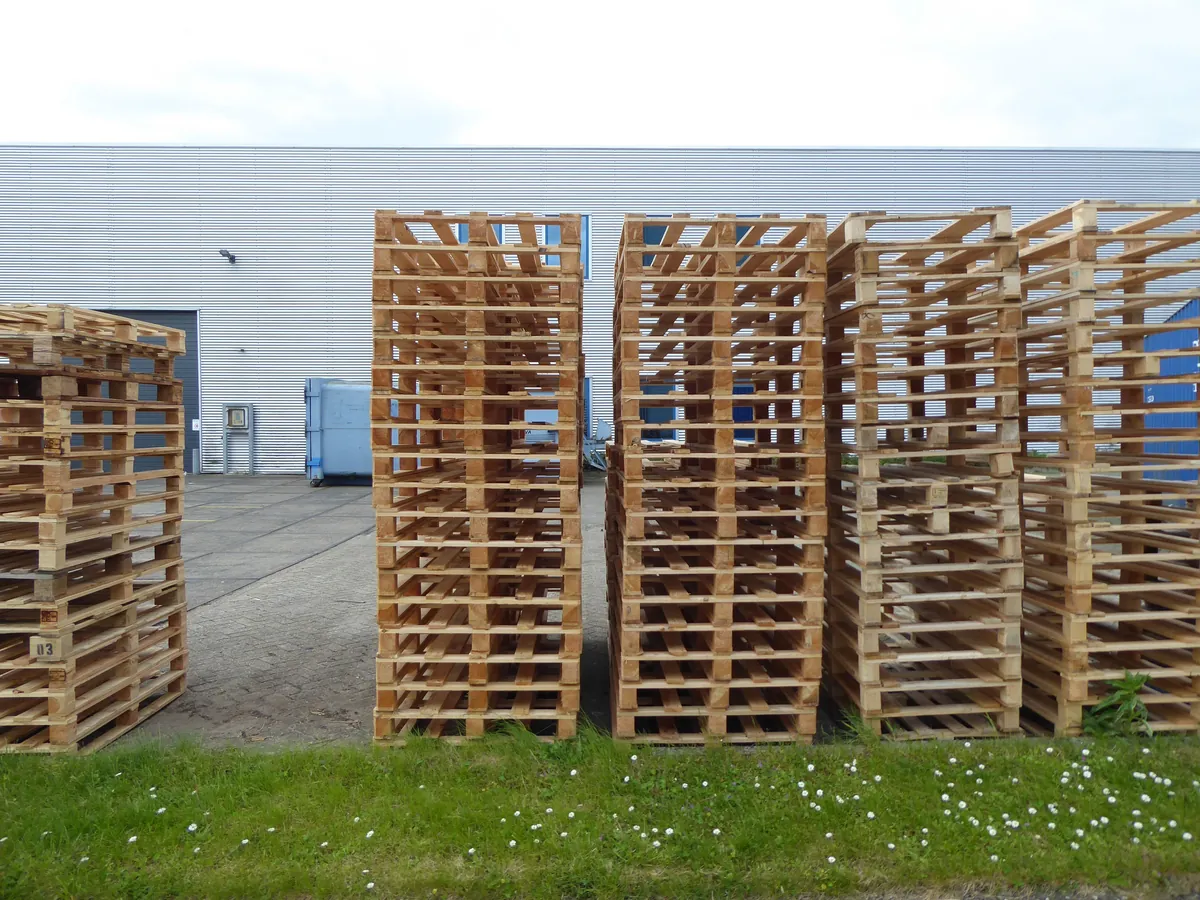
The container is where first-time importers lose money, not the factory. Confirm three things in writing before loading: panels per carton, cartons per pallet, and who stacks and secures the load. The packing plan is quoted per project, because panel modules and order volumes change the math every time.

Chinese manufacturers typically quote two delivery structures. Under Option 1, delivery to your destination port, the seller carries Chinese export clearance, international ocean freight and transport insurance. Under Option 2, delivery at the Chinese port, the seller covers inland haulage, export clearance and loading, and your freight forwarder takes the handover from there.
Those structures map onto the trade terms used in most quotations, standardized globally as Incoterms. FOB means cost and risk pass to you when the goods are loaded at the Chinese port, which is Option 2 in practice. CIF adds ocean freight and insurance to the seller’s bill through to your destination port, which is Option 1. Most suppliers stay flexible on other delivery requirements, so ask rather than assume.
Ready to Price Your First Container?
Send your specification, target quantity and destination port, and we will return a quote with MOQ, packing plan and shipping terms stated line by line. Standard samples are free at 20 x 20 cm, three to four pieces, with DHL or FedEx delivery in 4-6 days.
Quality Control Before the Container Ships
Quality is decided on the line, not in the container, and the production sequence hands you a natural checkpoint map. Every panel passes through compounding, extruding, twisting, tufting, coating, drying, perforating and rolling up. Each step has a failure mode you can ask about, from color mixing at compounding to backing bond at coating.
Your inspection brief should be short and concrete. Compare production pieces against the golden sample in daylight, count density against the spec sheet, and check the backing for bonding defects. Measure panel dimensions against the agreed tolerances, then finish with the packing: carton condition, pallet layout and moisture protection before the doors close.
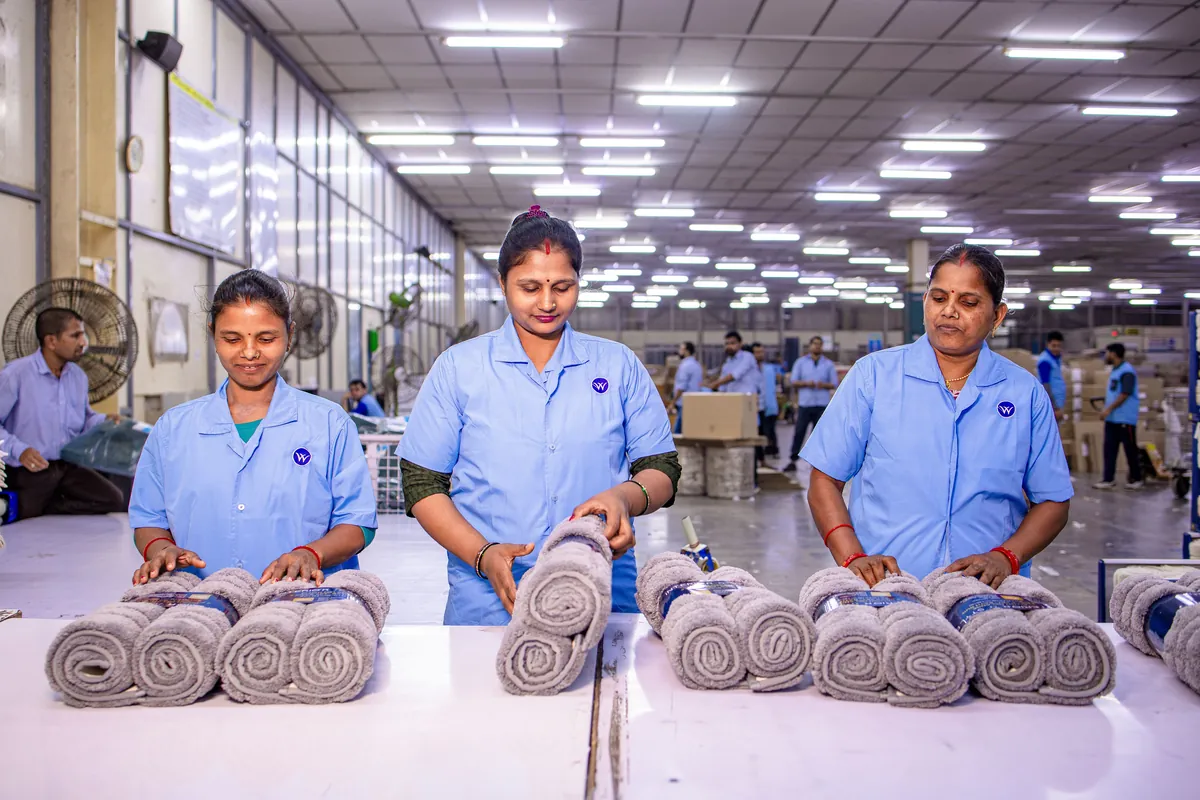
Our default advice is to inspect before the balance payment moves, either with your own person or a locally booked third-party inspection service. An inspection that catches a mismatch is an expensive afternoon. A container that lands wrong is an expensive quarter, and the dispute teeth you have depend entirely on the paperwork you signed months earlier.
Building a Repeatable Wholesale Supply Playbook
Repeat volume is where a sourcing program compounds, in both directions. Archive the spec sheet, the golden sample and every batch reference, and attach them to each new purchase order. A buyer who reorders by reference number gets the same wall in the same green. A buyer who reorders from memory gets a fresh negotiation and a new shade of green.
Close the loop with your market every cycle. Pass retail complaints and contractor feedback into the next specification review, and revisit volume bands once the reorder pattern is proven. Supply chains reward buyers who keep records, because records make drift visible before your customers do.
Frequently Asked Questions
What is the MOQ for wholesale artificial grass wall panels?
There is no public fixed number, because MOQ moves with panel size, density, customization and the production schedule. Send your specification and destination port, and the quote states the minimum quantity that makes the run economic.
How much does a wholesale artificial grass wall cost?
Material pricing is indicative at $7-60 per square meter, moving with density, yarn grade, backing and padding. Volume, customization and shipping terms price separately, so treat an exact number quoted without a specification as noise.
Can I get samples before booking a container?
Standard samples are free at 20 x 20 cm, usually three to four pieces, with courier costs on you. DHL or FedEx delivers in 4-6 days, 7-9 for remote areas, and custom samples add 10-15 days.
Which shipping terms should a first-time importer choose?
First-time importers usually take seller-paid freight to the destination port: the manufacturer covers Chinese export clearance, ocean freight and insurance. With your own freight forwarder, handover at the Chinese port gives you control of the destination leg.
How do I keep color consistent across repeat orders?
Approve a golden sample, reference its batch on every purchase order, and inspect each shipment against it in daylight. Lock density, pile height and backing in the spec sheet so production cannot quietly substitute materials.

 English
  Arabic
  French
  German
  Portuguese
  Russian
  Spanish