
A contractor once spread three green swatches across a warehouse desk and asked which one was olive and which was field green. Under the fluorescent tubes, nobody in the room could answer with certainty. That gap between a name on a colour card and what a roll looks like on the ground is where most colour budgets go wrong.
Popular colors and designs for artificial turf run far deeper than one green swatch, and the decisive choices happen on the production line rather than in a brochure. We carry every shade through compounding and extruding before it reaches a tufting needle, so the tone you approve is the tone that gets woven. What follows breaks the palette into the green family, multi-tone builds, field markings and bold colours, then closes with a sampling routine that protects the order.
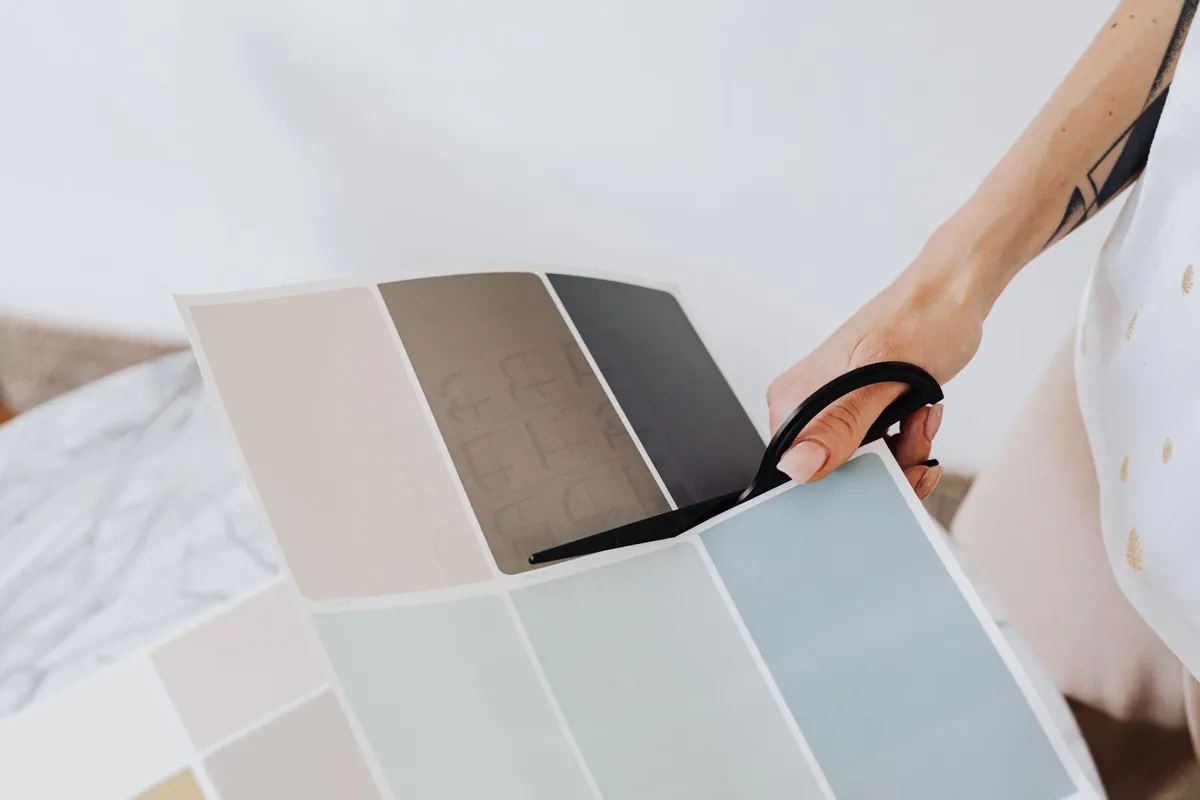
How Yarn Color Enters the Production Line
Colour in artificial grass is a manufacturing input, not a finishing touch. During compounding, pigment masterbatch is blended into the polymer pellets, and extrusion then pushes that coloured compound through spinnerets to form the yarn. The shade therefore lives inside each fibre, like cocoa stirred through cake batter rather than dusted on top. Nothing applied later can move it.
This has one consequence buyers learn to respect: colour is a batch property. Every metre of a given shade comes from one production run, and a reorder placed months later starts a new run with its own tone reading. Large projects avoid the issue by booking the full quantity in a single window. Smaller phased projects should expect a slight drift between phases and plan seams away from colour-sensitive edges.
It also explains why a photograph can mislead. Screens shift colour, and the same fibre reads warmer at noon than at dusk. The only colour that matters is the one sampled from the actual run destined for an artificial turf installation, cut from the same masterbatch that will feed the machine.
Multi-colour orders add a planning layer on top. Each extra shade means an extra masterbatch preparation and a changeover on the line, which is why marked pitches are scheduled differently from plain green. The practical move is to freeze the colour list early, because a shade added after the run is planned costs more than the same shade agreed at the start.
The Green Family and Its Popular Shades
Nearly every search for popular colors and designs for artificial turf starts inside the green family, and for good reason. Field green, the brightest of the standard tones, repeats the look of sunlit grass. Olive green sits darker and greyer, the shade of a well-kept lawn that never shouts. Dark green brings a rich, formal weight that suits commercial entrances and hotel fronts. Light, almost lime tones read playful, which is why they appear in children’s areas.
Trend cycles move inside this family too. Installers report that soft, natural palettes have been pushing very bright greens aside, with dark green emerging as a quiet favourite for premium gardens. A mature, understated tone also photographs better for property listings than a saturated spring green. For an artificial turf installation that must flatter a house rather than shout over it, the calmer end of the palette wins. Every application described in our residential turf applications starts from those quieter tones.
Let the surroundings vote as well. A pale rendered wall flatters olive, brick and warm stone pull toward field green, and dark cladding makes light greens pop. Planting matters too, because a lawn sitting next to silver foliage reads differently from one framed by deep shrubs. Choose the tone that completes the picture, not the one that wins on a card in isolation.
The table condenses the tones buyers compare most often.
| Shade | How it reads | Where it fits |
|---|---|---|
| Olive green | Mature, understated, the tone of a lawn that is cared for but never showy | Estate lawns, offices, formal plots where calm wins |
| Field green | Bright, sunlit, the fresh-cut look of grass on a sunny afternoon | Family gardens, parks, everyday sports surfaces |
| Dark green | Deep, formal, lush, with weight under low evening light | Commercial entrances, hotel fronts, showroom lawns |
| Light to lime green | Playful, energetic, modern, cheerful beside colourful planting | Play zones, themed areas, indoor features |
| Multi-tone blend | Variegated, closest to living grass, forgiving under glare | Premium lawns where realism is the point |
| Light tips on green blades | Sun-kissed highlights scattered across the surface | Softening very dark main tones |
| Brown thatch base | Dry-grass undertone beneath the greens, adds depth | Blended into most realistic builds |
Brown and tan deserve a line of their own here. Used alone they read as earth paths, but their main job is the thatch layer, covered next.
Multi-Tone Blades and Brown Thatch Realism
A single-tone carpet is the fastest way to spot synthetic grass from across the street. Realistic builds therefore blend three or four green tones into one surface, and some add blades with lighter tips that mimic the sun-kissed look of natural growth. From ten paces, an artificial turf installation built this way reads as a lawn rather than a product. In practice, these variegated constructions are the popular colors and designs buyers keep returning to once they have seen a flat tone beside them.
Under the greens sits the thatch, a shorter, curled layer in brown or tan that imitates the dead grass at the base of a living lawn. In our construction, polyethylene monofilament carries the main colour while polypropylene thatch adds the dry undertone, tufted in the same pass so the two layers settle as one carpet. That same pass can also mix fibre shapes, because straight blades keep the surface open while curled ones lock the base together.
Fibre shape changes how colour behaves, not just how it wears. Flat blades reflect light uniformly and can look glossy in strong sun, while spine-shaped profiles scatter light and mute the shine. That is one reason the same tone from two suppliers reads differently, and why samples always outrank spec sheets.
The recipe is a genuine specification, not a cosmetic detail. Two products can both be called field green yet differ in the number of tones and the density of thatch, and the difference shows in every season. The build details behind each construction sit in our artificial grass product range.
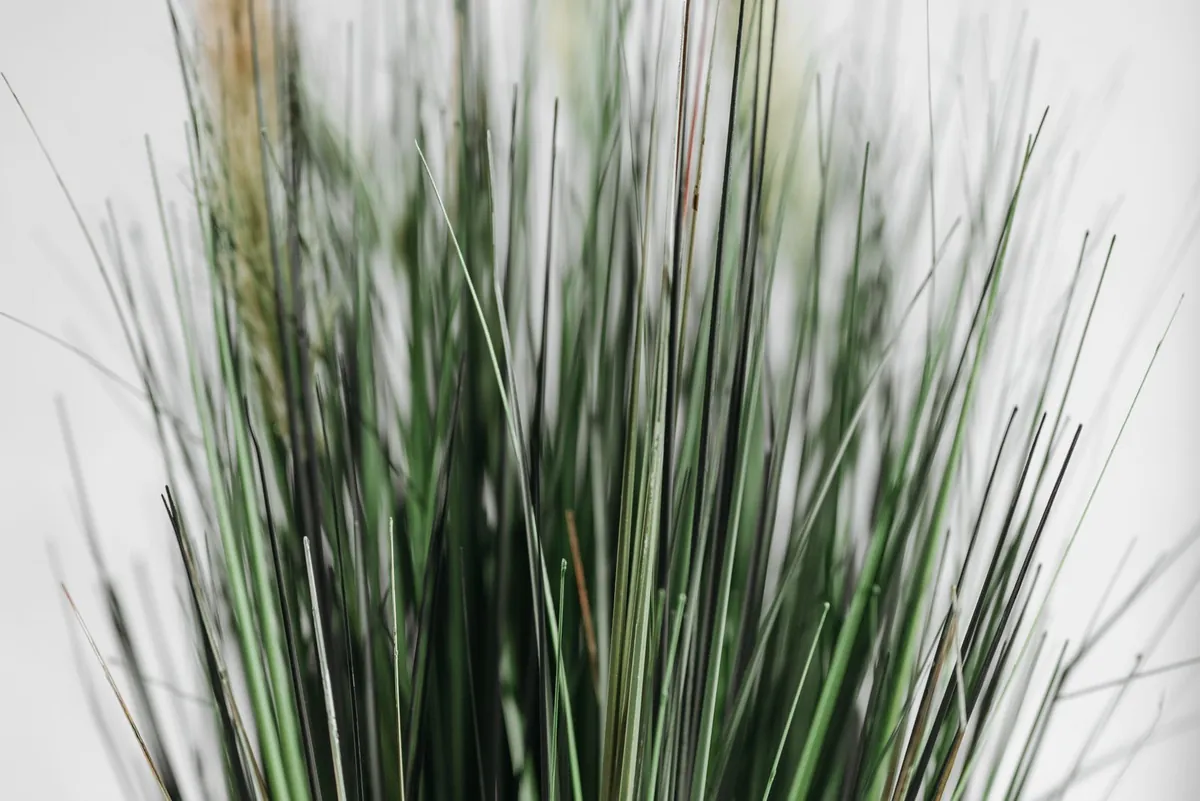
White Lines and Color Zones on Sports Fields
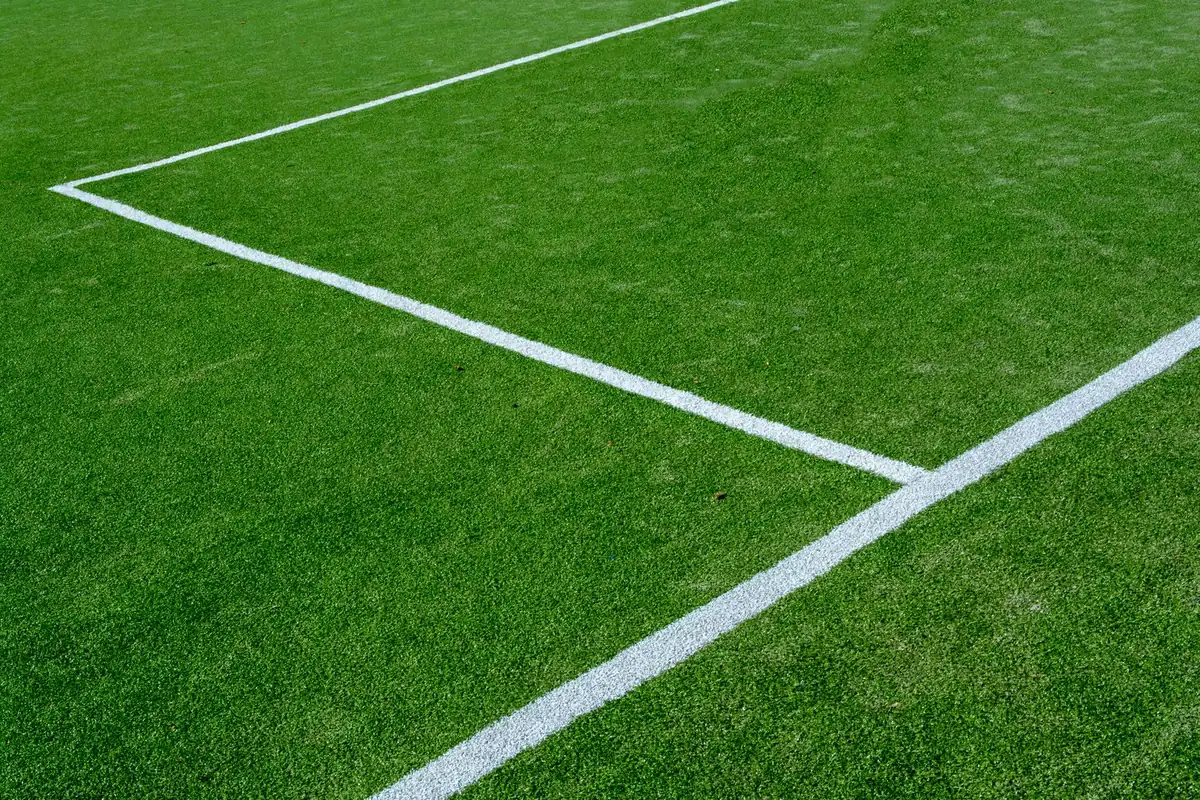
Sports surfaces are where colour does structural work. White marking lines, the most common request from schools and municipalities, are tufted into the carpet in the same pass as the field green. The line therefore becomes part of the product rather than an addition to it. Multi-colour zones follow the same logic: a red sprint lane, a blue training circle, or yellow play bands around a pitch.
A municipal project we supplied shows the thinking. The client wanted one full-size pitch and one training area, each with its own line pattern, on a single order. We planned the colour runs so the white lines and the zone colours were produced alongside the main green, then rolled and shipped as matched batches. On site, the crews laid a finished pitch rather than assembling one from parts.
Line details deserve early decisions too. Width, spacing and the exact white all change the yarn programme, and multi-sport surfaces often overlay two line sets, which doubles the marking work inside one carpet. Agreeing the full marking plan before production keeps every line in a single run and keeps the white consistent from touchline to centre circle.
Logos are a separate craft with three established routes across the industry: direct tufting into the carpet, inlay of precision-cut coloured pieces, and surface painting. Tufted marks live as long as the carpet itself. Inlaid graphics allow intricate, multi-colour crests, while painted work suits temporary branding but needs touch-ups. Where a design calls for woven lettering or a crest inside the carpet, our customization options page shows what can be built in.
Bold Colors Beyond Green and Their Places
Beyond the greens, popular colors and designs for artificial turf open into a working palette. Black reads sleek in gyms and sled tracks. White gives clean backdrops for weddings, photography and retail windows. Red and blue carry team identity in athletic facilities, while grey and tan settle calmly into contemporary rooftops. Earth tones such as terra cotta and desert sand blend into naturalistic schemes.
The honest trade-off is fading. Bright reds and blues weather faster than traditional greens under UV exposure, so bold colour earns its place in zones rather than across whole lawns. A red sprint lane, a blue logo square or a yellow play border works inside a larger artificial turf installation. A whole bold lawn would date quickly and demand more grooming than most sites can give.
Indoor and covered spaces widen the bold palette further, because UV load is low and colour holds longer. Training facilities use saturated lanes for footwork drills, showrooms use coloured floors as wayfinding, and play centres stack primary colours without a second thought about the sun.
Events and retail use colour even more aggressively, swapping full carpets for coloured rolls that define a stand, a stage or a launch area within a day. That usage pattern is worth copying at smaller scale. Treat bold colour as furniture you can move, not a wall you must live with.
Matching Shade to Climate, Light and Use
Colour decisions survive or fail in the site’s own conditions. Dark greens absorb more heat, so in high-sun regions a lighter shade keeps the surface kinder underfoot. Darker tones hide stains and wear, while lighter ones show every spill and footprint. Usage tips the balance the same way. A display lawn can take a delicate tone, while an artificial turf installation crossed daily by dogs, prams and trolleys needs a shade that forgives.
Lighting is the sneaky variable. One of our trade customers shortlisted two greens from a showroom and could not separate them. The samples were laid outside, at noon and again at dusk, on the actual site, and the difference finally showed. The olive looked richer in low light, while the field green won the midday reading. He settled it by ordering the field green with a brown thatch base, which softened the midday brightness without losing the freshness.
Whatever the shortlist, popular colors and designs are judged on the ground they will occupy, never on a screen. List your sun hours, traffic level and cleaning budget against each candidate, and the field narrows fast.
See the Shades in Your Own Light
Narrow the palette to two or three candidates and we will cut 20cm x 20cm swatches straight from production, in the pile height and density your drawings call for. You cover the courier only, and DHL or FedEx typically delivers within four to six days from our factory in Jiangsu, China. Lay them on site, read them at your own hours, and lock the colour run with confidence.
How Color Affects Upkeep Across the Seasons
Every shade carries an upkeep bill, and it is smaller than most buyers fear but worth reading in advance. Fading is managed by placement: keep bold tones away from the most reflective south-facing walls, and keep colour-critical features out of the highest-UV zones. Multi-tone surfaces fade gracefully, because the variation hides what a flat tone would reveal.
Dirt visibility follows tone. Light greens and pastels need more frequent rinsing to look their best, while darker, variegated builds mask dust between cleanings. Brushing matters too, since matted fibre reflects light differently from upright fibre and makes a clean lawn look patchy.
Seasons change the reading as well. Spring pollen dusts pale tones yellow, autumn leaves stain light fibre, and summer glare washes out mid-greens at peak hours. A shade chosen with the site’s worst month in mind, rather than its best, stays convincing all year.
Our bench view, offered as an opinion rather than a rule: multi-tone builds with a brown thatch base age the best of anything we have watched in the field. That staying power is why they anchor most popular colors and designs shortlists. Buyers who choose flat single tones usually accept the extra grooming needed to keep them looking even.
Testing Shades with Samples Before You Commit
Popular colors and designs end the same way every time: on a swatch, in your own light. A 20cm by 20cm sample of each candidate, laid on the area the artificial turf installation will cover, settles debates that no catalogue can. Check the shade at noon and at dusk, wet it with a hose, and press a corner flat to see how the colour reads when the pile leans.
Photograph the swatches too, but only beside plain paper, and expect the phone to flatter the brighter shade. Compare photos last, after the eye has done its work.
Sampling also opens the custom door. If a brand colour or an unusual tone is on the list, the sample run is where feasibility, tone accuracy and pile behaviour get proven before any volume is booked. Roll logistics stay independent of colour: widths of 2m, 4m and 5m in 25m lengths, plus tailor-made cuts, are chosen for the layout rather than the shade.
When one site mixes zones, sample by zone rather than by project. A display strip at the entrance, a shaded side garden and a play area can each justify a different tone. A split order keeps every zone in its best shade. Mark each swatch with its zone on the back, because two similar greens swapped between areas will not be obvious until the rolls arrive.
On price, expect an indicative $7-60 per square meter across the range, with padding, grade and yarn type doing most of the moving; request an exact quote against your specification. Colour itself is rarely the main cost driver, though rare pigments and multi-run projects shift the number.
Frequently Asked Questions
What are the most popular colors for artificial turf?
Classic and field green lead for lawns, with olive for a mature look and dark green for premium entrances. Multi-tone builds with brown thatch dominate realism. The most popular colors and designs blend three or four greens into one carpet.
Do darker shades make artificial grass hotter?
Yes. Darker surfaces absorb more heat, so high-sun locations do better with lighter shades of green. Shade structures, morning-only sun exposure and pile colour together decide how hot an artificial turf installation gets underfoot.
How are white lines and logos added to sports turf?
Marking lines are tufted directly into the carpet during production. Industry-wide, logos are either tufted, inlaid from cut pieces, or painted. Inlaid graphics last longest; painted ones need periodic touch-ups.
Will colored artificial turf fade in strong sunlight?
All synthetic fibres weather eventually, and bright reds and blues fade faster than greens. Pigment locked into the yarn during extrusion, plus sensible zone placement, keeps colour loss slow and even.
How many shades of green go into one roll?
Realistic builds typically blend three or four green tones over a brown or tan thatch layer. The exact recipe is a production decision, which is why two products with the same name can look different.
Can artificial turf match a specific brand color?
Yes, within production limits. Brand colours are matched at the compounding stage, and a swatch from the actual run is what you approve. Share the colour reference early so the run can be planned.
 English
  Arabic
  French
  German
  Portuguese
  Russian
  Spanish