
Athletic directors and grounds managers sign off on a surface that locks in years of maintenance labour, water bills and rain cancellations. The quote compares the install cost per square metre, and says nothing about keeping the field playable, or how many hours a season it can really be used.
We answer the grass vs artificial turf question from the production side. There is no universal winner here. Three variables settle it almost every time. How many hours a week must the field take, what does the local climate do to the surface, and is the budget built around annual upkeep or periodic capital spend? Read those three and the answer tends to name itself.
What the Comparison Really Turns On
Most comparisons start at the wrong end. They open with a price per square metre and then argue about appearance. Both matter less than the three variables that move the outcome: usage intensity, climate and the budget shape. A school pitch used twenty hours a week and a municipal ground used six are not the same buying problem, however similar the drawings look.
Usage intensity comes first, because grass recovers slowly and recovery sits behind every closure. Climate comes second: rain, drought and frost each remove hours in a different way. Budget shape comes third. Grass costs something every season in labour and water; an artificial turf installation costs once, then again at replacement. The selection checklist that follows this decision sits in our guide to sports field turf specification.
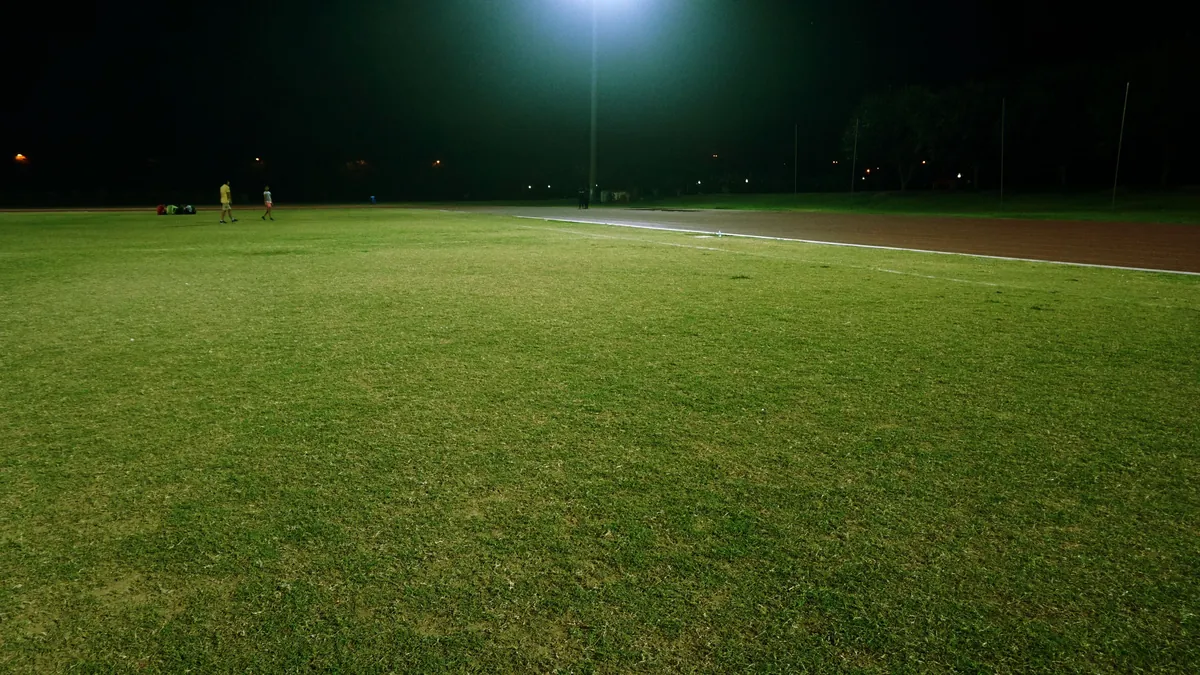
Side by Side on the Numbers That Matter
The table sets the frame. Every figure is an order of magnitude, because published industry numbers move with climate, sport and how faithfully the upkeep programme is followed.
| Factor | Natural grass | Artificial turf |
|---|---|---|
| Upfront build | Lower build cost | Significantly higher build cost |
| Annual upkeep labour | Mowing, irrigation, feeding, aeration, overseeding; hundreds of hours | Grooming, debris, infill top-ups, seam checks; a fraction of that |
| Water | Irrigation programme through dry months | None for playability; occasional rinse and cooling |
| Playable hours | Reduced by rain, frost and recovery periods | Close to all-weather use |
| Surface temperature | Tracks air temperature closely | Can run substantially hotter under strong sun |
| Falls and slides | Softer landing, gentler on skin | Firmer, with more abrasion risk |
| Evenness | Varies; wear shows first in goal mouths and the centre | Consistent across the whole field |
| Consumables | Seed, fertiliser, water | Infill top-ups, then full carpet replacement |
| End of service | Renovated in cycles | Replaced in one piece of work |
Two rows decide most arguments: playable hours and upkeep labour. Everything else, from look to water use, follows from how those two land on your site.
Playing Hours Decide Most Budgets
Picture a Thursday in November. The pitch has taken three days of rain, the grounds team closed it twice, and the fixtures move again. Those lost hours surface as rearranged fixtures, hired pitches and lost income. An artificial turf installation drains through the base and returns to play far sooner, and that difference beats most line items on the page.
Work the number out before you compare anything else. Count the sessions you need each week, then multiply by the weeks in a season. Subtract the days grass is realistically closed for heavy rain, frost and recovery after reseeding. What remains is the capacity you are actually buying. Drainage design sets most of that ceiling on grass, which is why how drainage is designed deserves its own read.
A field behaves like a conveyor in a packing plant. You are not buying the belt, you are buying throughput per hour. Cost per square metre tells you what the belt cost; cost per playable hour tells you what the plant produces.
Upkeep Labour and the Annual Bill
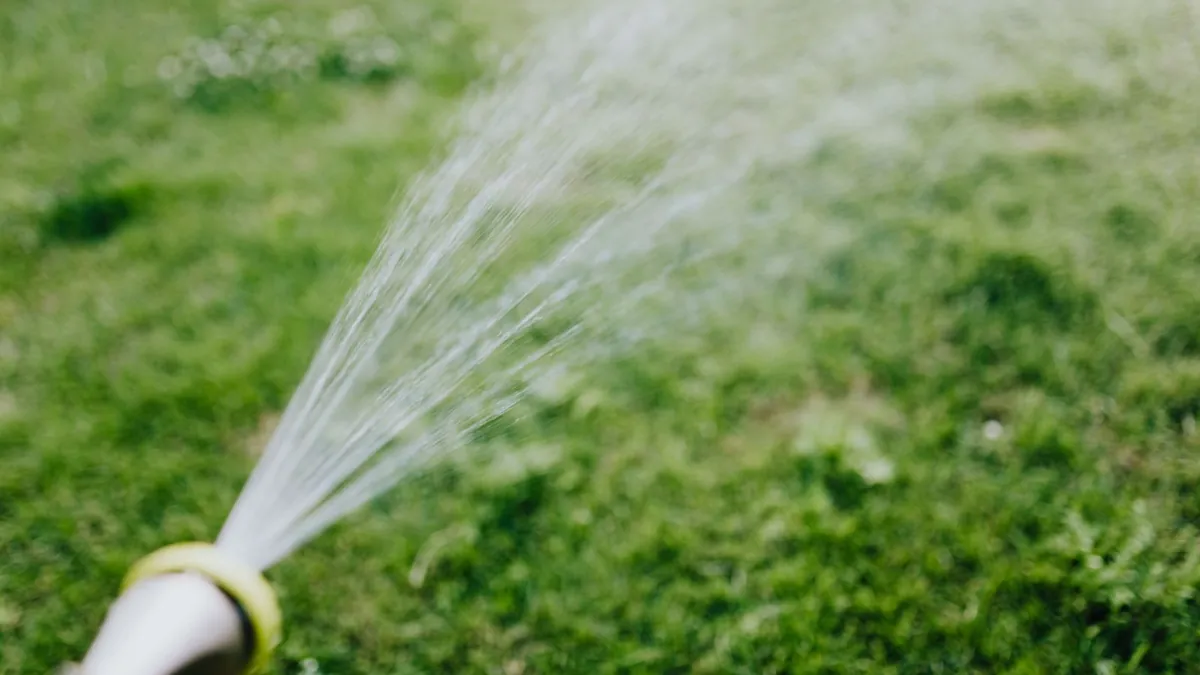
Grass is a crop on a schedule. Mowing runs weekly through the season, irrigation fills the dry weeks, and feeding, aeration and overseeding sit on their own calendar. Disease and pests add unplanned visits. Skip a cycle and the surface shows it within a season.
The caretaker starting the mower at six each morning from March to October is the real cost centre, before water is even counted. Synthetic surfaces swap that schedule for a shorter one: brushing, debris removal, infill top-ups and periodic seam checks. An artificial turf installation is not maintenance-free; it is lighter and far more predictable.
What sits below the carpet decides how much of that work you inherit, so read our piece on what sits under the surface before signing anything.
| Task | Natural grass | Artificial turf |
|---|---|---|
| Mowing | Weekly through the growing season | Never |
| Irrigation | Dry-season programme | Occasional rinse and cooling only |
| Feeding and soil care | Seasonal feeding, aeration, top-dressing | Not required |
| Renovation | Periodic overseeding and top-dressing | Not required until replacement |
| Grooming | Not required | Regular brushing to keep the pile upright |
| De-compaction | Aeration of the soil profile | Periodic loosening of settled infill |
| Consumables | Seed, fertiliser, water | Infill top-ups |
| Inspection | Wear, disease, bare patches | Seams, infill depth, drainage outlets |
Heat, Falls and Surface Temperature
Heat is the honest weakness on the synthetic side. A carpet of plastic yarn holds far more warmth than living grass. On a still, sunny afternoon the surface can run substantially above the air temperature, and published research and third-party testing have shown that gap repeatedly. The dull answers work: move sessions to cooler hours, water the surface before play, and keep shade on the sidelines.
Falls cut both ways. Grass gives the softer landing and treats skin more kindly, which young players notice immediately. Synthetic surfaces offer more consistent footing and far fewer rutted, muddy areas, but a slide can leave an abrasion. Joint loading moves with the shock pad and the layered build of artificial turf rather than with the carpet alone. The injury evidence belongs in our wear resistance guide.
Heat and impact both respond to specification. Two carpets that look identical on a sample card can behave very differently once pad and infill are fixed, so judge the whole build together.
How the Answer Changes by Sport
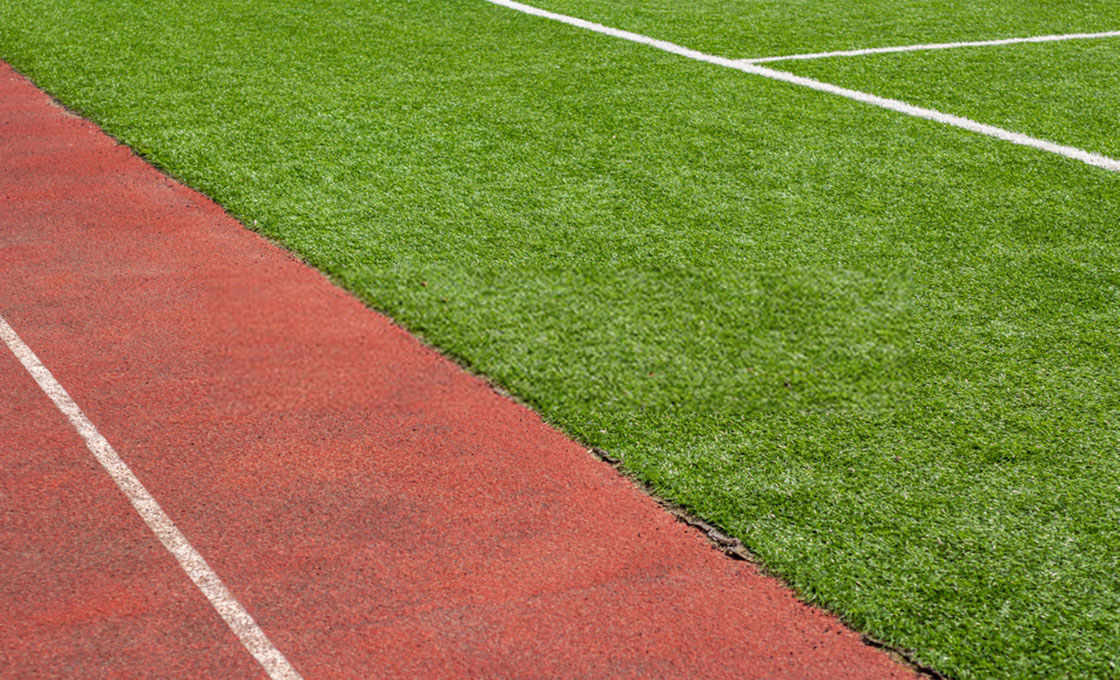
Wear is never spread evenly, and each sport concentrates it somewhere different. That concentration, more than the name of the sport, decides which surface copes.
| Sport | Dominant wear pattern | Surface that usually fits | Spec lever |
|---|---|---|---|
| Football | Goal mouths and centre circle | Either; synthetic where weekly hours run high | Pile height and infill depth |
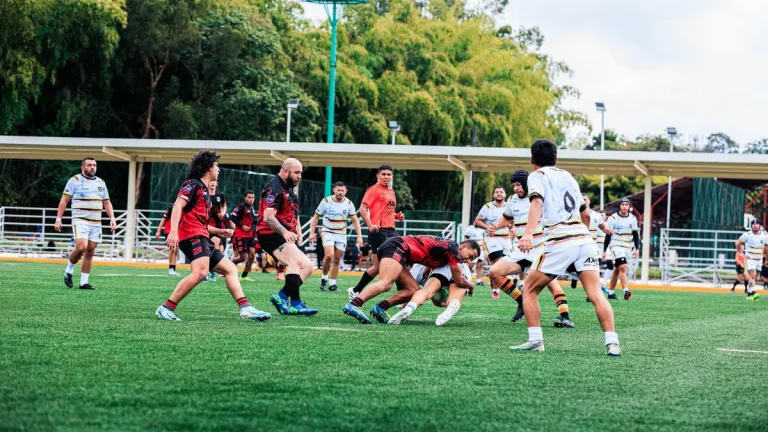
| Rugby | Scrums and repeated heavy contact | Grass, or synthetic over a shock pad | Shock pad and backing strength |
| Baseball and softball | Sliding zones and bullpen arcs | Grass infield with synthetic cutouts | Pile height in high-wear lanes |
| Cricket | Bowling run-ups and the pitch block | Grass square, synthetic outfield | Even pile for a true bounce |
| Field hockey | Short, fast, low-impact movement | Synthetic with a short dense pile | Low pile and a flat surface |
| Multi-use | Everything at once | Synthetic with a mid-height pile | Balanced density and infill |
The lever column is where a factory earns its keep. Pile height, infill selection, shock pad and backing can each be set for the sport in front of you. Our infill options compared and essential artificial turf layers guides go deeper.
Roll planning belongs in the same conversation. On a large artificial turf installation, wider carpet means fewer seams, and every seam is where infill migrates and wear starts.
What a Factory Can Tailor for Each Field
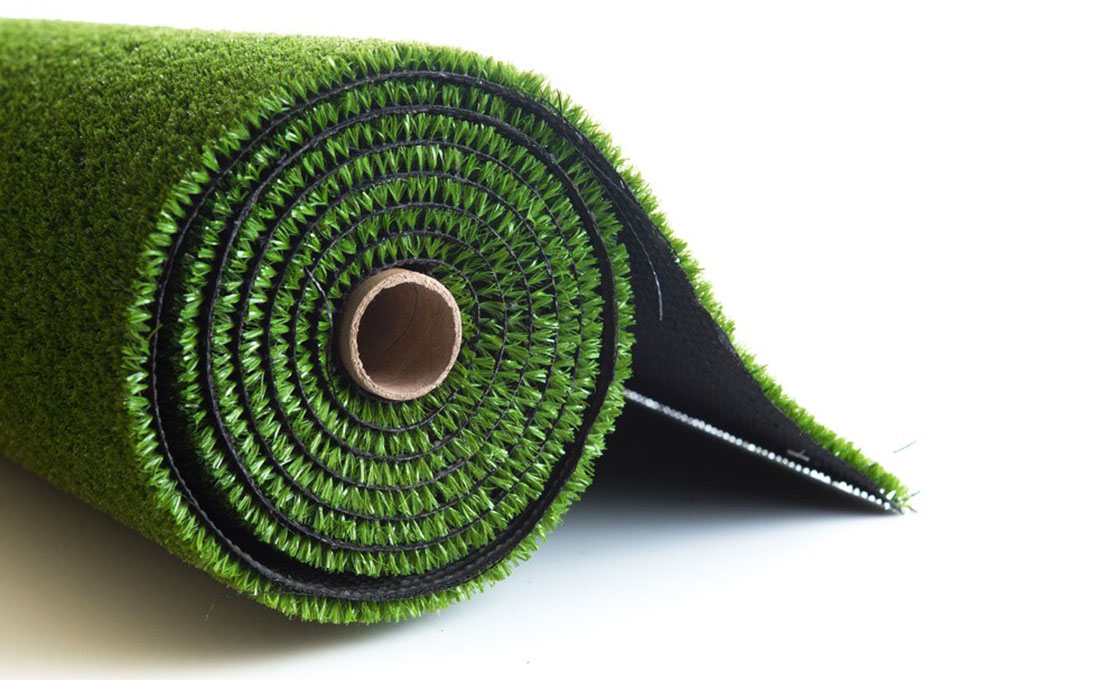
Specification is where the comparison stops being generic. On a made-to-order artificial turf installation, the key variables are set before the carpet is tufted: yarn material, colour, blade shape, density, pile height, backing composition and roll size. We build to order, so these stay real choices.
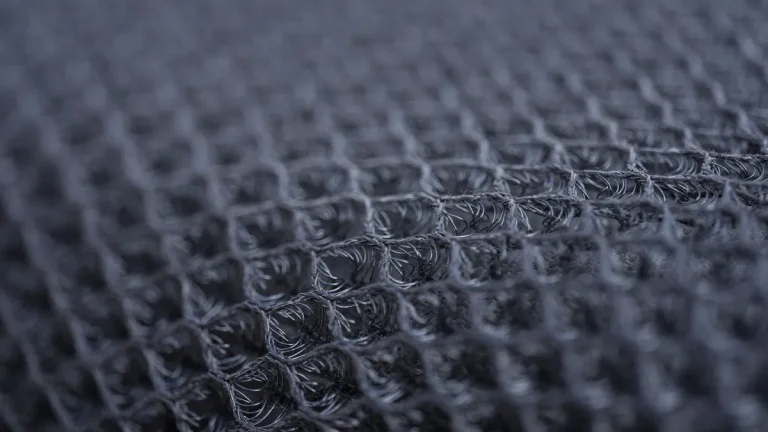
Rolls leave the line at 2 m, 4 m or 5 m wide and 25 m long, with made-to-measure widths available to avoid seams. Backing comes in PP plus net or PU, chosen for fix method and site stability.
Eight steps sit behind that: compounding, extruding, twisting, tufting, coating, drying, perforating and rolling up. Holding them on one line is why a custom specification is a conversation, not a compromise.
Be careful with any early number you are handed. Factory-direct carpet runs $7-60 per square meter as an indicative range only, because grade, pile height, backing and quantity all move the final figure. Request an exact quote once the specification is fixed.
Samples settle arguments faster than emails do. A 20 x 20 cm swatch reaches most buyers in four to six days, which is quicker than another round of internal debate.
Compare Both Surfaces With Your Own Samples
Specs on paper cannot tell you how a pile recovers under a boot or how hot a surface runs at midday. Handle both before you commit a season of playing hours. Factory-direct supply means pile height, backing and roll width are set to your field, with a 20 x 20 cm sample pack shipping in four to six days.
Deciding Which Surface Fits Your Field
In our experience, the fields that disappoint were specified before anyone counted the hours. Start there. High-intensity, year-round use, such as a school with fixtures every afternoon and community lets every evening, is where synthetic earns its premium, because grass simply cannot deliver the hours.
A tight capital budget with a skilled grounds team argues the other way. Grass costs less to build and can be renovated in cycles rather than replaced in one piece, provided the site can absorb the closure days renovation needs. Where water is costly or restricted, that argument weakens.
Multi-sport sites usually land on synthetic, because one consistent surface serves six sports better than six compromises. Whichever way you go, write the expected weekly hours into the enquiry. That single number changes more specifications than any other on the form.
Cost, Lifecycle and Replacement Timing
Think in two clocks. Grass runs on an annual one: labour, water, seed and fertiliser, every season. Synthetic runs on a capital one: a larger build cost, modest annual upkeep, then a full replacement at the end of its service life.
Neither clock is shorter by default. They differ in who pays and when. A school that funds revenue budgets but not a capital replacement should read that honestly, and so should a club with capital but no grounds staff.
Our carpet pricing runs $7-60 per square meter, indicative only. Grade, pile height, backing and quantity must be fixed first, so request an exact quote before setting it against a competing bid. The wider picture sits in cost per square meter factors. Any artificial turf installation should be budgeted with its replacement in view from the first day.
Frequently Asked Questions
Is artificial turf or natural grass better for a school sports field?
It depends on weekly hours. Grass suits sites with a grounds team and tolerance for closure days. Synthetic suits timetables that cannot absorb cancellations and have capital available for eventual replacement.
How many hours a year can a natural grass field be played on?
Fewer than the calendar suggests. Rain, frost and recovery periods after reseeding all remove sessions. Count required sessions per week, multiply by season weeks, then subtract realistic closure days.
Does artificial turf really need less maintenance than grass?
Yes, but not none. Expect regular grooming, debris removal, infill top-ups and seam checks. What disappears is mowing, irrigation, feeding and the seasonal renovation the playing surface needs.
Which surface stays cooler for players in summer?
Natural grass, clearly. Living grass tracks air temperature, while synthetic carpet can run substantially hotter under strong sun. On hot days, shift sessions earlier, water the surface and provide shade.
How long does an athletic field surface last before replacing?
Grass is renovated in cycles rather than replaced. Synthetic carpet serves many seasons and then needs full replacement as one job. Climate, weekly hours and upkeep decide the timing on both.
Can one field serve several sports on the same surface?
Yes, and synthetic usually does it better. Choose a mid-height pile with balanced density and infill, then accept that a multi-use surface is a compromise tuned to no single sport.
 English
  Arabic
  French
  German
  Portuguese
  Russian
  Spanish