








Failed playground installs send back three photos: an open seam at the slide exit, a ponding low spot after the first storm, and a pad that missed the tallest platform. Each one traces to a decision made before the rolls arrived. The crews who avoid them run the job as a chain of gates, each closing on something you can check.
We sit on the factory side of this work, so the specs that come back to us tell a pattern. Crews who install artificial grass for playgrounds without rework treat every stage as an acceptance gate — something is measured, checked and signed before the next stage covers it up.
Survey the Site: Fall Heights, Drainage and Access First
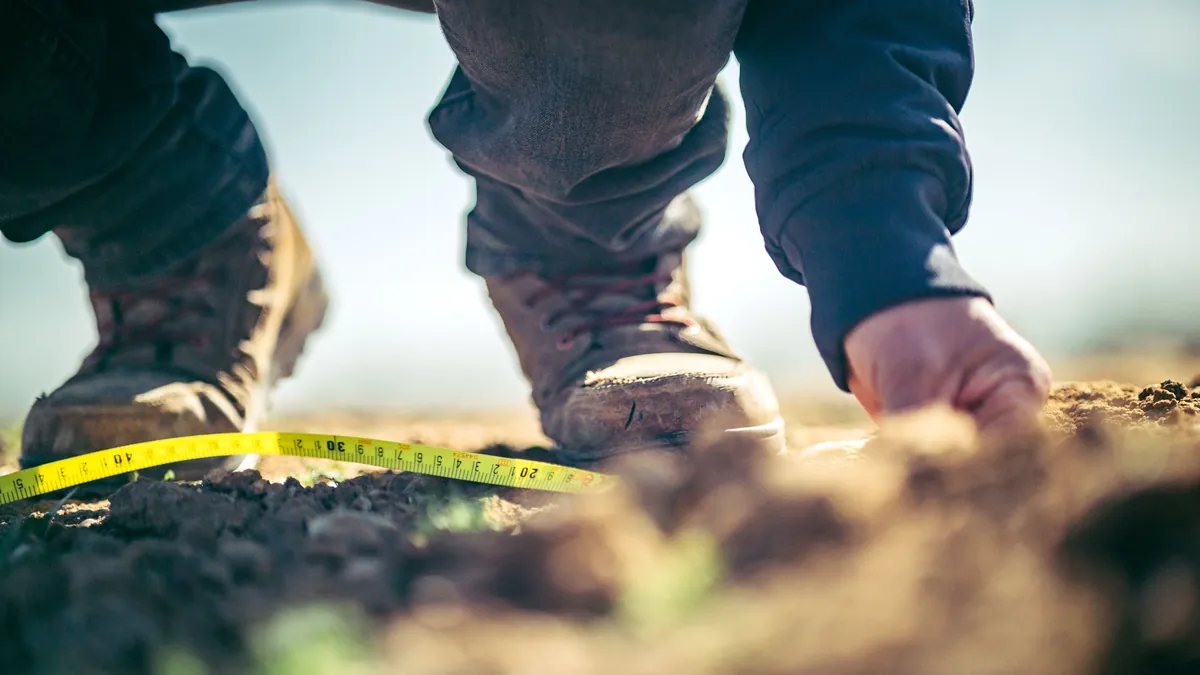
Walk the site with a tape and a clipboard before anyone prices a roll. Record the tallest accessible platform, the slide exit height and the highest point a child can reach from a handhold — those numbers drive every later stage. Mark the use zone with string line and pegs while the ground is still bare, because the layout is hardest to argue with once equipment footings exist. Contractors who install artificial grass for playgrounds without this sheet end up specifying the pad from memory.
Drainage belongs in the same survey. Water travels through the perforated backing, into the shock pad and down through the compacted aggregate base. Find the low point that receives it before the base goes in. Around a stand-alone climber, the CPSC handbook puts the use zone at a minimum of 6 feet in every direction from the equipment perimeter. Check access for base material deliveries and sweep for buried irrigation lines while you are at it.
Per the CPSC handbook, a fall onto a shock-absorbing surface is less likely to cause a severe head injury than a fall onto a hard surface. The same handbook adds that some moderate injuries may occur regardless of the surfacing material. That conditional is the anchor for every safety claim in this guide.
Record fall heights against the equipment list before anything is bought, because the pad reads those numbers and the handover pack files them. CPSC guidance also treats any material impact-tested to ASTM F1292 as protective surfacing, so the survey sheet becomes the paper trail that ties the site to the standard.
Build the Base and Get the Levels Right
The base does two jobs at once: it carries compaction loads underfoot and it sets the drainage gradient the survey called for. Get the levels wrong and every stage that follows inherits the error — ripples, ponding, seams that open at the joints. When you install artificial grass for playgrounds, this is the one stage nobody admires at handover, which is exactly why it gets checked now.
Excavate and Shape the Sub-Grade
Strip sod, mulch and any old surfacing first. Excavation depth then follows the sub-grade: one professional flow sheet specifies 75-100mm, a US installer checklist runs 4-6 inches, and a Canadian guide lands at 3-5 inches. The ranges differ by ground and by who is writing the guide; what matters is choosing depth against your own soil, not copying a number. Shape a 1-2% grade away from buildings and equipment as you dig. For the full ground-preparation walkthrough, including soil stripping and membrane choice, our separate guide carries the detail this section compresses.
Compact in Lifts, Then Water-Test
Lay the sub-base in roughly 50mm lifts and compact each one to 90-95% before the next goes down; one vendor guide’s numbers, but the logic is universal. Under-compaction shows up later as settlement, and settlement reads as ripples underfoot and ponding after rain. Then water-test the finished grade with a hose before any roll arrives — water is the honest inspector. Watch it run to the low points and off the pad footprint. For the tool-by-tool and line-item cost breakdown for a full build, our step-by-step walkthrough prices the whole exercise.
Specify the Shock Pad Against the Highest Fall Height
Get the pad wrong and the whole effort to install artificial grass for