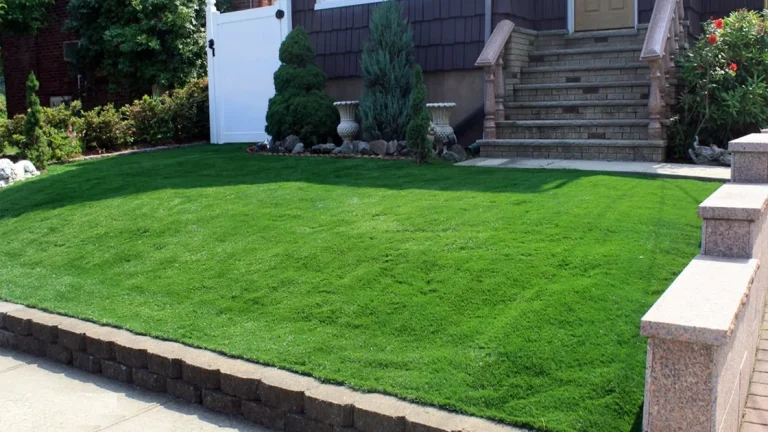
Three bids for the same site can land thousands apart, and every installer will defend their number. The gap hides in the line items a quote never spells out: base depth, compaction passes, seam work and infill labor. The failures surface a season later as bumps, puddles, visible seams and lifted edges, long after the invoice is paid. The worst of it hides in plain sight: wrong infill flat-mats the carpet and leaves the backing to take the sun.
We sit on the factory side of this trade and watch the same pattern repeat: the carpet spec gets chosen after the base instead of before it. The fix is reading the job in order rather than reading the total. To install artificial turf step by step is to walk the sequence with acceptance numbers attached, so the ground tests right before the rolls land and the quote becomes legible.
Tools and Materials for the Job
A crew about to install artificial turf step by step needs the van list complete before mobilizing, grouped by what each tool does rather than what a catalog calls it. A missing compactor or spreader costs more in delay than in rental fees. Lists like this get traded between foremen all the time, and the versions that survive are grouped by function, because that is how a missing item announces itself on site.
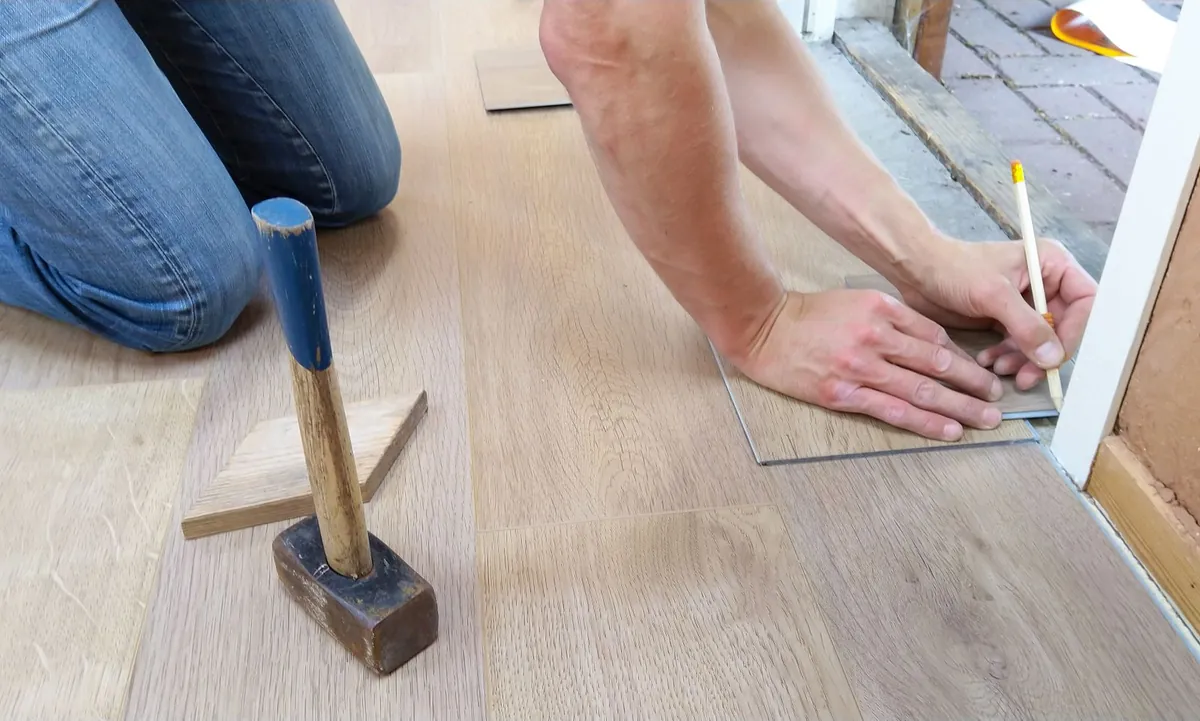
Rent rather than buy what a job uses once or twice a year. Local rental centers carry plate compactors for aggregate bases and brush machines for infill, and the right tool shortens the job and reduces damage risk.
- Measuring: tape measure and marking paint for layout lines.
- Ground preparation: sod or turf cutter, shovel, landscape rake and wheelbarrow.
- Compaction: plate compactor or hand tamper, rented for aggregate base passes.
- Cutting: utility knife with spare blades; dull blades chew pile edges.
- Joining: seam roller and seaming tape for the joints.
- Fixing: hammer or mallet with nails, staples and pegs.
- Finishing: drop spreader, power broom or stiff broom, and gloves.
Materials follow the same logic, split into what goes under the carpet, what joins it and what holds it down.
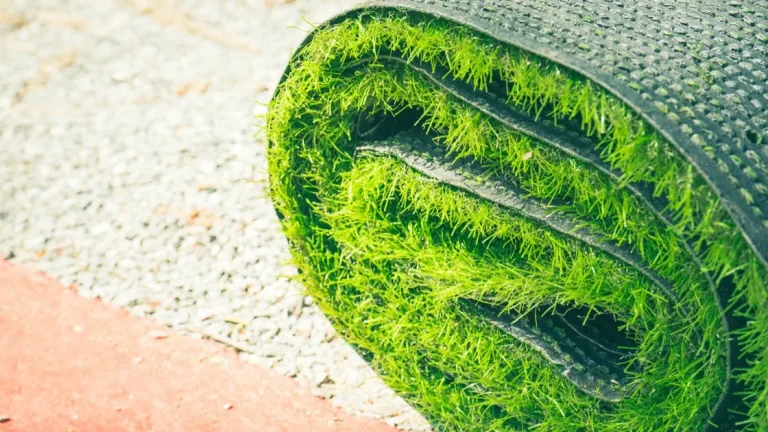
- Turf rolls: residential landscape pile typically runs 20-40 mm with softer fibers.
- Base material: crushed rock or decomposed granite road base.
- Geotextile weed barrier, laid after base compaction.
- Seaming tape and turf adhesive for the joints.
- Perimeter nails, staples and pegs for fixing.
- Silica sand infill, spread at roughly 1-2 pounds per square foot.
- Edging such as bender board to hold the perimeter line.
Two quantities settle most ordering mistakes: infill at about 1-2 lbs per square foot, and turf ordered 5-10% beyond the measured area to cover cutting waste and future repairs. Roll width decides the seam count before cutting starts. Standard 2 m, 4 m and 5 m rolls in 25 m lengths, plus custom widths for large continuous areas, change how many joints a layout carries. You can browse the full turf product range while the base crew mobilizes, so the order and the layout agree.
The Installation Sequence From Bare Ground to Brushed Pile
To install artificial turf step by step, hold to one order: underground before overground, measured before cut, seamed before fixed before filled, grain one way throughout. How to install artificial turf well is mostly a matter of not swapping those stages. Each stage below carries the acceptance numbers a foreman signs off before the next one starts.
Step 1: Plan the Layout and Order to Spec
Walk the area with a tape and measure at multiple points, then sketch the layout with grain running toward the main sightline. Match the roll plan to the width chart before ordering, because 2 m, 4 m and 5 m rolls in 25 m lengths fix how many seams the job carries. Order 5-10% beyond the measured area; a foreman who measures once and orders exact often watches the last roll arrive short. Small irregular shapes raise cutting and seam work, while large continuous areas stay simpler and cheaper per square foot. The turf roll specifications and widths page is worth a look before the order is committed.
Step 2: Clear the Site and Excavate
Strip the site of grass, roots and debris, then dig 3-4 inches in a typical residential job, which cross-checks at 70-100 mm in metric guides. Go deeper where drainage demands it, not where the shovel gets easy. Installer guides in both imperial and metric markets land on the same depth band. The excavation depth is the first acceptance check of the job: what comes out now decides what the base can rebuild later. Starting from ground that already pools or rolls, the uneven-ground install guide covers the leveling work first.
Step 3: Build, Grade and Compact the Base
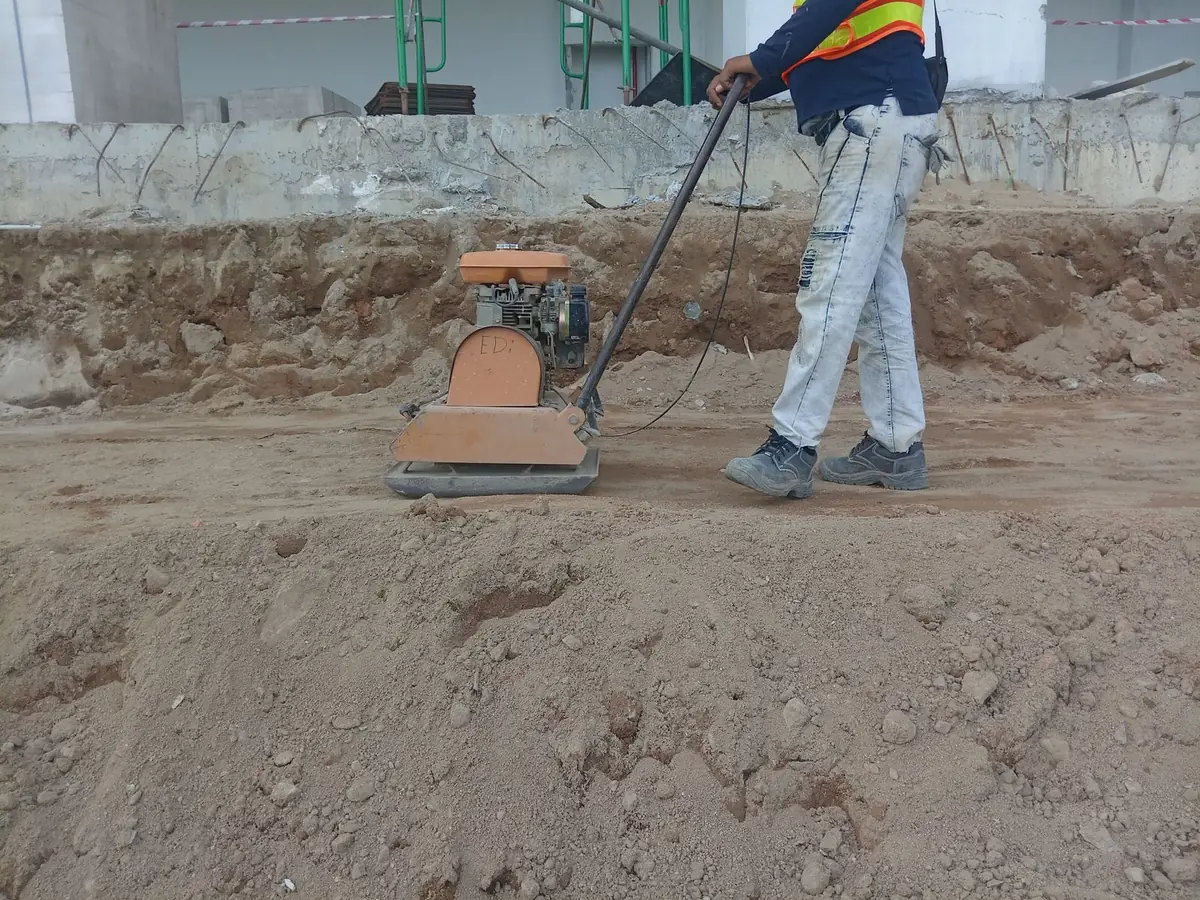
Spread crushed rock or decomposed granite 2-3 inches deep, or lay road base at 70-80 mm with a 20 mm crusher dust topping, compacting each layer in turn. Grade the surface to a 1-2% slope, about 1/8 to 1/4 inch per foot, away from structures and toward existing drainage points. Compact to 90% density; anything less settles unevenly into bumps, dips and soft spots months later. Lay the geotextile weed barrier after compaction so it sits on a finished plane. This is the step to slow down on, because every later step inherits the flatness built here.
Step 4: Roll Out and Acclimate the Turf
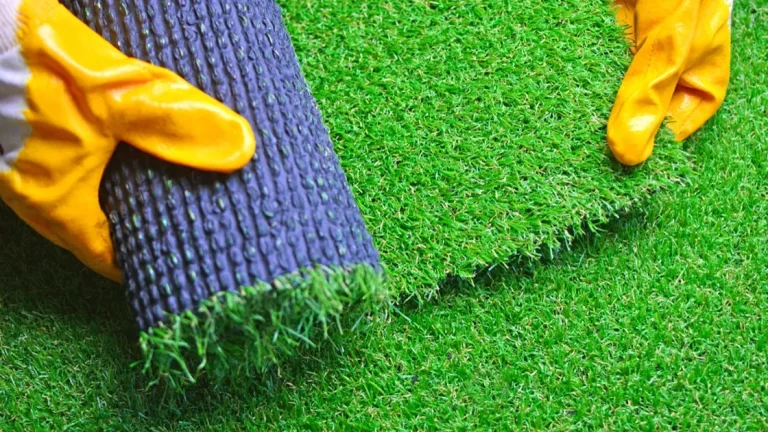
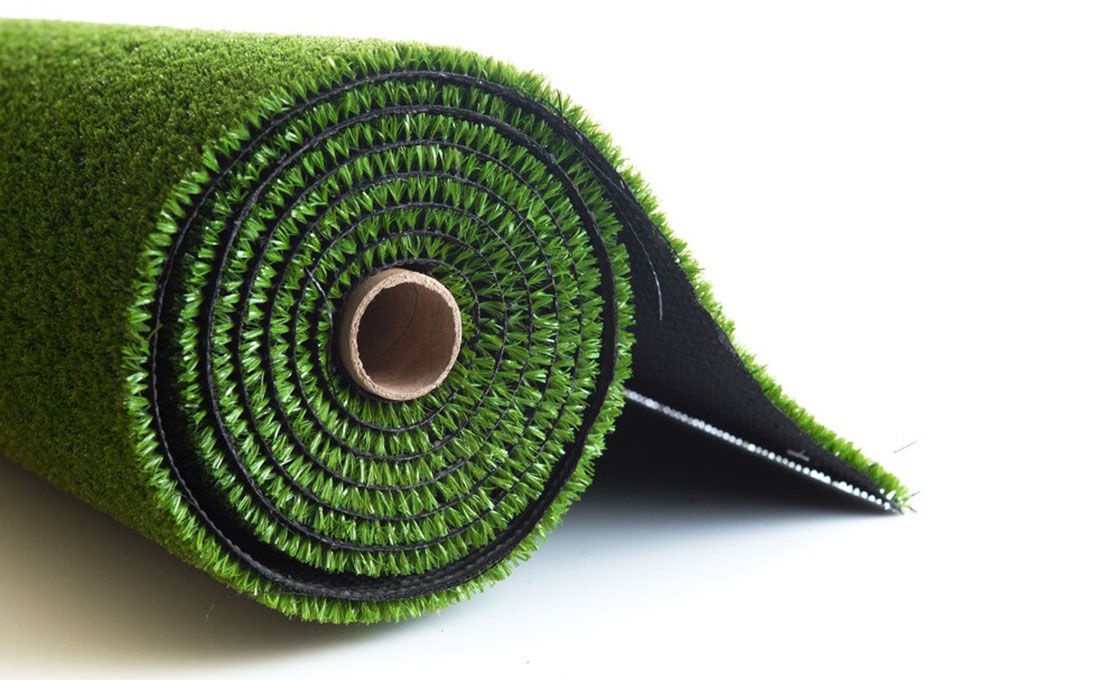
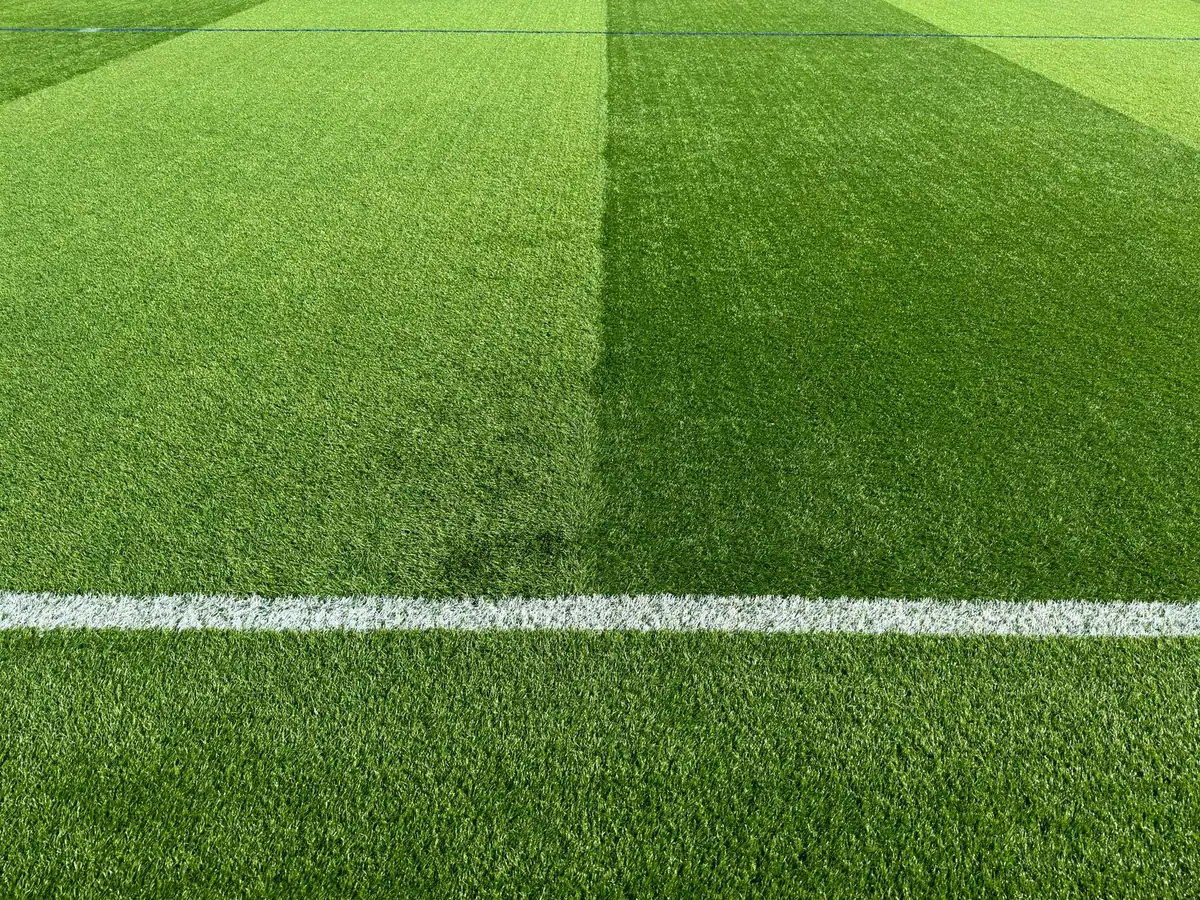
Roll the turf out in the same direction throughout, because mixed grain shows as two shades under daylight. Let the rolls rest in the sun for 1-2 hours to relax creases, then rough-trim the edges leaving about 50 mm of excess. Pick the weather window as deliberately as the base: heavy rain and extreme temperatures attack adhesives and wrinkle a carpet before it is ever fixed. A roll that goes down tense stays tense.
Step 5: Seam and Join the Rolls
Join rolls with seaming tape and turf adhesive, never by overlapping the edges. Align the two edges with a 2-3 mm gap, lay the tape shiny side down, spread the adhesive evenly and press the seam firmly home. Published installer guides put the gap at 2-3 mm because tight butting squeezes adhesive out and overlapped edges show as a ridge. Keep pile direction consistent across the joint, because a seam in crossed grain reads as a stripe from across the site. Keep traffic off the joint until the adhesive cures as directed, because a seam loaded early lifts, curls or frays.
Gluing only holds on a base that was made gluing-ready; the base preparation before gluing checklist covers flatness, cleanliness and dryness.
Step 6: Secure the Perimeter and Field
Fix the perimeter with nails or staples every 6-8 inches, working from the center outward so tension releases toward the edges instead of bunching at the borders. Work without overstretching, since a carpet pinned down over a wrinkle keeps the wrinkle. Center-outward fixing matters most on large fields, where trapped tension migrates to the weakest seam. On flexible bases, pegs at 200-300 mm spacing hold the field edges; on hard bases such as concrete, fix the perimeter with adhesive instead of pins. Edges that go down under-fastened come back as lifting borders and movement along walkways.
For the hard-base route end to end, see installing artificial turf on concrete.
Step 7: Spread and Brush In the Infill
Spread silica sand infill with a drop spreader at about 1-2 pounds per square foot, which metric guides cross-check at 5-10 kg per square metre. Follow the turf manufacturer’s rate wherever it differs. The target is infill covering about 50-70% of the blade height; brush against the grain afterward to work the sand down and lift the fibers. Kiln-dried sand is the common choice, and the rate varies with pile height rather than taste. Skip the brush-in and the sand sits visibly on top a week after handover, matting the carpet where traffic runs heaviest.
Step 8: Final Grooming and Handover Checks
Walk the finished field and recheck every seam, edge and drainage path, clearing debris before the final groom. Power-brush the pile upright, then apply a light watering to settle the infill into place. Most residential crews complete the whole sequence in 1-3 days depending on size, shape complexity and weather. Handover happens when the checks pass, not when the last roll is unrolled.
Budgeting a Turf Project Without a Line-Item Quote?
Many installers lose margin to hidden freight and spec mismatches. Our rolls ship factory-direct, typically 30-50% below market prices on like-for-like specifications.
What the Project Costs, Line by Line
None of the figures in this section is our quote. All of them are third-party published research: the component ranges come per a published U.S. cost table, and the all-in numbers come per one 2026 installer breakdown. Anyone planning to install artificial turf step by step should price the job in the same five buckets, so a bid can be checked line by line.
The buckets, with published per-square-foot ranges:
| Cost bucket | Published range per sq ft | Source qualifier |
|---|---|---|
| Turf material | $2.00-$8.00 | per a published U.S. cost table |
| Base and subsurface | $1.50-$4.50 (crushed stone $0.90-$2.80; geotextile $0.40-$0.90; edge restraints $0.25-$1.00) | per a published U.S. cost table |
| Labor | site prep $0.50-$2.50; laying and seaming $3.50-$9.00; a second breakdown logs labor at $3-$6 | per a published U.S. cost table; per one 2026 installer breakdown |
| Edging and accessories | $0.50-$3.00 | per a published U.S. cost table |
| Infill | $0.50-$2.00 (spread at 2-4 lbs per sq ft) | per one 2026 installer breakdown |
Per a published U.S. cost table, installed artificial grass runs $6.00-$14.50 per square foot with material and labor combined. Per one 2026 installer breakdown, most residential jobs run $10-$22 all-in. Converted for metric planning, those same published ranges correspond to roughly $65-237 per square metre. Read the two bands side by side rather than merged; they come from different methodologies and different market samples.
Crew time enters the labor math too: 3-8 hours per 100 sq ft with 2-5 workers, per the same US cost table. On whole-project scale, that table puts a 1,500 sq ft job at $14,250-$18,000 before taxes and permits. The 2026 breakdown bands 500 sq ft at $5,000-$11,000 and 1,000 sq ft at $10,000-$20,000 installed. Roll width feeds back into this math, since wider made-to-order roll widths and specs cut seam count and seam work is priced inside the labor bucket.
Drivers move the total more than the buckets do. Complex shapes add 10-20%, and labor in California, New York and the Pacific Northwest runs 15-30% above national averages, per the 2026 breakdown. Cooling-technology infills cut surface temperature by 20-30 degrees F on hot days and add about $1-$2 per square foot. Weigh those against the shape of the site before signing, not after.
Installation Mistakes That Cost Redos
Crews that install artificial turf step by step still redo work when one acceptance number gets skipped. The published failure lists name the same handful: base, drainage, seams, edges, infill. The five failure modes below carry the redo cost.
Base compaction rushed or skipped
Inadequate base preparation is the most commonly named installation mistake, and it sits under everything else. When the base is not leveled, compacted and built to the right depth, the ground settles unevenly into bumps, dips and soft spots.
Slope missing
The finished base needs a slight gradient away from structures and toward the existing drainage points, or rain has nowhere to go. Standing water after rain brings mold, mildew and pet odors, because the turf relies on the system beneath it to move moisture.
Seams overlapped or under-glued
Overlapped edges, inaccurate trimming before joining and too little adhesive all show up later as seam lines that lift, curl or fray at the joint. Precise cutting with weather-resistant seam tape and a full, even adhesive spread is what keeps the join intact.
Edges under-fastened
Edges that are not anchored correctly let the turf lift at borders and shift along walkways, opening gaps between sections. Fix the perimeter while the install is still open: pins on aggregate bases, adhesive on hard surfaces such as concrete.
Infill short
Too little infill lets fibers mat down quickly under traffic and removes the ballast that weights the carpet against wind lift. It also leaves the backing exposed to prolonged UV, which the correctly filled sections would have shielded.
After handover, brush with a stiff nylon broom or power brush every 1-3 months, more often in high-traffic or pet areas, to lift the fibers and redistribute infill. Drainage-friendly turf for dog areas carries the same grooming cadence with less odor risk, because the system beneath the carpet moves moisture the way the base was graded to.
Before final payment, run the handover checks. Seams, edge fixing and drainage flow get verified in that order — not after the first storm.
Closed out this way, to install artificial turf step by step ends where a factory order ends: every check signed before the money moves. The sequence is the spec; run it as one and the redo list stays empty.
Frequently Asked Questions
How deep should the base be under artificial turf?
Plan on excavating 3-4 inches (about 70-100 mm) and rebuilding with a compacted crushed rock or road base; go deeper where drainage corrections demand it.
How much infill do I need per square foot?
About 1-2 pounds per square foot, enough to cover roughly 50-70% of the blade height; follow the turf manufacturer’s rate wherever it differs.
How long does a turf installation take?
Most residential installations finish in 1-3 days, depending on project size, shape complexity and weather.
What slope does artificial turf need for drainage?
Grade the base to a 1-2% slope, about 1/8 to 1/4 inch per foot, away from structures and toward existing drainage points.
Which cost items move an installation quote the most?
Per the published cost tables cited above: turf material $2-$8 and base $1.50-$4.50 per square foot. Labor is the swing item, with complex shapes adding 10-20% and some regional labor running 15-30% higher.